







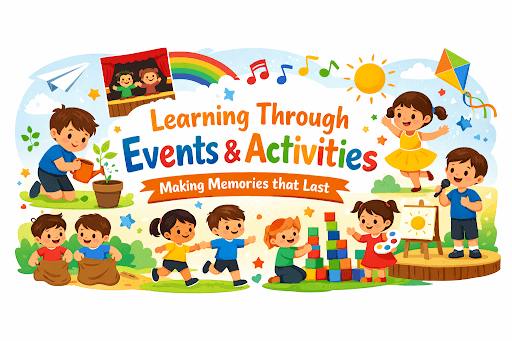

Have you ever wondered why children remember a puppet show or a festival celebration more vividly than a lesson from a textbook? What makes events and activities such powerful tools in early childhood education?
Well, studies show that children remember up to 90% of what they actively participate in, compared with much less from passive listening. These experiences shape not only their learning but also their confidence and joy of going to school each day.
Tiny Tots English School, one of the best schools in Pune, recognizes this vital connection. So, let us explore how you can make your child’s learning feel more interesting by helping them make memories along the way.
Also Read | How Tiny Tots School Nurtures Complete Development in Every Child
Why Events and Activities Matter in Early Years
In the early years of school, children are like little sponges. They absorb not just words, but feelings, rhythms, colour and movement. Events and activities bring learning alive. They help children:
- Understand concepts through experience rather than just words
- Improve social skills by working and playing with friends
- Boost language and communication through songs, storytelling and drama
- Develop emotional strength by standing on stage, cheering for a friend, or leading a small activity
Children remember feelings long after they forget facts. A festival celebration where they sing and dance becomes an emotional memory. A science fair where they explain their project to family and teachers stays with them like a treasure.
These experiences help children connect school to life outside. They start to see school as a place where they can explore, express and be themselves.
The Science of a "Sticky" Memory
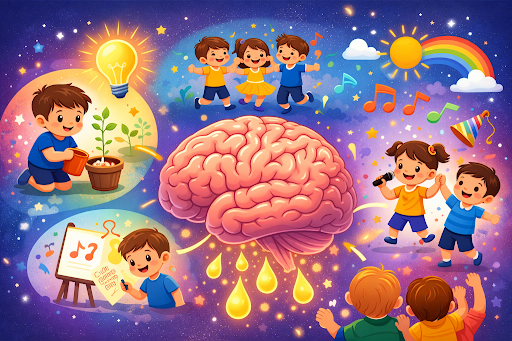
Why do we remember the smell of rain or the excitement of a birthday party but forget a math worksheet from last Tuesday? It is because the human brain prioritizes emotional data. When a child is excited, their brain releases dopamine, which acts like a "save button" for information.
In a classroom where events are the core of the curriculum, every lesson is attached to an emotion, like:
- The "Ah-ha" Moment: This happens when a child plants a seed and sees it sprout.
- The Social Spark: This occurs during a group dance or a "Yellow Day" celebration.
- The Confidence Boost: This is felt when a shy toddler finishes a poem in front of a small, cheering audience.
Children remember things that make them feel something. Anything new or exciting triggers emotion. And emotion increases memory retention. A child might forget a definition from a book. But they will not forget singing a rhyme on stage with friends, laughing together, and hearing applause. That emotional memory becomes part of their self-confidence.
The Limits of Classroom-Only Learning
Classroom teaching lays the foundation. It builds structure and discipline. It introduces concepts in a systematic way.
But children are naturally active learners. Sitting and listening alone cannot hold their attention for long. Young minds thrive on movement, colour and interaction.
When learning remains confined to textbooks:
- Concepts may feel abstract
- Curiosity may fade
- Retention may weaken
Adding experiences brings energy back into the process. It bridges the gap between knowing and understanding.
Turning the Mundane into the Memorable
How do you make a Tuesday morning in a classroom stick in a child's mind forever? You do it by breaking the routine. A routine is the enemy of memory. When every day looks the same, the brain goes into a "power-saving" mode. However, when a school introduces a "Color Day," a puppet show, or a simple gardening session, the brain wakes up.
Events and activities have the power to wake the brain up and draw the child towards having “fun”. Such engagement fosters the following in children:
- The Power of Senses: A child might forget the word "sour," but they will never forget the memory of tasting a lemon during a "Food Discovery" activity.
- Emotional Milestones: Winning a small race or finishing a drawing creates a feeling of pride. That pride becomes the memory that says, "I am capable."
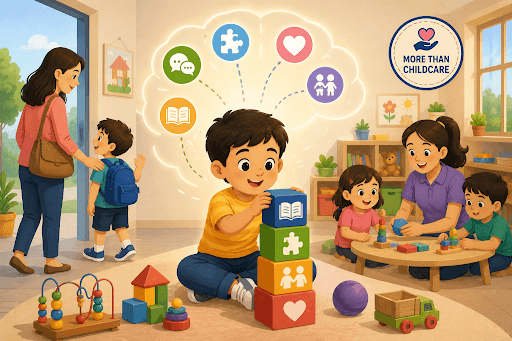
- The Social Glue: Working with a friend to build a block tower creates memories of cooperation. These are the building blocks of social intelligence.
Check Out | The Importance of Experiential Learning in Modern Education
Tiny Tots English School: Where Learning Meets Experience
With a vision to move away from the "factory" model of schooling, Tiny Tots English School was established in the year 1997. The school aims to provide a "Home-Away-From-Home" where children from Nursery to Class 5 can grow in an environment that values their individual pace and curiosity.
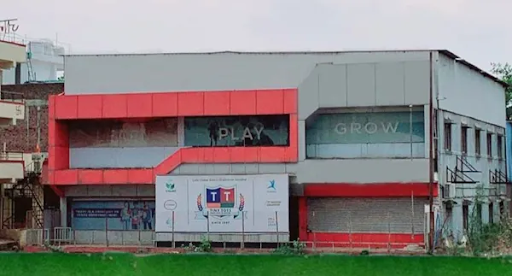
At Tiny Tots English School, events and activities are thoughtfully integrated into the school calendar. By using "Color Days," storytelling sessions, and hands-on craft activities, they turn the syllabus into a series of vivid experiences that children actually want to remember.
One of the best CBSE schools in Pune, Tiny Tots English School believes that children learn better when they participate actively. The school also integrates life skills into these memory-making moments. Children learn about health during "Nutrition Days" and about discipline through structured play. By the time a student reaches Class 5, they aren't just leaving with a report card. They are leaving with a library of positive associations with learning.
Beyond the daily classroom life, the school emphasizes physical milestones and social events. The staff acts as facilitators of these memories, carefully documenting a child's progress and sharing those moments with parents. This transparent and human-centric approach has allowed the school to remain a trusted institution for over 25 years.
Conclusion
Learning is not only about what children hear or write down. It is about what they live. It is about the memories they make of joy, confidence, cooperation and achievement. Events and activities do not stand apart from learning. They make learning stronger. They make it real. They make it memorable.
Tiny Tots English School recognises this truth and makes learning a space of joy, friendship and discovery. Because, when a child walks into school excited about a new celebration or project, it means learning has become part of their memories too. And those memories stay with them, shaping the adults they will one day become.
For more information on this and other similar schools, check out this list of the best schools in Pune.




 as a preferred source on