





There are a lot of things that our children learn from textbooks, but they are also taught a lot about the important things in life outside those books. They can go through textbooks about farmers, soldiers, doctors, and sanitation workers, but it becomes much easier for them to understand what they did and still do when they learn about the same in their communities.
How Real-World Experiences Help Children Understand Gratitude
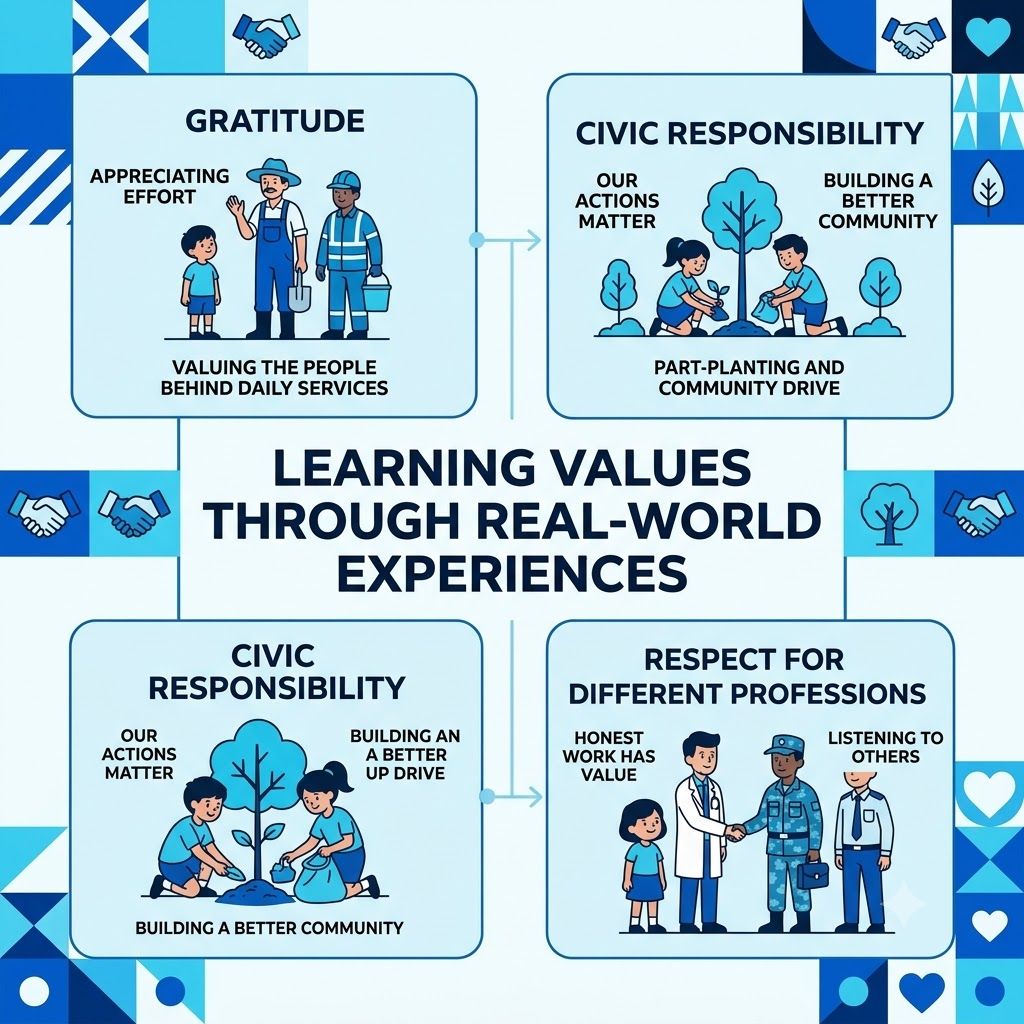
Kids take everyday luxuries for granted - without thinking about the people behind them. There are many hands that bring you food at the table, for instance. And there are many pairs of eyes that keep the streets clean, the roads safe, and the clinics stocked with supplies.
Children also learn about these through real-world experience. For instance, by discovering more about the life of a farmer, children will come to realise the effort that is put into the food they eat. Or by meeting community helpers, they will learn about those who maintain the safety and cleanliness of their community.
You can involve your child in a donation drive or community service project to help them realize that people may not be as fortunate as they are. It can make them more thankful and considerate.
It's also about respecting people's work and not throwing things away. If kids appreciate the value of food, water, and resources, they might be less wasteful in their everyday behaviour.
How Community Events Foster Civic Responsibility
Civic responsibility involves recognizing our responsibilities to the community and the locations we live in. Children can begin to learn about these responsibilities early in school or community activities.
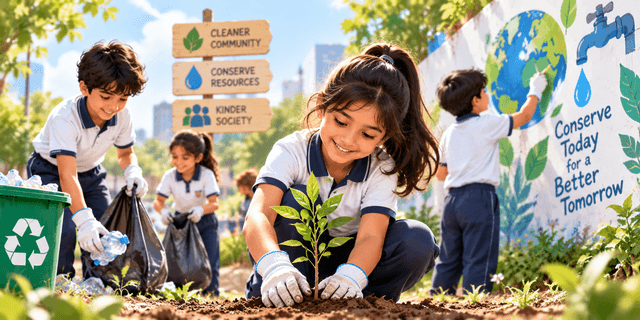
Cleanliness drives and activities related to cleanliness, planting trees, and waste disposal can make children realize how their little deeds can impact others. For instance, while planting trees in their locality, they will realize that cleanliness is not only a municipal corporation's job but also ours.
These kinds of activities can also be used to show children that by obeying the rules, caring for community property, cooperating, and looking after the environment, they are actually 'being good citizens'. The tasks start to show children that not 'doing what you are told' is not the same as being 'a bad citizen'.
These lessons show more significance when daily practice can be implemented into children's lives. There are easy practices that help children fulfil civic responsibilities, such as not wasting electricity, using water bottles, and cleaning up after themselves.
Why Children Should Respect Different Professions
All jobs have an impact. Farmers produce our food, dentists work to protect our health, teachers help us learn, and rubbish removers make sure our environment stays tidy. Soldiers work for the nation, and drivers get us to where we're going.
Sometimes children don't realise what goes into a job. Life can bring in new experiences which expose children to other jobs and show them how much hard work goes into some services.
For instance, farming could demonstrate to children just how patient and hard-working they have to be to plant and grow crops. For instance, learning about health care professionals can educate kids about the value of knowledge, health care, and attention.
You can also use these experiences to show children that being paid more or having a higher status isn't what makes them more valuable. That's true of any honest work.
Children demonstrate respect by using good manners, listening when others are speaking, and recognizing the good work that someone has done. The more respectful habits they have, the more caring a person they become.
Why Participation Helps Learning Feel More Real
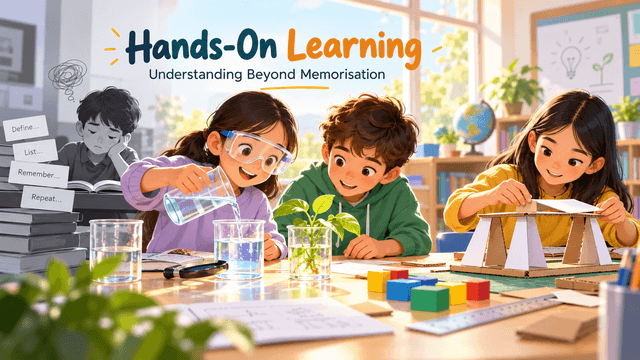
Attending an event can give children information, but being involved in an activity helps them to know what it's about. Community Projects. When children are involved in community projects, they learn to share chores, to listen to others, and to work for a common purpose.
For instance, in an environmental campaign, children may make awareness-raising posters, do some waste segregation, or propose ways to cut down on plastic use. This ties in classroom studies to practical action.
You can build on these experiences by talking about them afterwards. Ask children what they learned, who they appreciated, and how they can use that learning in their lives.
The conversations can still be continued at home. By prompting children to assist those in need, minimize material wastage, and have a respectful attitude towards workers, one time could become a lifetime.
How Vishwa Vidyapeeth Connects Learning with Social Values
Vishwa Vidyapeeth, Yelahanka, Bengaluru, has programmes to connect students to practical learning and social service. Its Jai Jawan Jai Kisan event, for instance, featured displays on agriculture and defence services, cultural events, interactive activities and presentations by students.
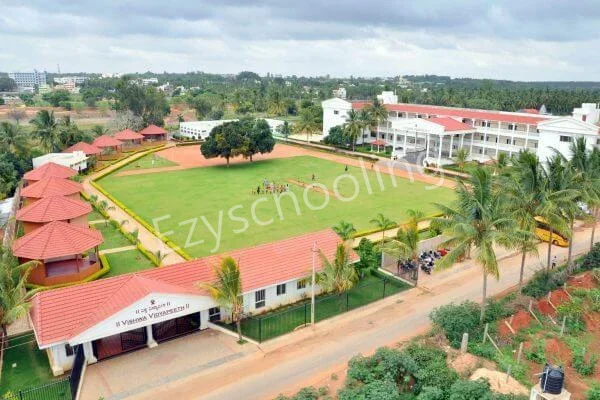
Such hands-on exposure can also help children understand the value of the contribution of our soldiers and farmers and be thankful to them. The school's SEWA programme (Social Empowerment through Work Education and Action), meanwhile, provides another opportunity for students to learn hands-on. As per its website, students of Grade 6 and above spend 30-50 hours (depending on the grade) on social service during the year.
Small Experiences Can Build Lifelong Values
Thankfulness, a concern for one's community, and an attitude of respect build as a result of experiences, discussions, and daily interactions. Events in the real world enable children to realize that society is sustained by our cooperation and our interactions with others.
School and parents can foster children's respect for others, the environment, and their local area, and reduce waste and help the community. Little steps that children can take if you make them part of your routine.
Education is not just academic. It's about giving children the skills to be responsible citizens: to respect others, to show gratitude for their efforts, and to help create a better society.
For more information on this and similar schools, check out this list of the best schools in Bangalore.




 as a preferred source on