






The speed at which the world of work is changing is constantly growing. Because of technology, artificial intelligence, and recent discoveries, both the way people work and the kinds of jobs that are available to them are being altered. It was difficult to imagine many of the occupations that exist today a few decades ago; just as now, children who are being educated at school may go on to have careers in jobs which do not yet exist.
That does bring up a significant question—since no one knows exactly what the future careers are going to be, how can schools possibly prepare children for them? The solution lies in helping children acquire skills which can be made use of in all sorts of situations, even if the nature of their work and their surroundings changes.
Also Read| Beyond the Classroom: How Real-World Experiences Enrich Children’s Learning
Teaching Children How to Think, Not Just What to Learn
Even though children can learn a lot of facts and figures in school, being able to retain that information is only half the battle; they also need to understand it and how to apply it to real life.
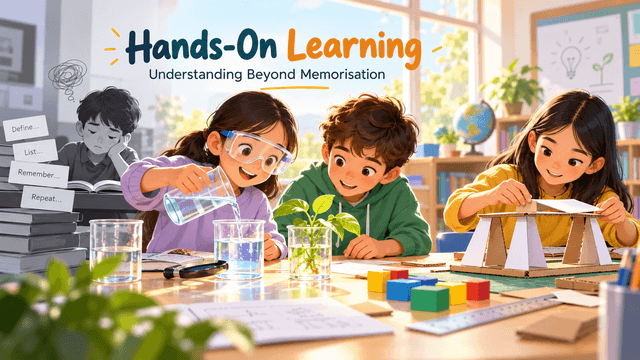
This can be done by engaging students through asking them questions, having debates,s and letting them figure out things for themselves. Instead of learning facts, students should be able to learn how to look at a problem, think of many solutions, and then choose the best one.
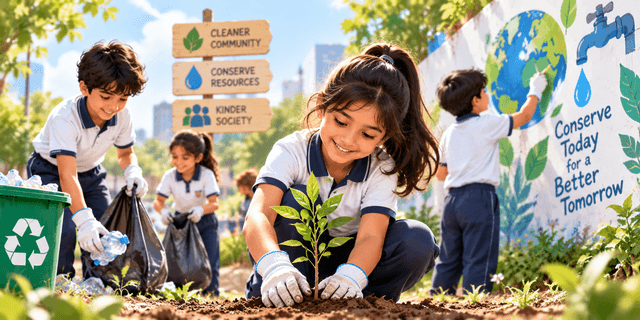
Instead of telling them about pollution and how bad it is, teachers should let them find it in their local area and figure out ways to get rid of it. In the end, the students will know more than just facts about pollution; they will be able to apply their own knowledge to the subject.
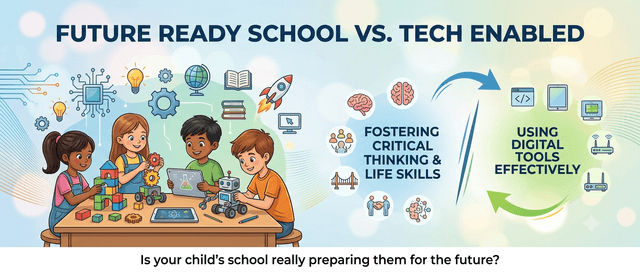
It is activities like these that will help children grow as critical thinkers, and as a result,t they will be better prepared for their future. Even though many things change, such as the technology used in science, the fundamental skills needed to understand it will stay the same.
Supporting Children in Problem-Solving and Creativity
Children need problem-solving and creative skills,s as the kinds of jobs that they will do in the future are likely to confront them with problems where there are no cookbook answers.
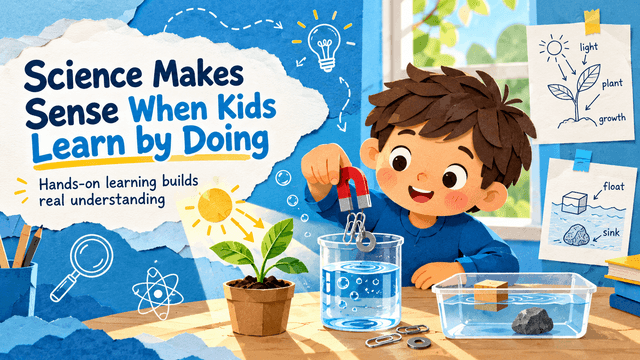
Students can discover many answers by doing projects, experiments, and group work in which they have a chance to try their ideas, determine the cause of the failure, and then improve it. In addition, students can learn that mistakes are a natural part of finding better answers.
Furthermore, students might be given the challenge of devising a simple rainwater harvesting system for their school; to fulfill their challenge, children should know how to collect rainwater, choose the materials they will use, and think about the reuse of the collected water.
One activity may involve science, maths, knowledge of the environment, and creative thought, and also, this may teach youngsters to think on top of problems.
If a school offers places for this, then children will walk into new experiences with a sense of curiosity rather than something that they want to be told the answer to immediately.
Building Skills That Remain Useful as Careers Change
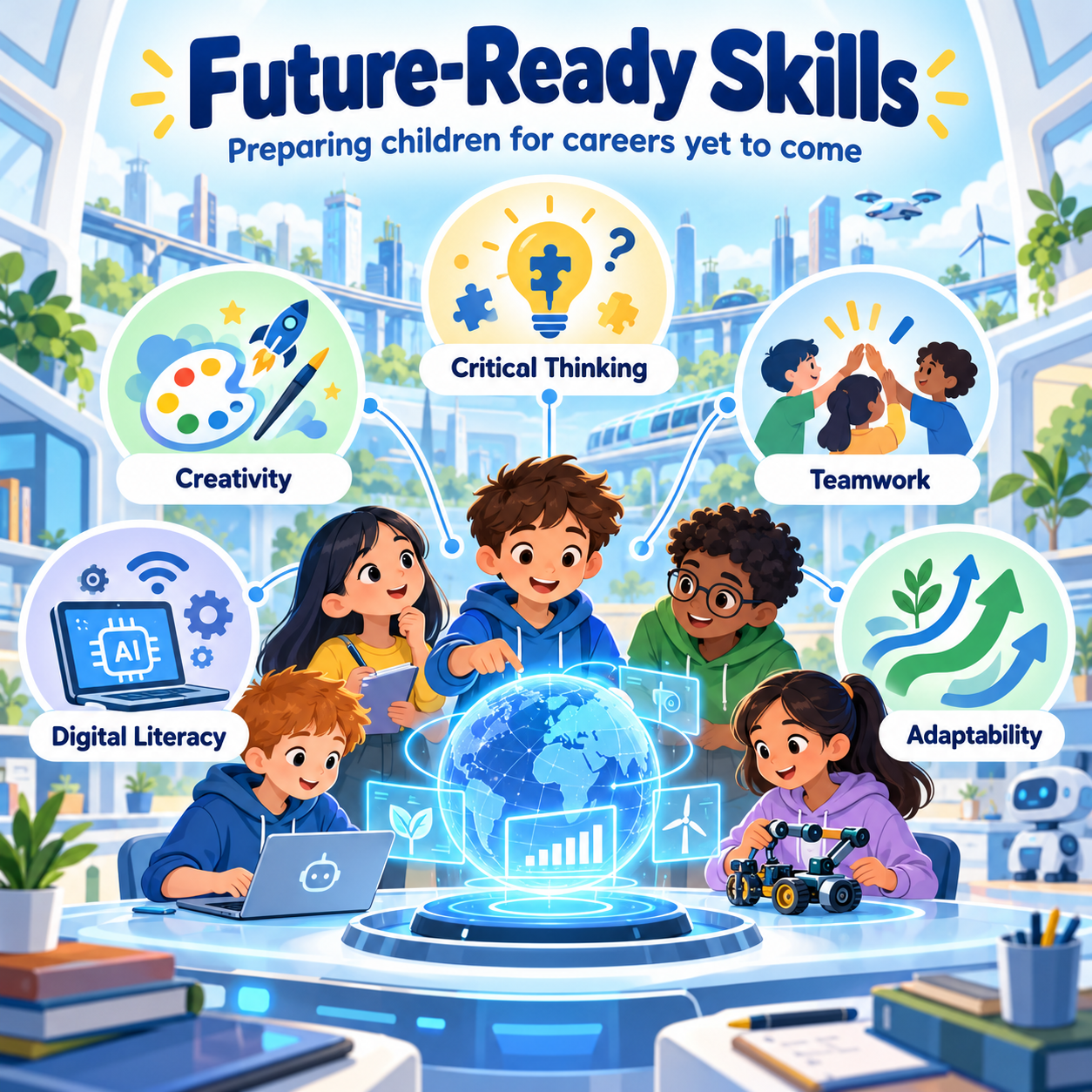
If we are to make our children ready for the future, we must do more than just teach them new technology. They will need certain personal and social skills that will help them cooperate and deal with a variety of scenarios.
Communication and Teamwork
For most jobs, employees are supposed to bring their ideas to the table, listen to others,s and work together to reach a shared goal. Children can begin to develop these skills by doing group work, participating in class discussions and debates, and giving presentations.
As they are working together, students learn how to split up the jobs, support each of the opinions they have, and compromise. Students also learn that different individuals can have alternative ways of solving these issues.
The skills gained in this manner will also assist children in adapting well to new teams and unfamiliar settings as they get older.
Digital Literacy and Ethical Technology Usage
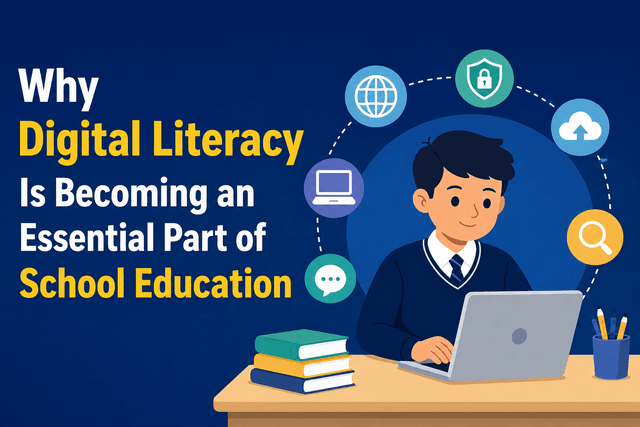
Technology will keep influencing how students learn and the world of work, so children need to learn how to find information, do projects and solve problems using digital technologies.
Having the skills to use a computer isn't enough; we need to learn how to verify facts, find dubious sources, safeguard our private information and realise that computers may sometimes be providing the wrong answers.
For instance, if kids are using a piece of AI during an assignment, they can verify information from it with real sources instead of accepting the answers one by one. This way, they can make use of the technology responsibly because they're also learning something for themselves.
Flexibility and Continuous Education
The skills needed for a job can evolve over time,e and children need to learn that when they leave school or college, they will still need to learn to keep up with changes in skills.
If schools could encourage children to explore unfamiliar areas and accept criticism and improve their work, children might learn to adapt if the situation changed, as they would be willing to try new things.
The application of it in many areas of profession is to seek out a new skill, learn a special apparatus, or take care of a problem in a brand new way.
Encouraging Children to Try New Things
Children usually do not know what they will want to do in the future, as they have little experience in different areas, and schools can assist them in this by enabling them to test out many interests.
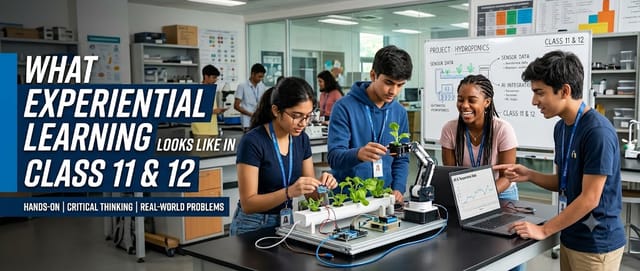
Through engagement inhands-onn activities in the fields of science, art, design, sports, community projects, and areas of technology, students will be able to explore what interests them and what they are good at. They will also be able to learn about types of jobs through career talks and interaction with professionals.
For example, a child who delights in designing posters for school events can develop an interest in visual communication, and a child who enjoys organising group activities can develop an interest in planning or leadership.
The purpose is not for children to decide too soon what job they want to do, but to enable them to understand their own interests and to keep their options open.
Also Read| Empowering Children Through Play: The Science Behind Play-Based Learning
How Manav Rachna International School Encourages Future-Ready Learning
At Manav Rachna International School in Sector 46, Gurugram, the attention given to future skills and cross-disciplinary topics meets the need to get children ready for the future. The many areas of learning offered – including the Maker Shala, Media Shala and Fashion Shala – enable children to have fun hands-on experiences, develop ideas and explore new ways of applying their knowledge.
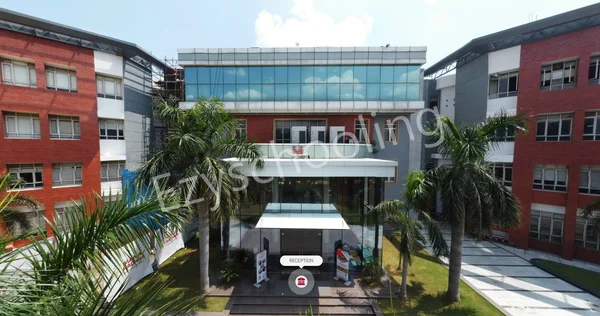
The school's CREST methodology places a focus on exploratory learning, reasoning and 21st-century skills. These planned learning activities can let children experiment with creativity and problem-solving and can help them hone their ability to work as a team while exploring their interests beyond the regular school-time lessons.
Getting Kids Ready for an Unknown Future
While no school will be able to predict what professions will develop in the next few years, schools can prepare children with the confidence and skills they will need to face new challenges.
Students are prepared for the changes in the world as they are being educated to think critically and analytically, to be creative, to work in groups, to use technology appropriately, and to pursue lifelong learning. Furthermore, when children are given the chance to pursue their personal interests and to use what they learn, they will discover their strengths.
The most effective approach to ready children for the future is to nurture their sense of curiosity, alertness, and adaptability - by honing their ability to learn - so that they thrive in a world of constant change.
For more information on similar schools, check out this list of the best schools in Gurugram.



 as a preferred source on