




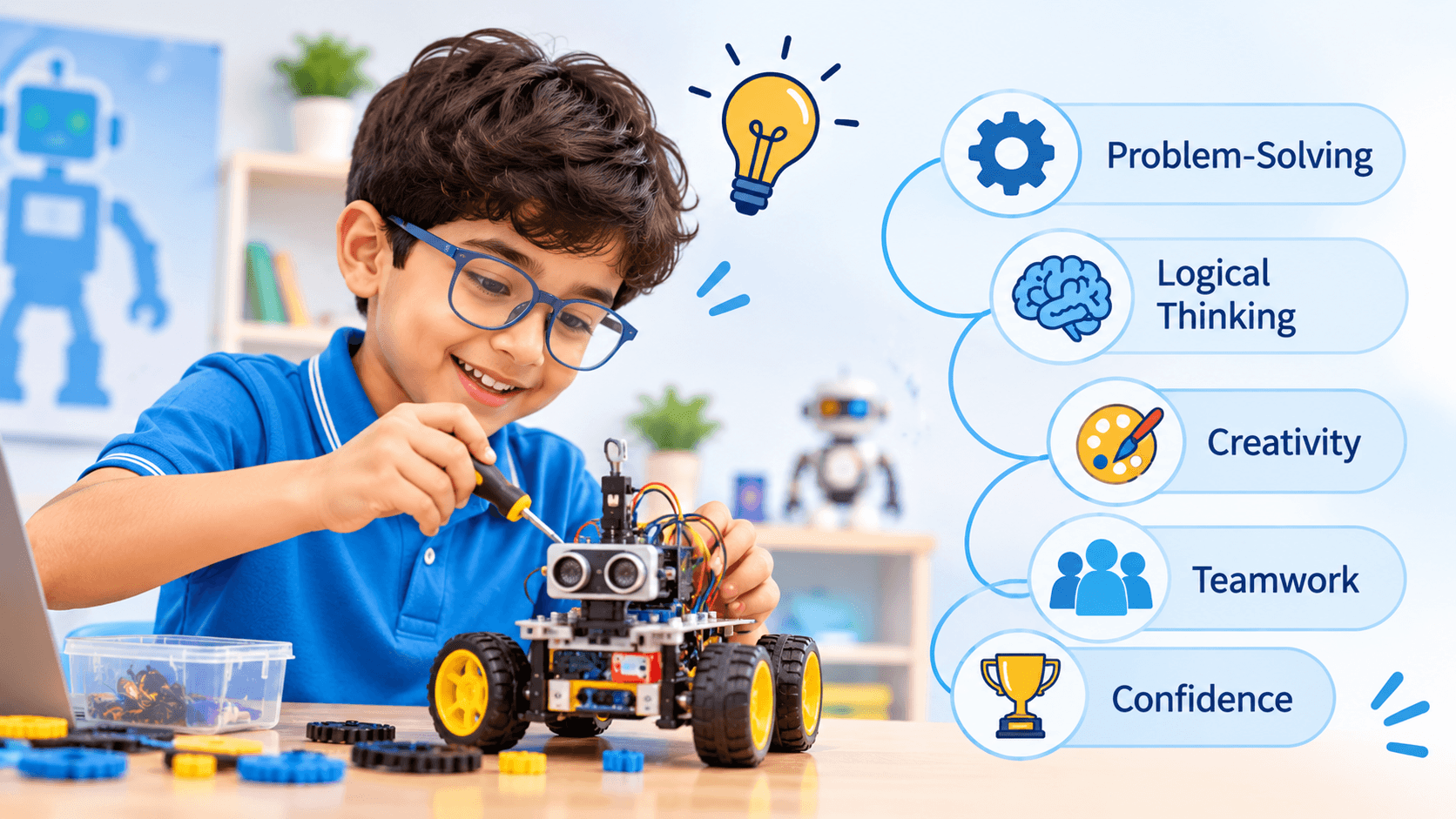

Imagine a child building a small robot that is supposed to move forward, turn around, and avoid obstacles. The robot starts moving but gets stuck halfway. Instead of giving up, the child checks the instructions, changes the code, and tries again. After a few attempts, the robot finally completes the task.
This simple activity teaches much more than how to operate a machine. It encourages children to think, observe, find mistakes, and look for solutions.
As technology becomes a bigger part of everyday life, children need skills that go beyond knowing how to use digital devices. Problem-solving, logical thinking, and creativity are equally important. Robotics activities offer an interesting way to develop these abilities through practical experiences.
For parents exploring the Best schools in Gurugram, understanding how activities like robotics contribute to children's learning can help them make informed educational choices.
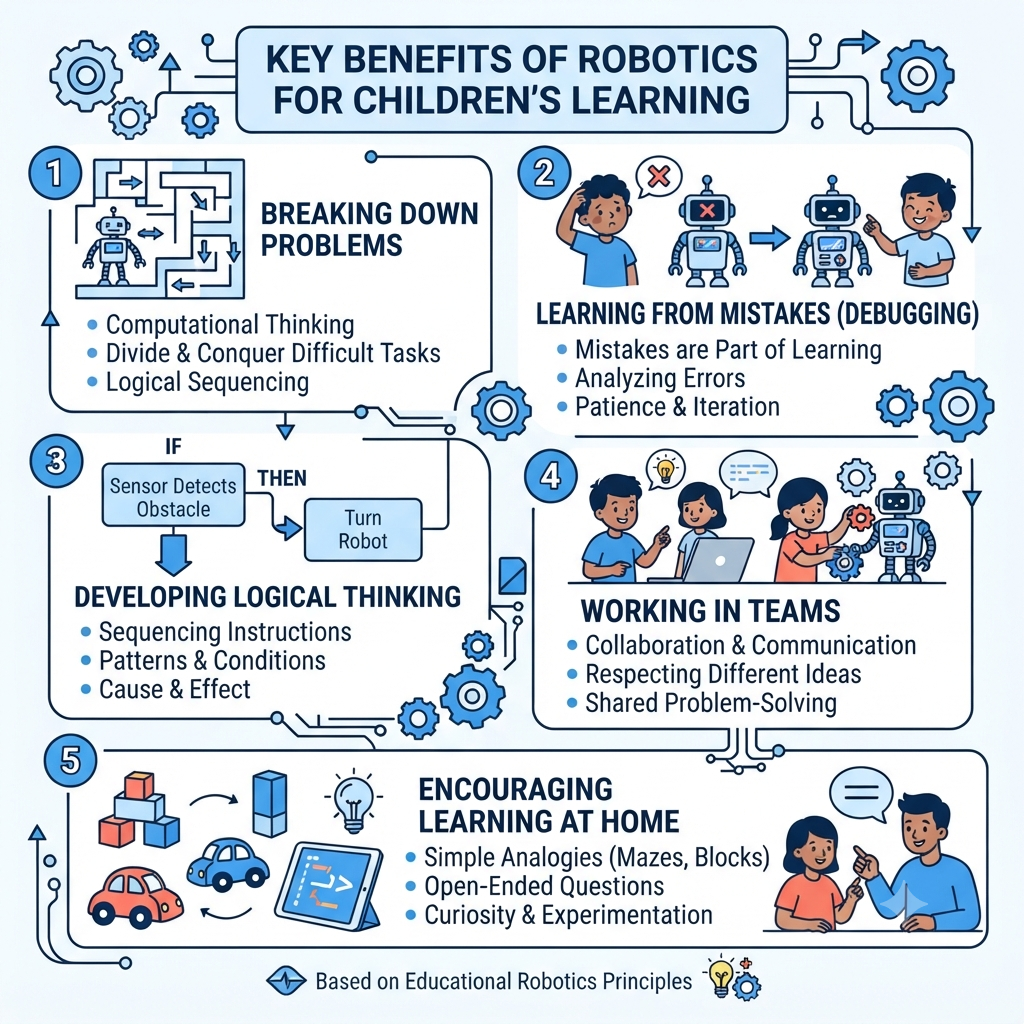
1. Robotics Teaches Children to Break Problems into Smaller Steps
One of the first things children learn through robotics is that a big problem can be solved by dividing it into smaller tasks.
For example, imagine that children have to build a robot that can move through a simple maze. They cannot expect the robot to find its way automatically. They need to decide how far it should move, when it should turn, and what it should do when it reaches an obstacle.
This process teaches them to:
- Understand the problem before finding a solution.
- Divide a difficult task into smaller steps.
- Arrange instructions in the correct order.
- Think about what might happen next.
This way of thinking is known as computational thinking. It helps children approach problems in an organised manner instead of trying random solutions.
These skills are useful beyond robotics. Children can apply the same approach while solving mathematics questions, completing science projects, or planning their daily activities.
2. Making Mistakes Helps Children Become Better Problem-Solvers
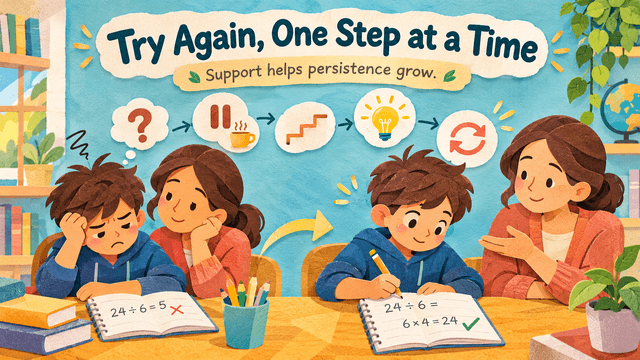
A robot may not work correctly on the first attempt. Sometimes, the motor may not respond, the wheels may move in the wrong direction, or the instructions may contain an error.
Instead of treating these mistakes as failures, robotics activities encourage children to understand what went wrong.
This process is called debugging. It involves finding an error, understanding its cause, and correcting it.
For example, if a robot turns left instead of right, children need to check the instructions and identify where they made a mistake. They can then change the command and test the robot again.
Through this process, children learn that:
- Mistakes are a natural part of learning.
- Every problem has different possible solutions.
- Careful observation is important.
- Trying again can lead to better results.
A 2024 meta-analysis published in Computers & Education examined research on computational thinking and children's cognitive skills. It found positive effects of coding activities on problem-solving, planning, and other thinking skills.
Such experiences can also help children become more patient when facing difficult academic tasks. Rather than immediately asking for answers, they begin to think about what they can try next.
3. Robotics Makes Logical Thinking Easier to Understand
Logical thinking means understanding how one action leads to another. Children use this skill when they make decisions, identify patterns, and understand relationships between different things.
Robotics provides a practical way to understand these ideas.
For instance, children may programme a robot to move forward when a particular condition is met or stop when it detects an obstacle. They need to understand what instruction should come first and what should happen next.
Some common concepts children explore through robotics include:
Sequencing: Arranging instructions in the correct order so that the robot performs the required task.
Patterns: Recognising repeated actions and understanding how they can be used in programming.
Conditions: Giving instructions based on a particular situation, such as stopping when an obstacle is detected.
Cause and effect: Understanding how changing one instruction can affect the robot's movement.
A systematic review published in TechTrends examined 22 studies on educational robotics involving young learners. It identified sequencing, conditions, loops, debugging, and algorithmic thinking among the commonly studied computational thinking skills.
These concepts may sound technical, but children understand them through simple activities. They learn by giving instructions, observing results, and making changes.
4. Working in Teams Encourages Children to Think Differently
Robotics activities are not always individual tasks. Many projects involve children working in small groups to build and programme a robot.
One child may work on assembling the parts, another may prepare the instructions, while others observe the robot and suggest changes.
During this process, children learn to listen to different ideas and explain their own thinking. They may not always agree on the best solution, which encourages them to discuss their choices and consider other possibilities.
Group activities also help children understand that the same problem can have more than one solution.
For example, two groups may build different robots to complete the same task. Both designs may work, even though their methods are different.
This teaches children to respect different approaches, share responsibilities and work towards a common goal.
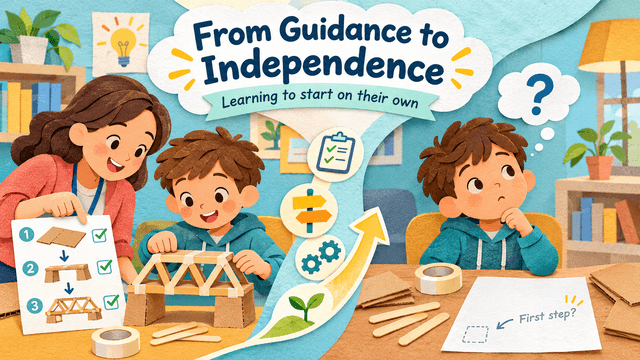
Parents can encourage similar thinking at home through building blocks, simple puzzles, board games, and small construction activities. Children do not always need advanced equipment to practise problem-solving.
5. How Parents Can Encourage Robotics-Based Learning at Home
Parents do not need to purchase expensive robotic kits to introduce children to logical thinking. Simple activities can help them understand the basic ideas behind robotics.
Here are a few ways to begin:
- Create a simple maze: Ask children to guide a toy car through a maze by giving step-by-step directions.
- Build with blocks: Encourage them to construct a bridge or tower that can support a small object.
- Try basic coding games: Use age-appropriate activities that introduce instructions, patterns, and sequencing.
- Ask open-ended questions: Instead of answering, ask, "What do you think went wrong?" or "What could we change?"
- Encourage experimentation: Allow children to test different ideas instead of expecting everything to work the first time perfectly.
The main purpose is to make children curious about how things work. The learning process matters more than creating a perfect robot.
How Robotics Learning Connects with Presidium School, Sector 57, Gurugram
For parents considering the Top schools in Gurugram, it is useful to understand how schools introduce practical learning opportunities alongside classroom education. Presidium School, Sector 57, Gurgaon, has a dedicated robotics lab where students participate in hands-on learning sessions and experimental challenges. According to the school's official website, these activities aim to strengthen children's understanding of science, technology, and mathematics while encouraging creativity, innovation, and teamwork. Such opportunities connect classroom concepts with practical experiences and give children a chance to explore how ideas work in real situations.

Conclusion
Robotics is not simply about building machines or learning to programme. It gives children opportunities to think independently, solve problems, understand mistakes and explore different solutions.
These experiences can help develop logical thinking, patience, creativity and teamwork. Parents should remember that children do not need to become engineers to benefit from robotics. The real value lies in learning how to think, experiment, and find answers.
When children are encouraged to ask questions and explore possibilities, they develop skills that can support them in school and throughout life.
For more information on similar schools, check out this list of the best schools in Gurugram.









 as a preferred source on