




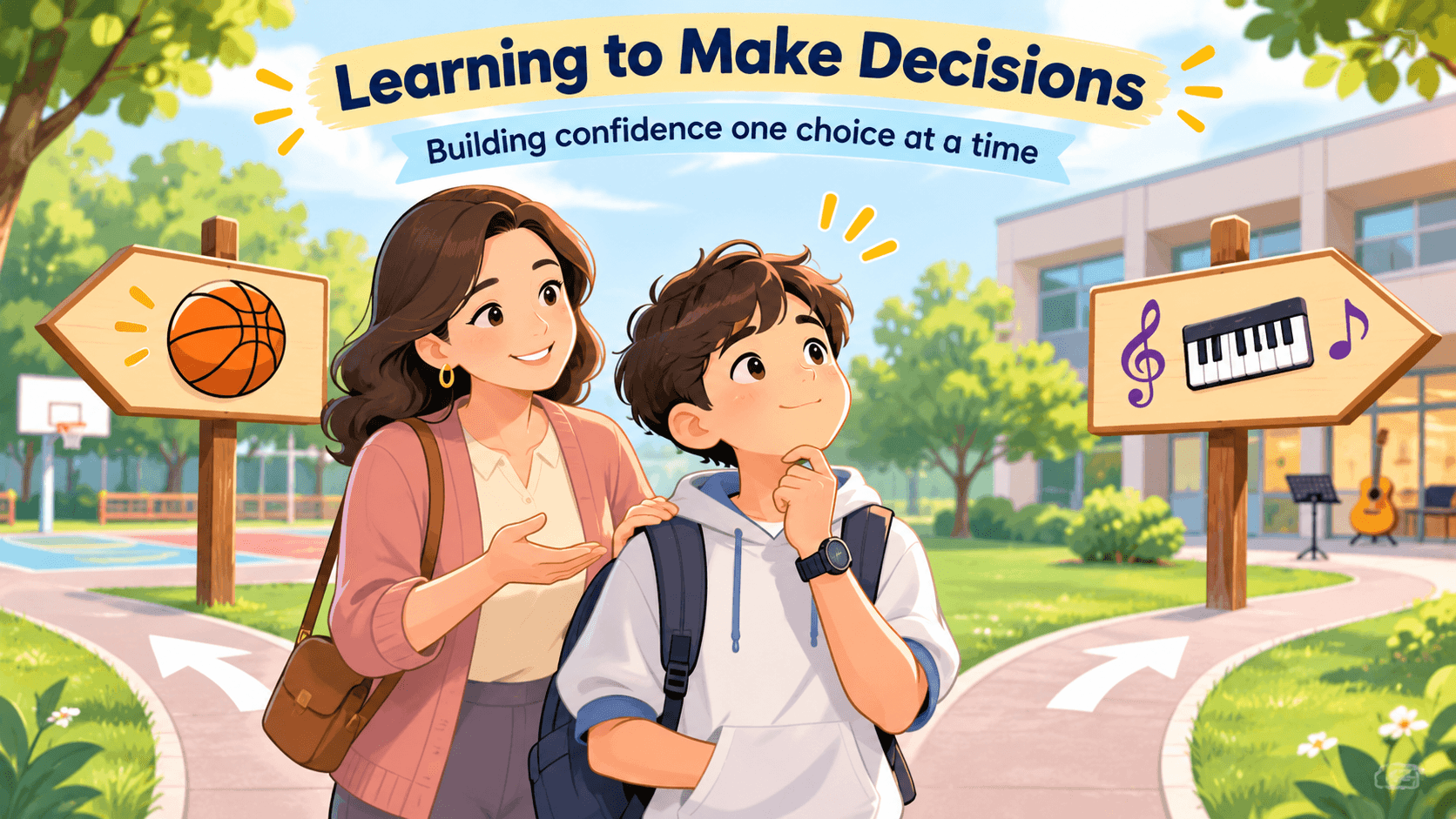

Your 12-year-old needs to choose between joining the school basketball team and attending music classes. Both sound interesting, but instead of deciding, they keep asking, "Mumma, what should I do? You tell me."
Even after discussing the options, they seem uncomfortable making the final choice.
For parents exploring Top Boarding schools in India, this hesitation can raise an important concern: Will my child be able to manage everyday decisions when I'm not around?
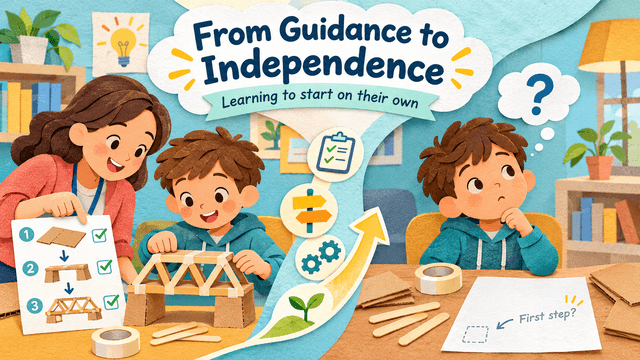
Children don't automatically become independent as they grow older. Decision-making is a skill they develop through practice, guidance, and opportunities to make their own choices.
Why Do Some Children Depend on Their Parents for Every Decision?
Some children can explain their options perfectly but still hesitate to choose. This doesn't necessarily mean they lack ability. Several factors may influence their confidence.
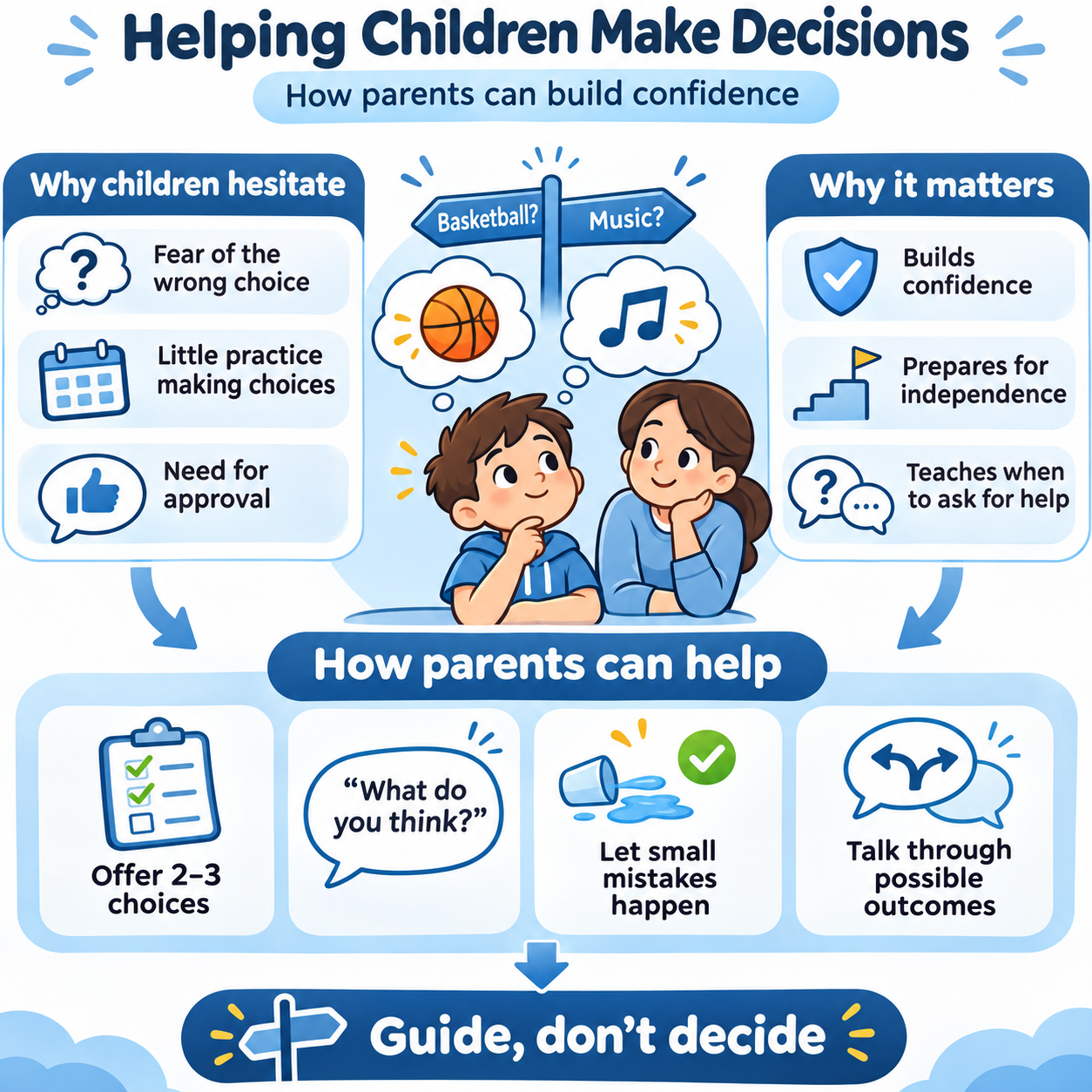
1. They worry about making the wrong choice.
A child might avoid deciding because they fear criticism or disappointing their parents.
Imagine a child choosing a topic for a school project. Instead of selecting something interesting, they repeatedly ask which topic their parents think will score better.
Their concern may be less about the project and more about avoiding mistakes.
2. They have limited experience making choices.
Parents often make decisions to save time or prevent problems. They select activities, organise schedules, and decide how children should complete their work.
Although well-intentioned, doing this too often can leave children with fewer opportunities to practise independent thinking.
3. They become accustomed to seeking approval.
When children regularly receive instructions, they may begin looking for confirmation before acting.
UNICEF's parenting guidance encourages adults to respect adolescents' growing independence by allowing age-appropriate choices while continuing to provide support.
The goal isn't to stop helping children. It's to help them gradually trust their judgement.
How Does Making Small Decisions Help Children Build Confidence?
Confidence doesn't always come before making decisions. Sometimes, children develop confidence by making manageable choices and discovering what happens afterward.
Consider a child who struggles to organise their evening.
Instead of preparing the entire schedule, a parent could ask, "Would you prefer finishing your homework before playing or taking a short break first?"
Both options are reasonable. The child gets to choose while understanding that homework still needs to be completed.
Over time, parents can encourage children to plan the schedule themselves.
A 2026 study published in Child Development, involving 286 Dutch adolescents, found that perceived parental support was associated with stronger experiences of autonomy.
The findings suggest that supportive relationships and growing independence can coexist, although the study does not prove that parental support directly causes better decision-making.
Children need neither complete freedom nor constant instructions. They benefit from choices that match their age, experience, and abilities.
What Can Parents Do to Help Children Make Decisions Independently?
Parents can encourage independent thinking through ordinary situations rather than waiting for major decisions.
1. Begin with two or three choices.
Too many options can feel overwhelming. Start with manageable decisions, such as selecting a weekend activity or deciding which subject to revise first.
Gradually allow children to consider more possibilities.
2. Ask questions instead of giving answers immediately.
When your child asks, "What should I do?", try responding with, "Which option do you prefer, and why?"
This encourages them to explain their reasoning rather than simply follow instructions.
3. Allow small mistakes without immediate criticism.
Suppose your child spends their pocket money on something they later regret.
Instead of saying, "I told you so," ask what they might do differently next time.
Safe mistakes can become opportunities to understand consequences.
4. Practise thinking through possible outcomes.
UNICEF's Adolescent Kit includes a decision-making activity where young people explore a situation, consider three possible choices, and examine their consequences.
Parents can try a simpler version at home.
For example, if a child cannot decide whether to join a school club, discuss what they might enjoy, what commitments it requires, and whether it fits their schedule.
Remember that independence doesn't mean children must handle everything alone. Decisions involving safety, health, bullying, or serious emotional concerns require appropriate adult support.
Why Does Independent Decision-Making Matter Before Boarding School?
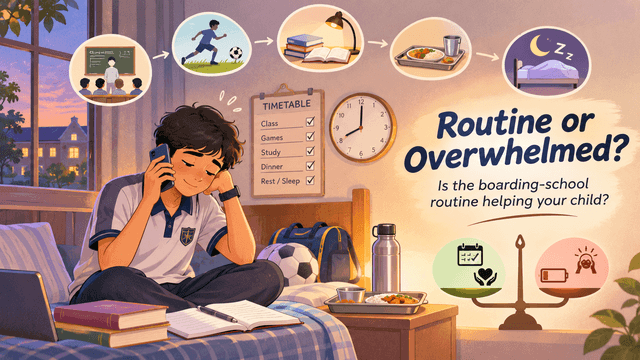
Boarding school introduces everyday situations where children may need to make choices without immediate parental involvement.
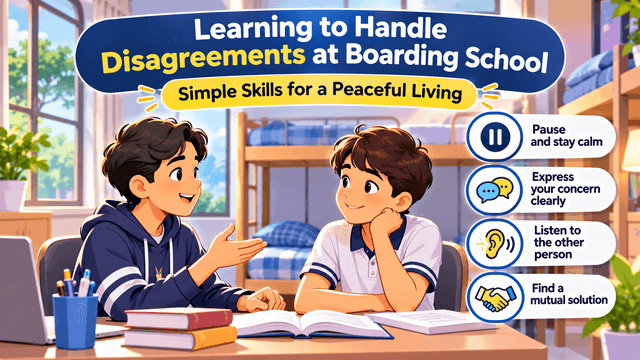
They might need to organise their belongings, manage study time, select activities, or decide how to respond to minor disagreements.
Children who have practised making such decisions at home may feel more prepared to handle these responsibilities.
However, independence also involves recognising personal limits.
A child who can organise their study schedule but knows when to approach a teacher or hostel staff member for help is demonstrating responsible judgement.
Parents can prepare children by discussing realistic situations before they begin residential schooling.
Understanding Independence in a Residential School Environment
MVM School - Doddaballapura, Doddaballapura, Bangalore describes independence, responsibility, and time management as important aims of its residential programme. Its official website also discusses dorm-parent guidance and counselling support. For families comparing the Best Boarding schools in india, such information can help them ask how schools balance student responsibility with adult supervision. Developing independence, however, remains a gradual process shaped by each child's needs, experiences, and support system.

Conclusion
Children who struggle to make decisions don't necessarily need less parental support. They may need more opportunities to practise choosing for themselves.
Start with one small decision each day. Listen to their reasoning, allow manageable mistakes, and offer guidance when needed.
The aim isn't to raise children who never ask for help, but children who know when to decide independently and when to seek support.
For more information on this and similar schools, check out this list of the best boarding schools in India.






 as a preferred source on