




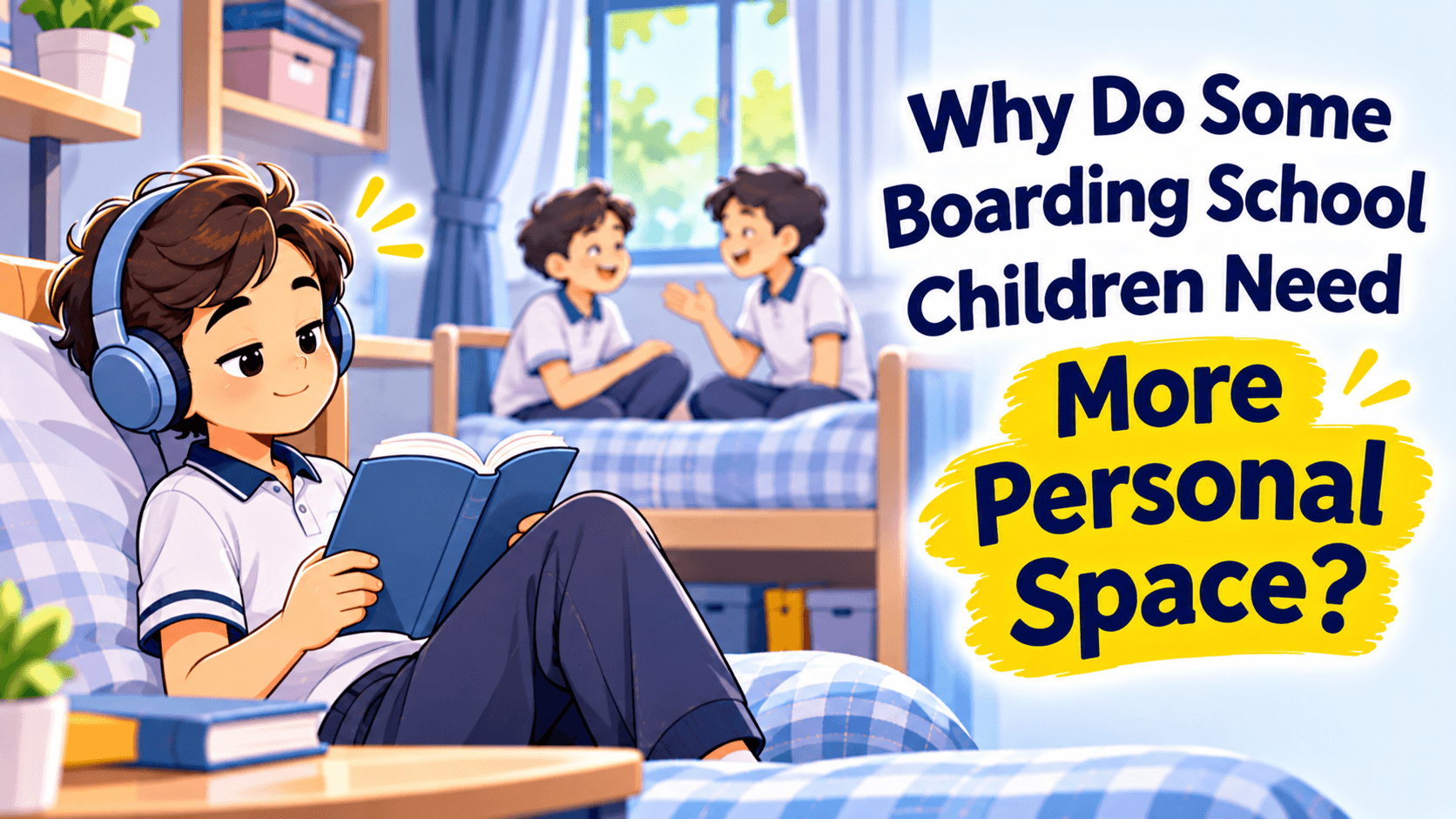

Imagine your child calling from boarding school and saying, "I like my friends, but sometimes I just want to be alone."
You may find this surprising. After all, boarding schools offer opportunities to make friends, participate in activities, and develop independence.
However, living with other students means sharing bedrooms, study areas, dining spaces, and much of the daily routine.
While some children enjoy constant companionship, others may occasionally feel overwhelmed.
Understanding why children need personal space can help parents recognise the difference between normal privacy needs and difficulties adjusting to residential life.
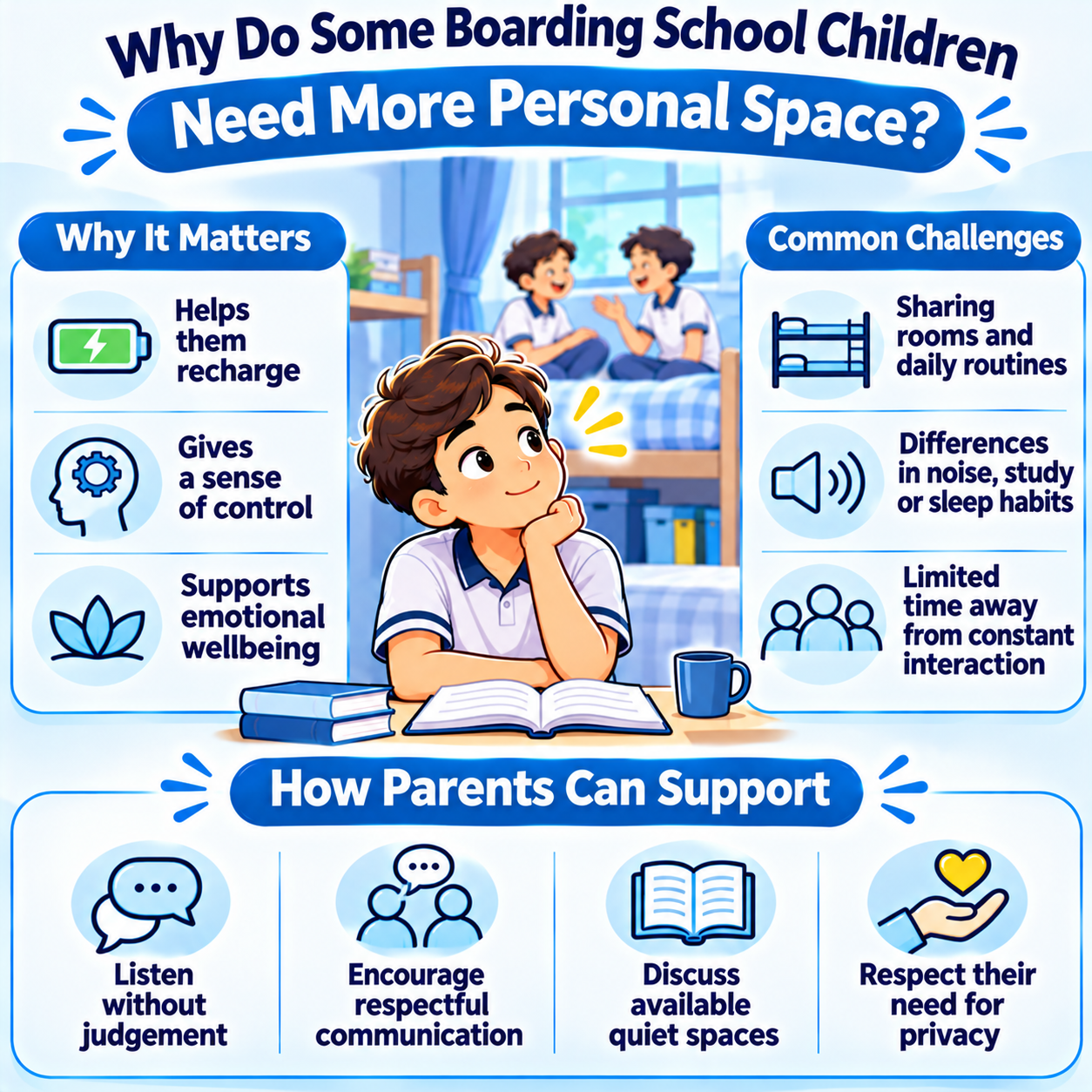
Why Does Personal Space Matter to Boarding School Children?
Personal space is not simply about having a separate bedroom. It also involves feeling comfortable, having boundaries, and occasionally choosing to spend time alone.
1. Children Need Time Away From Social Interaction
At boarding school, children may spend almost their entire day around classmates.
They attend lessons together, participate in activities, eat meals, and share residential spaces.
Even enjoyable interactions can become tiring when children have limited opportunities to relax independently.
A 2024 study published in Children's Geographies explored how children and teenagers experience time alone. Researchers identified privacy, personal control, ownership, and restoration as important reasons children seek private spaces.
Although this research examined family homes, its findings help explain why children may value similar opportunities in residential environments.
2. Sharing Spaces Can Reduce Personal Control
Imagine a child who wants to read quietly while their roommate prefers talking.
Neither child is necessarily behaving badly, but their needs differ.
Repeated disagreements over lighting, noise, belongings, or sleeping schedules can make shared accommodation uncomfortable.
A child may begin feeling that they have little control over their surroundings.
3. Privacy Needs Change With Age
Younger children may enjoy spending extended periods with friends, while adolescents often develop stronger preferences for independence and privacy.
However, these differences are not universal. Temperament, experiences, and individual needs also matter.
Can Limited Personal Space Affect Children's Emotional Wellbeing?
A lack of privacy does not automatically cause emotional problems.
However, feeling unable to withdraw from constant interaction may contribute to frustration, tiredness, or conflict.
A 2023 study published in the British Journal of Educational Psychology examined sleep among boarding and day-school students.
Its qualitative findings suggested that roommates could help children overcome homesickness, while older students sometimes preferred separate rooms for greater independence, quieter studying, and more control over bedtime.
This shows that shared accommodation can offer social benefits while presenting practical challenges.
Parents might notice their child complaining about noise, becoming irritated with roommates, or saying they never get time to themselves.
These concerns deserve attention, but they should not immediately be interpreted as signs that boarding school is unsuitable.
The important question is whether children can manage their needs safely and receive support when difficulties continue.
How Can Children Maintain Personal Boundaries While Sharing Rooms?
Learning to live with others involves cooperation, compromise, and respect.
Children can practise these skills without giving up their need for personal space.
Respecting Personal Belongings
Roommates should understand that sharing accommodation does not mean sharing everything.
Children can learn to ask permission before borrowing clothes, stationery, or other belongings.
Communicating Preferences Clearly
Instead of remaining silent until they become frustrated, children can practise simple statements such as:
- "Can we keep the noise down while studying?"
- "Please ask before using my things."
- "I'd like some quiet time after today's activities."
Such conversations encourage respectful communication without unnecessary arguments.
Finding Appropriate Quiet Spaces
Depending on school rules, children might use supervised reading areas, libraries, or designated recreational spaces when they need a quieter environment.
Parents should encourage children to ask residential staff which areas are available rather than assuming they can leave shared spaces whenever they wish.
Understanding Other People's Needs
Personal boundaries work both ways.
Children should recognise that roommates may also need privacy, rest, or uninterrupted study time.
Respecting these differences helps students develop healthier shared-living habits.
How Can Parents Support a Child Who Wants More Personal Space?
When children complain about having no privacy, parents should listen before offering solutions.
Avoid dismissing the concern by saying, "You should be happy you're surrounded by friends."
Instead, ask what specifically makes them uncomfortable.
Is the room noisy? Are belongings being used without permission? Do they struggle to find quiet study time?
Identifying the problem helps determine an appropriate response.
Parents can also:
- Encourage children to communicate respectfully with roommates.
- Discuss manageable changes with residential staff when necessary.
- Ask whether supervised quiet spaces are available.
- Respect their child's need for privacy during family conversations.
If the situation involves bullying, repeated boundary violations, unsafe behaviour, or persistent distress, parents should contact the school's responsible staff promptly.
The goal is not to remove every inconvenience from boarding life. It is to ensure children feel respected, supported, and able to seek help.
Understanding Privacy and Shared Living at Treamis School
For parents exploring Top Boarding schools in India, residential arrangements and student privacy deserve attention alongside academic facilities. Treamis School(TIS), Bangalore offers weekly and full-time boarding, with separate residential buildings for boys and girls. Its official website describes residence halls intended for studying, socialising, and relaxation, supported by full-time residential staff. Parents comparing the Best Boarding schools in India can ask about room-sharing arrangements, quiet study areas, personal belongings, and how staff respond when students need additional privacy.

Conclusion
Children can enjoy boarding school friendships while still needing occasional time alone.
Personal space helps them manage shared living arrangements, express preferences, and develop healthy boundaries.
Parents can support this adjustment by listening carefully, encouraging respectful communication, and working with residential staff when necessary.
Ultimately, successful boarding life is not about spending every moment with others. It is about learning when to connect, when to compromise, and when to ask for space.
For more information on this and similar schools, check out this list of the best boarding schools in India.



 as a preferred source on