





Your child brings home a report card full of good marks. You congratulate them, expecting a smile. Instead, they say, "I hate going to school." If they are doing well in class, what could be wrong?
Good grades show how a child performed in assessments, not necessarily how they feel during the school day. A child can finish homework, answer questions correctly, and still feel anxious, lonely, or exhausted. Parents can use this complaint to understand what school feels like from their child's point of view.
Why Good Grades Don't Always Mean a Child Is Happy
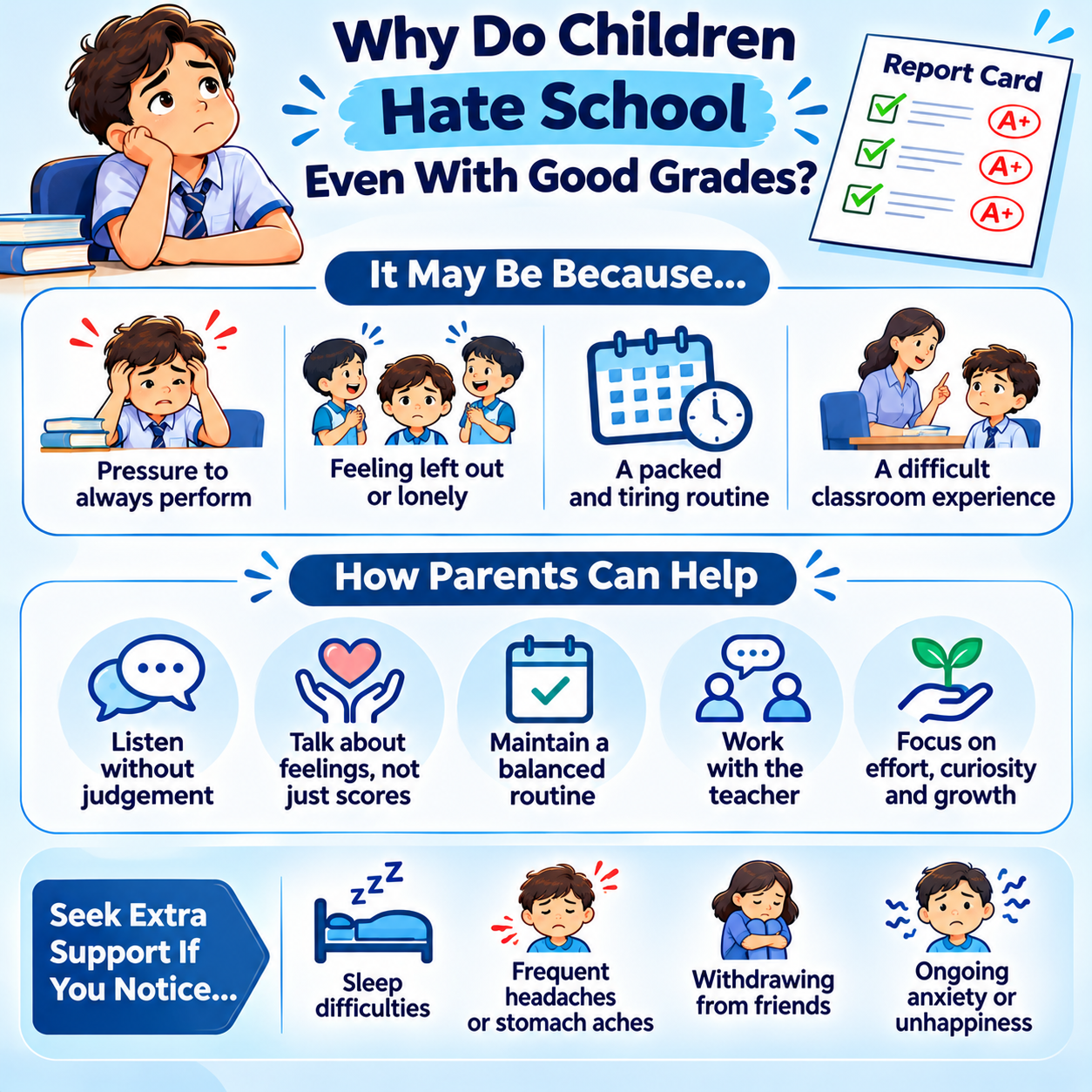
Academic Success Can Hide Pressure
Some children earn high marks because they enjoy learning. Others work hard mainly because they fear disappointing adults or losing their position in class. For them, even a small mistake can feel like failure.
Imagine a student who scores 92 out of 100 but worries all evening about the eight lost marks. Learning may still feel stressful.
Parents can notice this by listening to how children discuss results. Do they talk about interesting ideas, or only about ranks and mistakes? Praise effort, curiosity, and improvement rather than making every conversation about scores. Remind children that one test does not define their ability.
Friendships Can Affect the Entire School Day
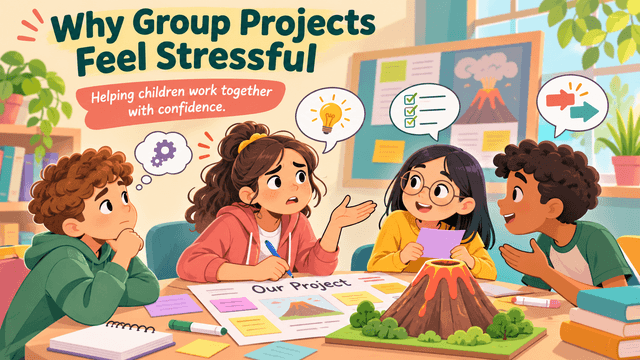
A child may do well in lessons but feel ignored during lunch, left out of games, or uncomfortable around classmates. They may hesitate to tell parents because they fear being judged or having adults intervene immediately.
The US Centers for Disease Control and Prevention (CDC) describes school connectedness as feeling cared for, valued, and supported by adults and peers. Its research summaries associate stronger school connectedness with better emotional wellbeing and educational outcomes.
Ask about break time, group work, and who your child feels comfortable approaching.
What Else Can Make School Feel Difficult?
A Packed Routine Can Leave Little Breathing Room
Classes, tuition, homework, tests, travel, and extracurricular activities can fill a child's day. Even enjoyable activities may become tiring when there is no time to rest or play freely.
Notice whether your child has enough sleep, unstructured play, and opportunities to relax. If evenings are consistently rushed, consider reducing optional commitments.
A Difficult Classroom Experience May Go Unnoticed
Children sometimes dislike school because they feel embarrassed when answering questions, struggle with a particular teacher's communication style, or worry about being corrected publicly. This does not automatically mean a teacher has behaved wrongly; the child's experience still deserves attention.
Instead of immediately deciding who is responsible, ask for a specific example: "What happened before you started feeling that way?" Then discuss the concern calmly with the class teacher if needed.
How Should Parents Respond When a Child Says They Hate School?
Start by Listening, Not Correcting
Avoid responding with "But your marks are excellent" or "Other children would love your school." Such replies can make children feel that their emotions are unimportant.
Try saying, "That sounds difficult. What is the hardest part of your day?" If your child cannot explain immediately, let them know you are ready to listen later.
Look for Patterns and Work With the School
Keep track of when the complaints happen. Are they strongest before Monday mornings, after particular classes, or around examinations? Patterns can help distinguish occasional frustration from an ongoing concern.
Share observations with a teacher and ask what they notice in class and during breaks. Discuss a small, realistic support plan, then check whether the situation improves.
When Is It More Than an Ordinary Bad Day?
Disliking school occasionally is common. Repeated school refusal, frequent stomach aches or headaches, changes in sleep, withdrawal from friends, or strong anxiety deserve closer attention.
CBSE guidance on student mental health identifies school refusal and physical complaints as possible signs of distress. NCERT also advises adults to take persistent emotional and behavioural changes seriously.
If these signs continue, affect daily functioning, or become severe, consult a qualified child mental health professional. If your child mentions bullying or feeling unsafe, contact the school promptly and prioritise their safety. Good marks should never be used as a reason to delay support.
Looking Beyond Marks When Choosing a School
Parents comparing the Best Schools in Greater Noida may find it useful to ask how a school responds when a high-performing student feels unhappy. Sheoran International School(SIS), Omega I, Greater Noida states on its official website that it aims to provide a stress-free learning environment where children can ask questions and learn from mistakes. This is a stated educational approach, not evidence of any particular student's experience. Families considering the Top Schools in Greater Noida can ask about teacher communication, student support, and how concerns are handled in practice.

Conclusion
When a child says they hate school despite earning good grades, the response should be curiosity rather than disbelief. Look beyond report cards, listen for concerns about pressure or belonging, and work with teachers when necessary. Children need more than academic success: they need to feel safe, supported, and comfortable being themselves at school.
To know more about other schools in Greater Noida, click on the link below









 as a preferred source on