




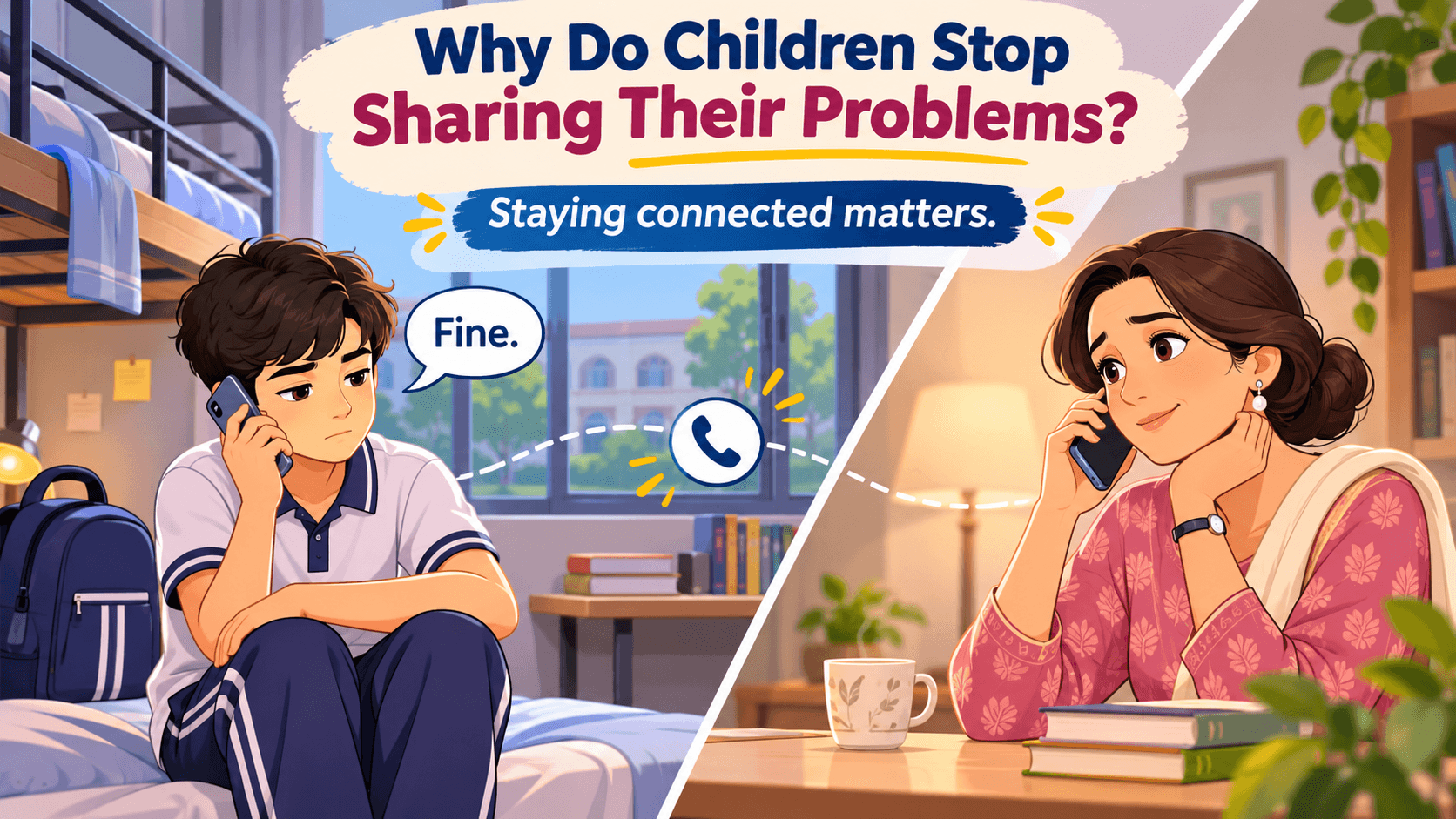

During a call home, your child answers every question with "Fine." They used to tell you about friends, teachers, and even small arguments. Now, after joining boarding school, they seem to have little to say. Should you be worried?
Parents exploring Top Boarding schools in India, including Manchester Global School, Hyderabad, may wonder how they will stay connected when their child lives away from home. Short conversations do not necessarily mean something is wrong. Understanding why children become less open can help parents respond thoughtfully.
Why Do Some Children Become Less Open About Their Problems?
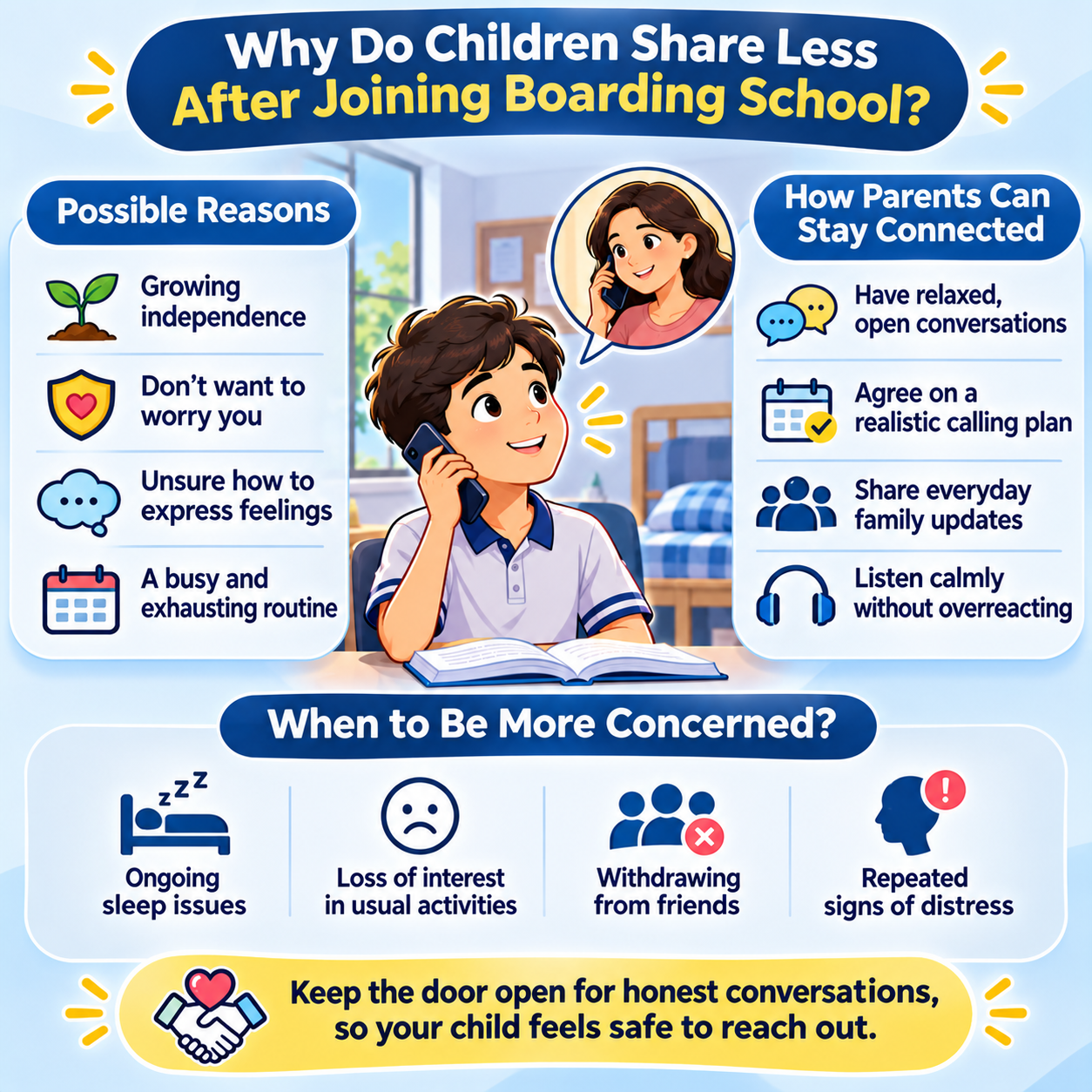
As children grow, they want more control over their personal lives. They may prefer handling a small disagreement themselves rather than explaining every detail to their parents. This can be a normal part of growing independence.
Other children stay quiet because they worry about their parents' reactions. Imagine a student who argues with a friend during lunch. If they expect a parent to call the school immediately, they might decide not to mention the disagreement at all.
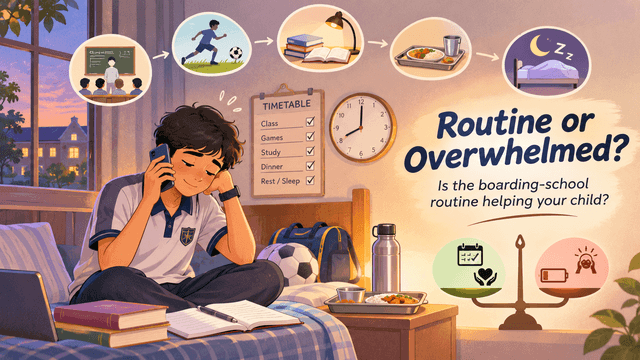
Some children also avoid sharing problems because they do not want their families to worry. Others cannot yet explain what they are feeling. A busy day filled with classes, activities, and new friendships may leave them tired when it is time to call.
UNICEF India encourages parents to respect adolescents' growing independence while making it clear that support remains available. The important question is not simply how much a child talks, but whether they feel safe asking for help when something matters.
How Can Parents Encourage Children to Talk Without Constant Questioning?
A call that feels like an interview can make children withdraw. Questions about marks, meals, homework, friends, and behaviour, asked one after another, may leave little space for a natural conversation.
Try beginning with something ordinary: "I tried making your favourite snack today, but it didn't turn out quite right." Then give your child a chance to share something from their week.
Specific, open questions often work better than repeatedly asking, "Is everything fine?" You might ask, "What made you laugh this week?" or "Was there anything you found difficult?" If your child gives a short answer, do not demand a longer one immediately.
When they do share a problem, listen before offering advice. If they describe a friendship disagreement, avoid deciding straightaway who was wrong. Ask, "What happened next?" and "Do you want me to listen, or would you like help thinking of a solution?"
The American Academy of Pediatrics advises parents not to overreact or turn every difficult conversation into a lecture. A calm response today makes it easier for a child to approach you again tomorrow.
How Can Parents Maintain an Emotional Connection From a Distance?
Staying close does not require long conversations every day. What helps is creating dependable opportunities for connection that fit the school's communication rules and your child's routine.
Agree on a realistic calling schedule, but allow some flexibility. A child might be excited to speak after a sports event and quieter during an exhausting exam week. Neither response tells the whole story.
Share ordinary family news too. Tell them about a sibling's funny comment, a neighbour's new puppy, or something you cooked. Conversations should remind children that they belong to family life, not just that someone is checking on their performance.
You can also agree on a simple phrase your child can use when they need a private or serious conversation. Make sure they know which trusted adult at school they can approach when a call home is not possible.
The CDC recommends regular conversations, active listening, and patience. Trust is built through many small exchanges, not through forcing a child to disclose everything at once.
When Should Parents Be Concerned About a Child's Silence?
A child wanting privacy is different from a child who seems persistently distressed. Pay attention to patterns rather than one unusually quiet phone call.
Repeated reports of poor sleep, unexplained fear, loss of interest in activities, withdrawal from friends, or strong reluctance to return to school deserve a closer conversation. Ask gently what has changed, and listen without assuming the cause.
If your concern continues, contact the appropriate teacher, house parent, or counsellor and discuss specific observations. Significant or lasting distress may require advice from a qualified mental-health professional.
If a child reports bullying, abuse, threats, or immediate danger, act promptly to protect them. Respecting privacy never means leaving a child to manage unsafe situations alone.
Communication and Support at Manchester Global School, Hyderabad
Families comparing the Best Boarding schools in india may also want to understand how children can reach trusted adults on campus. Manchester Global School, Hyderabad describes house parents and floor mentors as part of its residential arrangements. Its official boarding information also refers to counselling support. These published provisions are relevant questions for parents to explore, although they do not establish how often students use these services or how effective they are.

Conclusion
Children may share fewer details as they become more independent, but they should never feel that difficult problems must be faced alone. Parents can help by asking thoughtful questions, listening calmly, and staying available without demanding constant updates. The aim is not to know every detail of boarding-school life. It is to remain someone your child trusts when they truly need support.
For more information on this and similar schools, check out this list of the best boarding schools in India.






 as a preferred source on