




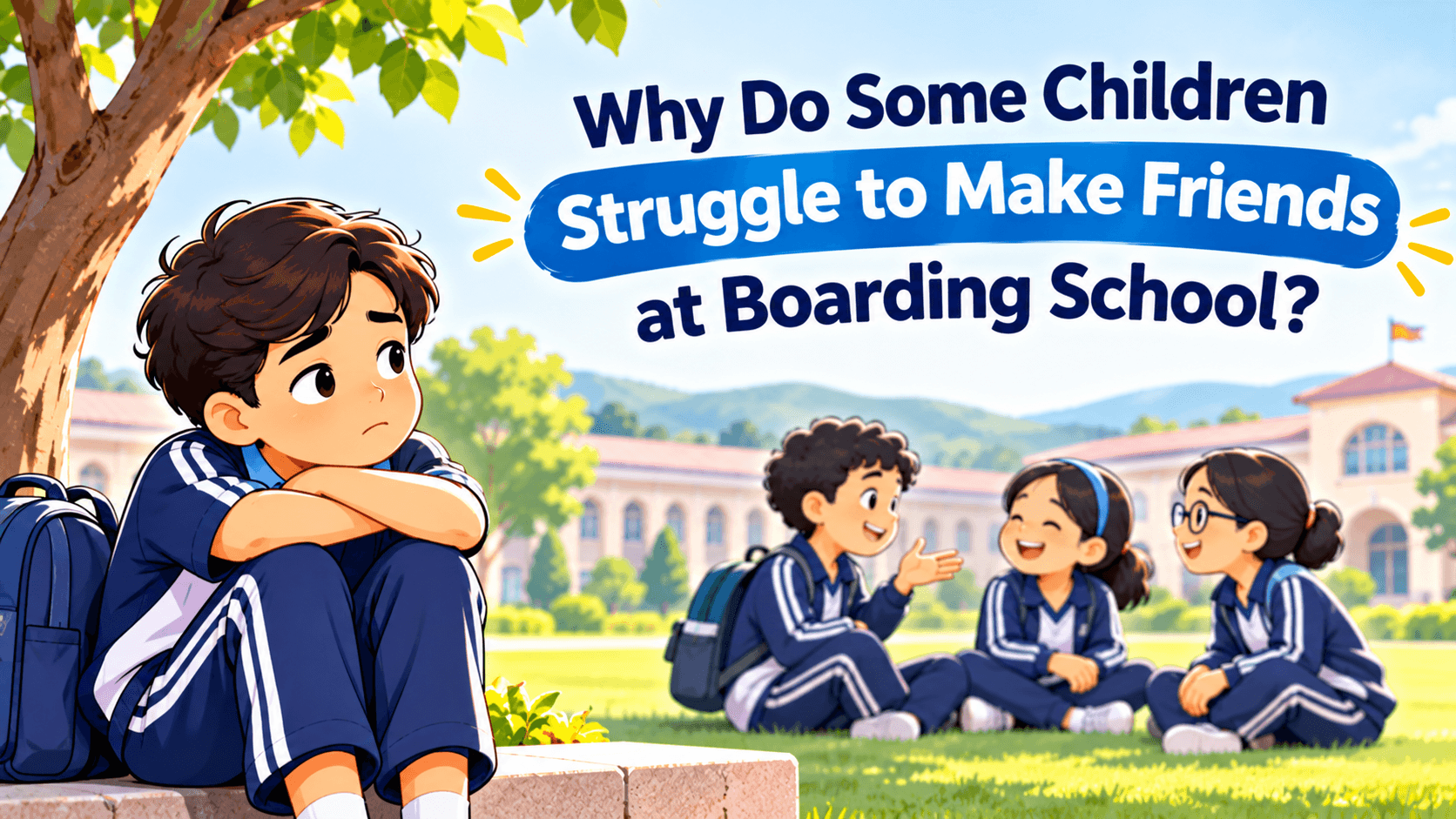

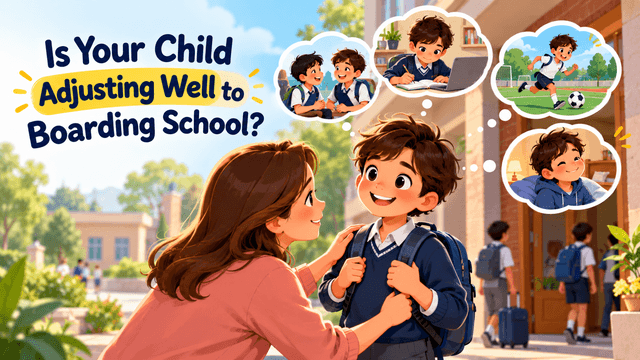
Your child has settled into the hostel, attends classes regularly, and seems comfortable with the daily routine. Yet during a phone call, they quietly say, “I don't really have anyone to talk to.” Living among many students does not automatically mean a child feels included. Understanding this can help parents offer support.
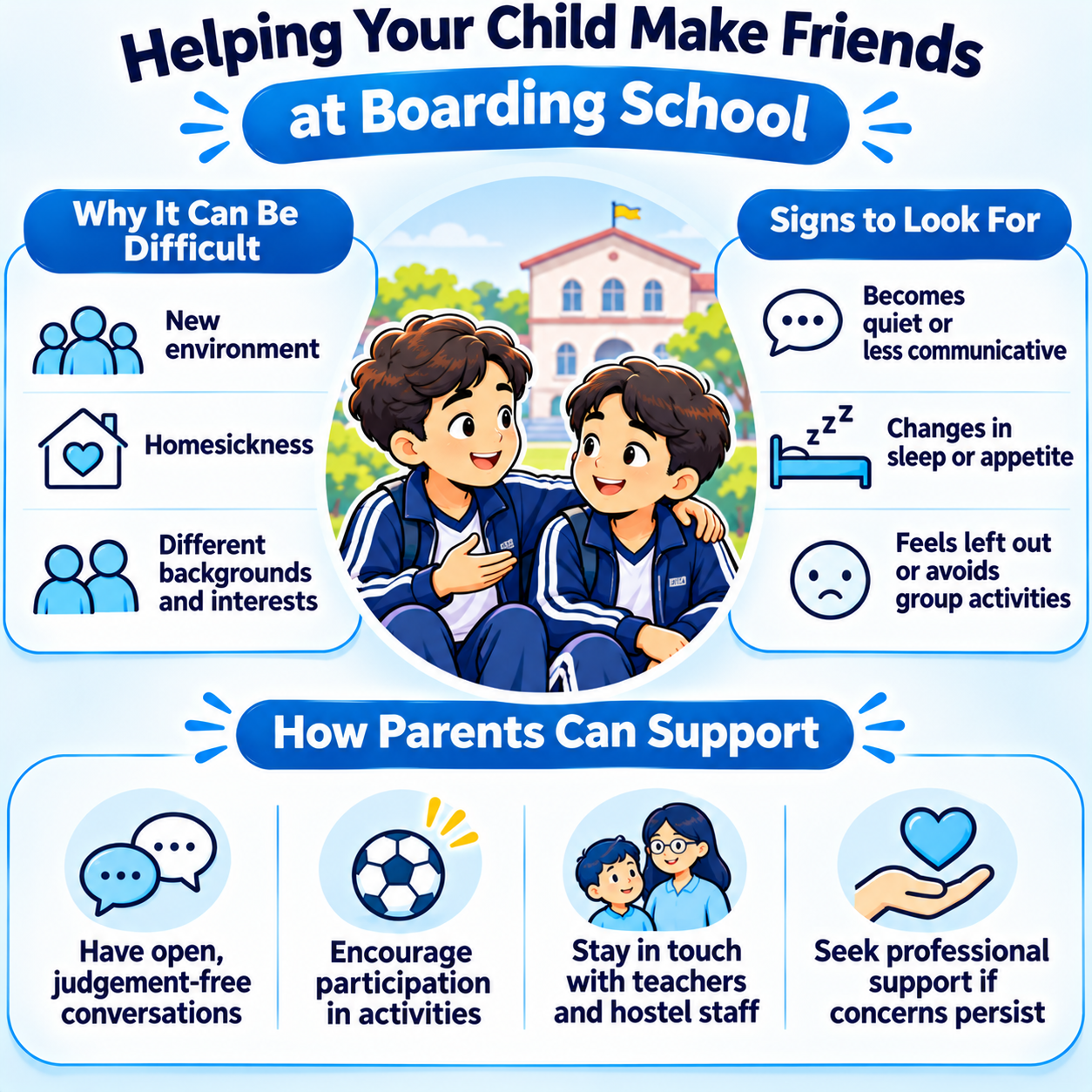
Why Can Making Friends Feel Difficult at Boarding School?
A New Environment Changes Familiar Social Habits
At home, children may have spent years with the same classmates and neighbourhood friends. Boarding school brings unfamiliar personalities, shared rooms, different languages, and established friendship groups. A child who was confident in their old school may suddenly feel unsure about joining conversations.
For example, a student who enjoys quiet reading might find it difficult to approach roommates who bond over cricket. They may simply need more opportunities to meet peers with similar interests.
Homesickness Can Make Socialising Harder
Missing family can affect how willing a child feels to participate. Some children withdraw because they are tired, worried, or afraid of rejection.
The World Health Organization identifies peer relationships, social pressure, and supportive school environments as important influences on adolescent mental health. Friendship struggles are not necessarily signs of illness, but persistent distress deserves attention.
How Do Friendships Affect a Child's Boarding School Experience?
Friendship is about more than having someone to sit beside at lunch. A trusted peer can make routines feel safer and encourage participation.
The US Centers for Disease Control and Prevention describes school connectedness as feeling cared for, valued, and supported by peers and adults. Its research links stronger connectedness with better student well-being and educational engagement. These findings are not specific to Indian boarding schools.
Being popular, however, is not the goal. One or two dependable friendships may matter more than belonging to a large group. Friendship counts are a poor measure of happiness.
What Can Parents Do to Help Without Forcing Friendships?
Ask Questions That Invite Honest Answers
Instead of asking, “Have you made friends yet?” every time, try “Who did you enjoy spending time with this week?” or “Was there any moment when you felt left out?” These questions invite children to share experiences.
Listen before offering solutions. If your child says classmates ignored them, acknowledge how upsetting that felt. Avoid immediately telling them to be more outgoing or blaming other students without understanding what happened.
Encourage Small, Realistic Steps
Making a friend rarely starts with a deep conversation. Suggest simple actions: inviting a classmate to study, joining a supervised sports or art activity, helping with a group task, or greeting someone regularly.
Children who are shy may prefer structured activities where there is something to do together. The CDC's guidance on peer connections highlights shared classroom projects and enjoyable group activities as ways schools can help students get to know each other.
Encourage children to stay open to classmates from different regions and backgrounds. Remind them they need not tolerate unkind behaviour to fit in.
Work With Teachers When Needed
If a child remains isolated, ask their class teacher or hostel staff what they observe during meals, activities, and free time. Are there chances to work with different classmates? Is someone regularly left out? A teacher may be able to support inclusion without singling the child out publicly.
Research-based CDC guidance recommends that educators notice peer relationships and support students who appear isolated. Parents and staff can agree on practical next steps and review whether the child feels more comfortable over time.
When Is Friendship Difficulty a Bigger Concern?
Some awkwardness is expected during a transition. But persistent crying, fear of returning to school, sleep changes, withdrawal from activities, or repeated reports of humiliation need closer attention. Bullying, threats, or exclusion should never be dismissed as normal hostel life.
Ask your child directly whether they feel safe. Record specific concerns, contact the school promptly, and request a clear response if bullying is suspected. Where distress continues or affects daily functioning, seek advice from a qualified mental health professional. If there is an immediate safety concern, prioritise the child's protection rather than waiting for friendships to improve.
Supporting Social Adjustment at Sweet Memories High School & Junior College
At Sweet Memories High School & Junior College(SMHS), Panchgani, the official website describes counselling support for children adjusting to life away from their families. It also outlines a life-skills programme that includes communication and emotional awareness. For parents comparing Top Boarding schools in India or searching for the Best Boarding schools in India, these are useful areas to ask about directly: how staff identify loneliness, how children seek help, and how concerns are shared with families. Published descriptions should be followed up with questions about current practice.

Conclusion
Making friends at boarding school is a process, not a test a child must pass quickly. Parents can help by listening without judgement, encouraging small social steps, and working with school staff when difficulties continue. What matters most is not how quickly a child joins a group, but whether they gradually feel safe, respected, and connected.
For more information on this and similar schools, check out this list of the best boarding schools in India.





 as a preferred source on