






Your child has recently joined boarding school. During the first few days, every phone call is filled with stories about classmates and new surroundings. Then the conversations become shorter. When you ask how things are going, your child says, "Fine," and quickly changes the subject.
For parents comparing Top Boarding Schools in India, including Treamis School(TIS), Bangalore, this uncertainty can be difficult. Is your child becoming more independent, or finding something hard to discuss?
The answer rarely comes from one conversation. A child's adjustment is better understood through patterns in their feelings, friendships, routines, and willingness to seek help.
Is Homesickness a Sign That Something Is Wrong?
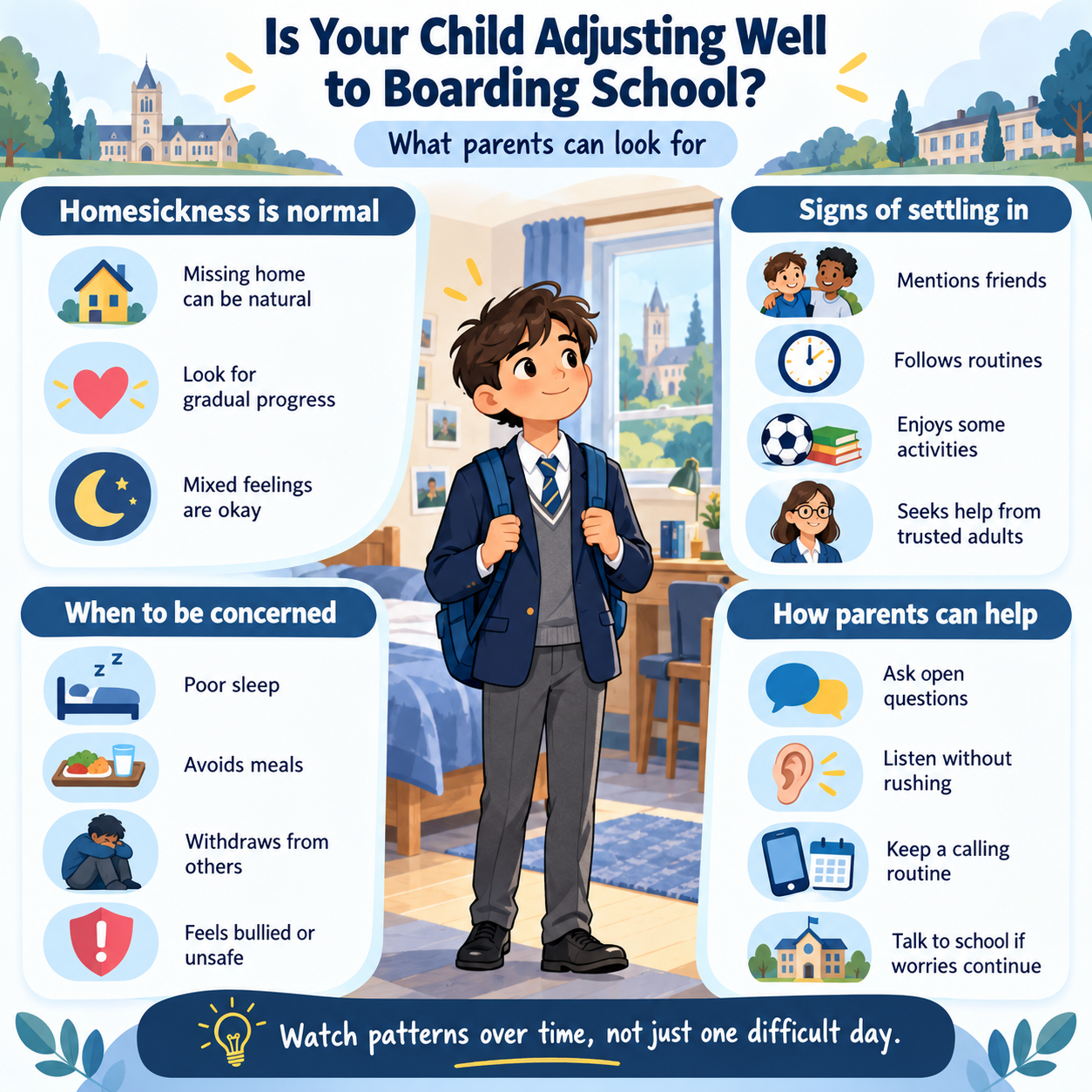
Missing home is a natural response to leaving familiar people and routines. A child might enjoy football practice during the day but feel lonely at bedtime. These feelings can exist together.
Homesickness does not automatically mean boarding school is the wrong choice. Children need time to become familiar with their surroundings, roommates, teachers, and schedules. Some settle quickly, while others need longer.
The American Academy of Pediatrics recommends acknowledging homesickness rather than dismissing it. Telling a child, "You have nothing to be upset about," may discourage them from sharing their feelings. A more helpful response is, "I understand that you miss home. What has been the hardest part of your day?"
Look for gradual progress, not constant happiness. If your child still misses home but begins talking about enjoyable activities or people they trust, that may be an encouraging sign.
What Are the Signs That Your Child Is Settling In?
Adjustment often appears in ordinary details rather than dramatic changes.
Your child may start mentioning a friend they sit with at lunch, a sport they look forward to, or a teacher who helped with a difficult lesson. They may become familiar with meal times, study hours, and shared-room routines.
Another important sign is knowing whom to approach when something goes wrong. A child who can say, "I spoke to my houseparent about it," is showing that they recognise support is available.
The US Centers for Disease Control and Prevention highlights school connectedness: the feeling that teachers and other students care about a child and their learning. Feeling accepted and supported is associated with better student wellbeing.
Parents can listen for signs of belonging without expecting a cheerful report every day. Children may have disagreements with friends or complain about homework while still feeling comfortable at school.
Notice changes over time. One quiet call or a difficult afternoon does not reveal the whole picture.
When Should Parents Be Concerned?
Some difficulties need more than reassurance. Pay attention when your child repeatedly reports poor sleep, avoids meals, withdraws from activities, or seems frightened about returning after holidays.
Repeated complaints about being excluded, bullied, threatened, or unsafe must also be taken seriously. Do not assume such experiences are simply part of growing up.
It is especially important to notice whether problems are becoming more frequent or affecting several areas of daily life.
For example, a child who misses home occasionally but continues eating, attending lessons, and spending time with friends may be adjusting. A child who consistently avoids others, struggles to sleep, and expresses distress needs closer attention.
Speak privately with your child, then contact residential staff or a school counsellor to understand what they have observed. If there is an immediate safety concern, act promptly. Persistent emotional distress may also warrant support from a qualified mental health professional.
How Can Parents Help Without Increasing Homesickness?
Begin with questions that invite conversation. Instead of asking, "Are you happy there?" every time, try, "Who did you spend time with today?" or "Was anything difficult this week?"
Listen before suggesting solutions. If your child says they miss home, acknowledge the feeling rather than immediately telling them to be strong.
Agree on a calling routine that fits the school's communication policy and your child's needs. Some children value predictable check-ins; others prefer shorter conversations. Neither pattern alone proves that adjustment is going well or badly.
Encourage your child to speak to a trusted adult on campus about everyday difficulties. This does not mean withdrawing family support. It means helping them build another circle of people they can rely on.
If concerns continue, share specific observations with the school. Asking whether staff have noticed changes in friendships, participation, or routines is more useful than requesting a general assurance that everything is fine.
Supporting Adjustment in a Residential School Environment
For families exploring the Best Boarding Schools in India, residential support deserves as much attention as academic offerings. Treamis School(TIS), Bangalore offers weekly and full-time boarding arrangements, with residence staff and after-school academic mentoring forming part of its residential provision. Shared accommodation, activities, and regular routines create opportunities for students to interact with peers and adults. Parents considering such arrangements should ask how children can raise concerns, stay in contact with family, and receive help during the adjustment period.

Helping Children Feel Secure Away From Home
Settling into boarding school is not the same as never missing home. It involves gradually building friendships, confidence in daily routines, and trust in supportive adults.
Parents can help by staying available, watching for patterns, and taking concerns seriously. Independence develops more securely when children know they do not have to manage every difficulty alone.
For more information on this and similar schools, check out this list of the best boarding schools in India.
















 as a preferred source on