




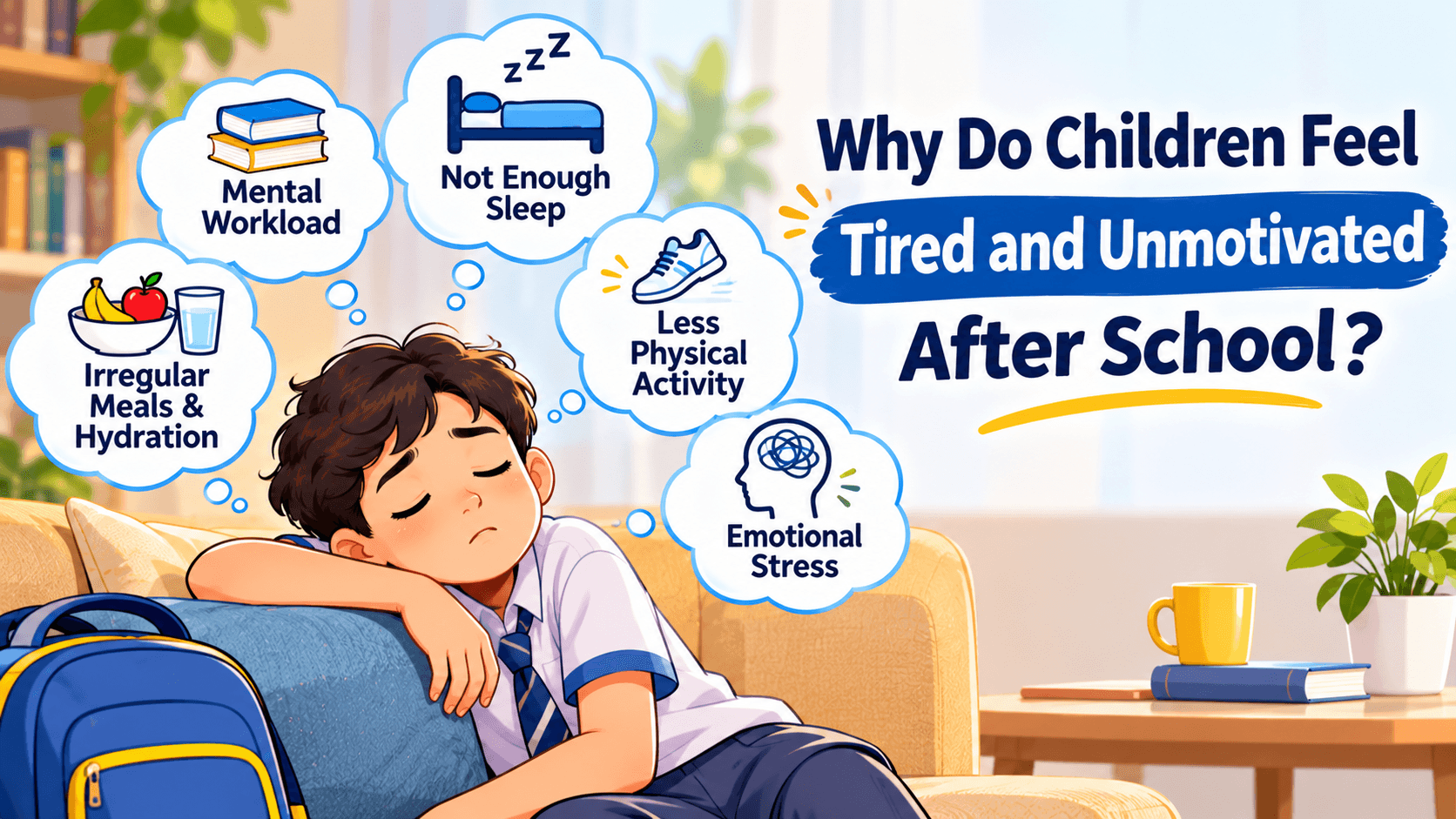

Your child returns from school, drops their bag on the sofa, and says, "I'm too tired to do anything." Even after resting, they seem uninterested in homework, outdoor games, or family conversations. You wonder why they feel exhausted when they haven't done anything unusually demanding.
School days involve much more than attending classes. Children spend hours concentrating, following instructions, interacting with classmates, and managing expectations. By evening, these demands can leave them physically and mentally drained.
However, when tiredness becomes an everyday concern, parents should look beyond the assumption that their child is simply being lazy.
Why Do Children Feel Exhausted After School?
1. Their Minds Have Been Working All Day
Imagine a child moving between mathematics, science, language lessons, classroom activities, and assessments. Each subject requires attention, memory, and problem-solving.
Alongside academics, children must follow rules, manage friendships, and adjust their behaviour to different situations. These demands can feel exhausting, especially during examination periods.
Mental tiredness may appear as irritability, difficulty concentrating, or avoiding homework.
Parents should avoid immediately asking children to start studying after reaching home. Instead, provide a short period to relax, eat something, and talk about their day.
Ask, "What made today tiring?" rather than assuming they simply dislike studying.
2. They May Not Be Getting Enough Sleep
Sleep plays an important role in children's energy, concentration, memory, and emotional wellbeing.
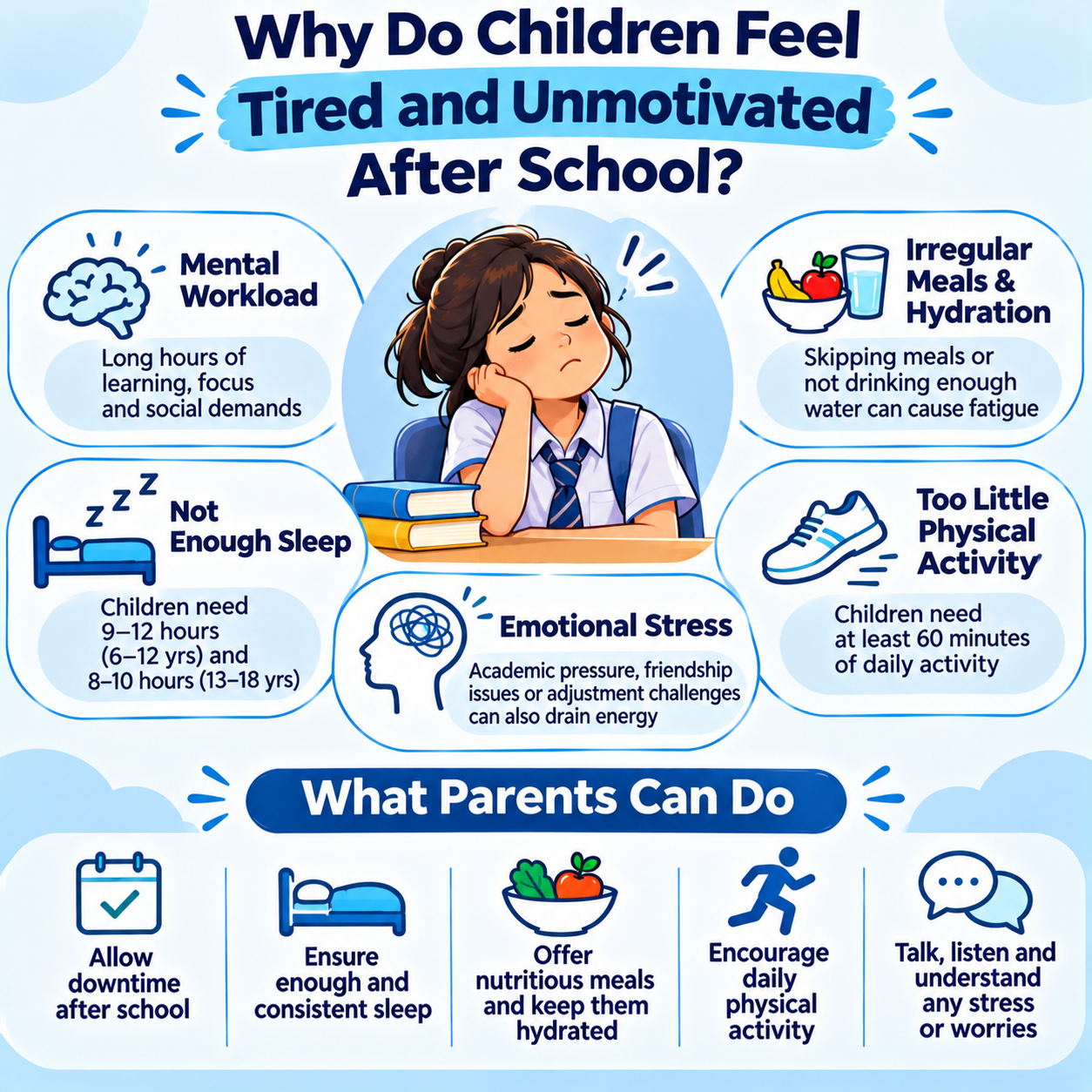
According to the US Centers for Disease Control and Prevention (CDC), children aged 6–12 generally need 9–12 hours of sleep per day, while teenagers aged 13–18 need 8–10 hours.
Yet early school mornings, homework, late-night screen use, and irregular bedtimes can reduce sleeping hours.
For example, a child who sleeps at 11 PM and wakes at 6 AM receives only seven hours of sleep. For most school-aged children, this is insufficient.
Parents can help by maintaining consistent sleeping schedules, reducing screen exposure before bedtime, and ensuring that evenings are not overloaded with activities.
Can Food, Water, and Physical Activity Affect Energy Levels?
3. Irregular Meals Can Leave Children Feeling Drained
Children need adequate nutrition to support growth, learning, and daily activities.
Skipping breakfast, eating very little during school hours, or going too long without food may leave some children feeling hungry, tired, or distracted.
The American Academy of Pediatrics recommends offering nutritious meals and snacks to help children meet their energy needs.
Parents can consider simple after-school options such as fruit with curd, a vegetable sandwich, or roasted chana.
Also, encourage children to drink water regularly, particularly during hot weather or after sports.
Avoid treating sugary snacks or energy drinks as solutions to regular tiredness. Consistent eating habits are more useful than temporary energy boosts.
4. Too Little Movement Can Affect Overall Wellbeing
It might seem surprising, but spending most of the day sitting does not necessarily make children feel refreshed.
The World Health Organization recommends an average of at least 60 minutes of moderate-to-vigorous physical activity daily for children aged 5–17.
Physical activity supports fitness, emotional wellbeing, and overall health.
After school, encourage enjoyable movement such as cycling, badminton, dancing, or playing outdoors.
However, children already attending demanding sports sessions may need adequate recovery rather than additional exercise.
The aim is to balance movement with rest, not make every afternoon more demanding.
Could Emotional Stress Be Making Your Child Tired?
Children do not always describe emotional stress directly. Instead of saying they are worried about examinations or friendships, they may simply complain about feeling tired.
Consider whether your child has recently experienced academic pressure, arguments with friends, bullying, or difficulties adjusting to classroom expectations.
Avoid interpreting reduced motivation as laziness without understanding what has changed.
Create opportunities for relaxed conversations and listen without immediately offering solutions.
Parents can also contact teachers to understand whether the child appears withdrawn, unusually quiet, or overwhelmed during school hours.
When Should Parents Be Concerned About Everyday Tiredness?
Occasional tiredness after a demanding day is normal. However, persistent fatigue should not be ignored.
Consult a paediatrician if tiredness continues despite adequate rest, lasts more than two weeks, or interferes with normal activities.
Seek medical advice sooner if your child experiences unusual weakness, significant weight changes, breathing difficulties, repeated dizziness, or other concerning symptoms.
Possible causes may include sleep problems, nutritional deficiencies, illness, or emotional difficulties. A healthcare professional can assess the underlying reason.
Supporting Healthy Routines Through School and Home
Parents comparing the Best Schools in Greater Noida can consider how schools balance academics, physical activity, and student wellbeing. Sparsh International School(SIS), Omega I, Greater Noida lists sports and physical fitness as part of its educational programme. The school also documented a vaccination drive on 16 February 2026, reflecting a specific preventive-health activity. Families exploring the Top Schools in Greater Noida can ask about daily activity schedules, rest opportunities, nutrition awareness, and communication regarding student health.
Conclusion
Children who regularly feel tired after school may need more than encouragement to study harder. Sleep, nutrition, physical activity, and emotional wellbeing all influence their energy levels.
By observing daily routines, listening to concerns, and recognising persistent symptoms, parents can help children feel healthier, more comfortable, and better prepared for learning.
To know more about other schools in Greater Noida, click on the link below













 as a preferred source on