




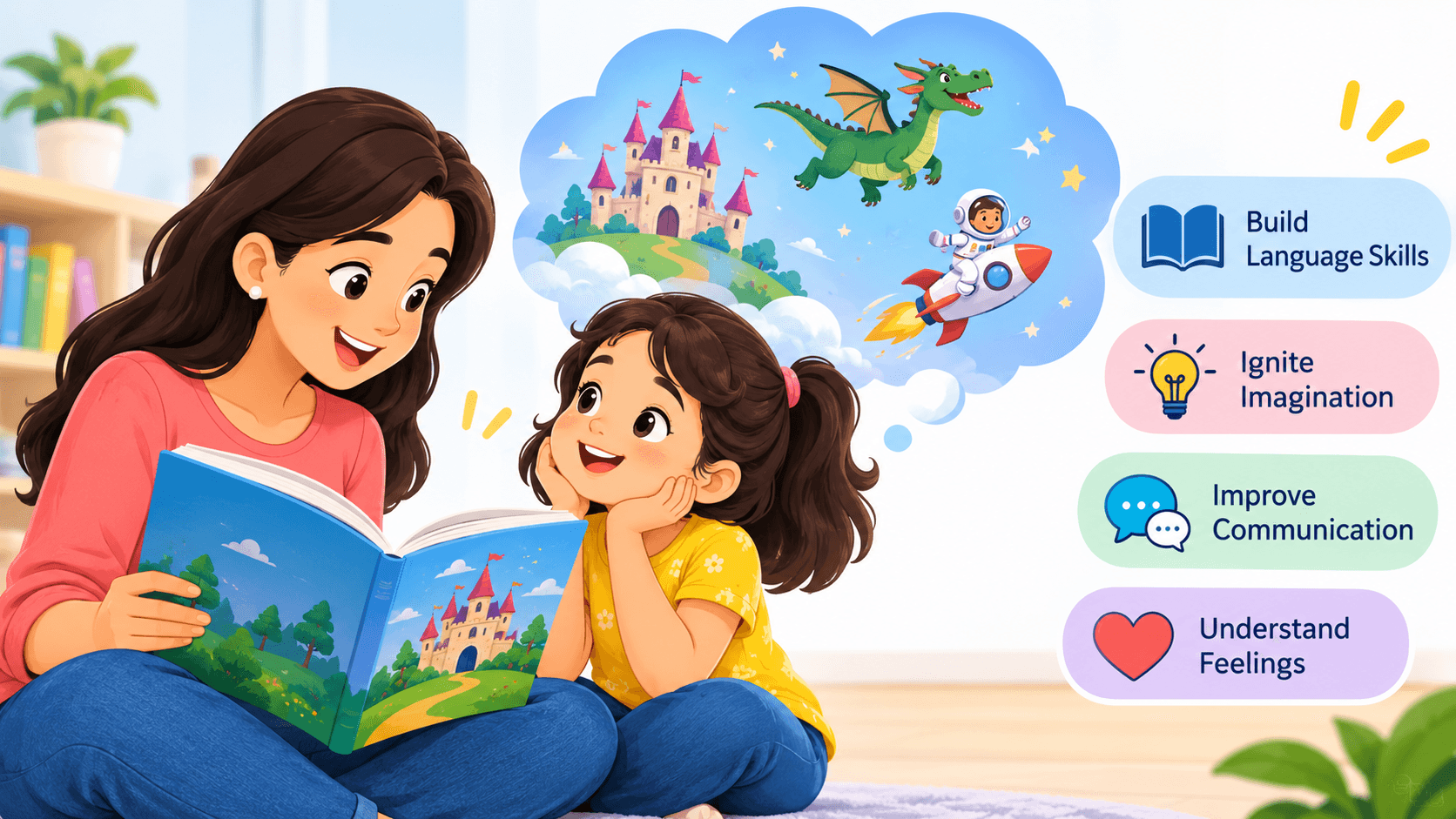

Storytelling is more than a way to entertain children before bedtime. A simple story about a talking animal, a brave child, or a magical kingdom can introduce new words, encourage questions, and inspire children to create their own ideas.
For parents, storytelling is also an easy way to support a child's development without making learning feel like a classroom activity. Whether children listen to a story, read one themselves or invent their own, they get opportunities to practise language, use their imagination and express their thoughts.
The National Curriculum Framework for the Foundational Stage, developed by NCERT, recognises storytelling as a useful way to build vocabulary and support children's language, emotional, social and intellectual development.
1. Storytelling Helps Children Build Language Skills
Children learn language by listening to people speak and by trying to express themselves. Stories give them a natural way to experience new words and understand how sentences are formed.
For example, a story about a forest may introduce words such as mysterious, adventurous, peaceful, and enormous. Children begin to understand these words through the characters, events and situations in the story. They also learn how words are used together to describe people, places and feelings.
Listening to stories can help children:
- Learn new words and understand their meanings.
- Recognise how sentences are formed.
- Improve their listening and comprehension skills.
- Understand how events are connected.
- Become more comfortable expressing their thoughts.
Parents can make this experience more interactive by asking simple questions while reading. Questions such as "Why do you think the character did that?" or "What might happen next?" encourage children to think about the story rather than simply listen to it.
2. Stories Encourage Imagination and Creative Thinking
One of the most interesting things about storytelling is that children do not always imagine a story in the same way as adults. A simple description of a castle may lead one child to picture a place in the clouds, while another may imagine a castle under the sea.
This freedom to imagine helps children explore ideas beyond what they see in everyday life. They can picture different places, create characters, and think of unusual solutions to problems.
Storytelling also gives children the opportunity to change familiar stories or invent completely new ones. For instance, parents can ask them to imagine what would happen if a story's main character made a different decision. Children may come up with surprising endings or introduce new characters.
These activities encourage children to:
- Think of different possibilities.
- Create original characters and situations.
- Explore problems from different perspectives.
- Develop curiosity and creative thinking.
Instead of correcting every unusual idea, parents can give children the freedom to explore their imagination. The aim is not to create a perfect story but to help them enjoy thinking creatively.
3. Storytelling Makes Communication More Natural
Knowing words is only one part of communication. Children also need to learn how to arrange their thoughts, explain what they mean, and share ideas with others.
Retelling a story allows them to practise these skills. They must remember the characters, describe what happened and explain how the story ended. As they become more comfortable, they may start adding their own details or sharing what they liked about the story.
Storytelling can also help children become more confident when speaking in front of others. They can begin by telling a story to a parent or sibling and gradually share it with a small group of friends or classmates.
Parents can encourage this by:
- Asking children to retell their favourite stories.
- Letting them describe pictures in a storybook.
- Encouraging them to speak in their own words.
- Giving them time to finish without interrupting.
- Listening patiently instead of focusing on every small mistake.
The more opportunities children get to express themselves, the more comfortable they may become with sharing their ideas.
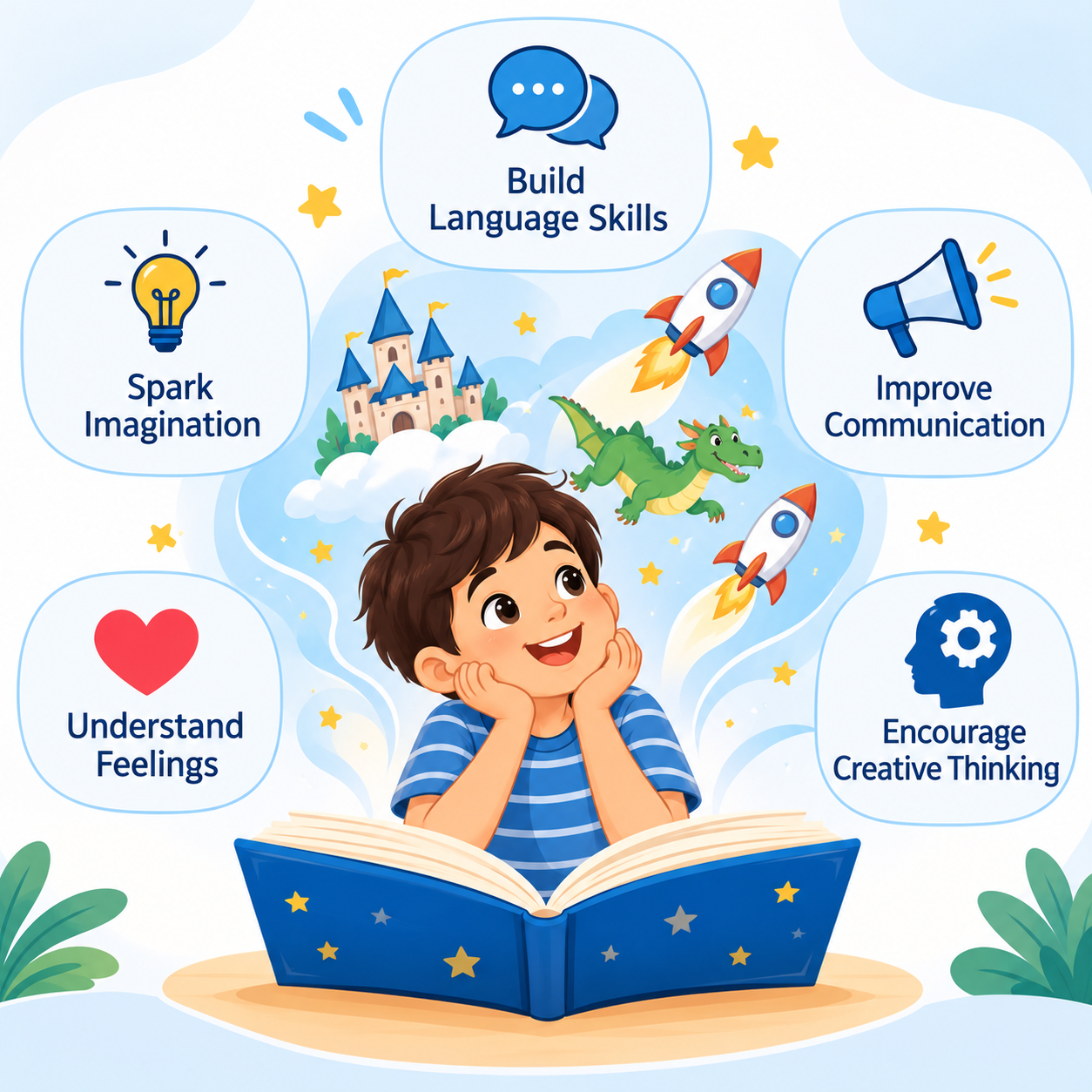
4. Stories Help Children Understand Feelings and Relationships
Stories introduce children to characters who experience happiness, fear, disappointment, excitement, and many other emotions. When children follow these experiences, they get an opportunity to think about how others might feel and why they behave in certain ways.
For example, a story about a child who feels left out during a game can help children understand loneliness. A story about friends resolving an argument can introduce ideas such as sharing, kindness, and forgiveness.
Parents can use these moments to start meaningful conversations. Ask questions such as "How do you think the character felt?" or "What could the other person have done differently?"
These conversations help children think about different points of view. They also make stories a useful starting point for discussing everyday situations, friendships, and relationships.
5. Simple Ways Parents Can Make Storytelling a Daily Habit
Storytelling does not require expensive books, special equipment, or a fixed schedule. A few minutes of conversation can become an enjoyable learning experience.
Here are some simple ways to include it in a child's routine:
- Read together: Choose age-appropriate books and allow children to turn pages, look at pictures, and ask questions.
- Create stories together: Begin with a simple line and ask your child to continue the story.
- Use everyday experiences: Turn a visit to the park, a family outing or a school activity into a short story.
- Try role-play: Let children act as their favourite characters and speak their dialogues.
- Encourage stories in familiar languages: Children can begin storytelling in the language they are most comfortable speaking. They can gradually explore other languages too.
Most importantly, keep the activity enjoyable. Children should not feel that every story is a test of their memory, vocabulary,y or speaking ability.
How Schools Can Support Storytelling and Communication Skills
Along with activities at home, schools can give children opportunities to express themselves through creative and interactive experiences. At PP International School (PPIS), Pitampura, the school's focus on all-round development includes theatre and speech classes, along with activities such as elocution, debate, quizzing, and public speaking. These activities provide opportunities for students to practise expression and communication in different ways. For parents exploring the Best schools in Delhi, such opportunities can be one aspect to consider when looking at a child's overall development. The school's emphasis on creative activities also gives families exploring Top schools in Delhi another way to understand how learning can extend beyond textbooks.

Conclusion
Storytelling gives children more than an enjoyable way to spend time. It helps them discover new words, explore ideas, understand emotions, and become more comfortable expressing themselves. Parents do not need to be expert storytellers to make a difference. Listening patiently, asking thoughtful questions, and giving children the freedom to create their own stories can make the experience meaningful. A small story shared today may become the starting point for a child's lifelong love of language, learning and imagination.
To know more about other schools in Delhi, click on the link below




 as a preferred source on