




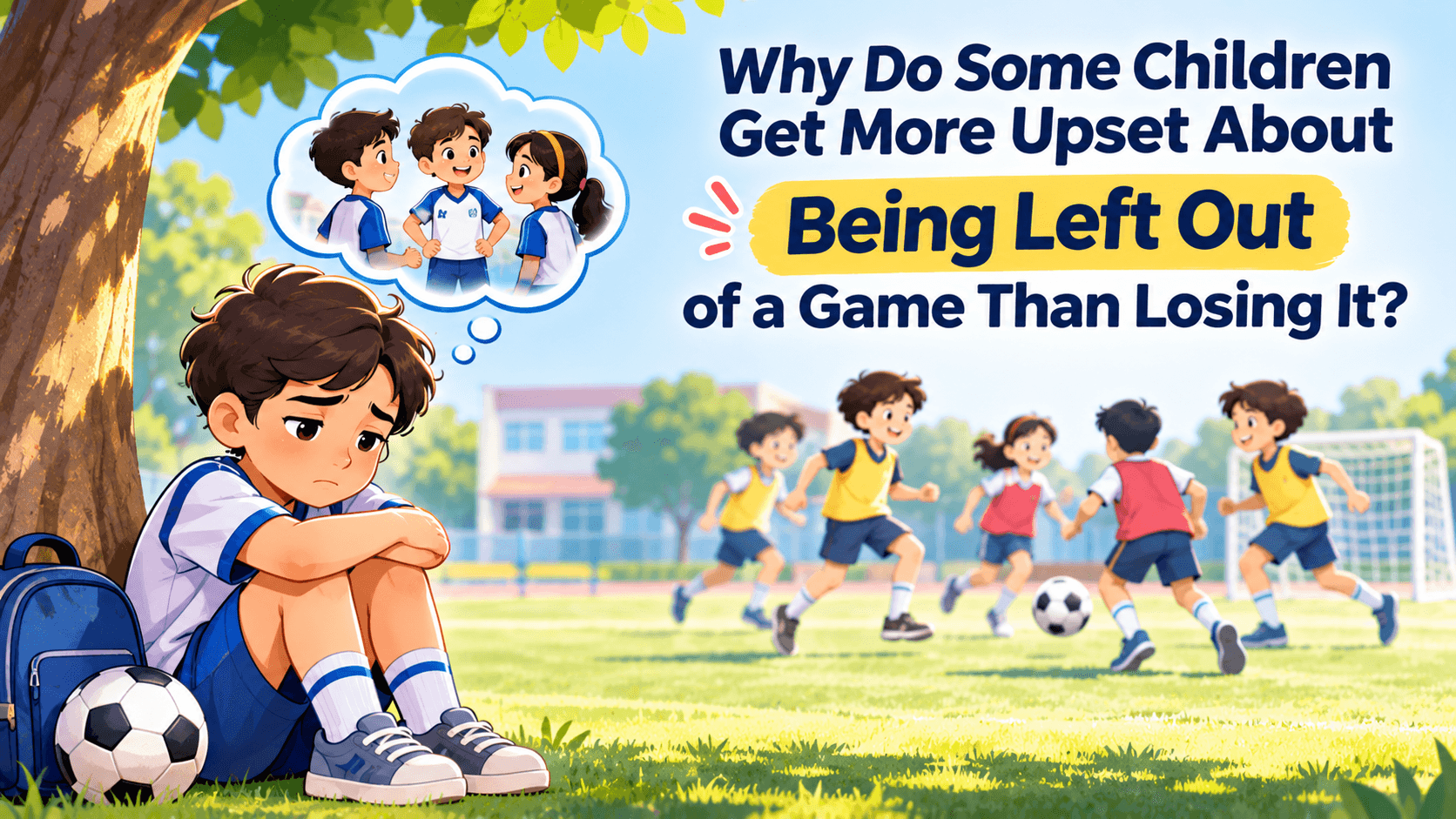

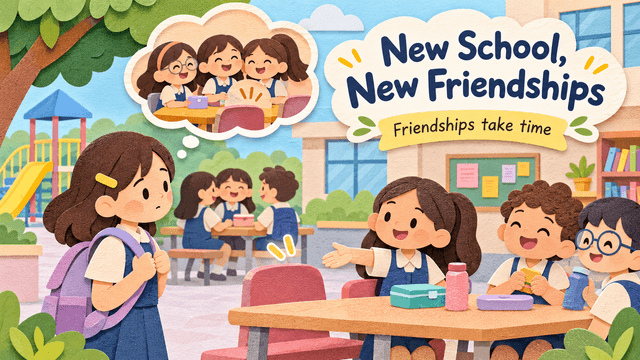
Your child loses a cricket match and shrugs it off. The next afternoon, they return home in tears because their friends did not let them join the game. "They said they don't want me," your child explains.
Why would missing a game hurt more than losing one?
For parents exploring Top schools in Bangalore, including New Oxford school(NOS), Sarjapur, Bangalore, children's experiences with friends can matter as much as the sports they play. Understanding the difference between disappointment and rejection helps parents respond thoughtfully.
Why Can Being Left Out Feel Worse Than Losing?
When children lose a match, they have still taken part. They may be disappointed by the score, but they can remember a good catch, a successful pass, or simply enjoying the game.
Being excluded can raise a different question: "Do my friends even want me around?"
Children often use everyday experiences to understand where they belong. If classmates repeatedly ignore them, they may wonder whether something is wrong with them.
Research published in the British Journal of Developmental Psychology found that exclusion during a simulated online ball game lowered mood and affected feelings of belonging, self-esteem, and control among children and adolescents.
That does not mean every child will feel more hurt by exclusion than defeat. But it helps explain why a playground incident can seem much bigger to a child than the game itself.
The uncertainty can add to the distress. They may not know whether their friends were upset with them, had different plans, or were deliberately avoiding them.
Does Not Being Picked Always Mean Rejection?
Not necessarily. A football team may need only eleven players. Older children might be playing a faster game, or two teams may already be full.
These situations can still disappoint a child. However, not getting a place is different from being repeatedly told, "Everyone can play except you."
Before drawing conclusions, ask what happened.
Was there a rule about team size? Did the other children offer a turn later? Has the same group excluded your child on several occasions?
Avoid dismissing the experience simply because the team was full. A child can feel genuinely hurt without anyone intending to be unkind.
Likewise, don't label every disagreement as bullying. Repeated, targeted exclusion, particularly when accompanied by humiliation or intimidation, deserves closer attention from adults.
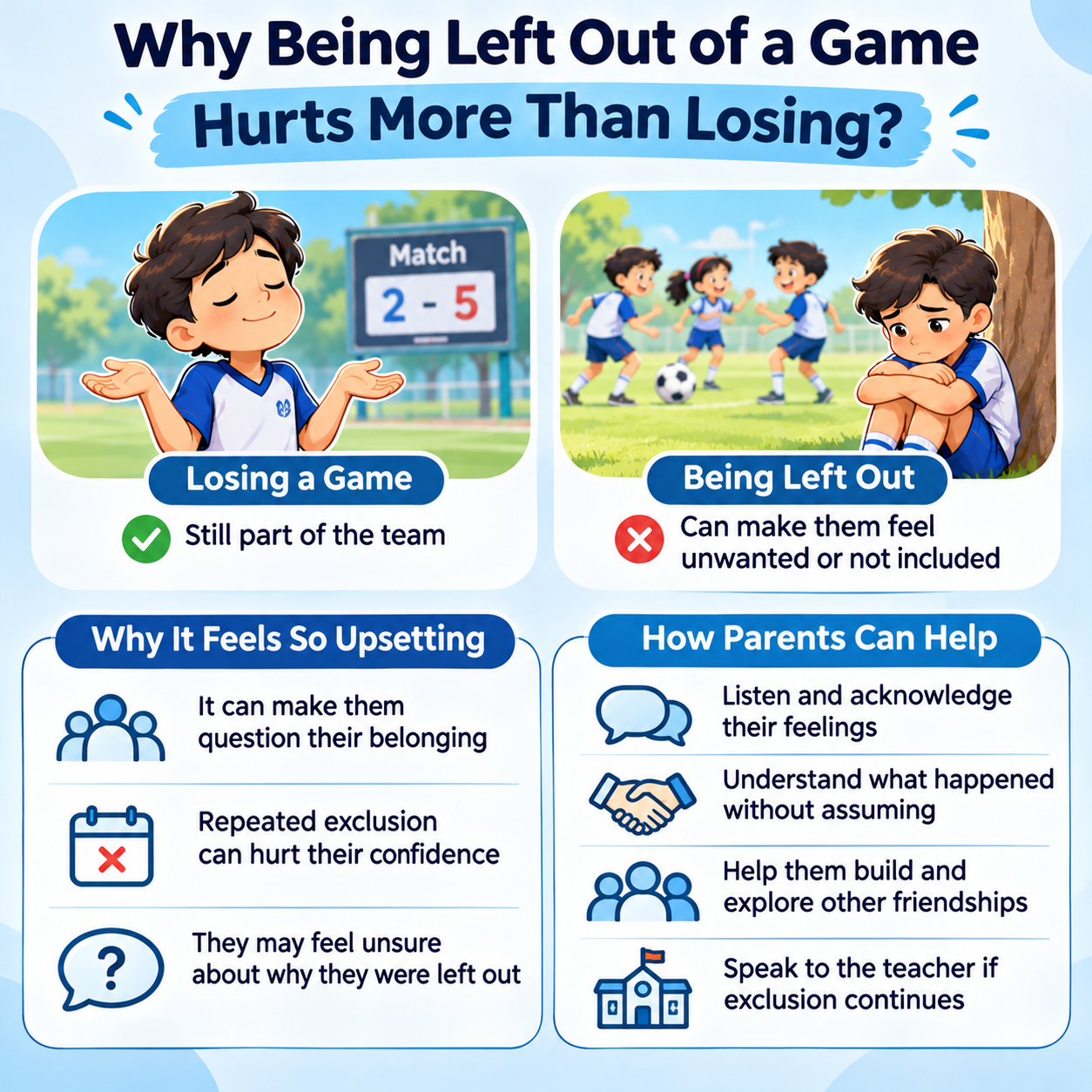
How Can Parents Help a Child Who Feels Left Out?
1. Listen before offering advice.
Instead of saying, "It's just a game," try, "You really wanted to play with them. That sounds upsetting."
This acknowledges the feeling without assuming you already know everyone's intentions.
2. Ask gentle questions about the situation.
"Who was playing?" and "What did they say when you asked to join?" can reveal more than "Why didn't they include you?"
Give children time to describe events in their own words. Avoid turning the conversation into an interrogation.
3. Practise simple ways to ask for a turn.
For an ordinary misunderstanding, children might say, "Can I play in the next round?" or "Could we make another team?"
Try practising these sentences at home. The aim is to build confidence, not place responsibility for deliberate mistreatment on the child.
4. Make room for other friendships.
A child who feels rejected by one group may benefit from playing with a different classmate, joining another activity, or inviting a friend for a small game.
Do not suggest that they must win over classmates who repeatedly treat them badly.
5. Speak to the school when there is a pattern.
The American Academy of Pediatrics recommends talking with teachers when peer rejection continues. Explain what your child reports and ask staff what they have observed.
If exclusion is accompanied by bullying, persistent sadness, sleep difficulties, or school avoidance, seek appropriate support rather than waiting for the problem to resolve itself.
How Can Games Teach Children to Include Others?
Parents can also help children notice who is standing on the sidelines.
During a family game, ask, "How could we change the rules so everyone has a turn?" Children might rotate positions, start a second team, or invite someone to join the next round.
Discuss fairness without insisting every child must receive the same role every time. Teams can have limits, and competitive games can still be meaningful.
The important lesson is to treat people respectfully, explain decisions kindly, and avoid repeatedly singling someone out.
The US Centers for Disease Control and Prevention notes that feeling valued and supported by peers is part of school connectedness. Games are one everyday setting where those relationships develop.
A School Connection: Games and Belonging
New Oxford school(NOS), Sarjapur, Bangalore lists a playground for games including cricket, football, basketball, volleyball, and kho-kho on its official website. It also describes team-based activities in its Activity Lab. For families comparing the Best schools in Bangalore, these details can prompt useful questions about how schools encourage fair participation, respond to exclusion, and help children form positive peer relationships. The listed facilities alone do not establish any particular inclusion policy or outcome.

Conclusion
Losing a game can hurt, but being left out may make a child question whether they belong.
Parents can help by listening, understanding the circumstances, practising respectful responses, and involving teachers when exclusion persists.
What children remember most may not be the final score, but whether they felt welcome to play.
For more information on this and similar schools, check out this list of the best schools in Bangalore.


 as a preferred source on