




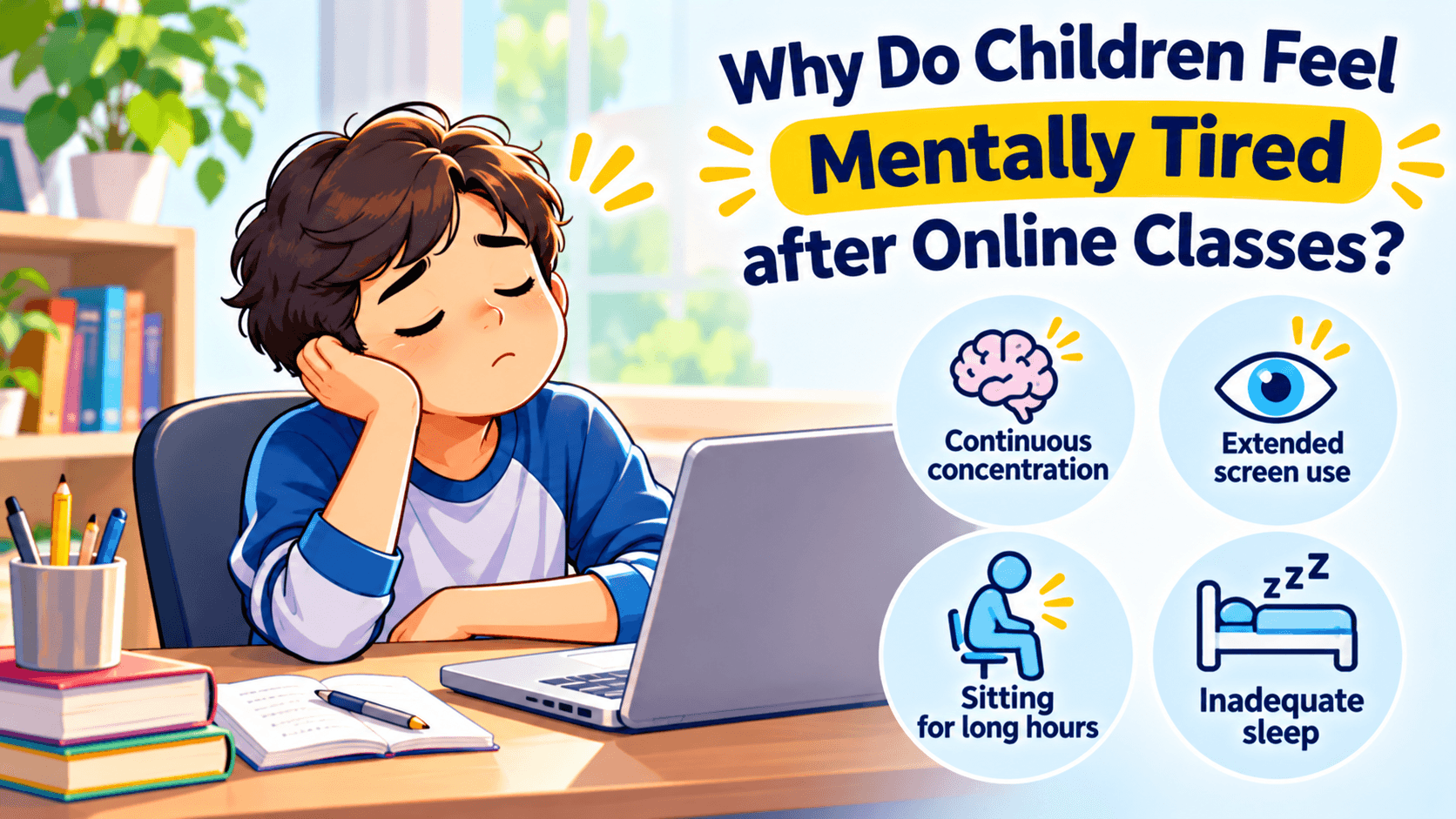

Your child finishes their online classes, closes the laptop, and immediately complains about feeling tired. You wonder why. They have spent the entire morning sitting comfortably at home, without travelling to school or running around the playground.
Yet they seem exhausted, irritated, or unwilling to complete homework.
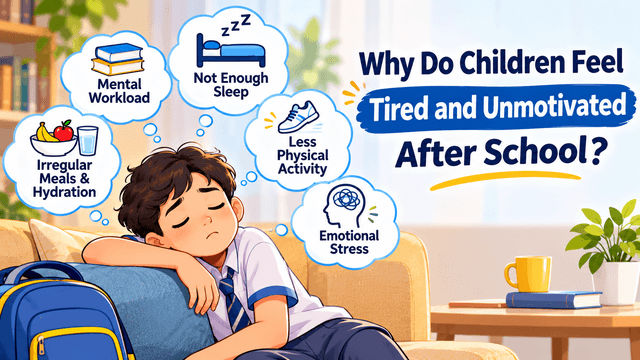
This is something parents may notice during online learning. Physical activity is not the only thing that requires energy. Concentrating, processing information, responding to teachers, and looking at screens for extended periods can also feel tiring.
Understanding these possible causes helps parents create healthier learning routines without compromising their child's education.
Why Can Online Classes Feel Mentally Exhausting?
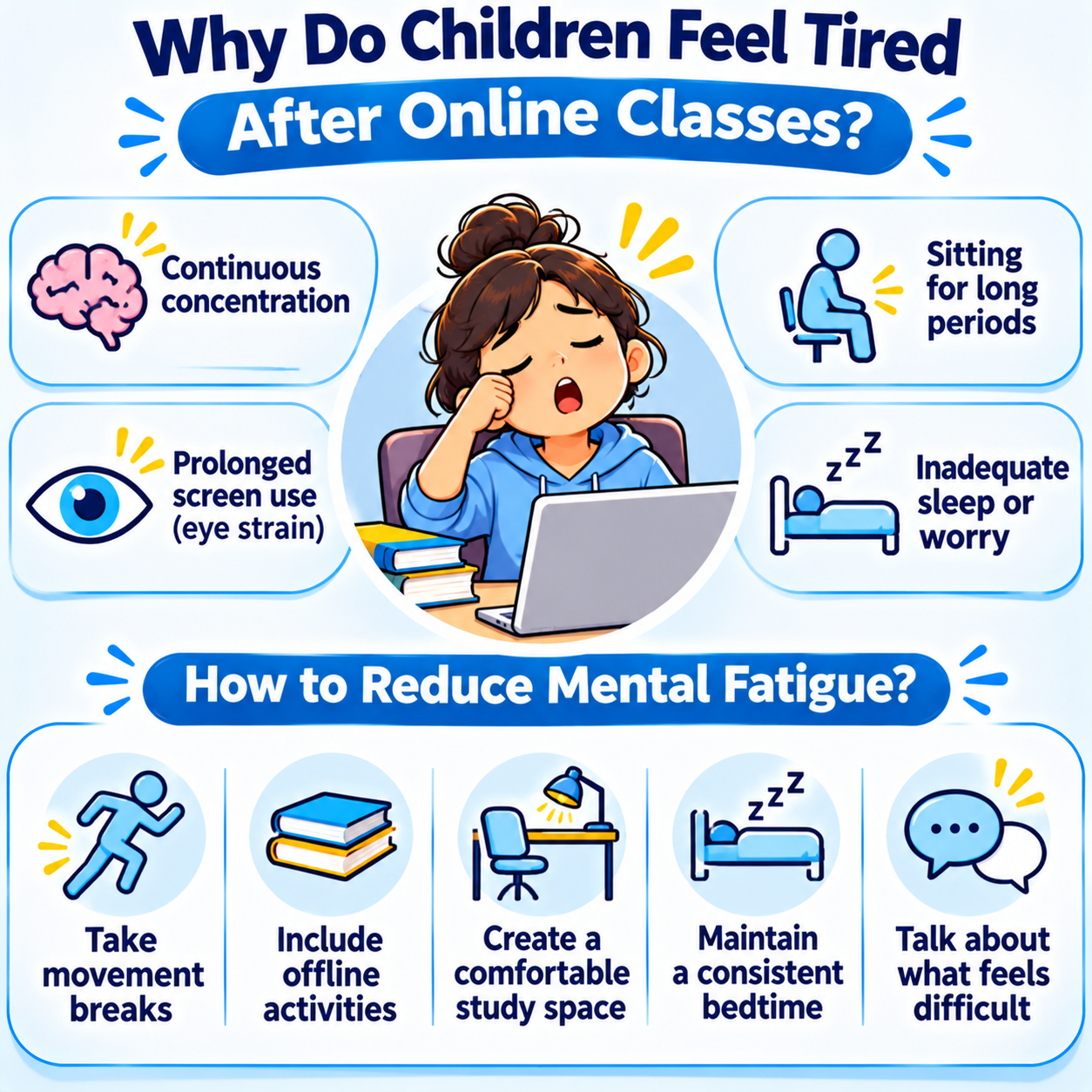
Continuous Concentration Requires Effort
Imagine your child attending four online lessons involving mathematics, science, English, and social studies.
During each class, they must listen carefully, understand explanations, read information on the screen, and respond to questions. Moving between subjects also requires mental adjustment.
Even though their body is relatively still, their mind remains actively engaged.
Online environments can introduce additional distractions, such as notifications, household noises, or switching between digital materials.
UNESCO's 2023 Global Education Monitoring Report highlights how digital distractions can interfere with learning. It also notes that online education requires students to manage their attention and learning behaviour.
Mental tiredness does not necessarily mean online classes are ineffective. It may simply indicate that a child needs a better balance between focused learning and recovery time.
How Does Extended Screen Use Affect Children's Comfort?
Eye Strain Can Make Concentration Difficult
Children often stare at screens without realising how long they have been looking at one distance.
According to the American Academy of Pediatrics, prolonged screen use can contribute to tired eyes, blurred vision, headaches, and reduced blinking.
These physical symptoms may make children feel less comfortable and more tired during lessons.
Parents can encourage the 20-20-20 rule: every 20 minutes, look at something approximately 20 feet away for at least 20 seconds.
Adjusting screen brightness, reducing glare, and keeping the monitor at a comfortable height can also help.
Sitting Still for Long Periods Adds Discomfort
Children naturally need opportunities to move. Remaining seated for several lessons may cause stiffness or discomfort, particularly when their chair and desk are unsuitable.
A child who constantly changes sitting positions or complains about neck pain might need a more comfortable workspace.
Encourage them to stand, stretch, or walk briefly between classes whenever their schedule allows.
The World Health Organization recommends that children aged 5–17 complete an average of at least 60 minutes of moderate-to-vigorous physical activity daily across the week.
Movement supports overall health, although exercise alone cannot resolve every cause of fatigue.
Why Do Some Children Feel More Tired Than Others?
Age, Sleep, and Learning Needs Matter
Not every child responds to online lessons in the same way.
Younger children may need more help maintaining attention, while older students might feel pressure from assignments, examinations, and deadlines.
Sleep also plays an important role. A child who stays awake watching videos after completing homework may struggle to concentrate the following morning.
The American Academy of Pediatrics advises families to consider whether digital activities interfere with sleep, physical activity, and other essential experiences.
Parents should therefore examine the child's entire daily routine rather than assuming educational screen time is the only cause.
Emotional factors matter too. Worrying about academic performance, feeling disconnected from classmates, or hesitating to ask questions can make learning feel more demanding.
How Can Parents Reduce Mental Fatigue During Online Learning?
Build a Routine With Meaningful Breaks
Small adjustments can make the school day more comfortable.
- Encourage movement: Let children stretch, walk, or play during scheduled breaks.
- Include offline activities: Drawing, reading printed books, and simple household tasks provide alternatives to screens.
- Create a suitable workspace: Use a comfortable chair, appropriate desk height, and adequate lighting.
- Protect sleep: Maintain consistent bedtimes and avoid unnecessary screen use before sleeping.
- Observe tiredness patterns: Notice whether fatigue appears after particular lessons, at certain times, or following inadequate sleep.
Avoid filling every break with additional assignments or entertainment videos.
Most importantly, speak with your child about what feels difficult. Sometimes, changing the schedule helps. At other times, parents may need to discuss workload or classroom participation with teachers.
Persistent exhaustion, frequent headaches, significant sleep difficulties, or fatigue affecting daily activities should be discussed with a healthcare professional.
Supporting Balanced Learning at The Class Of One
At The Class Of One(TCO1), Online School, the official website describes live online education alongside co-curricular activities, including art, craft, music, dance, and physical fitness. These published offerings provide a useful starting point for parents exploring a Top online school in India or comparing options for the Best online school in India. Parents can ask how lessons are scheduled, what breaks are provided, and how offline activities fit into everyday learning. A balanced routine remains important regardless of the online school selected.

Conclusion
Children can feel mentally tired after online classes even when they have spent most of the day sitting. Concentration, prolonged screen use, uncomfortable posture, inadequate sleep, and limited movement may all contribute.
Rather than simply reducing learning hours, parents should focus on healthy routines, regular breaks, physical activity, and open communication.
Online learning works best when children have enough time not only to study, but also to rest, move, and enjoy life beyond their screens.
To know more about other Online Schools, click on the link below






 as a preferred source on