




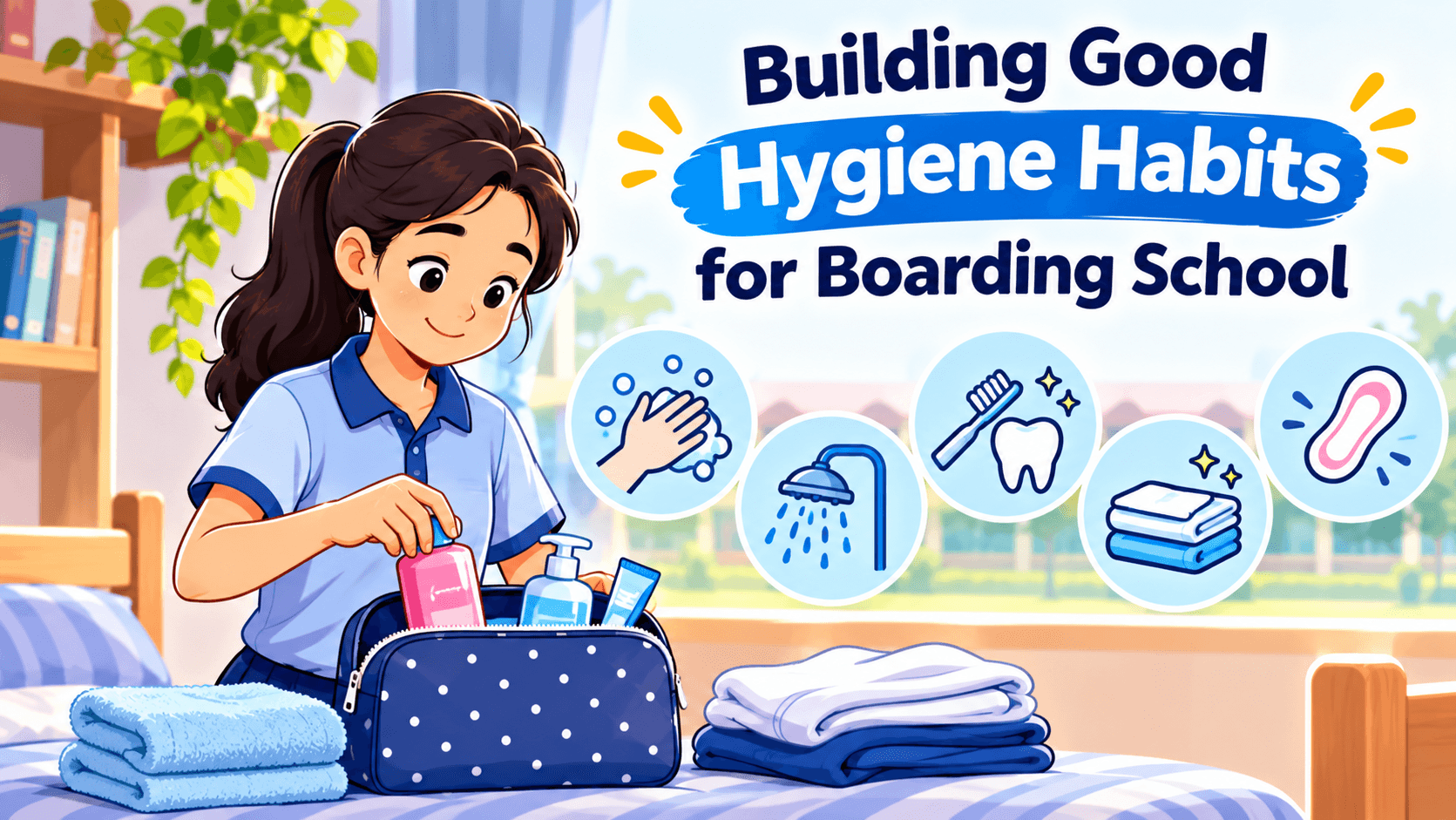

Your child remembers to brush their teeth when you remind them, changes clothes when you ask, and keeps their room clean with your help. But what happens when they move to a boarding school and you are no longer around to remind them?
For many Indian parents, personal hygiene is an important concern when children begin living away from home. Sharing rooms, using common facilities, and managing daily responsibilities require children to become more independent.
The good news is that maintaining hygiene is a skill children can learn. With preparation, simple routines, and supportive guidance, parents can help them develop habits that continue even without daily reminders.
Why Is Personal Hygiene Important for Children Living Away From Home?
Children living in shared spaces come into regular contact with other students, common surfaces, and shared facilities. Good hygiene helps reduce the spread of certain infections and supports everyday comfort.
According to UNICEF India, clean water, sanitation, and regular handwashing are essential parts of a healthy school environment.
Personal hygiene also involves more than bathing or wearing clean clothes. It includes oral care, menstrual hygiene when applicable, keeping personal belongings clean, and recognising when something needs medical attention.
Rather than treating hygiene as a set of strict rules, parents should explain why these habits matter. Children are more likely to practise them independently when they understand their purpose.
What Daily Hygiene Habits Should Parents Teach?
1. Practise Proper Handwashing
Handwashing is one of the simplest habits children can develop before moving away from home.
The US Centers for Disease Control and Prevention recommends washing hands with soap and water for at least 20 seconds, particularly before eating and after using the toilet.
Teach children to clean between their fingers, around their nails, and the backs of their hands.
For example, after playing cricket or football, children should wash their hands before eating snacks.
Practise these routines at home until they become natural rather than something children do only after being reminded.
2. Maintain Bathing and Dental Care Routines
Children should learn to manage bathing, changing clothes, and brushing their teeth without depending on adults.
Encourage regular bathing, especially after sweating or physical activities. Wearing clean underwear and socks and drying the body properly are equally important.
The American Dental Association recommends brushing teeth twice daily for two minutes using fluoride toothpaste.
Parents can help children establish a simple morning and evening routine. Before leaving for boarding school, ask them to follow it independently for a few weeks.
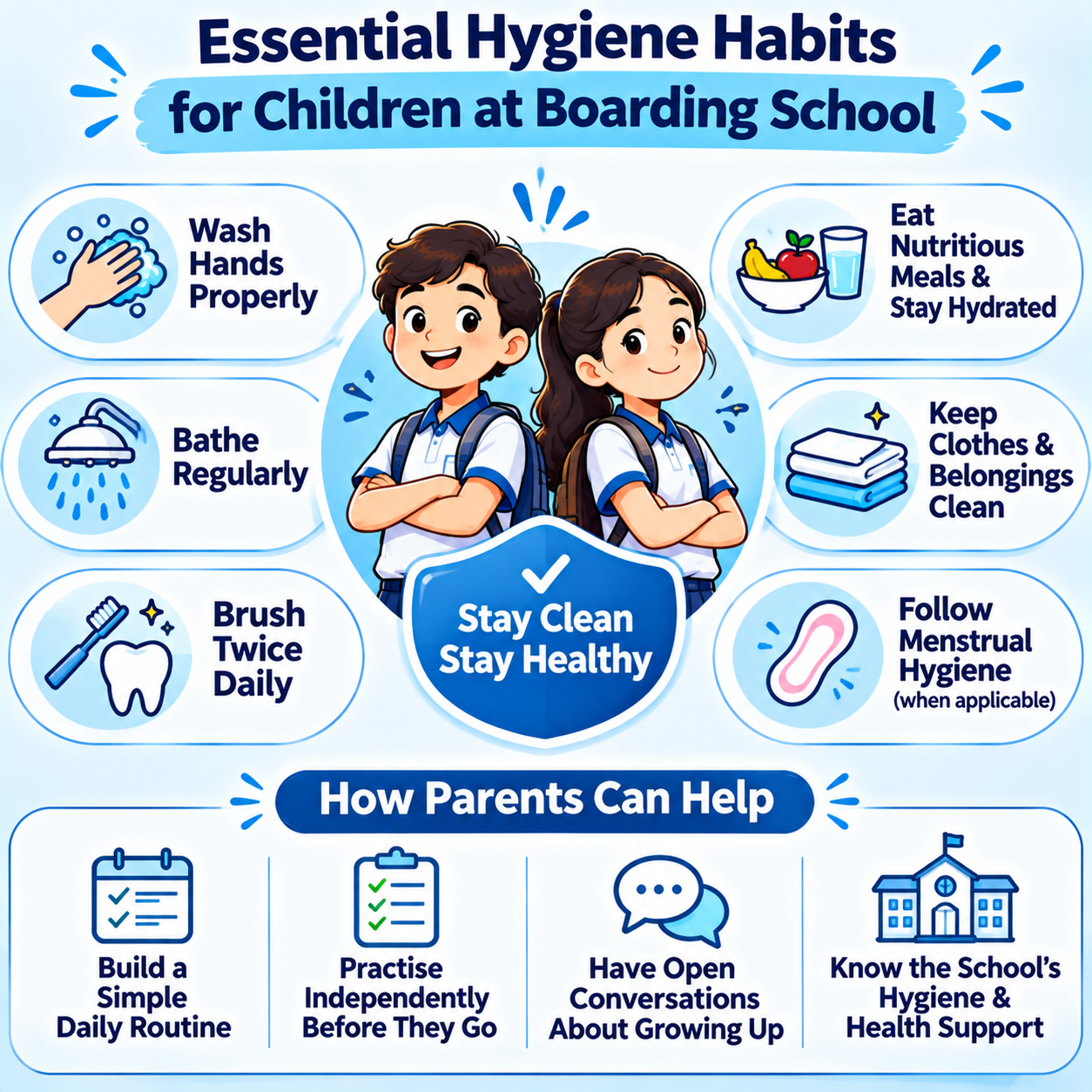
How Can Children Keep Their Clothes and Belongings Clean?
Children may remember to bathe but forget about damp towels, dirty socks, or unwashed sports uniforms.
Teach them to separate worn clothes from clean ones and avoid leaving wet items inside closed bags.
For example, a damp towel stuffed into a cupboard may develop an unpleasant smell and remain unsuitable for reuse.
Children should also understand why personal items such as toothbrushes, towels, combs, and razors should not be shared.
Labelling belongings can help prevent accidental exchanges in shared accommodation.
Before departure, practise organising a cupboard and preparing clothes for the following day. Keep the routine simple enough for children to manage without constant supervision.
How Should Parents Prepare Children for Personal and Menstrual Hygiene?
As children grow, they experience physical changes that may require additional hygiene practices.
Parents should discuss puberty in an age-appropriate and comfortable manner rather than waiting for children to raise questions themselves.
For girls who menstruate, explain how to use and change menstrual products, maintain hygiene, and dispose of used products safely.
India's National Menstrual Hygiene Policy for School-Going Girls emphasises access to appropriate products, privacy, sanitation facilities, and accurate information.
Parents should ensure children know whom to approach if they need supplies, experience discomfort, or require medical assistance.
These conversations should remain respectful and free from embarrassment. Every child should feel comfortable asking questions about their body and personal care.
How Can Parents Build Hygiene Habits Without Constant Reminders?
Start preparing children several weeks before they begin living away from home.
Create a simple checklist covering bathing, brushing, clean clothes, handwashing, and organising belongings.
Gradually reduce reminders and allow children to manage these tasks themselves.
Instead of criticising forgotten habits, discuss what made the routine difficult and how they could remember it next time.
Once children move away, ask occasional practical questions during conversations without turning every call into an inspection.
Parents should also understand the residential school's laundry arrangements, sanitation facilities, and process for reporting health concerns.
If a child repeatedly experiences skin irritation, dental pain, or other health problems, encourage them to seek appropriate medical care rather than ignoring symptoms.
Supporting Hygiene and Independence in Residential Schools
When comparing the Best Boarding Schools in India, parents can consider how residential facilities support children's daily hygiene and independence. Sri Devaraj Urs International Residential School(SDIRS), Bangalore describes hostel accommodation with bathing and toilet facilities on each floor. Its official website also lists a dispensary and medical assistance for residential students. Families exploring the Top Boarding Schools in India should ask about cleaning schedules, laundry arrangements, access to hygiene supplies, and procedures for reporting health concerns.
Conclusion
Learning personal hygiene is an important part of becoming independent. Children need more than reminders; they need practical knowledge, consistent routines, and confidence to manage their own care.
By practising these habits at home and keeping communication supportive, parents can help children maintain healthy hygiene routines even while living away from home.
For more information on this and similar schools, check out this list of the best boarding schools in India.




 as a preferred source on