




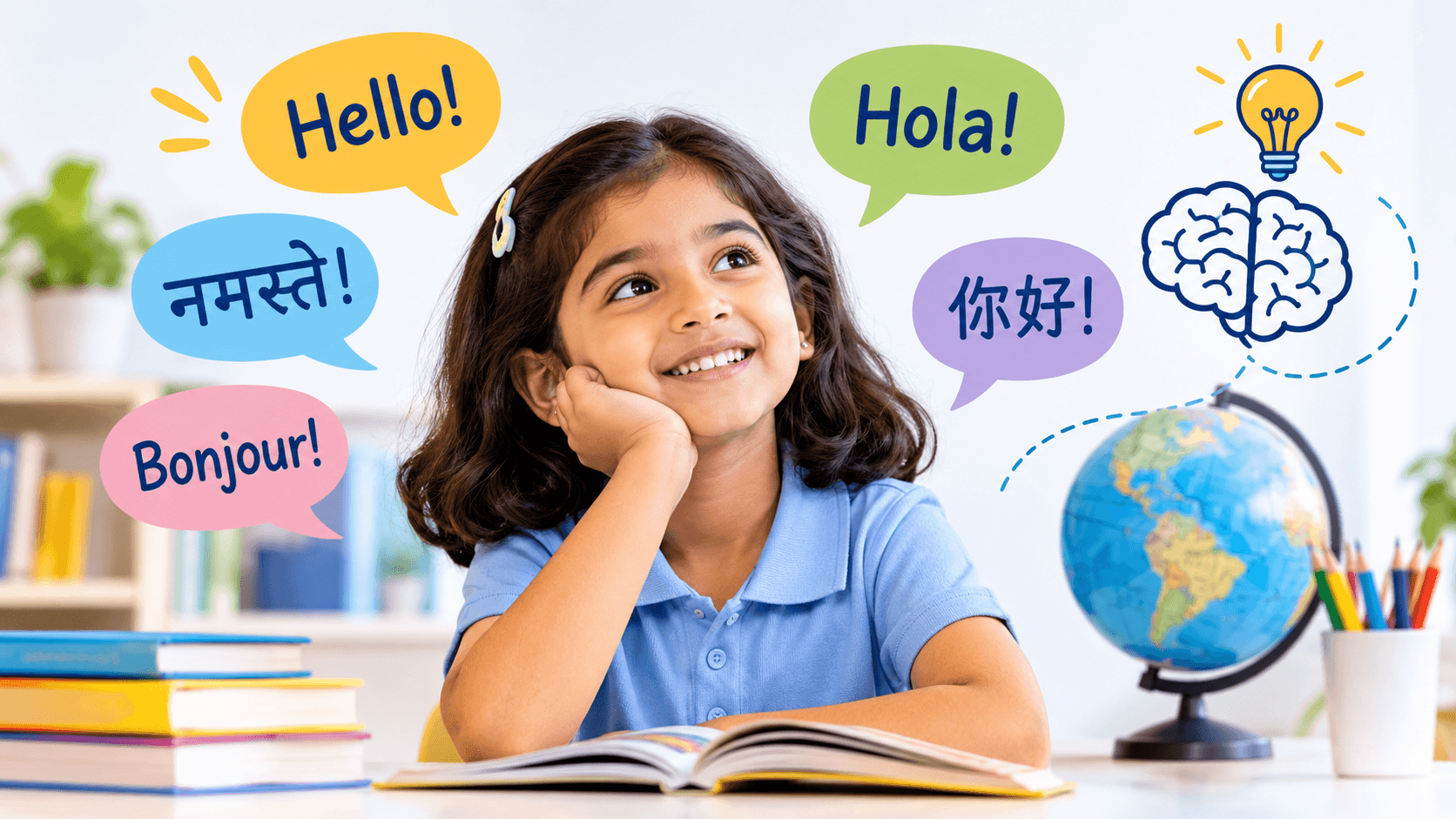

A child may speak Hindi with grandparents, use English in the classroom and hear another regional language at home or in the neighbourhood. Yet parents sometimes wonder whether learning several languages at once could confuse a child or slow down speech development.
Research shows that growing up with more than one language does not, by itself, cause confusion or language delay. Parents exploring Top schools in Gurugram may want to understand how schools support this learning.
Can Children Learn Two or More Languages at the Same Time?
Yes. Children can learn more than one language from an early age. They may hear different languages from parents, relatives, teachers and friends.
A child who says, "Mujhe water chahiye," is not necessarily confused. They may be using the words they know to communicate an idea. Mixing words from two languages is common among multilingual children, particularly while their vocabulary is developing.
Children may also be stronger in one language than another. For example, a child might know household words in their mother tongue but use more school-related words in English.
The American Academy of Pediatrics explains that exposure to more than one language does not cause a language disorder. If a child has a genuine speech or language difficulty, their communication should be considered across the languages they use rather than assuming multilingualism is the cause.
How Can Multilingual Learning Shape a Child's Development?
Learning different languages gives children more ways to communicate and helps them notice that the same idea can be expressed in different ways.
1. Builds communication opportunities
A child who understands more than one language may communicate with a wider range of people, including relatives and members of their community.
2. Creates connections with culture
Language carries stories, songs, expressions and family traditions. Knowing a family or community language can help children take part in conversations and understand cultural references.
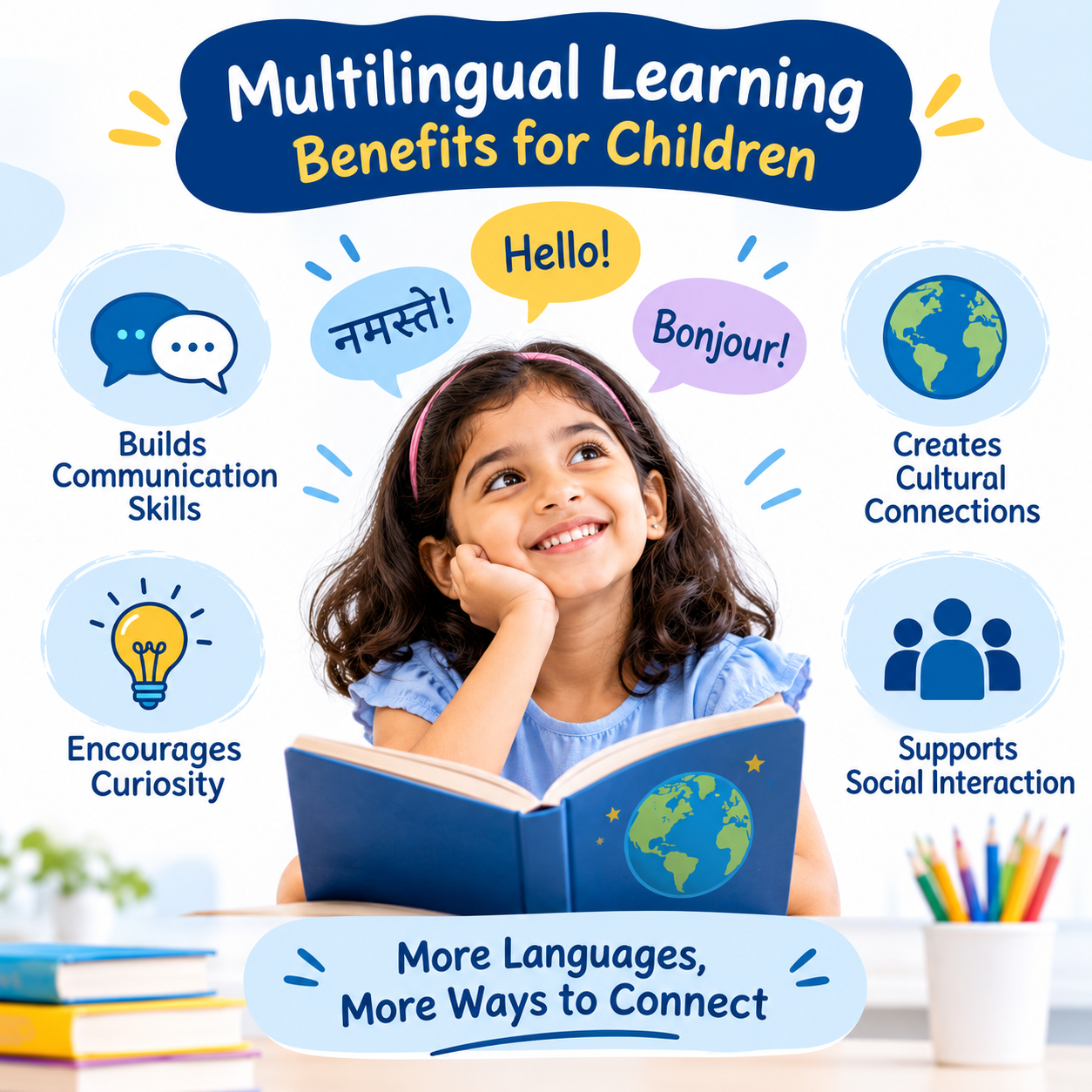
3. Encourages curiosity about words
Children may notice that an object has different names in different languages. This makes language learning an enjoyable part of everyday life.
4. Supports social interaction
Knowing another language can help children connect with classmates, neighbours and people from different backgrounds. These experiences can encourage respectful communication.
What Can Parents and Schools Do to Support Multilingual Children?
Children need regular, meaningful opportunities to hear and use a language. Simple routines can help.
- Speak naturally: Use the language in which you can express yourself comfortably. Warm, detailed conversations matter more than forcing unfamiliar words into every sentence.
- Share stories: Read picture books, tell family stories or sing songs in different languages. Ask children questions about what they hear.
- Make room for conversation: Talk about meals, journeys, games and daily activities. Give children time to answer instead of correcting every mistake.
- Introduce languages through play: Rhymes, word games and simple conversations can make practice enjoyable.
- Value the home language: Learning English or another additional language does not mean a child must stop using the language spoken at home.
Schools also have an important role. They can use stories, discussions, songs and group activities while respecting the languages children bring from home.
Finding the Right Balance Between Languages
Children do not need to become equally fluent in every language. Their skills may vary depending on how often they use each one and the situations in which they hear it. A child may speak comfortably in a home language but need more time to develop academic vocabulary in English. This can be a normal part of learning.
Speaking a language and reading or writing it are different skills, and children may develop them at different times.
If a child has difficulty understanding or communicating in all the languages they use, parents should discuss their concerns with a qualified speech-language professional or paediatrician. Persistent concerns should not be dismissed as simply a result of learning multiple languages.
How Queen Elizabeth’s School, Gurugram Approaches Language Learning
At Queen Elizabeth’s School, Gurugram, the published curriculum describes multilingual learning opportunities in the Early Years, with English and Hindi included in the Prep School curriculum. The school also outlines Modern Foreign Languages from Year 3, with further language options in later years. For parents considering Best schools in Gurugram, it is worth looking at how a school supports communication, respects children's linguistic backgrounds and gives them meaningful opportunities to use additional languages.

More Languages, More Ways to Connect
Learning more than one language does not mean children have to master every language at the same speed. What matters is giving them time, encouragement and regular opportunities to communicate. Parents can begin with everyday conversations, stories and songs, while schools can make language learning a welcoming part of classroom life. When children value both their home language and the languages they are learning, they gain more ways to share ideas, understand others and connect with the world around them.
For more information on similar schools, check out this list of the best schools in Gurugram.








 as a preferred source on