




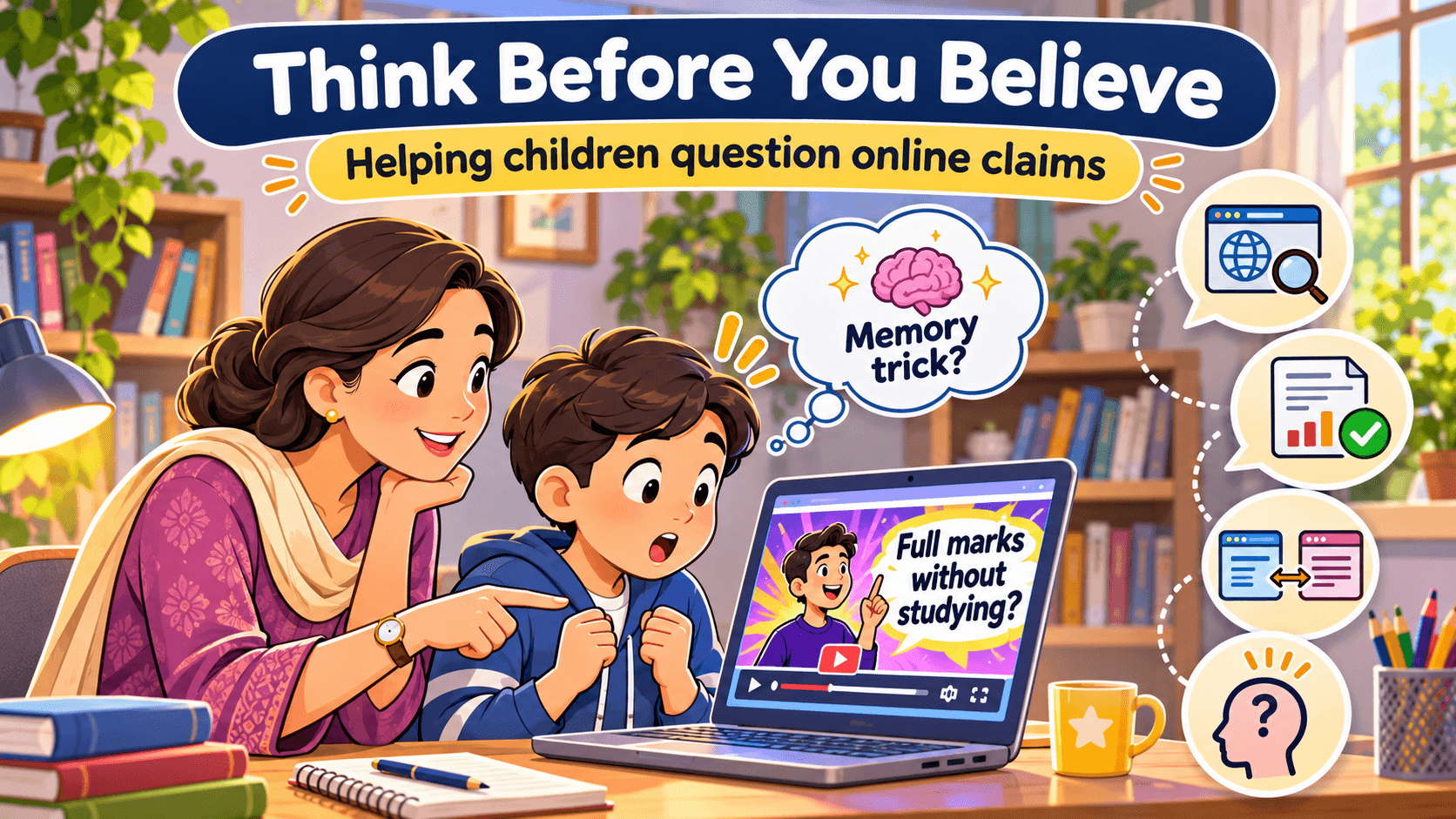

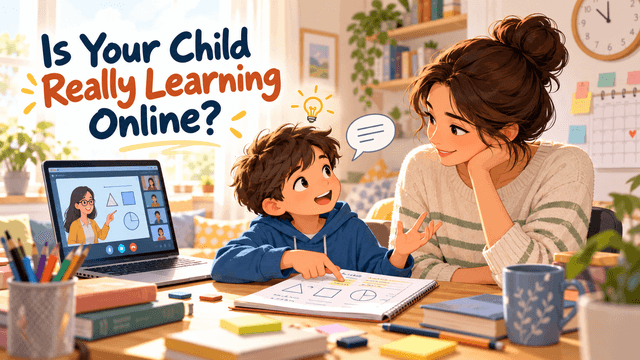
Your child announces that a YouTube video has revealed a trick to score full marks without studying. When you question it, they reply, "But the person in the video explained everything!"
You may wonder why something that sounds unlikely seems completely believable to your child.
For parents exploring Top Schools in Bangalore, including Goldenbee Global School (GBGH), Horamavu, Bangalore, understanding how children judge online information is an important consideration.
Knowing how to use the internet does not automatically mean knowing what to trust.
Why Do Online Videos and Websites Seem So Convincing?
Imagine a video claiming that eating one particular food can improve memory overnight. It has colourful graphics, thousands of likes, and a presenter speaking confidently.
A child might assume the claim is true because so many people have watched it.
Yet popularity and accuracy are different things. Videos can look professional without presenting reliable evidence. Even a familiar creator can make mistakes or repeat information they have not checked.
Children may also trust claims repeated across several videos. Seeing the same statement often can make it feel familiar, although those videos may simply be copying one another.
Instead of dismissing a claim immediately, ask, "How does this person know that?" or "Where did this information come from?"
These questions help children look beyond an entertaining presentation and think about the evidence.
Why Is It Hard to Separate Facts, Opinions and Misleading Claims?
Online information often mixes facts, personal opinions, jokes and advertisements. Children may not immediately recognise the difference.
Consider three statements:
Fact: "The Earth takes about one year to travel around the Sun." This can be checked using scientific evidence.
Opinion: "Science is the most interesting school subject." This reflects someone's personal preference.
Unsupported claim: "This study method guarantees 100% marks." This promise needs strong evidence.
A confident speaker may present all three with the same certainty.
Misleading information is not always shared deliberately. Someone may believe an incorrect claim and pass it along without checking. Deliberately creating or spreading false information to deceive people is different.
The goal is not to label everything online as fake. It is to help children recognise what kind of information they are seeing and what evidence would confirm it.
Adults sometimes share questionable messages too. Showing children how you check your own assumptions can be more useful than simply warning them about strangers online.
How Can Parents Teach Children to Check Whether Online Information Is True?
Fact-checking becomes easier when children practise a few simple habits during everyday internet use.
1. Pause before believing or sharing.
If a video makes a surprising claim, encourage your child to wait before forwarding it. Exciting information deserves checking, not automatic sharing.
2. Find out who created it.
Is the information from a recognised scientific institution, a teacher discussing their subject, or an unknown account? Knowing the source provides useful context.
3. Look for supporting evidence.
Ask whether the claim is supported by trustworthy research, a clear explanation, or an original source. A dramatic headline is not proof.
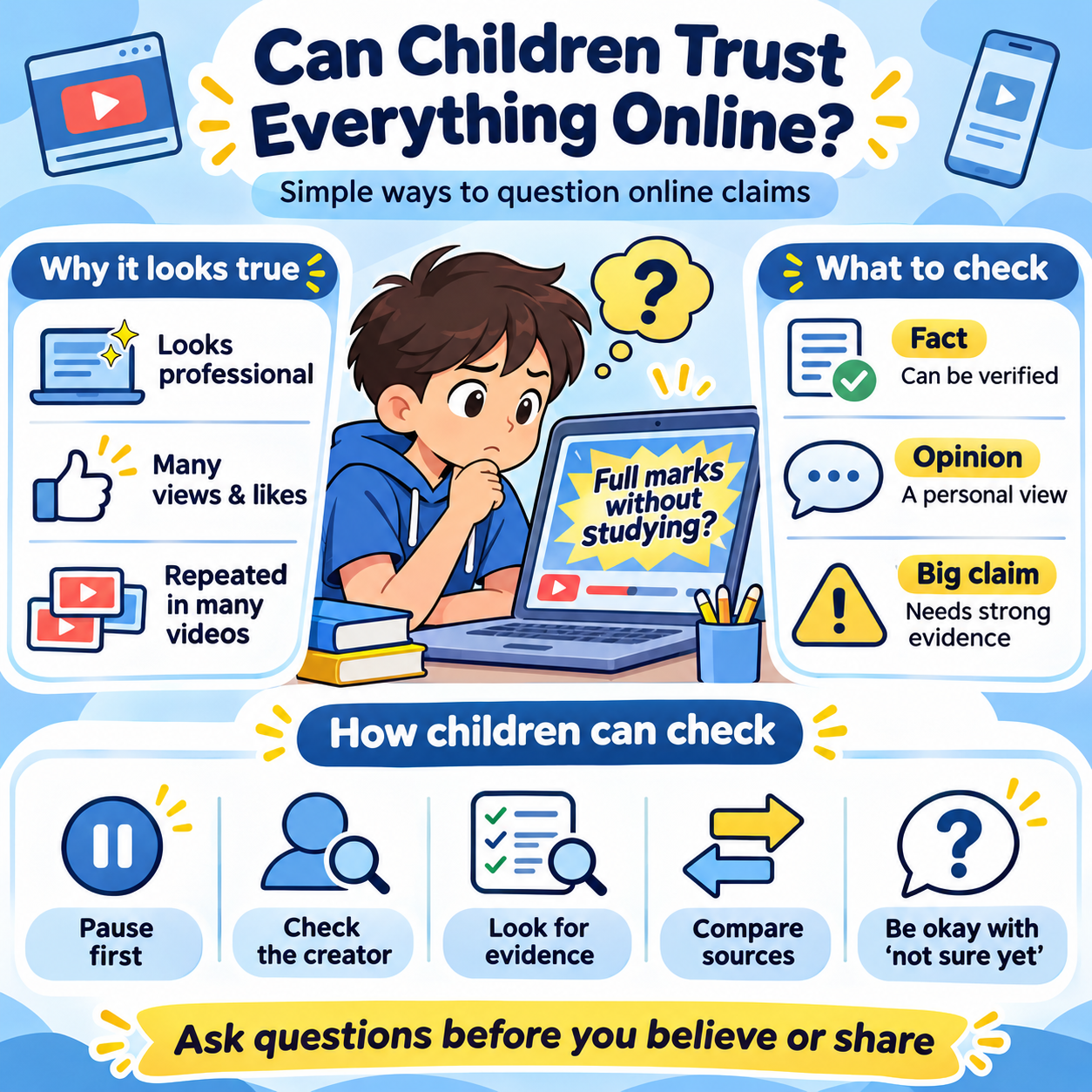
4. Compare information from different sources.
Help your child leave the original webpage and compare the claim with a textbook, an official educational resource, or another reliable source. This approach is sometimes called lateral reading.
5. Discuss what remains uncertain.
If the information cannot be verified, explain that saying "We don't know yet" is perfectly reasonable.
Suppose your child watches a video claiming that humans use only 10% of their brains.
Instead of immediately correcting them, encourage them to investigate what established neuroscience research says. They can discover that the claim is a myth while practising how to verify information.
The same approach applies to AI tools. An AI-generated answer may sound confident while containing factual errors or invented details.
Children should learn to check important AI-generated information rather than assuming every answer is correct.
How Can Parents Encourage Questioning Without Creating Distrust?
Healthy questioning does not mean assuming that everything online is false.
Choose an age-appropriate educational video and examine one claim together. Ask who created it, what evidence supports it, and whether another reliable source agrees.
Encourage children to ask questions, even when they seem obvious. Avoid making them feel embarrassed for believing something inaccurate.
Younger children may need more direct guidance, while older children can gradually take responsibility for checking information themselves.
Parents should also demonstrate these habits. When you encounter a doubtful message, show your child how you investigate it before sharing.
The aim is to develop curiosity supported by evidence, not fear of technology.
Digital Learning at Goldenbee Global School, Horamavu
Goldenbee Global School (GBGH), Horamavu, Bangalore, lists a computer laboratory and library among its campus resources. Parents comparing Best schools in Bangalore can use such information to ask how children are encouraged to research topics, compare sources,s and question online claims. However, the availability of these facilities alone does not establish whether a dedicated media-literacy or AI-literacy programme is offered.

Conclusion
Children can be comfortable using technology without knowing how to evaluate everything they encounter online.
Parents can help by encouraging questions, checking evidence together, and demonstrating responsible information-sharing habits.
The next time your child shares a surprising online claim, ask them to explore whether it is true. That conversation can become an opportunity to develop critical thinking.
For more information on this and similar schools, check out this list of the best schools in Bangalore.





 as a preferred source on