







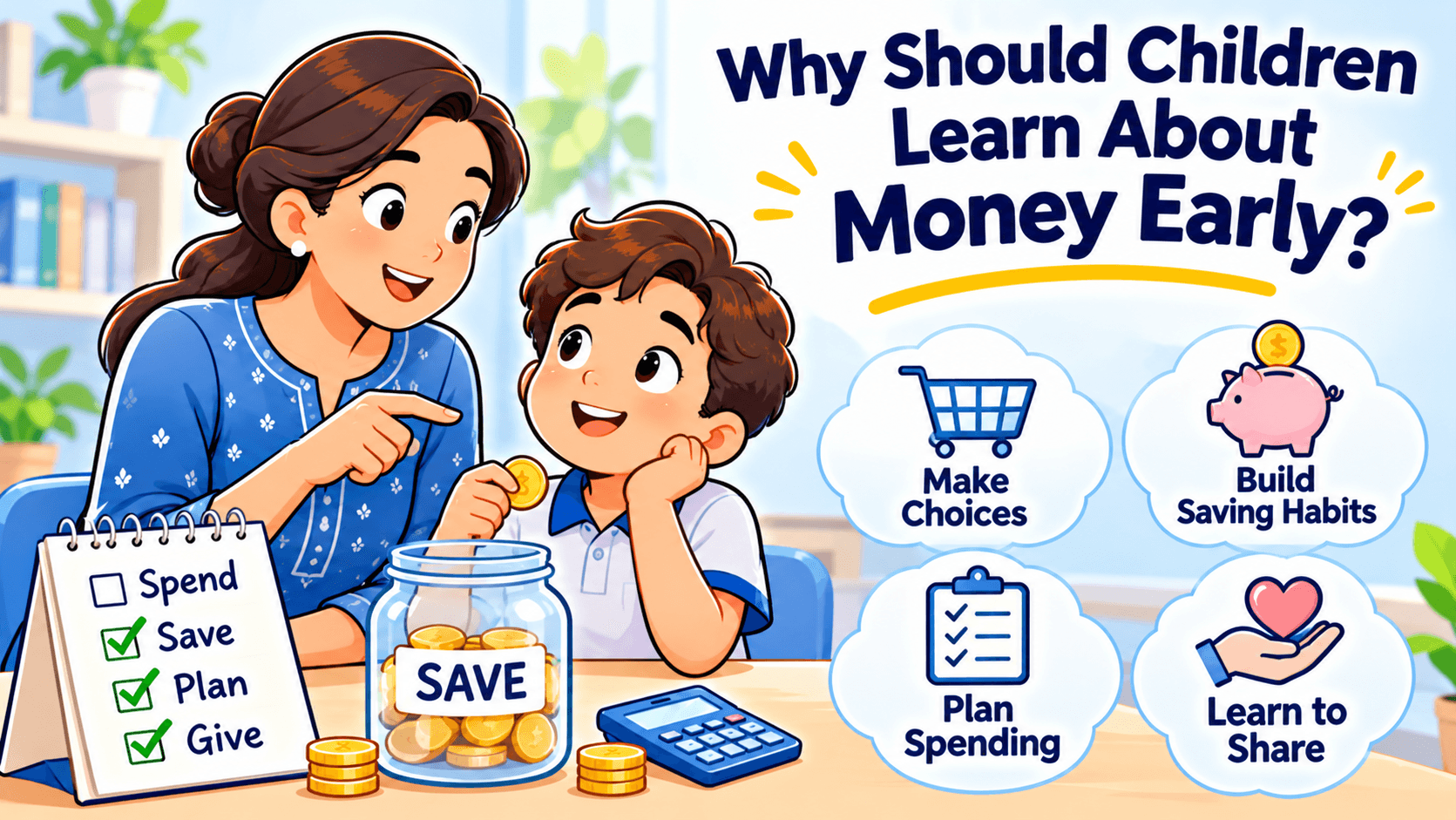

Your child asks for a new water bottle because a classmate has one, even though their old bottle works perfectly. Or they spend all their birthday money on a toy and regret it a week later. These moments offer a chance to discuss money choices.
Children do not need a salary or bank account to understand money. They see adults paying bills and comparing prices. Financial literacy helps them make sense of these everyday experiences before their decisions become more complicated.
Financial Literacy Is About Choices, Not Just Calculations
Financial literacy means understanding how money is earned, spent, saved and managed. For young children, it begins with recognising that money is limited and every purchase involves a choice.
Imagine giving your child ₹200 for a school fair. They want a ₹150 game and a ₹100 snack. Instead of immediately offering another ₹50, ask, “Which matters more to you today?” This simple question introduces budgeting without a lecture.
It also helps children separate needs from wants. School shoes that no longer fit are a need; another pair in a fashionable colour may be a want. There is no need for guilt. The aim is to explain priorities and the reason behind each decision.
The Central Board of Secondary Education (CBSE) provides financial literacy learning materials for middle-school students, covering basic concepts such as money and banking. This reflects the value of teaching financial skills well before adulthood.
Everyday Money Lessons Build Patience and Independence
A child who understands saving learns that not every wish has to be fulfilled immediately. Suppose your child wants a board game costing ₹600. If they save ₹100 from six weekly allowances, they can work towards the purchase themselves.
You could draw six boxes on a sheet of paper and colour one whenever ₹100 is saved. Visible progress helps. It also opens a conversation about changing plans: what happens if they decide they no longer want the game?
Children should also be allowed to make small, safe mistakes. Spending their allowance too quickly can become a useful lesson, provided parents discuss it calmly rather than rescuing them every time. Ask what they would change.
The Reserve Bank of India has highlighted the importance of financial education at school level and supports activity-based learning alongside lessons. At home, a shopping trip, family celebration or simple savings goal can serve the same purpose.
How Can Parents Teach Money Skills Without Making Them Stressful?
You do not need complex financial terms or a large allowance. Start with situations your child already understands.
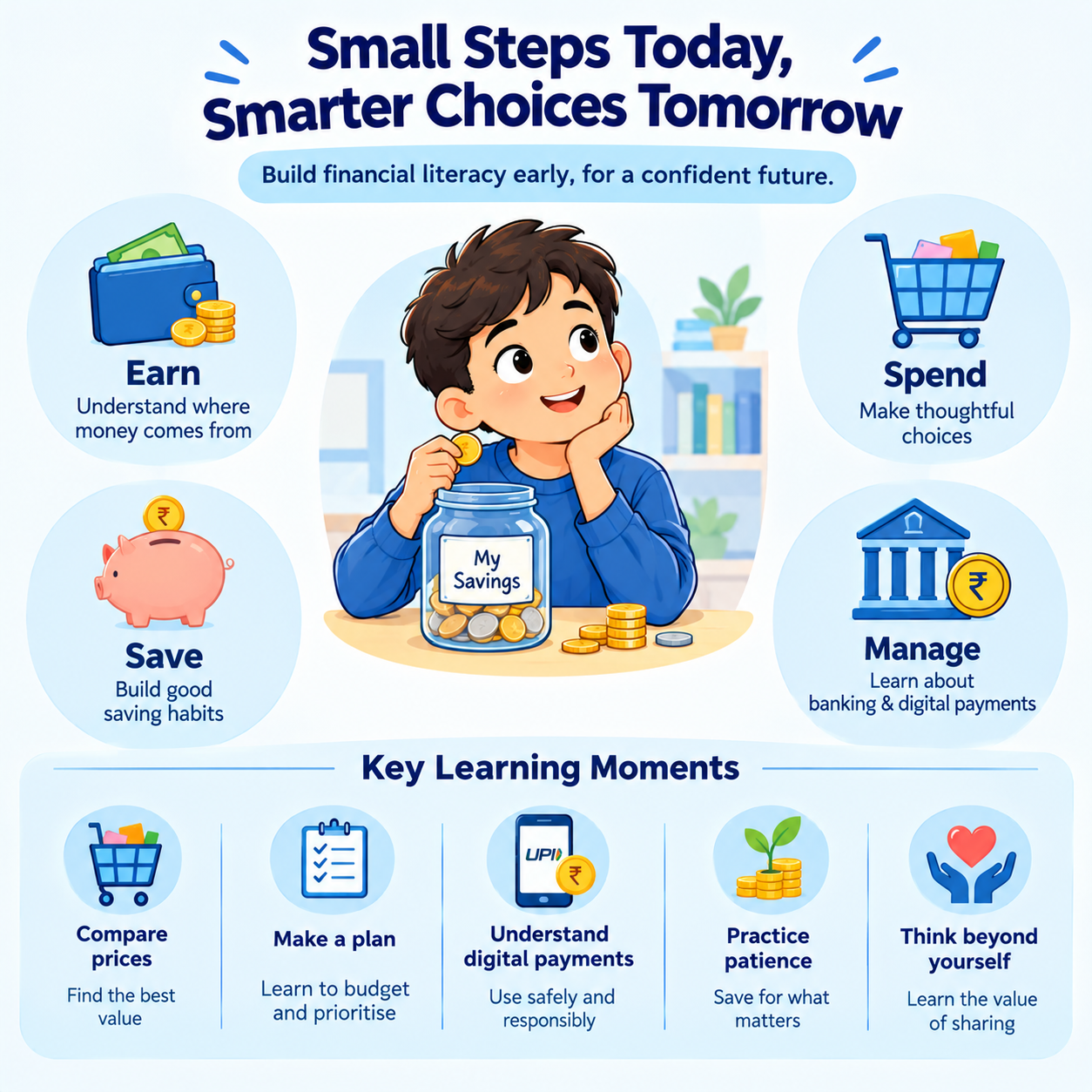
Compare prices together. At a grocery store, show two packs of the same product. Discuss quantity, price and usefulness. An expensive item is not always the better choice, and the cheapest one is not always suitable.
Make a small spending plan. Give an older child a fixed budget for stationery before the new term. Let them list the essentials first, calculate the total and decide what can wait. Review it together.
Discuss digital payments. When you use UPI, explain that tapping a phone does not create free money. The amount still leaves a bank account. Teach children never to share a PIN or OTP and to ask a trusted adult before responding to payment requests.
Include giving and sharing. Some families may choose to set aside a small amount for a cause or a gift. This shows children that money decisions can reflect care for others, not just personal purchases.
Avoid linking financial lessons to family income or comparing your child with wealthier classmates. Let them ask questions without worrying about household finances.
What Should Children Learn at Different Ages?
For younger children, keep lessons concrete. Sorting coins, playing shop or choosing between two affordable treats can introduce value and choice.
By the middle-school years, children can try a simple budget, keep track of expenses and calculate how long it will take to reach a savings goal. Introduce the idea that advertisements and discounts are designed to influence buying decisions. A “limited-time offer” does not automatically mean something is needed.
For teenagers, conversations can expand to bank accounts, interest, online fraud and the difference between saving and investing. Avoid asking them to make real financial investments as a learning exercise. Explain risks first.
There is no single age at which every child becomes responsible with money. Start simply and repeat lessons patiently.
Connecting Financial Literacy With School Learning
For parents exploring Top schools in Ghaziabad or comparing Best Schools in Ghaziabad, practical life skills may be one factor to examine alongside academics. K.R. Mangalam World School Vaishali(KRMWSV), Vaishali, Ghaziabad lists financial literacy among its skill-based education offerings on its official Primary and Middle Wing pages. Parents can ask schools how such topics are taught, what age-appropriate activities are used and how classroom learning connects with real-life decisions.

Conclusion
Teaching children about money is not about preparing them to earn early. It is about helping them pause, weigh options and understand consequences. Start with a small purchase, an achievable savings goal or a conversation during shopping. These ordinary experiences can help children practise thoughtful choices long before they receive their first salary.
To know more about other schools in Ghaziabad, click on the link below












 as a preferred source on