




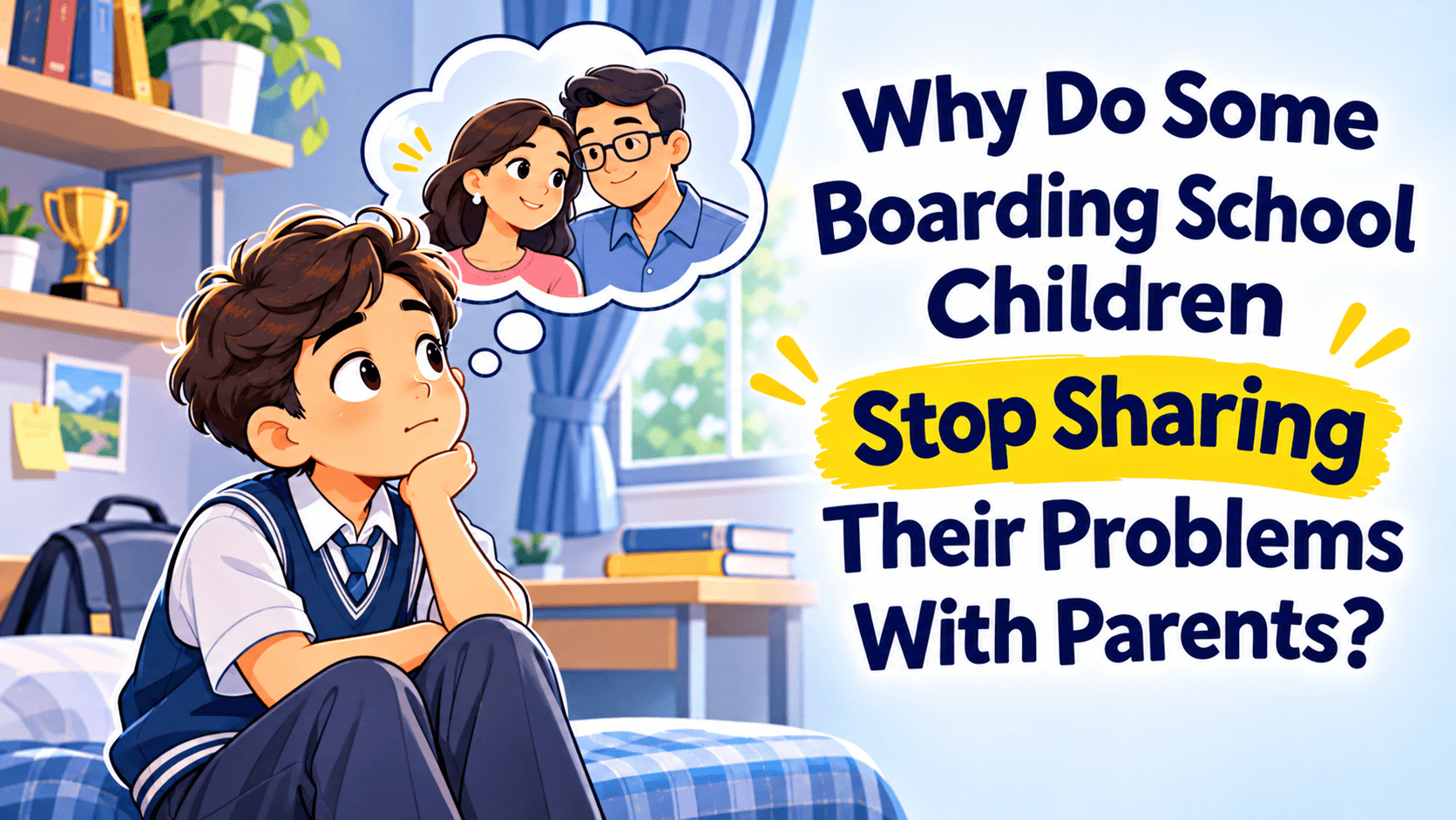

Your child used to tell you everything about school, from arguments with friends to difficult homework. But after a few months at boarding school, your conversations have become shorter.
"How was your day?"
"Good."
"Is everything alright?"
"Yes."
You may wonder whether your child is becoming independent or keeping something important from you.
Living away from family changes how children communicate. Some become more comfortable solving problems independently, while others hesitate to discuss difficulties because they do not want to worry their parents.
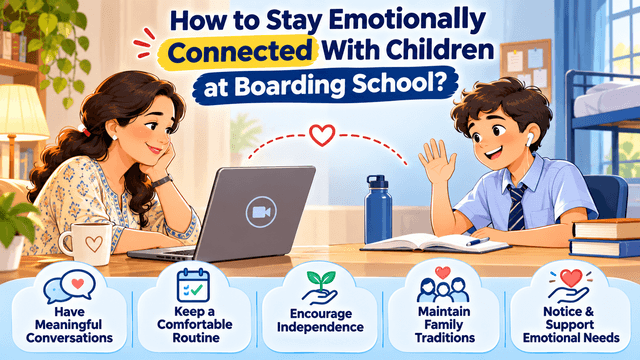
Understanding these changes can help families maintain emotional connections without interfering with a child's growing independence.
Why Do Boarding School Children Become Less Open With Parents?
Children living in boarding schools experience a different daily environment. They develop friendships, follow residential routines, and gradually learn to manage responsibilities without their parents nearby.
However, several factors may influence how openly they discuss their experiences.
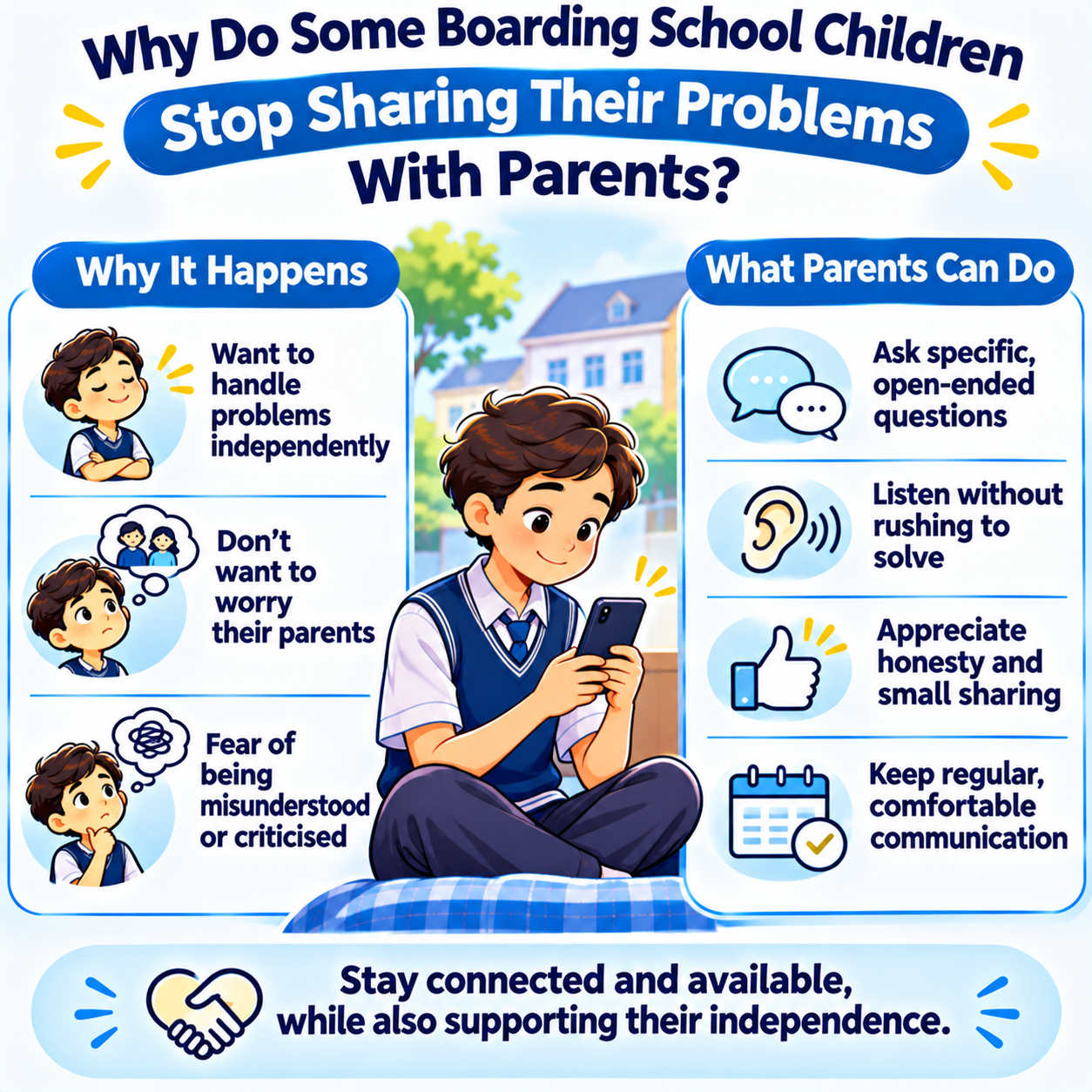
1. They Want to Handle Problems Independently
Imagine a child having a disagreement with their roommate.
Instead of immediately informing their parents, they might decide to resolve it themselves or seek guidance from a teacher.
This can reflect growing independence rather than emotional distance.
A 2016 study published in the Canadian Journal of School Psychology, involving 701 boarding and day-school students, found that boarding students reported greater autonomy from parents but perceived less parental support.
These findings highlight the importance of balancing independence with continued emotional connection.
2. They Do Not Want Their Parents to Worry
Some children avoid discussing problems because they know their parents are already concerned about them living away from home.
For example, a child experiencing friendship difficulties might think, "If I tell Mum, she'll worry all night."
They may share positive experiences while keeping uncomfortable feelings private.
3. They Fear Being Misunderstood
Children may hesitate to discuss disappointing test results, disagreements, or mistakes if they expect criticism.
When conversations focus mainly on marks, discipline, and achievements, children might feel that everyday emotional concerns are less important.
Does Talking Less Mean a Child Is Emotionally Distancing Themselves?
Not necessarily.
As children grow older, they naturally develop greater privacy and independence. They may prefer discussing certain experiences with friends or trusted adults at school.
Research published in 2021 on boarding and day-school students found that greater psychological independence could coexist with emotional closeness to parents.
Therefore, shorter conversations alone should not be treated as evidence of an unhealthy relationship.
What matters is whether children still feel comfortable seeking parental support when they need it.
Parents should pay attention to changes beyond communication frequency.
For example, persistent sadness, unusual withdrawal, sleep difficulties, declining interest in activities, or repeated reluctance to return to school may deserve closer attention.
These signs do not automatically indicate a serious problem, but they should not be dismissed as ordinary boarding-school adjustment either.
Why Is Staying Emotionally Connected Important During Boarding School?
Emotional support remains important even when children become capable of managing everyday responsibilities.
The 2016 study comparing boarding and day-school students found that boarding students perceived greater teacher support but less parental support.
This does not mean boarding school necessarily weakens family relationships. Rather, it suggests that maintaining connections deserves deliberate attention.
Another study, published in 2025, examined communication in two Tanzanian primary boarding schools. It identified limited parent-child communication as a concern associated with children's feelings of isolation and homesickness.
Although these findings cannot be applied equally to every boarding school, they demonstrate why regular, meaningful family contact matters.
Children benefit from knowing that their parents remain available, even when they are learning to handle situations independently.
The aim is not constant monitoring. It is maintaining a relationship in which children feel safe discussing difficulties without expecting immediate judgement.
How Can Parents Encourage Boarding School Children to Open Up?
Parents can make conversations more comfortable through small changes in how they communicate.
Ask Specific Questions Instead of General Ones
Rather than repeatedly asking, "Is everything fine?", try questions such as:
- "What was the most interesting part of your week?"
- "Did anything make you uncomfortable recently?"
- "Who do you usually talk to when something bothers you?"
- "Is there anything you wish adults understood better?"
These questions create opportunities for meaningful conversations without demanding personal details.
Listen Before Offering Solutions
If your child shares a disagreement with a classmate, avoid immediately contacting the school or telling them what to do.
First, listen and ask whether they want advice or simply someone to hear them.
However, concerns involving bullying, abuse, threats, or immediate safety require appropriate adult intervention.
Avoid Turning Every Call Into a Performance Review
Academic progress matters, but conversations should also include friendships, interests, everyday experiences, and feelings.
Children need to know that parental affection does not depend on examination results.
Maintain Predictable Communication
Agree on suitable calling times within the school's communication policies.
If your child occasionally prefers a shorter conversation, respect that preference while remaining available.
Work With School Staff When Necessary
If your child becomes consistently withdrawn or distressed, contact the appropriate residential staff member or school counsellor.
Share your observations and ask about the child's wellbeing while respecting reasonable privacy.
Persistent emotional or behavioural changes may also require assessment by a qualified mental-health professional.
Supporting Parent-Child Communication in Boarding Schools
For parents exploring Top Boarding schools in India, understanding how residential schools maintain communication between students, families, and staff is important. The TonsBridge School(TBS), Dehradun describes a House system supported by Housemasters, tutors, and matrons. Its official boarding information also identifies counselling and student-support arrangements. These provide opportunities for students to seek guidance while living away from home. Parents comparing the Best Boarding schools in India can ask about family communication policies, residential supervision, and procedures for raising emotional concerns.

Conclusion
When boarding school children stop sharing every problem, it does not necessarily mean they are becoming distant from their parents.
Sometimes, they are developing independence. At other times, they may need reassurance that discussing difficulties will not lead to criticism or unnecessary worry.
Parents can support both independence and emotional security by listening patiently, respecting privacy, and remaining consistently available.
Children do not have to share everything. What matters is knowing they can turn to their parents whenever they genuinely need support.
For more information on this and similar schools, check out this list of the best boarding schools in India.






 as a preferred source on