






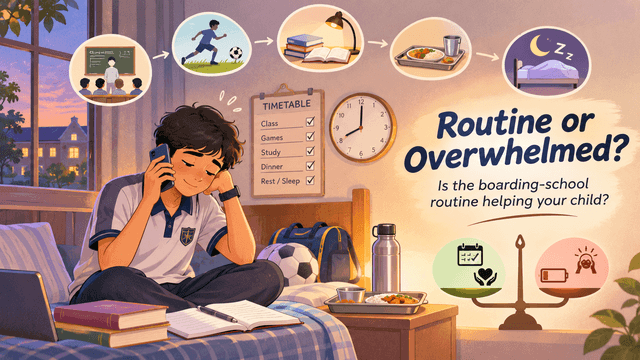
Your child calls from boarding school and says everything is fine. They attend classes, complete homework, and participate in activities. Yet, you sometimes wonder whether they are genuinely happy or simply saying what you want to hear.
This is a common concern for parents whose children live away from home. Good grades and regular participation do not always reveal how a child feels emotionally.
Understanding a child's emotional well-being requires looking beyond academic performance. Small changes in behaviour, communication, friendships, and daily routines can help parents understand how their child is adjusting to boarding-school life.
What Does Emotional Happiness at Boarding School Actually Look Like?
Emotional happiness does not mean children must feel cheerful every day. Missing home, arguing with friends, or feeling disappointed after an examination are normal experiences.
What matters is whether children generally feel safe, supported, connected, and comfortable expressing their emotions.
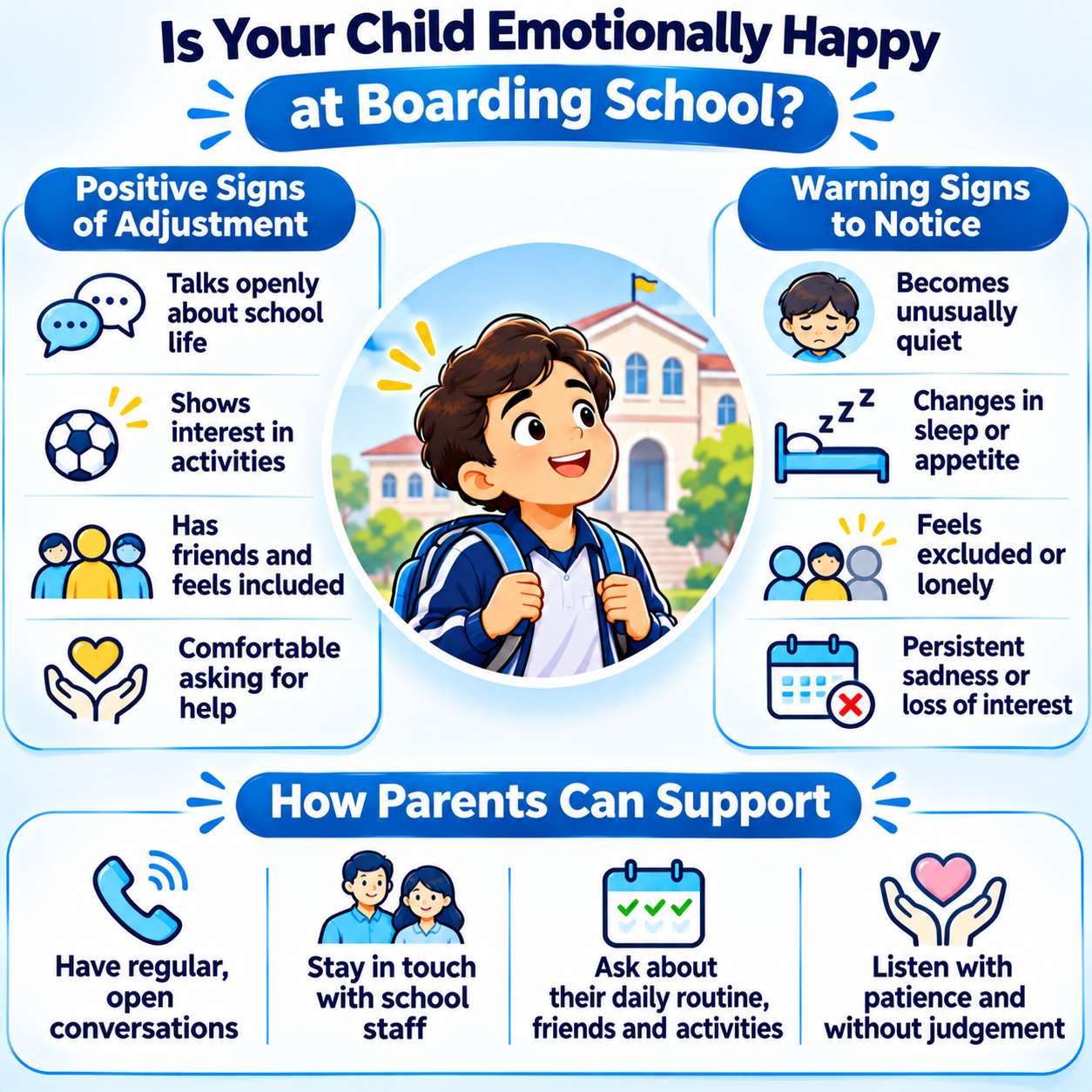
Some positive signs include:
- Talking naturally about friends, teachers, and daily experiences.
- Showing interest in hobbies, sports, or extracurricular activities.
- Feeling comfortable asking adults for help.
- Managing occasional disappointments without prolonged distress.
- Sharing both enjoyable and difficult experiences with parents.
A child who talks about a disagreement with a roommate may actually be demonstrating emotional openness.
Rather than expecting constant happiness, parents should look for a healthy balance between positive experiences and everyday challenges.
What Changes in Behaviour Should Parents Pay Attention To?
Children do not always express emotional difficulties directly. Sometimes, their behaviour communicates what they struggle to explain.
According to UNICEF, emotional distress in children can appear through changes in mood, behaviour, physical health, and social interaction.
1. Changes in Communication
Notice whether your child suddenly becomes unusually quiet during calls or avoids discussing school life.
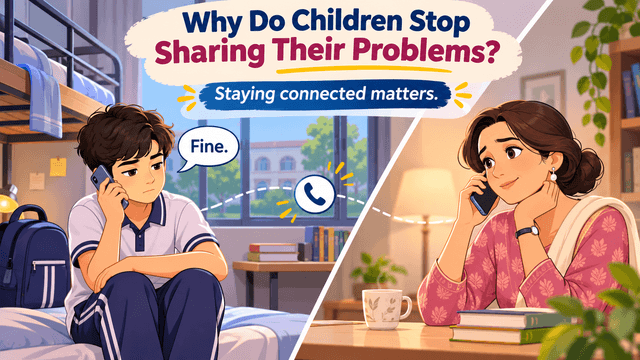
For example, a child who previously shared stories about friends might begin giving brief answers such as "nothing happened" or "everything is okay."
One quiet conversation does not necessarily indicate a problem. However, repeated withdrawal deserves attention.
2. Changes in Sleep, Appetite, or Interests
Persistent tiredness, reduced appetite, disturbed sleep, or losing interest in favourite activities can sometimes indicate emotional difficulties.
The World Health Organization identifies changes in sleep, appetite, concentration, and social behaviour among possible warning signs of depression in children and adolescents.
These changes can also have physical or situational causes. Parents should therefore avoid making assumptions and discuss persistent concerns with appropriate professionals.
3. Changes in Friendships and Participation
Friendships are an important part of residential-school life.
If your child repeatedly mentions being excluded, feeling lonely, or avoiding group activities, try understanding what is happening.
Ask whether they have someone they enjoy spending time with or an adult they feel comfortable approaching.
A child does not need a large friendship group to feel connected. Even one supportive friendship can be meaningful.
How Can Parents Understand Their Child's Feelings During Phone Calls?
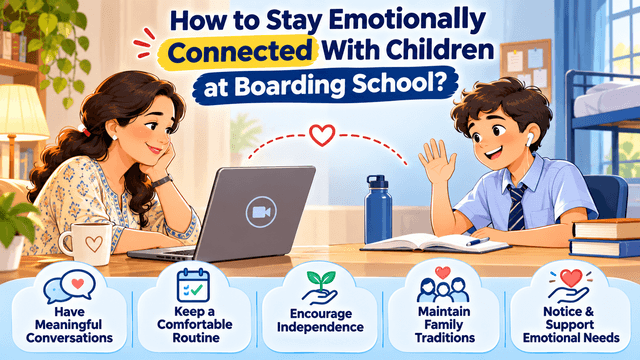
Regular communication is valuable, but the quality of conversations matters more than asking the same questions repeatedly.
Instead of beginning every call with questions about homework, examinations, and marks, create space for everyday experiences.
Try questions such as:
- What was the most enjoyable part of your week?
- Did anything make you uncomfortable recently?
- Who do you usually spend your free time with?
- Is there anything you wish were different?
- Whom would you approach if you needed help?
These questions encourage children to share experiences without feeling examined.
UNICEF recommends regular emotional check-ins and allowing children to express feelings in ways that suit them.
Avoid reacting with immediate anger or panic when your child shares something unpleasant. Listening calmly makes future conversations easier.
Parents should also avoid turning every difficulty into an instruction to be stronger or more independent.
Sometimes, children simply need to feel heard.
When Should Parents Involve Boarding-School Staff?
Parents cannot observe their child's daily behaviour while they are living at school. Communication with responsible staff members can therefore provide additional perspective.
If you notice concerning changes, speak with the House Parent, class teacher, or school counsellor.
Ask specific questions about your child's participation, friendships, sleeping habits, and willingness to seek support.
Compare these observations with what your child communicates, while respecting their privacy.
India's Indian Council of Medical Research identifies prolonged social withdrawal, persistent sadness, behavioural changes, and declining academic performance among signs that may require professional assessment.
If emotional difficulties persist or interfere with daily life, consult a qualified mental-health professional. Any indication of self-harm, abuse, or immediate danger requires prompt protective action.
How Swarnprastha Public School Supports Residential Students
For parents exploring the Top Boarding schools in India, understanding residential care and parent-school communication is an important consideration. Swarnprastha Public School(SPS), Sonipat, describes a boarding environment where House Parents supervise students, provide guidance, and communicate with families through telephone or email. According to the school's official website, residential students have access to supervised recreational activities, structured routines, and opportunities to remain connected with their parents. These arrangements provide relevant points for families comparing the Best Boarding schools in India to examine, particularly how students can seek support and how their emotional well-being is monitored.

Conclusion
Understanding whether your child is emotionally happy at boarding school requires more than checking marks or hearing that everything is fine.
Pay attention to communication patterns, friendships, interests, and changes in everyday behaviour. More importantly, create conversations where children feel comfortable sharing both positive and difficult experiences.
When parents listen consistently and work with school staff when necessary, they are better placed to recognise concerns early and support their child's emotional well-being.
For more information on this and similar schools, check out this list of the best boarding schools in India.


 as a preferred source on