






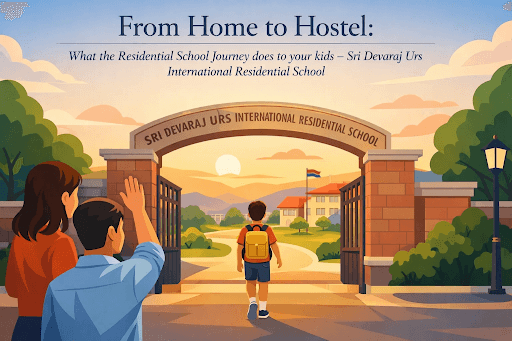

Let me start with something real: the day you drop your child at a residential school hostel for the first time does not feel ordinary. You adjust their cupboard. You check the bedsheets twice. You remind them to call. They try to act brave. You try to act braver. And somewhere in that moment, you both realise something has changed.
Moving from home to a hostel is not just a logistical shift. It is emotional. It is psychological. It is developmental. And while it feels overwhelming at first, it often becomes one of the most transformative journeys in a child’s life. Residential education has been part of India’s academic landscape for decades, and today it continues to grow. According to national education reports, boarding and residential institutions have seen a steady increase in enrolment, especially among families seeking structured discipline and holistic development.
Before you start looking for the best boarding schools in India, so that you can pick the right option for your kids' overall development. That is why you need to read the article till the end to know all that you should know before picking the right boarding school.
Also Read | Structured Learning Beyond the Classroom: Guided Study in Boarding Life
The First Goodbye Is Always the Hardest
1. Independence is not taught; it is Experienced
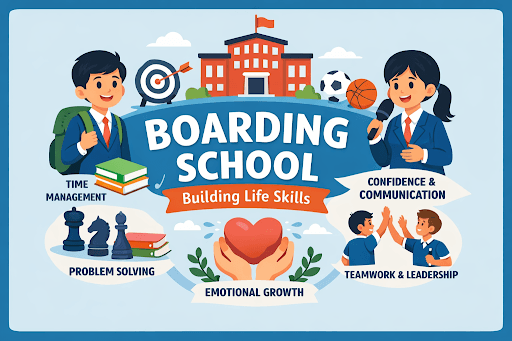
At home, most children have a safety net. Parents remind them about homework. Meals appear on time. Clothes are folded. Problems are handled quietly in the background. In a hostel environment, things change, and children learn to manage time. They wake up with alarms instead of parental nudges. They organise their belongings. They balance study hours with sports and social interaction.
Research in child development suggests that adolescents exposed to structured independent living environments develop stronger executive functioning skills, including planning, prioritising, and self-regulation. These are the very skills that later define success in university and professional life.
It does not happen instantly. In the first few weeks, they might feel confused. They may miss home-cooked food. They may forget small responsibilities. But gradually, routines form. Confidence builds. And that confidence feels different. It is earned.
2. Emotional Resilience Begins to Take Shape
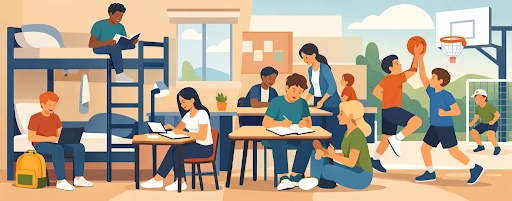
Living away from home teaches emotional strength in subtle ways. When children resolve minor conflicts with roommates or adjust to shared spaces, they develop negotiation skills. When they manage homesickness, they learn emotional regulation.
A 2022 educational psychology study highlighted that students in structured residential programs often demonstrate higher adaptability and resilience compared to peers in purely day-school setups. Why? Because they encounter controlled challenges daily. And controlled challenges create growth.
Sometimes, children don't even understand how much stronger they are becoming during this journey. They might complain about waking up early or missing family events, but quietly, they are learning to stand on their own. They are building a kind of emotional muscle that stays with them long after school ends. Growth does not always feel comfortable. But it is powerful.
3. Academic Focus in a Structured Ecosystem
One of the strongest advantages of residential schooling is academic discipline. In hostels, study hours are structured. Peer learning has become common. Teachers are more accessible beyond regular classroom sessions. Studies indicate that students in structured boarding environments often display improved time management and higher completion rates of academic assignments. The environment reduces external distractions and increases consistency.
Of course, academic excellence still depends on individual effort. But when the ecosystem supports concentration and routine, performance often improves naturally. Peer influence also plays a role. When everyone around you is preparing for exams or participating in academic activities, motivation becomes contagious.
4. Social Growth Beyond Textbooks
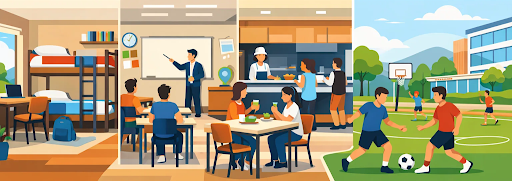
Residential schooling creates a miniature society. Students from different backgrounds, cities, and cultures live together. They share stories. They celebrate festivals. They argue and then reconcile. This diversity fosters empathy and cultural awareness.
According to UNESCO data, collaborative living and learning environments improve social intelligence and communication skills by significant margins. Children become more adaptable to varied perspectives. And honestly, those late-night conversations in hostels sometimes teach more about life than any formal lesson.
5. Physical Discipline and Holistic Development
Most residential schools emphasise physical fitness and extracurricular engagement. Structured sports sessions, activity hours, and participation in clubs ensure that children do not remain confined to academics alone.
Research consistently shows that regular physical activity enhances cognitive functioning and memory retention by up to 20%. When students balance academics with sports and creative pursuits, overall development becomes balanced. Hostel life naturally enforces routine like, early mornings, scheduled meals, and fixed prep times. In this way, discipline becomes part of a lifestyle rather than an imposed rule.
Check Out | How Does a Supportive Residential Experience Look Like?
Where Sri Devaraj Urs International Residential School Fits In
Every residential school has its own rhythm. Some focus heavily on discipline. Some highlight academics. Others lean toward personality development. But the real question parents usually ask is simple: Where does a school stand in shaping a child’s everyday life away from home?
This is where Sri Devaraj Urs International Residential School enters the conversation. Located in the calm outskirts of Bangalore, the school follows a residential model that tries to balance structure with independence. Not too strict. Not too relaxed either. Somewhere in between. And for many parents, that middle ground matters.
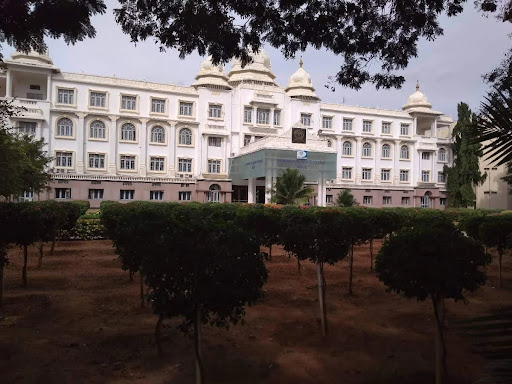
Students here experience a routine that is designed around both academic focus and personal development. Mornings often begin early. Classes follow. Then activities. Study hours. Sports. Social time. It sounds structured because it is. But within that structure, students slowly begin to manage themselves. Small decisions. Small responsibilities. Over time, these small things start building confidence.
Another aspect worth noticing is the environment students grow up in. Living with peers from different regions and backgrounds naturally exposes children to diverse perspectives. Conversations in dorms. Team sports. Group study sessions. These daily interactions quietly shape communication skills and adaptability. Not something that can always be taught inside a classroom.
Residential schools also tend to blur the boundary between learning and living. Teachers are not just instructors seen during class hours. They become mentors who observe students beyond textbooks in debates, sports fields, art rooms, and hostel corridors.
Of course, no boarding experience is identical for every child. Some adapt quickly. Others take time. Homesickness happens. Adjustment phases happen. It is part of the journey.
But schools like Sri Devaraj Urs International Residential School represent the broader idea of residential education, a place where schooling is not limited to academic periods, but becomes part of everyday life. And somewhere along that journey, children begin learning something bigger than subjects. They start learning how to live independently.
The Final Thoughts
If I had to summarise this in one thought, I would say that the journey from home to hostel reshapes identity. It does not turn children into someone else. It reveals strengths they did not know they had. Institutions like Sri Devaraj Urs International Residential School illustrate how structured residential education can nurture both academic achievement and personal growth.
The journey may begin with tears and uncertainty. But it often ends with confidence and clarity. And sometimes, as parents, giving children space to grow independently becomes one of the most loving decisions we make.
If you want to know more about this and other boarding schools, then check out the list of the top boarding schools in India.









 as a preferred source on