







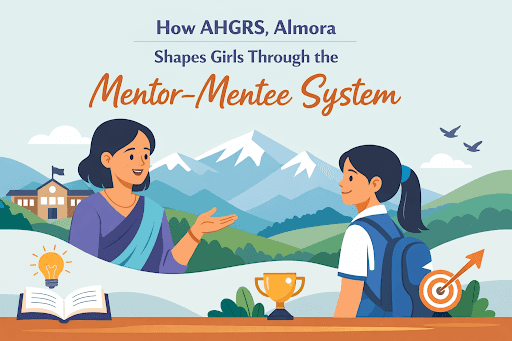

Growing up is never simple, and for young girls, the journey carries its own unique challenges. The environment a girl grows up in shapes her confidence, her values, and her sense of self. Schools that understand this responsibility go beyond textbooks to build the whole person. Boarding schools, in particular, carry a deeper duty; they become a second home, a place where young minds are guided every single day.
One of the best boarding schools in India, Ashok Hall Girls' Residential School (AHGRS) in Almora, has taken this responsibility seriously for over 30 years. Nestled in the quiet Kumaon hills with a clear view of the Himalayas, the school offers girls a calm, focused space to learn and grow.
In this article, we explore how the Mentor-Mentee System at AHGRS works and why personalised mentorship matters deeply in a young girl's growth.
Also Read | Ashoka Hall Girls’ Residential School, Almora: Where Discipline Meets Distinction
Why Mentorship Matters in Boarding Schools
Boarding school students spend most of their time away from family. This makes adult guidance inside the school very important. A good mentor fills a gap that parents cannot fill from a distance.
- Mentors Become a Safe Point of Contact: Students face academic pressure, personal doubts, and social challenges daily. A trusted mentor helps students talk about their struggles openly. This kind of support builds emotional strength over time.
- Regular Check-ins Build Consistency: Mentorship works best when it is not occasional but routine. Consistent meetings help students stay on track with their goals. They also help mentors spot problems early and act quickly.
- Builds Confidence Beyond the Classroom: A student who feels heard tends to perform better. Mentorship encourages students to believe in their abilities. It turns quiet, hesitant learners into self-assured young women.
What Makes Personalised Mentorship Work

Not all mentorship programs are equally effective. The difference lies in how personal and structured the relationship is. Students need to feel that guidance is meant specifically for them.
Small Groups Allow Deeper Bonds
Large groups make mentorship shallow and less effective. Smaller groups allow teachers to focus on each student individually. Every student gets meaningful attention and honest feedback.
Goal-Setting Gives Direction
Students who set goals early develop a clearer sense of purpose. A mentor helps students break big goals into smaller, achievable steps. This process teaches planning and self-discipline together.
Emotional Support Is Just as Important as Academic Support
Many students struggle emotionally during their boarding school years. Mentors who address both personal and academic needs create well-rounded support. This balance helps students manage stress with greater ease.
Also Read | Where Every Child Matters: Inside the Inclusive Education Model
The Role of Teachers Beyond Teaching
In a boarding school, teachers play multiple roles every single day. They are not just subject experts but also guides and role models. Students observe and absorb lessons from how their teachers carry themselves.
Teachers as Daily Influences
A student interacts with teachers far more in a boarding school. This daily presence makes teacher-student relationships very meaningful. Strong relationships inspire students to aim higher and stay motivated.
Structured Roles Improve Outcomes
When teachers carry clear mentorship responsibilities, results improve. Students feel accountable to someone who knows them personally. This accountability pushes students to stay consistent in their efforts.
Check Out | The Role of Teacher Development in Student Success
Ashok Hall Girls’ Residential School and Its Mentor-Mentee System
Ashok Hall Girls’ Residential School is one of the best CBSE boarding schools in India, founded on the values of the Birla family. It offers education from Class 4 to Class 12. The school focuses on holistic growth through academics, sports, arts, and personal development.

The Mentor-Mentee System at AHGRS is a structured program where each teacher mentors a small, diverse group of students. Mentors meet their mentees regularly to review academic progress, co-curricular involvement, and personal well-being. These meetings are semi-formal, which makes students feel comfortable enough to speak freely. Mentors help students set realistic goals and create personal plans that suit their unique strengths and interests. When a student needs specialised help, the mentor connects her to the right resource within the school community.
The program also works hand in hand with the school's broader vision. Students at AHGRS are encouraged to develop empathy, resilience, and leadership, i.e. values that mentors actively reinforce in every interaction. The dining hall, dormitories, and study rooms all become spaces where these relationships deepen naturally. Over time, the bond between mentor and mentee becomes a steady source of confidence for the student.
Conclusion
Mentorship is one of the most powerful tools a boarding school can offer. AHGRS has built this understanding into the very fabric of its daily life. Through its Mentor-Mentee System, the school ensures that no girl feels lost, overlooked, or unsupported. Every student walks out of AHGRS not just with a certificate, but with clarity, courage, and the confidence to lead.
For more information on this and other similar boarding schools, please click on the link below.

 as a preferred source on