








Remember the famous Stanford Marshmallow Experiment? A child sits alone in a room with a single marshmallow, promised two if they can wait fifteen minutes without eating it. That simple test revealed something profound: self-control in childhood predicted success decades later—better grades, healthier relationships, even higher incomes.
But here's the question parents rarely ask: Are our schools teaching children how to pass their own marshmallow tests? In an era obsessed with test scores and rank lists, we've forgotten that academic brilliance means little if a child crumbles under pressure, struggles to work with others, or makes impulsive decisions. Research from the Collaborative for Academic, Social, and Emotional Learning shows that students in social-emotional learning programs demonstrate an 11% improvement in academic performance alongside better emotional regulation and stronger interpersonal skills.
In this article, we explore why emotional intelligence matters as much as IQ, how schools can integrate it meaningfully into education, and how Cambrian Hall, Dehradun, is leading this transformation by blending emotional intelligence with academic rigour.
Also Read | Success Through Art Spaces at Cambrian Hall School
The Science Behind Emotional Intelligence in Schools
For decades, intelligence was measured by a single number—your IQ. But psychologists now recognise that success depends equally on emotional intelligence: the ability to understand, manage, and express emotions effectively. Schools integrating emotional intelligence aren't just producing happier students; they're creating better learners.
What Research Tells Us About EQ and Academic Success
Multiple longitudinal studies reveal a clear pattern: children who develop emotional competencies early perform better academically and socially throughout their lives. A comprehensive analysis published by the American Psychological Association found that students participating in structured emotional intelligence programs showed marked improvements not just in behaviour, but in standardised test scores too.
The connection isn't mysterious. When students learn to manage anxiety, they perform better during examinations. When they develop empathy, group projects become collaborative rather than contentious. When they practice self-awareness, they identify their learning gaps honestly and seek help without shame.
Why Traditional Education Falls Short
Walk into most classrooms, and you'll see the same pattern: brilliant students who memorise perfectly but freeze during presentations. Top scorers who can't handle a single critical comment. High achievers who struggle to make friends or manage stress.
Traditional education prioritises cognitive skills while treating emotional development as incidental. We expect children to automatically know how to handle disappointment, jealousy, or frustration. But these skills aren't instinctive; they're learned. Without explicit teaching, many children simply never develop them.
Core Components of Emotional Intelligence in Education
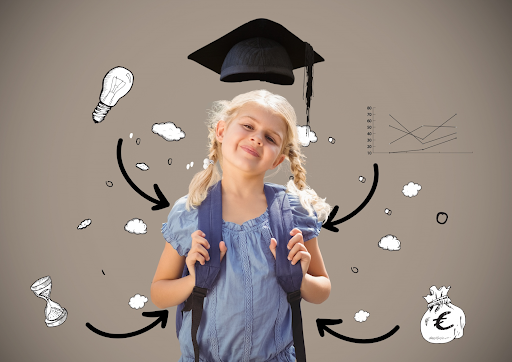
Emotional intelligence isn't a single skill but a cluster of competencies that work together. Effective programs address all these dimensions systematically, giving students practical tools they can use daily.
Self-Awareness and Emotional Regulation
Understanding your emotions is step one; managing them is step two. Self-aware students recognise when they're anxious, angry, or overwhelmed. They learn to pause rather than react impulsively.
Practical exercises include:
- Emotion journaling: Students track their feelings daily, identifying patterns and triggers
- Mindfulness practices: Simple breathing exercises that calm the nervous system during stress
- Reflection prompts: Questions like "What made me proud today?" or "When did I feel frustrated?"
- Body awareness activities: Recognising physical signs of emotion—tight chest during anxiety, warm face during embarrassment
These aren't abstract concepts but concrete skills that help a child calm down before a difficult exam or think clearly during a disagreement with a friend.
Social Skills and Relationship Building
Academic intelligence might get you through school, but social intelligence determines how you navigate life. Children need explicit instruction in reading social cues, communicating clearly, and resolving conflicts constructively.
Role-playing exercises work remarkably well here. Students practice apologising after hurting someone's feelings, standing up to peer pressure, or negotiating fairly during group work. They learn that empathy isn't just feeling sorry for someone—it's actively trying to understand their perspective.
Responsible Decision-Making and Ethical Reasoning
Every day presents dozens of small ethical choices: Do I share the answer or let my friend struggle? Do I take credit for group work or acknowledge everyone's contribution? Do I follow the crowd or stand by my values?
Schools can nurture moral reasoning through structured discussions of age-appropriate dilemmas. The goal isn't to dictate right and wrong, but to develop the thinking process: Consider consequences, weigh values, anticipate impact on others, and choose courageously.
Practical Applications: How Schools Integrate Emotional Intelligence
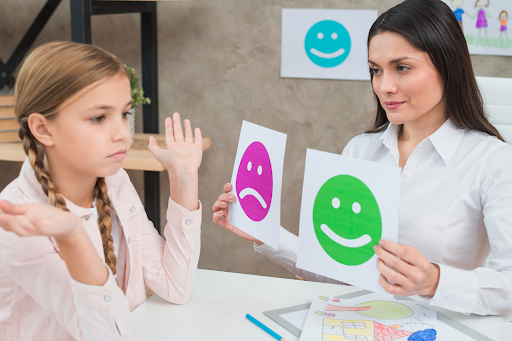
Theory matters, but implementation determines impact. Schools successfully integrating emotional intelligence share certain approaches: they make it experiential, embed it across subjects, and measure it seriously.
Interactive Learning Methods
Forget lectures about feelings. Effective emotional intelligence education is active and engaging. Students participate in drama activities where they embody different emotions and perspectives. They engage in team challenges requiring cooperation and communication.
Some schools use games like "emotion charades", where students act out feelings without words, or "perspective-taking exercises", where they argue from viewpoints they initially disagree with. These activities feel playful but build crucial competencies.
Creating Safe Spaces for Vulnerability
Emotional growth requires psychological safety—the confidence that expressing feelings won't lead to judgment or ridicule. Schools achieve this by modelling vulnerability themselves. Teachers share their own challenges and coping strategies. Counsellors facilitate small-group discussions where students discover their struggles aren't unique.
Peer support systems amplify this effect. Older students mentor younger ones, sharing how they navigated common challenges. This normalisation of difficulty reduces stigma and encourages help-seeking behaviour.
Measuring Success Beyond Test Scores
How do you assess emotional intelligence? Not through multiple-choice tests. Schools are developing holistic evaluation methods: teacher observations of classroom behaviour, self-reflection portfolios, parent feedback on home behaviour changes, and peer assessments of collaboration skills.
The real measure appears over time: Do students handle setbacks with greater resilience? Do classroom conflicts decrease? These qualitative improvements matter more than any numerical score.
Check Out | Empowering Students Through Practical Learning
Cambrian Hall, Dehradun: Where Emotional Intelligence Drives Academic Excellence

Established in 1954, Cambrian Hall in Dehradun represents a legacy institution reimagining education for modern times. This day school, set in a serene, pollution-free environment, has consistently produced distinguished alumni—from military officers to CEOs to artists.
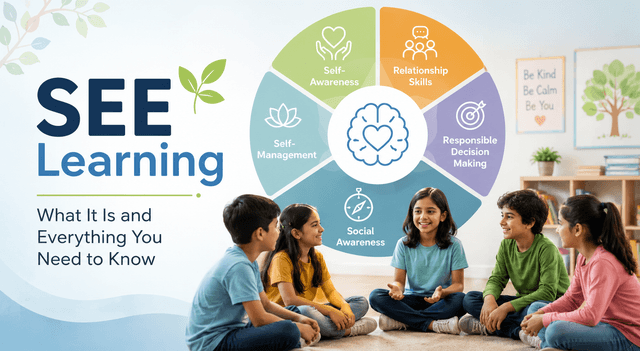
Cambrian Hall has partnered with Emory University and the Dalai Lama Foundation to implement SEE Learning—Social, Emotional, and Ethical Learning. This framework operates on a 3x3 model: three dimensions (Awareness, Compassion, Engagement) across three domains (Personal, Social, Systems). Students develop practical competencies through structured activities like the Marshmallow Test for delayed gratification, "Tell Me Without Telling Me" challenges for non-verbal communication, Laughter Yoga for stress relief, and ethical dilemma discussions for moral reasoning.
Beyond emotional intelligence, the school offers comprehensive development. The Cambridge Methodology for junior students emphasises inquiry-based learning. State-of-the-art AI and Robotics Labs provide hands-on STEM education. Dedicated spaces for art, music, dance, and drama nurture creative expression.
The school's approach balances rigorous academics with emotional well-being. Teachers receive continuous professional development in modern pedagogy. Personalised learning recognises different developmental paces. The in-house counselling program provides confidential support for students navigating challenges. The house system develops leadership, while clubs like Model United Nations expand perspectives beyond textbooks.
What distinguishes Cambrian Hall is how seamlessly emotional intelligence integrates with academic excellence. Parents consistently observe tangible changes: children articulate feelings better, handle disappointments with maturity, show increased empathy, and approach problems with resilience rather than anxiety. These fundamental capabilities determine long-term success and well-being far beyond board examination scores.
Discover how Cambrian Hall's unique integration of emotional intelligence, academic rigour, and innovative learning creates future-ready individuals. The school's admission process welcomes families seeking more than conventional education—those who understand that true success requires both intellectual capability and emotional wisdom. Visit the campus to experience firsthand how learning happens in an environment that celebrates curiosity, nurtures compassion, and builds character alongside competence.
For more information on this and similar schools in the area, check out this list of the best schools in Dehradun.





 as a preferred source on