







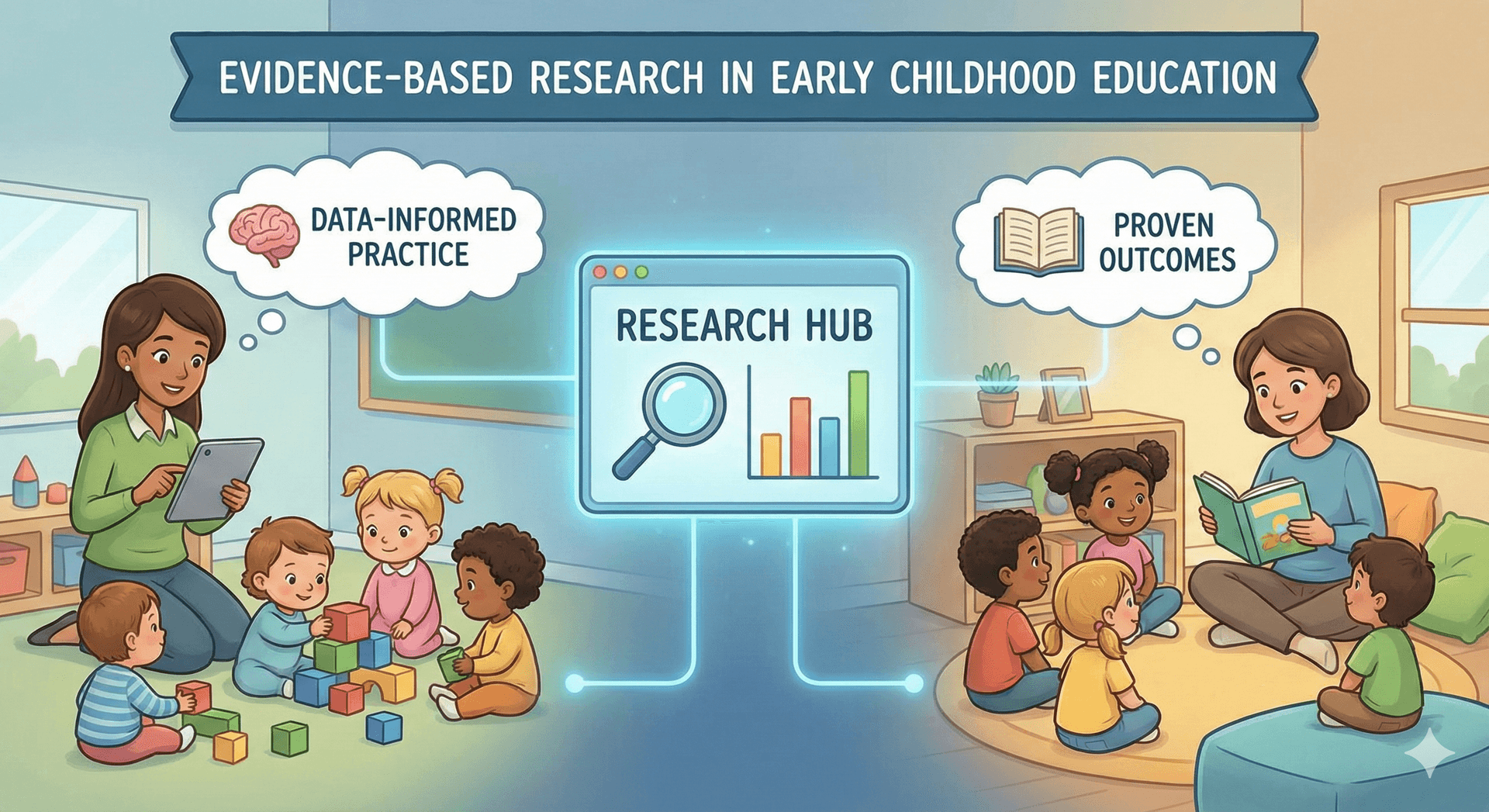

India has a unique advantage of having the largest population of young people in the entire world today. However, our education system is heavily based on outdated education models and rote memorization rather than knowing what genuinely works for students. We frequently see young children memorizing heavy textbooks without understanding the basic concepts behind the words they repeat.
Evidence-based research is the urgent solution required to fix this foundational learning crisis across our country. It proves that Indian children need much more than just copying from a blackboard to succeed in life. When schools use verified modern scientific teaching methods, they change passive students into active and curious thinkers.
Modern educational research in teaching allows schools to customize education to fit our different languages and unique cultures effectively. In this article, you will see how some of the schools in Gurgaon are focusing on scientific teaching methods over traditional textbook study methods to genuinely secure India's future in the education sector.
Also Read: From Concept to Creation: The Big Idea Factory
Why Facts Matter More Than Opinions in Education?
Many people in our society have strong opinions about how to raise and teach young children. However, evidence-based research separates what we assume works from what actually brings real results in classrooms. For a long time, schools believed that children learned best by sitting perfectly still and listening quietly.
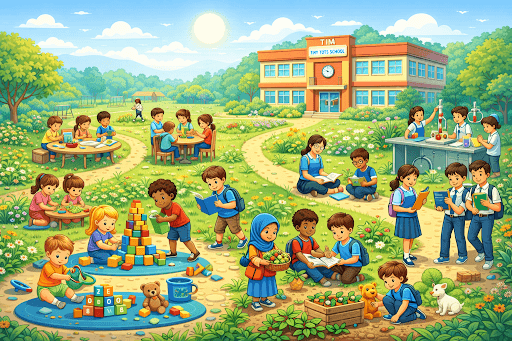
Scientific studies now confirm that young children learn best through active play and hands-on exploration. Research shows that play-based learning helps children develop social skills and solve problems better than rote learning.
When teachers use methods backed by science, they can help children overcome difficult challenges much earlier. This is especially true for children who might have learning difficulties or come from economically disadvantaged backgrounds. Verified data helps educators identify these specific issues early when they are easiest and cheapest to fix.
Waiting until a child is older often means the problem becomes much harder and more expensive to solve. Evidence-based practices ensure that every single moment in the classroom has a clear purpose and a proven benefit.
The Economic Power of Early Learning
Investing in early childhood education is not just good for children; it is financially smart for the nation. Nobel Prize-winning economist James Heckman proved this concept clearly with his famous "Heckman Equation." His research shows that high-quality birth-to-age 5 programs for disadvantaged children deliver a huge return on investment. This means for every rupee spent on high-quality early education, society gets back remarkably more in the long run.
These returns come from better health, reduced crime rates, and higher future earnings for the children involved. When we use evidence-based research to design these programs, we ensure that public money is spent effectively. Governments and schools can use this data to fund programs that actually deliver measurable results.
This research proves that early researched-backed education is one of the best financial investments a country can make. It changes tax money into productive, successful, and happy citizens who contribute positively to the economy.
Closing the Gap Between Researchers and Teachers
A major problem in education is that useful research often stays stuck in universities. Professors write about new discoveries in complicated academic journals that regular teachers never see. This creates a gap where teachers might use outdated teaching methods simply because they do not know about new findings. Evidence-based research must be accessible to the people who work with children every day.
We need scholar-practitioners, i.e. teachers who also study the latest research and apply it in their classrooms. When teachers understand the science behind how children learn, they become more effective and confident. They can explain to parents why they are doing certain activities, like playing with blocks or telling stories. This shared understanding creates a strong support system around the child. It turns classrooms into a place of healthy experimentation where the best ideas are tested and improved.
The Role of Technology and Media in Spreading Knowledge
In the past, accessing the latest research was difficult and time-consuming for busy teachers. Today, digital media like podcasts and online journals make it much easier to stay updated. Audio discussions allow educators to listen to experts while they commute or work. Online platforms allow researchers to share their findings instantly with a global audience.
This flow of information is important for keeping education modern and effective. It allows a teacher in a small town to use the same cutting-edge techniques as a teacher in a big city. By democratizing access to information, we ensure that every child benefits from the latest scientific discoveries. This is how we raise the standard of education for everyone, everywhere.
Also Read: Learn Farming & Life Skills
Salwan Montessori School: A Pioneer in Research-Driven Education
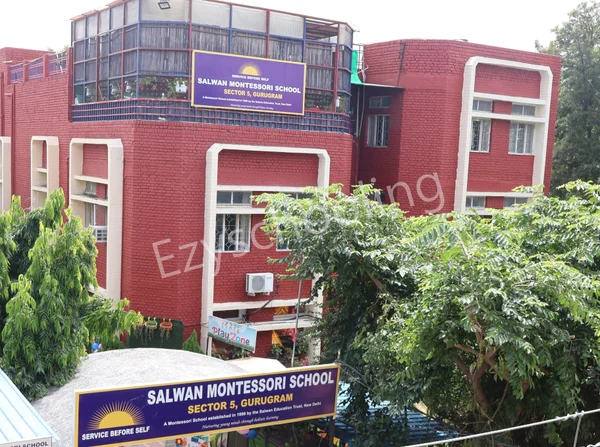
Salwan Montessori School (SMS), one of the good nursery schools in Gurgaon, is a promising leader in bridging the gap between research and classroom practice. Unlike many schools that only focus on teaching, SMS serves as a registered office and operational hub for high-level academic initiatives.
The school’s commitment to evidence-based education is visible through their dedicated research arm, "Navtika." This initiative ensures that the school’s methods are not just traditional but are backed by the latest scientific understanding of child development.
Navtika: A Journal on Early Childhood Care and Education
The centerpiece of this research focus is "Navtika: A Journal on Early Childhood Care and Education." This is a quarterly publication with the ISSN numbers 2348-8824 for print and 3048-5061 for online versions. The journal is published 4 times a year in February, May, August, and November. It is one of the few journals in India specifically dedicated to the foundational years of birth to age 8.
The journal’s mission is to share evidence-based insights that support educators and parents. It is edited by experts like Editor-in-Chief Dr. Indu Khetarpal and Editor Mrs. Priyanka Barara. Recent issues of the journal have covered timely and crucial topics for the modern world. For instance, the 2025 issues focused on "Building Brighter Futures: Integrating SDGs into Early Learning" and "Nurturing Early Minds: On-the-Go Assessment at the Foundational Stage." These themes show that the school is actively exploring how global goals and modern assessment tools apply to the youngest learners.
The Navtika Symposium: A Meeting of Minds
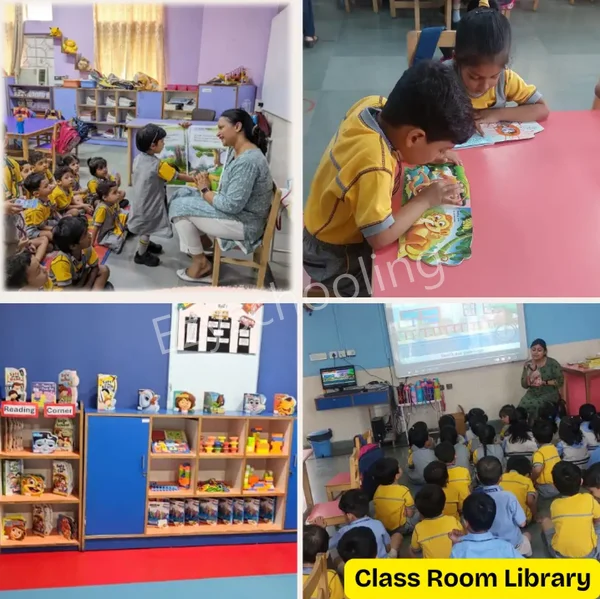
The school organizes the "Navtika Symposium," an annual event that brings people together to discuss big ideas. This event is not just for listening; it is a platform for dialogue among educators, thought leaders, and innovators. The "Navtika National Symposium 3.0" was a virtual event that tackled the challenging topic of "Navigating Artificial Intelligence in Early Childhood Education."
By hosting such events, Salwan Montessori School creates a space where theory meets practice. Teachers get to hear directly from experts about how things like Artificial Intelligence will impact their classrooms. This forward-thinking approach ensures that the school remains ahead of the curve. It empowers their staff to handle new challenges with knowledge and confidence rather than fear.
Extending the Dialogue Through Audio
The initiative also includes the "Navtika Podcast”, in recognition of the need for accessible information. This audio series features deep-dive discussions with the authors who write for the Navtika journal. It allows listeners to hear the story behind the research and understand the practical takeaways.
A recent podcast topic, "Developing Peaceful and Resilient Societies through Early Childhood Education," highlights the school's focus on holistic development. By using podcasts, the school ensures that valuable research reaches a wider audience, including busy parents and educators on the go. This multi-platform approach that includes journal, symposium, and podcast, makes Salwan Montessori School an outstanding hub for educational research.
Conclusion
Evidence-based research is the most powerful tool we have to improve early childhood education. It moves us away from guesswork and towards methods that are proven to work for young brains. The data on brain development and economic returns makes a clear case for investing in quality education.
Schools that focus on research, like Salwan Montessori School in Gurgaon, show the power of modern educational methods in raising the smartest of minds. Through initiatives like the Navtika journal, symposium, and podcast, they are bringing crucial knowledge directly to teachers and parents. The school shows us that when we base our teaching on facts, we give every child the strong foundation they deserve for a successful life.
To learn more about this and other schools nearby, see this list of the top schools in Gurgaon.









 as a preferred source on