









India's traditional education system pushes parents to pick between two paths too early. They must choose either a full international school or a traditional Indian board school. This choice does not work well for today's world anymore. Students now need a strong start that infuses creativity and sharp thinking from early years. They also need solid knowledge for college studies in India. One single curriculum from kindergarten through grade 12 hardly fulfills all these needs.
Many schools in Kolkata are solving this by using a dual curriculum model. They adopt an international curriculum (like Cambridge) for the early years and then they switch to a reputed Indian board like ICSE/ISC or CBSE for higher classes. This dual curriculum path gives students the best chance to succeed globally.
Also Read: From Board to Brain: Role of Chess in Strategic Learning
Early School Years: Why Global School Plans Work Best at the Start?
Early childhood education aims to teach children how to think first, instead of just making them remember facts. Children in global programs like Cambridge Early Years or IB Primary Years Programme develop skills well, because these programs focus on skills more than just facts.
Kids Become Thinkers When They Feel Curious
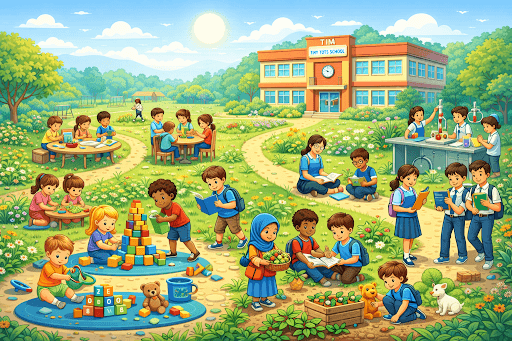
International school curricula use inquiry-based learning to spark curiosity in students. Teachers do not stand at a blackboard and give out facts; instead, students ask questions and solve problems on their own. For example, a Cambridge student does not just memorize plant parts; that student plants a seed, watches it grow, and wonders why it needs sunlight.
Global education data shows that primary school students who use inquiry-based learning solve problems better later in life. These students handle uncertainty well and find answers by themselves. They gain strong confidence in school that memorizing facts alone cannot create.
Kids Gain a Big Edge in Talking and Reading
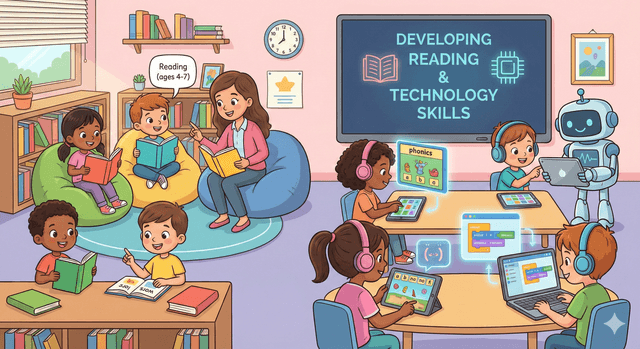
International primary curricula shine in how they teach language skills. The curricula stress speaking, listening, and understanding what you read, instead of only grammar rules. Many programs teach phonics from nursery level in a clear step-by-step way. Children learn the sounds letters make, so they read words fast.
This early focus creates faster reading skills by age 6 or 7. A child who reads smoothly at that age gains a huge lead in all subjects, because they take in facts more easily. They also learn to express their ideas clearly, which helps them succeed in any job later.
Senior Years: Why Indian Boards Matter for College?
International systems create strong foundations, but Indian higher education needs a change when students reach middle and high school.
Matching India's Tough Exams
Most students in India dream of joining top colleges for engineering, medicine, commerce, or humanities. Exams like JEE, NEET, and CUET decide who gets into these colleges.
These tough exams match the syllabi of Indian boards such as CBSE and ISC/ICSE. Over 1.2 million students take JEE Main each year. Students who follow only international curriculums until grade 12 face a big gap between school lessons and exam needs. They often need extra coaching to fill that gap.
Deep Knowledge and Tough Content
Indian boards like ICSE and CBSE offer tough content and deep knowledge, especially in science and math from grades 9 to 12. They cover lots of material in great detail. This depth prepares students well for college studies in India.
Students who switch to an Indian board in middle school use their early critical thinking skills on this tough content. They already feel curious and know how to ask questions. Now they gain the heavy content they need to answer those questions based on Indian standards.
Also Read: Education Beyond Four Walls: The Flexible Learning Advantage
A Great Example of Dual-Curriculum Blend: Douglas Memorial Higher Secondary School
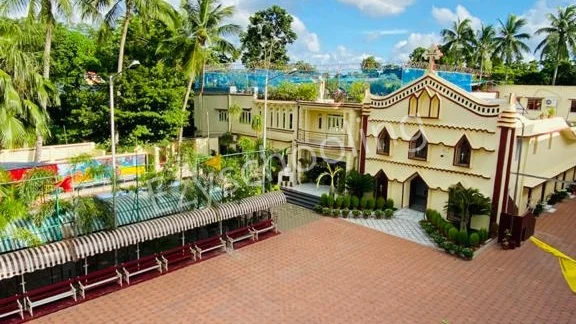
The dual curriculum model works well in real life. Forward-thinking schools already use it and get great results. Douglas Memorial Higher Secondary School (DMHSS), one of the good ICSE schools in Kolkata, shows a perfect example of this success.
How Douglas Memorial Mixes Cambridge and ICSE Curricula?
DMHSS knows that a 5-year-old needs different learning than a 15-year-old. They created a special mix to fix this. Their pre-primary section acts as a Cambridge Early Years Centre. Young students enjoy the fun, activity-based style from Cambridge Assessment International Education.
Students gain solid basic skills as they grow older. The school then shifts them smoothly into the Council for the Indian School Certificate Examinations (CISCE) program. They follow the ICSE board in Class 10 and the ISC board in Class 12. This plan gives kids the top global exposure and the best Indian finish.
See Real Results Through a Blended Curriculum

Classrooms at DMHSS clearly show the good effects of mixed curriculum. The school brought in the Cambridge Early Years program first in its area. They started methods like Jolly Phonics. This fun, multi-sensory way makes reading easy and exciting for little kids. It gives them a big advantage in reading over old ways.
These kids develop a strong mindset full of questions during early years. They prepare well for the tough subjects in the ICSE syllabus later on. They truly grasp the hard material instead of just repeating it from memory. The school creates the strong power of learning with the international program. Then it adds the energy needed for top scores in Indian exams with the Indian program.
Conclusion
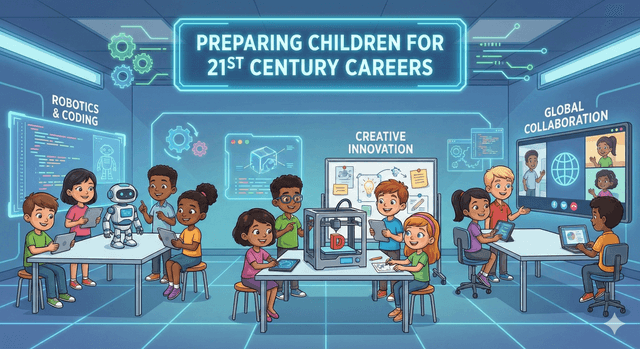
Students today face two big educational needs, they need soft skills like creativity and communication plus hard skills like deep knowledge in subjects. One single curriculum rarely gives both of these benefits to kids of all ages. Schools use a smart hybrid model that mixes international ways for early years with tough Indian board curriculum for higher classes.
Schools like Douglas Memorial Higher Secondary School show that a blended curriculum really works in real life, they create students who are both globally competent and locally competitive. More Indian schools must start this dual curriculum to get students ready for what the 21st century really demands.
To learn more about this and other schools nearby, see this list of good schools in Kolkata.








 as a preferred source on