









Indian classrooms today face a silent but massive challenge that textbooks alone cannot solve. The latest ASER 2023 Beyond Basics report reveals that nearly 25% of students aged 14-18 cannot read a Class 2 level text fluently in their regional language. Also, the data shows that about 43% of these students cannot solve simple division problems correctly.
These numbers highlight a deep gap between what students should know and what they actually know. Teachers in normal classrooms struggle because they must teach advanced learners and struggling students at the same time. Some of the good schools in Gurgaon are solving this widespread problem by creating performance-based sections and by grouping students according to their current learning levels. Teachers then make individual strategies that let every child learn at their own pace.
Also Read: Building Confidence Through Theatre
The Hidden Problem in Classrooms with Students of Mixed Abilities
Most Indian schools use a traditional system in which they group students strictly by age or grade level. In a Grade 6 classroom, some students read at a Grade 8 level, while others struggle with Grade 3 concepts. This huge difference creates an impossible situation for even the most dedicated teachers. Advanced students feel bored when teachers explain complex concepts to the whole class because they already understand them.
At the same time, students who fall behind feel lost and confused because they lack the necessary foundation. This one-size-fits-all approach creates a learning environment where neither group gets what they truly need to succeed.
Why Teachers Fail to Reach Every Student at the Same Time?
Teachers have limited time in a standard 40-minute period to address the needs of 40 different students. Teachers delay syllabus coverage for the entire class if they slow down to help struggling students. Teachers leave weaker students behind forever if they move fast to finish the chapters.
Research shows that this mismatch between the teaching level and the student's learning level causes low learning outcomes in India. The gap widens every year until struggling students drop out or fail to acquire important life skills.
Science That Explains Grouping by Skill Level
Teachers group students by skill level to meet each one right where they stand. This method matches the Teaching at the Right Level approach, which is well-tested in India. Proof from J-PAL (MIT Research Centre) and Pratham (Major NGO in India) shows that children learn much better when teachers group them by skill instead of grade.
For example, learning camps in Uttar Pradesh doubled the number of children who read a simple paragraph from 15% to 48% in only 50 days of focused teaching. This fact shows that students learn very fast when teaching fits their exact level.
How We Speed Up Learning for Top Students?
High-skill students often stop improving in normal classrooms because teachers do not challenge them enough to grow further. Teachers in skill-based groups give these students harder work that makes them think deeply and solve tough problems. These students finish basic lessons quicker and use extra time for special tasks like Olympiad practice or research projects.
Teachers keep their interest high this way and stop them from picking up poor study habits due to no real challenge. They compete with others who match their skill, which creates a good drive to compete and helps them reach top results.
How We Give Key Help to Students Who Struggle?
Students who fall behind need a fresh plan that fixes their basic skills first. Teachers in support groups use easy explanations and real examples without any rush to cover the full lessons. Teachers spend more time on simple reading and math until every student gets those skills right. The group feels safe and not scary because students ask basic questions without shame. This close focus helps students catch up much faster than they ever could in a usual classroom.
Also Read: Learn Farming & Life Skills
ODM International School’s Performance Based Sections
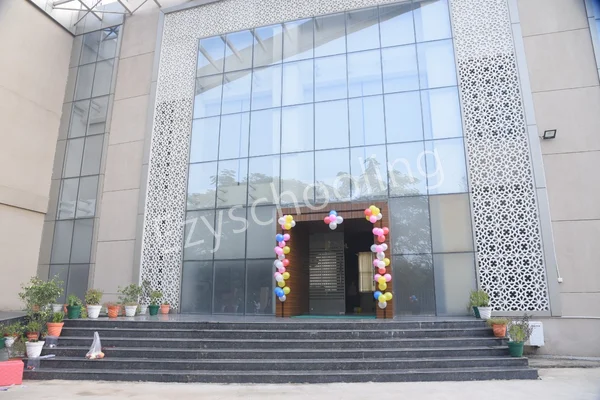
ODM International School,one of the good CBSE schools in Gurgaon, shows how schools can successfully use performance-based sections strategy for best learning outcomes. The school adopts Performance-based Sections as a main part of its academic setup to make sure every child succeeds.
School leaders divide students into sections based on their performance, and they create special plans for each child. Top students receive harder content, while weaker students get the exact help they need. This setup stops the usual issue where students get lost in a normal mixed classroom.
Smart Grouping for Best Learning Results
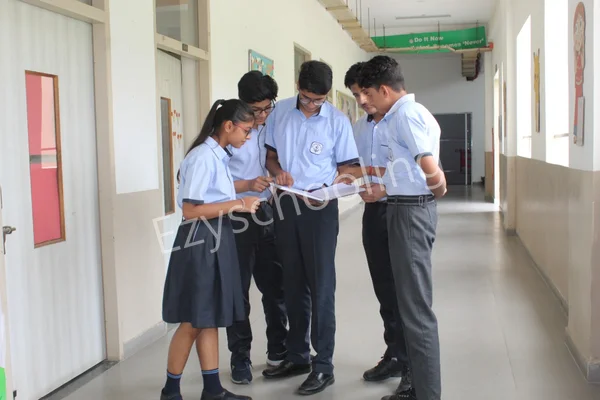
The school clearly states on its official website that teachers give top students different content, and they handle weaker students in a different way. For the most talented students, the school runs special groups like Nucleus 40, which offer a combined preparation program. School staff design these groups to challenge top achievers and ready them for national and international contests from an early age.
This separation lets teachers apply advanced teaching methods that do not work well in a mixed-ability classroom. The school works hard to push these students to their top ability without slowing them down to match the regular class speed.
Full Help Outside Class Time Too
For students who need more help, ODM International School gives strong support through its Focus on Under-Performers program. Teachers find weak spots of such students in different subjects, and they form separate groups for students who require close guidance from that teacher. The school makes sure these students receive a special learning program to fill their knowledge gaps well.
Teachers take extra steps to guide these students even after regular school hours so they can catch up. This strong effort makes performance-based grouping lead to real progress instead of leaving students alone.
Everyday Doubt Solving and Full Guidance
The school adds to this setup with strong Daily Doubt Clearing Sessions from 4:30 PM to 5:30 PM. Students from any performance level approach teachers with exact doubts during these set hours, and they get personal help. Mentors make sure each child improves, and they provide proper strategies for any child who falls behind to help that child shine. This full support system shows that performance grouping raises every student to their highest level.
Conclusion
Evidence clearly shows that traditional mixed-ability classrooms fail to meet various needs of Indian students. Shocking data from the ASER 2023 report warns us that we cannot continue with school learning and teaching in a usual manner. Schools must use performance-based sections to give the right level of instruction to every single child.
ODM International School in Gurugram shows that this model works well when teachers combine it with dedicated mentorship and targeted remedial programs. Schools group students by performance levels so advanced learners can do even better and struggling learners gain the ability to catch up with strong learners by clearing their doubts and making their concepts strong.
To learn more about this and other schools nearby, see this list of the top schools in Gurgaon.










 as a preferred source on