








According to the India Graduate Skill Index 2025, only 42.6% of Indian graduates were considered employable this year. This low number is not because students lack textbook knowledge. It is because they lack non-technical skills like adaptability and self-management. The World Economic Forum’s Future of Jobs Report 2025 confirms this trend.
The above-mentioned report lists Resilience, Flexibility, and Agility as some of the top core skills required by employers globally. Some of the good schools in Gurgaon are no longer just teaching subjects. They have started training young minds to manage themselves and learn independently.
Also Read: From Board to Brain: Role of Chess in Strategic Learning
The Crisis of Dependency in Education
For decades, the traditional Indian classroom has encouraged dependency. Students wait for teachers to give instructions, parents to set schedules, and tuition centers to solve problems. This creates a passive learner who can memorize facts but cannot plan their own day. The Institute for Competitiveness recently reported that nearly 88% of the workforce is engaged in low-competency roles. This happens because students are trained to follow orders, not to take charge.
When these students enter the real world, they struggle. They face a workplace that changes every day. If a boss does not give a step-by-step guide, the employee feels lost. This dependency stems from school years spent listening passively instead of acting proactively. To fix this, schools must shift their focus. They must stop measuring success only by marks and start measuring it by how well a student can handle a task without help.
Who is a Proactive Self-Manager?
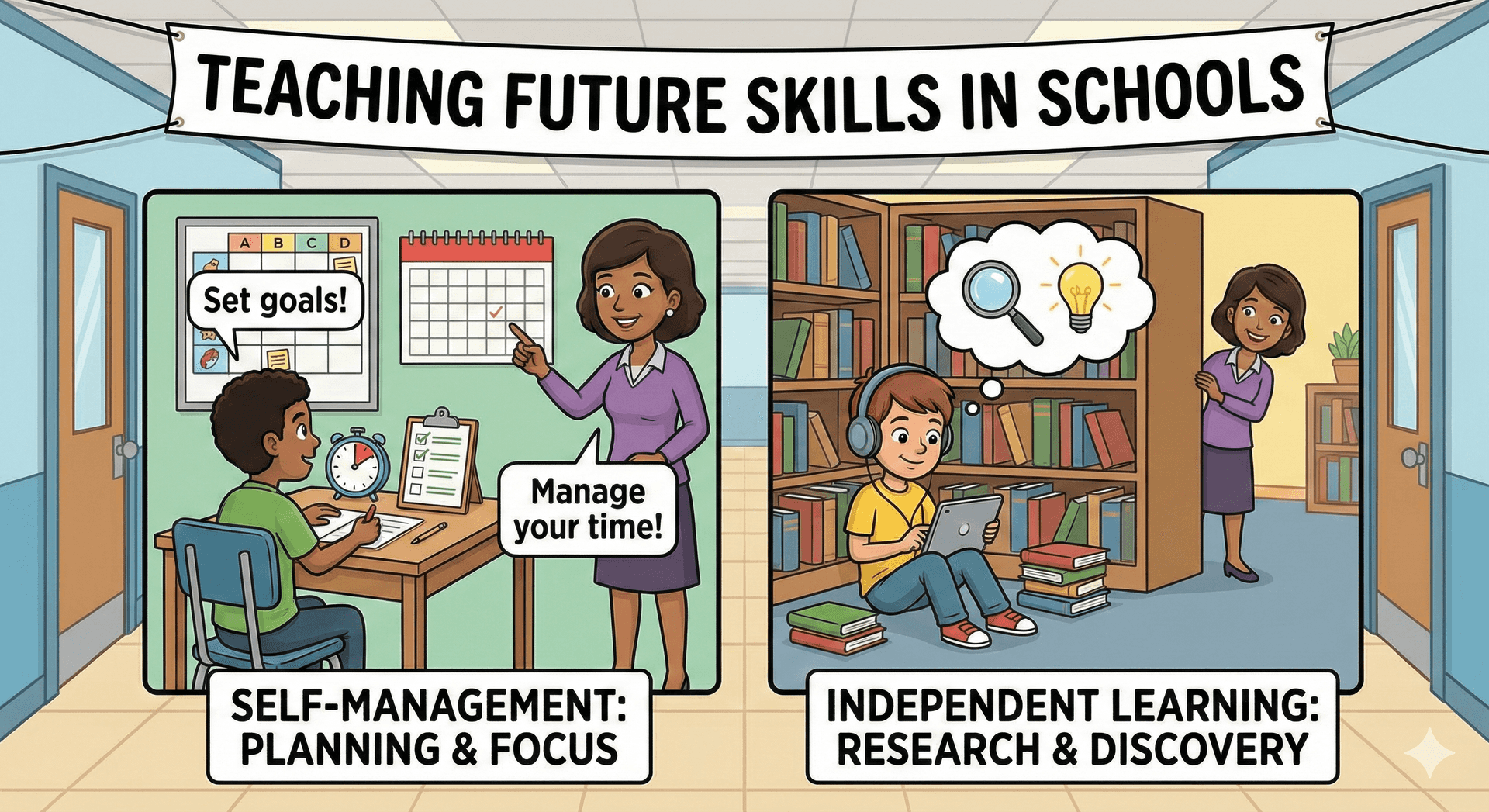
A proactive self-manager is a student who takes control of their own actions. They do not blame homework for a missed deadline. Instead, they plan their time to finish it. They do not wait for a teacher to correct a mistake. They check their own work first to see if there are any mistakes.
Recent studies on Self-Regulated Learning (SRL) in India show that students who control their own learning are far more successful. Research indicates a strong positive link (0.75 correlation) between self-regulation and high grades. In fact, self-regulation skills can explain up to 56% of the difference in student scores. This proves that a student’s ability to manage their focus and emotions is just as important as their intelligence.
A self-manager also knows how to handle stress. The World Economic Forum highlights "Motivation and Self-Awareness" as a key skill for 2025. Students with these skills can bounce back from failure. If they get a low score, they do not give up. They analyze what went wrong and try a new method. This is the mindset of a future leader.
The Independent Learner Advantage
A student who needs a teacher to explain every page of a book will fall behind. An independent learner is someone who seeks knowledge on their own because they are curious. If they do not understand a topic, they go to the library or search online to find answers.
The Future of Jobs Report 2025 states that "Curiosity and Lifelong Learning" is one of the top 10 skills employers want. Companies need people who can learn new software or new rules without being sent to a training workshop every week. Schools build this trait by giving students open-ended projects. Instead of asking "What is the answer?", teachers should ask "How can you find the answer?".
When students learn to find a way of solving a problem on their own, they become powerful. They develop analytical thinking, which is the number one skill demanded by companies today. They learn to separate good information from bad information. They take ownership of their education. This shift from spoon-feeding to self-feeding is the most important change Indian education needs right now.
The Power of Effective Team Participation
Some students work well alone but fight with others. Some love groups but cannot work alone. A true self-manager excels in both. In a team, a self-manager does not hide behind others. They take responsibility for their part of the work. They communicate clearly and respect different views.
The Mercer-Mettl report shows that non-technical roles like HR and Digital Marketing are seeing a drop in employability. These roles require strong people skills. Schools must create environments where students work in groups to solve real problems, not just to share the same class. This teaches them that their actions affect the whole team.
Also Read: Education Beyond Four Walls: The Flexible Learning Advantage
How KIIT World School is Creating Independent Thinkers & Self-Managers?
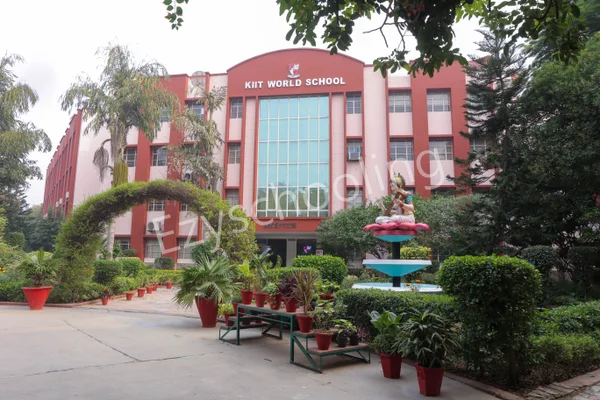
One institution that has formally combined this need for self-management into its core philosophy is KIIT World School, which is one of the good CBSE schools in Gurgaon. The school operates on a unique learning ethos known as the F.I.D.R Framework. This stands for Flexible, Innovative, Dynamic, and Resilient.
While all four pillars are important, the "D" for Dynamic is what directly addresses the need for self-management and independent learning.
What’s the "Dynamic" Factor?
According to the official website of KIIT World School, the Dynamic component of their ethos is explicitly defined. It states that a dynamic student is a: "Proactive self-manager and independent learner, who effectively participates in learning activities either as an individual or in a team."
This definition is not just a slogan. It is a clear goal for every student. Let us break down what this means within the context of the school’s daily life.
1. Proactive Self-Manager: At KIIT World School, being a proactive self-manager means students are encouraged to take charge of their responsibilities. The school encourages this through initiatives like the Green School Campaign.
In this program, students do not just learn about the environment; they actively manage it. They participate in drives like "Each One, Plant One", taking personal responsibility for the life of a plant. This requires planning, care, and regular attention without constant reminders from teachers.
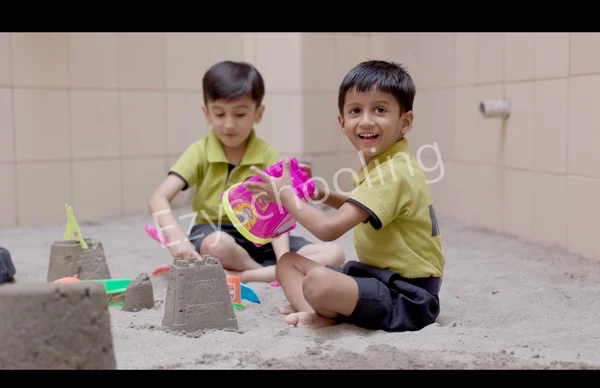
2. Independent Learner: The school’s focus on creating independent learners is visible in its academic approach. The school’s curriculum is designed to be growth-oriented and mindful. It encourages students to look beyond assumptions and generate their own ideas.
By using tools like the "Chhutki" digital mascot, the school engages students in a way that makes learning personal and self-driven. The student no more remains a passive vessel but an active participant in their own growth.
3. Participates... in a Team: The definition of Dynamic focuses on effective participation in teams. KIIT World School brings this to life through its club culture. A prime example is the Entrepreneurship Club. Here, students run a real-world initiative called "Treasures n Trinkets". This is a student-led venture where they must work together to design, market, and manage resources.
In the Entrepreneurship Club, no single student can do everything. They must split tasks, trust their teammates, and manage their time effectively to make the venture successful. This is the ultimate test of a "proactive self-manager" working in a team. They are learning business skills, but more importantly, they are learning how to cooperate and lead.
Another example is the "Wall of Kindness". This community initiative relies on students to organize and manage donations for the needy. It is a collective effort that teaches empathy and social responsibility.
Students must coordinate with each other to maintain the wall and ensure it serves the community. This aligns perfectly with the Dynamic ethos of participating effectively in activities that go beyond the classroom.
Conclusion
Indian schools face an urgent need to change and develop their teaching methods. We cannot afford another generation of passive students. We need young people who are proactive, who can learn without a teacher watching over them, and who can work smoothly with others. Institutions like KIIT World School, Gurgaon, show us a path forward with their “Dynamic” framework.
By defining students as "proactive self-managers" and giving them real platforms like the Entrepreneurship Club, Each One, Plant One, and Wall of Kindness, to practice learning-by-doing skills, they are creating the workforce India needs. Every school must adopt this spirit of dynamism to ensure our children are ready for the challenges of tomorrow.
To learn more about this and other schools nearby, see this list of the top schools in Gurgaon.








 as a preferred source on