









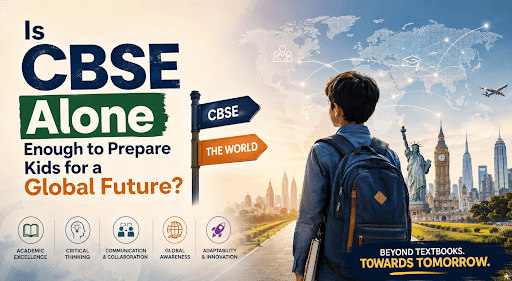
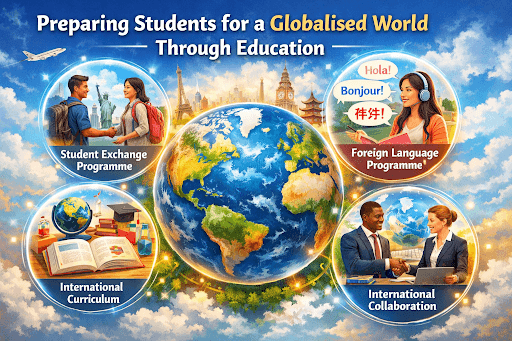
The world has changed a lot, and Indian students now compete on a truly borderless stage. Recent data from the Ministry of External Affairs shows that over 1.88 million Indian students studied abroad in 2025. This huge movement shows a strong desire for education that goes past local borders and standard rote learning.
Indian parents spent a huge amount of approximately $44 billion in the fiscal year 2024 alone to pay for foreign education, which proves that global readiness has become a must-have goal for families.
We cannot confine education to just textbooks when the job market demands cultural adaptability and critical thinking. Some of the good schools in Bangalore are adopting modern teaching practices to stop students from facing problems in international places where memorization holds no value. The future goes to those who can handle different cultures and tough global issues with confidence.
Also Read: From Skills to Success: Role of Value Added Programs
Why Classrooms Need Cultural Intelligence Right Now?
People often focus too much on math and science scores, but they forget the soft skills that truly decide how long careers last. Cultural Intelligence, or CQ, means the power to connect and work well across different cultures, and it grows more important than IQ in today's job world.
A shocking 2024 report showed that 75% of careers derail due to low emotional competence, which causes a big gap in leadership for companies that work in many countries. Indian schools create graduates who shine in technology but feel alone in teams with diverse people when they skip global views.
A student who never sees stories from around the world struggles to grasp the fine points of talking with a coworker in Tokyo or a customer in Berlin. This gap causes wrong messages, which cost a lot.
This is why Indian schools must add global lessons not as an extra treat, but as a must-have tool to create the strong workers India needs for future success. Teachers show kids through worldwide stories, history, and social studies that their own way of life stands as just one of many valid human experiences.
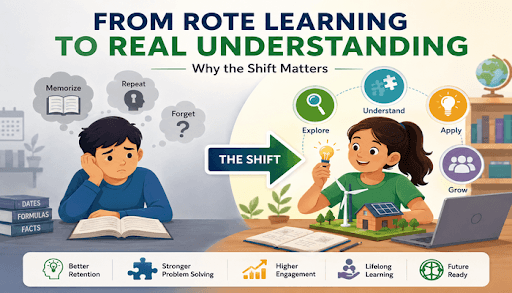
Choose Critical Thinking Instead of Just Memorizing
A global set of lessons gives the biggest gain by stressing critical thinking more than just soaking up facts. Old systems praise the student who remembers the most details, but the world job market praises the student who fixes the most issues. International frameworks, like those from the British Council or the International Baccalaureate, make students question "why" and "how" instead of only "what."
In a global lesson plan, teachers do not just list battle dates in history class; they make students study the economic reasons for the war from the views of many nations. This change matters a lot because jobs in 2030 demand hard problem-solving skills that machines cannot do.
Indian students already show strength in STEM areas, but they face a bamboo ceiling in world groups without critical thinking across subjects. Indian schools must end the factory style of learning and start a lab of new ideas where students learn to question set rules.
How Global Skills Help India's Future Economy?
A school system that matches global ways brings huge money gains for India's economy. As noted before, billions of dollars leave India each year for school fees and living costs abroad for students. Indian schools can keep some talent and money at home if they give equal global experience right here.
India sets itself up as a center for business and manufacturing now. To keep this growth going, the country needs home workers who know global rules for quality, following laws, and right behavior. A student trained in a global curriculum understands the importance of sustainability not just because it is in the textbook, but because they have studied climate change as a planetary crisis. They understand business ethics not as a set of rules, but as a universal language of trust. These are the employees who will drive India’s growth in the coming decades, and their training must begin in primary school.
Also Read: Rising Strong: Building Resilience in the Classroom and Beyond
Canara Gurukula Public School: Bridging Indian Tradition & the Modern World Educational Practices
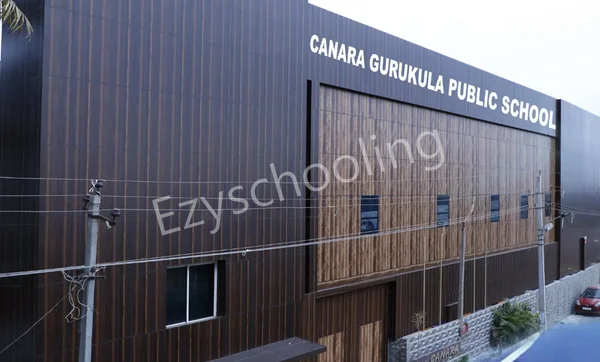
Many Indian schools are rushing to modernize now, but Canara Gurukula Public School, one of the good CBSE schools in Bangalore, shows how to mix local traditions with global educational practices in the best way. The school puts the “International Dimension in Schools” initiative into action with great success, which is a top certificate from the British Council. This initiative means more than a name; it shows a real promise to weave world awareness into daily school life and future plans.
The Big Wins from International Dimension in Schools Initiative
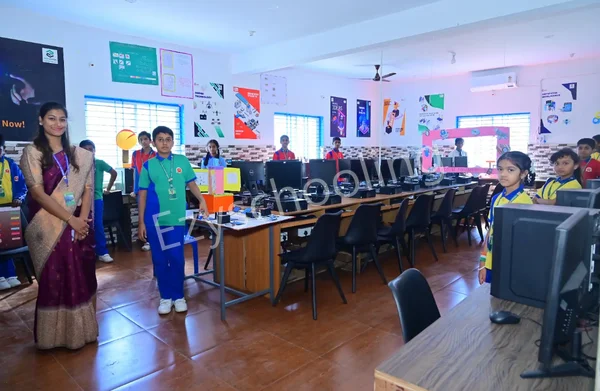
Schools earn the IDS certificate only after a tough check that proves their long-term commitment for global learning. Canara Gurukula Public School shows this honor clearly on its main website, which proves the school's strong focus on global curriculum. The school makes sure students do not learn about the world from a distance through the IDS program, but actively connect with world ideas in real ways. This certification confirms that the school’s teaching methodology goes past the standard state or national requirements to include cross-cultural projects and international collaborations.
Students at Canara Gurukula get education that matches world levels thanks to this certification. The IDS plan pushes schools to team up with places in other countries, so students share thoughts and work on projects together. This real contact holds great value. It turns big ideas like global citizenship into real events whereIndian students meet foreign students from various places. This program shows that a school needs no spot in London or New York to give top world education; it just needs the right plan and right certification.
How IDS Certification is Creating Globally Smart Students at Canara Gurukula Public School?
Canara Gurukula’s IDS certificate integration creates a strong global curriculum for every student. The website shows facilities and activities that support this worldwide goal, such as Robotics for technical skills and the Literary Club for communication. The school develops skills in debate, dramatics, and creative writing, so students learn to share their ideas around the world.
The school also wins big in competitions, like the Overall Winner title at Chrysalis 2020; the IDS certification likely plays a main role in this success because it encourages students and teachers to reach higher levels of international standard. Canara Gurukula Public School uses this certification to make sure students prepare not just for exams, but for future skills. Students graduate ready with the cultural knowledge and major skills they need to succeed in any country where they study or work.
Conclusion
The Indian education system must move to modern teaching methods to meet the needs of the next generation. Today, millions of students seek chances abroad, so the need for international standards reaches its highest point ever. Schools like Canara Gurukula Public School is a strong example for this change by achieving the British Council’s International Dimension in Schools certificate, proving its high-quality global teaching-learning practices rooted in traditional values.
The school's modern educational methods show that India can create citizens ready for the world while keeping our rich cultural heritage. Every Indian school must now study these winning examples and understand that readying students for the world stands as no longer a choice, but a basic responsibility.
To learn more about this and other schools nearby, see this list of the top schools in Bangalore.

 as a preferred source on