








Tiny steps, great starts. For the first time, when your child opens a classroom door, something incredible takes place. Their eyes flash with amazement, their little fingers search and touch, and in that very instant, you understand that this is the place where goals are made. But are you, as parents, really conscious of the things going on in those classrooms?
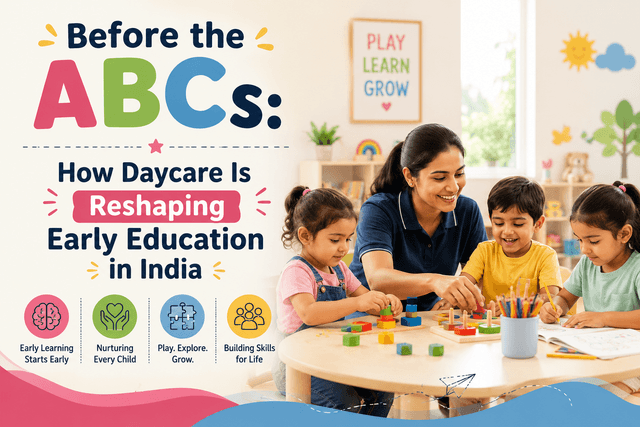
Learning techniques have changed drastically nowadays as the world keeps changing. The old ways of learning through rote memorisation and conformity have been replaced with new methods of teaching, especially for very young children. Children nowadays are encouraged to ask questions, be emotionally smart, and to develop a love for learning that lasts a lifetime.
Being a parent looking for the best schools in Bangalore, getting a grasp of such methodologies will assist you in choosing wisely regarding your child's schooling. The right attitude taken at the early stage not only equips a kid for educational achievements but also changes them to be good, strong and able to face life.
The article investigates how the different and innovative teaching methodologies that are changing the face of early childhood education, discusses the advantages for the young learners that these methods bring, and also throws a spotlight on The Cambridge International School, Haralur and its implementation of these forward-thinking practices to produce the next generation of creators and problem solvers.
Also Read | The Importance of Experiential Learning in Modern Education
Understanding the Critical Early Learning Years
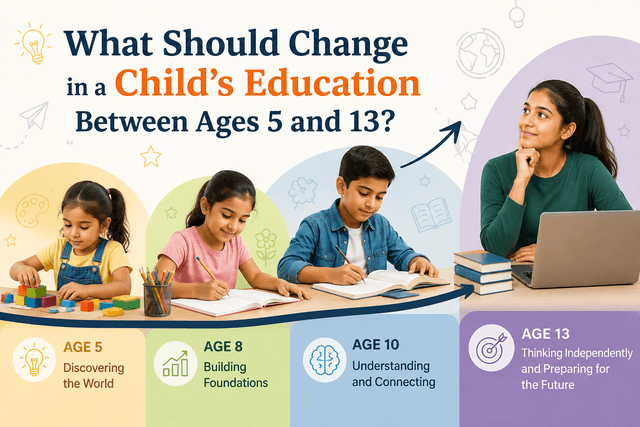
Between the ages of 3 and 8, the brain of a child is rapidly developing and making over a million new neural connections every second. It is not just a piece of biological information; it is a window of opportunity that, once closed, can never open again in the same way.
Various facets of kids' lives will be determined by the underlying skills that they develop during their childhood. This is the reason that the method of teaching that is used in early education has such a radical impact.
The Shift from Traditional to Modern Teaching Approaches
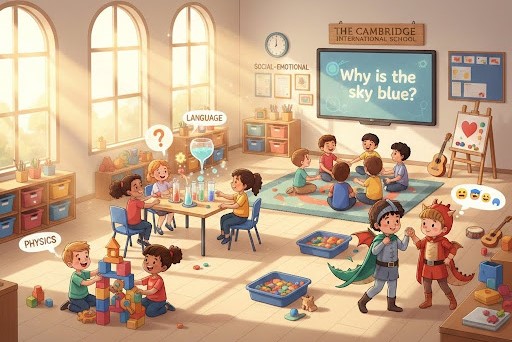
Remember the classrooms where we used to study as kids? There were lined-up desks, the teacher would write a lot of notes on the blackboard, and memorisation was always stressed. Although these methods were effective, research has revealed a way to do better. Contemporary teaching methods are based on the idea that a child is an individual with his/her own learning style, speed and interests.
Instead of having all kids go through the same very limited way of getting an education, schools nowadays have different routes to success. The radical change here is that the attention is not on 'what to think' but on 'how to think'.
Child-Centric Learning: The Child Leads, The Teacher Guides
Traditionally, the classrooms had the teacher as the centre, but in early modern education, the child was the main focus.
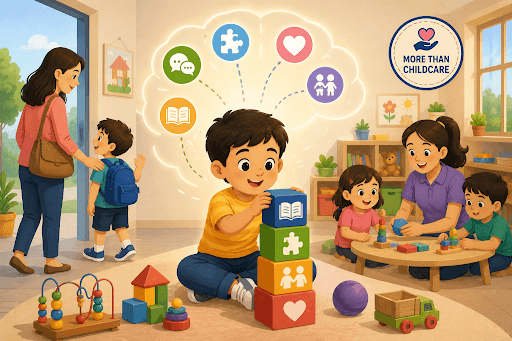
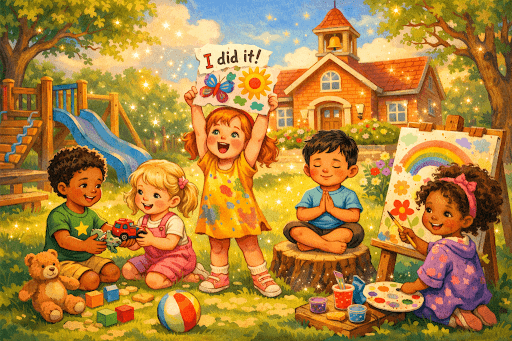
Where previously children might have been told to 'sit and listen', now classrooms are a space for questioning, movement, and self-expression. Teachers take the role of facilitators, and hence they are observing each child's rhythm, interests, and emotional readiness.
Learning is a personal journey
Children learn in different ways, and if a child gets personal attention, it will help prevent the child from getting frustrated or bored. Engagement becomes so easy when the learning is in line with the natural curiosity of a child.
Voice and choice in activities
Giving children the freedom to choose tasks is one of the ways to promote independence and ownership. Even major decisions require a small step of building confidence and decision-making skills.
Check Out: Find Ways To Modern Career Paths at MRIS Charmwood
What Parents Should Look For in an Early Learning Environment?
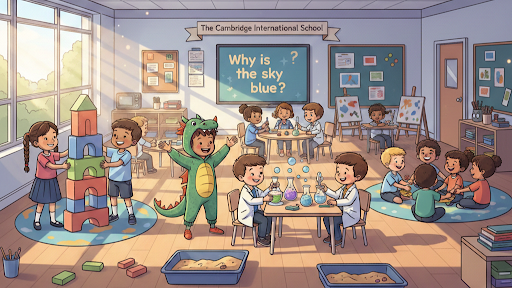
When considering a school for a young child, it is quite natural to think about the facilities or the top rankings. However, the most telling signs are usually more discreet and much more human.
Firstly, consider the student-teacher ratio. A teacher who truly understands each child, their talents, their difficulties, and their speed can only do that if the classroom is not overcrowded. Ratios of 10:1 or less are a very good sign of genuine, personalised attention.
Another telltale sign is the schools that have robot labs, language and culture. A school which teaches several languages and interweaves co-curricular activities, dance, debate, drama, and sport into daily school life is not just filling the timetable. They are developing whole, human beings.
A Glimpse into Early Learning at The Cambridge International School, Haralur
Located in the buzzing area of Haralur, The Cambridge International School (TCIS) is a great example of the results that modern educational philosophy, combined with a passionate execution, can bring about. For parents looking for the best schools in Haralur, TCIS is certainly a good choice to consider.
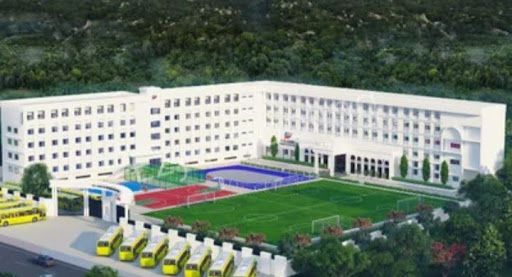
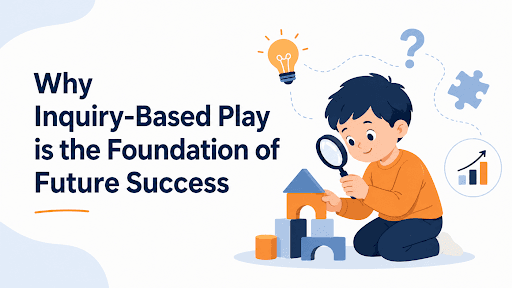
Founded in 2015, this CBSE and IB school in Bangalore has garnered quite a recognition, which includes being ranked No.2 among the best new schools in Bangalore by The Times of India. But it is not the awards that make TCIS stand out; it's the constant effort to bring out the best in every child by using a progressive, inquiry-based method of education that truly differentiates TCIS from others.
The school's physical facilities also clearly demonstrate its educational approach. Spacious, friendly classrooms that have been fitted with smart technology allow for the creation of exciting learning atmospheres.
The school also offers specialised areas for art, music, and STEM activities through which children can develop their hobbies and talents in a variety of ways. The student-to-teacher ratio of 10:1 is a great plus that makes it possible for every student to get the necessary level of attention from the teacher.
When weighed up against other CBSE schools in Bangalore or IB schools in Bangalore, TCIS undoubtedly stands out with its dual board affiliation, thereby offering a broad curriculum choice to your child as he or she grows.
To know more information about similar schools in the area, check out this list of the best schools in Bangalore.





 as a preferred source on