




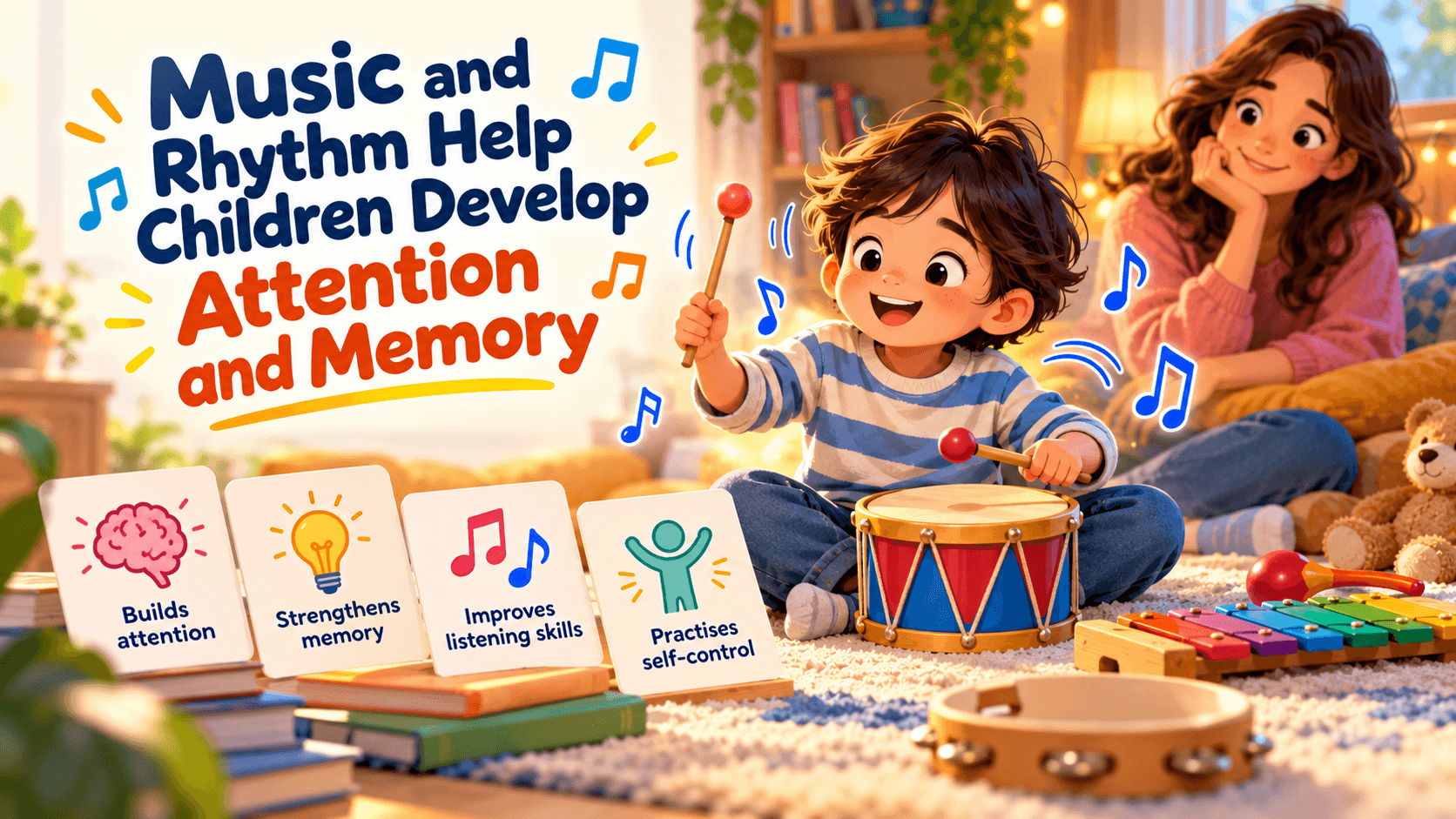

Your child can sing an entire cartoon song without missing a word, yet forgets the three instructions you gave just minutes ago. You might wonder why remembering a song seems so easy while remembering everyday tasks feels difficult.
Music offers an interesting way to explore how children pay attention and remember information. For parents exploring Top schools in bangalore, understanding the role of creative activities in learning can be just as important as academic subjects. Schools such as The Paradise International School(TPI), Electronic City, Bangalore provide a relevant context for discussing music, rhythm and children's development.
Why Music Naturally Captures Children's Attention
Have you noticed how quickly children respond when their favourite song begins playing? They might stop playing, recognise the tune and start singing or moving along.
Music contains patterns, repetition and changes in sound that give children something specific to follow. When they listen for the next beat or wait for a familiar chorus, they are actively engaging their attention.
For example, imagine asking your child to clap twice whenever they hear a particular word in a song. They must listen carefully, recognise the word and respond at the right moment.
According to Harvard University's Center on the Developing Child, movement games involving songs and rhythms provide opportunities to practise attention, working memory and self-control.
However, enjoying music does not automatically mean a child will concentrate better during homework. The value lies in the particular skills children practise while participating.
How Songs and Rhythms Exercise Working Memory
Working memory is the ability to hold information in mind briefly while using it. Children rely on this skill when following instructions, solving mental maths problems or remembering what comes next in a story.
Music creates opportunities to exercise this skill through familiar and enjoyable activities.
Consider a song that adds a new action after every verse. Your child must remember the earlier actions while learning the next one. Similarly, copying a sequence of drumbeats requires listening, remembering the order and repeating it correctly.
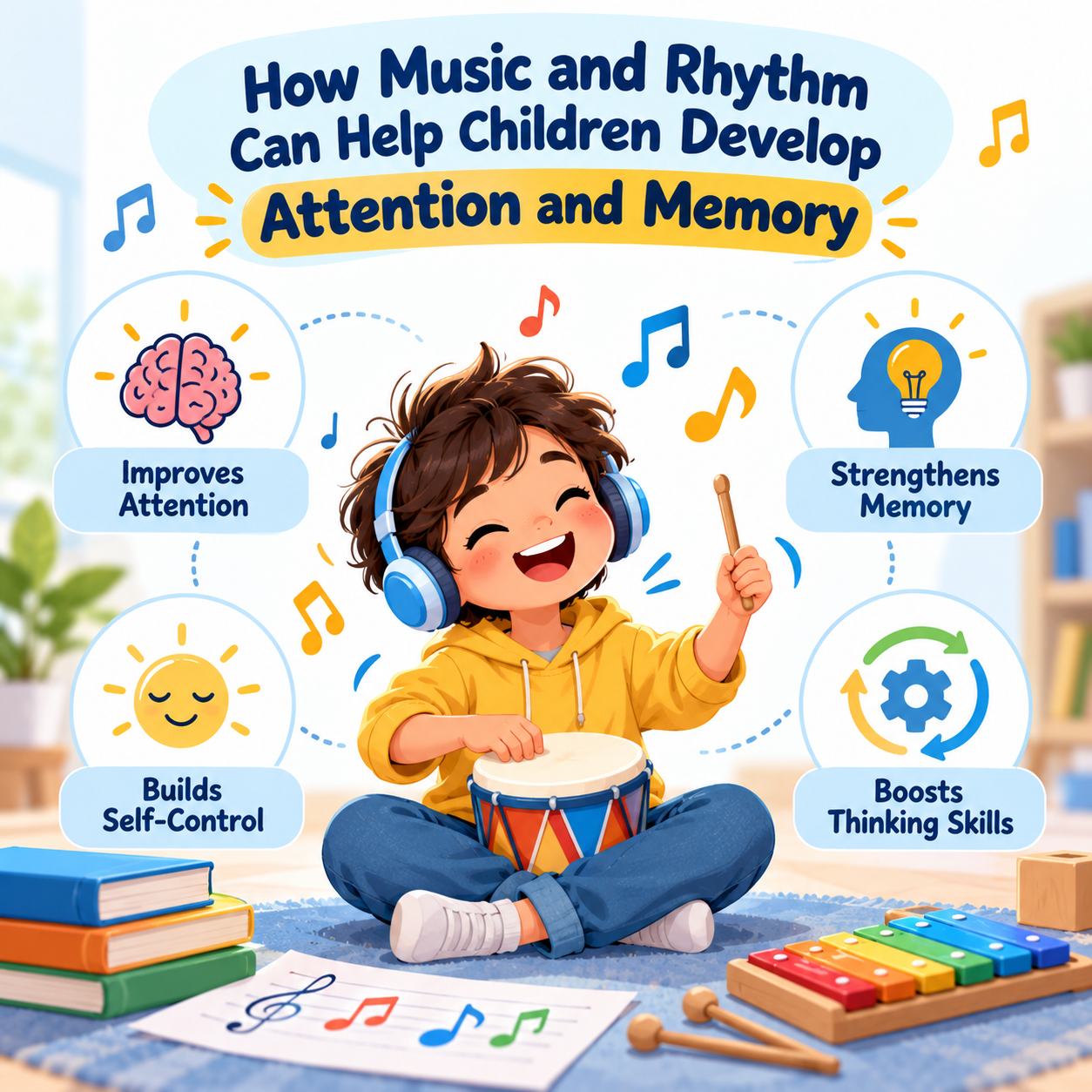
A systematic review and meta-analysis published in Frontiers in Psychology in January 2025 examined ten studies involving children aged three to six. Researchers found that structured music training was associated with improvements in working memory, inhibitory control and cognitive flexibility compared with control groups.
These findings are promising, but they do not mean every musical activity improves memory. The results concern specific skills and training programmes, not guaranteed improvements in school performance.
Four Simple Music and Rhythm Activities Parents Can Try
You do not need musical instruments or professional training to introduce rhythm-based activities at home. Your hands, voice and a little creativity are enough.
1. Copy My Beat
Clap a simple pattern, such as two slow claps followed by one quick clap. Ask your child to repeat it.
Begin with two or three beats. As your child becomes comfortable, introduce longer patterns or small pauses.
This activity encourages careful listening and remembering sequences. Younger children can copy short patterns, while older children can create rhythms for you to follow.
2. Freeze Dance
Play your child's favourite song and encourage them to dance. Pause the music unexpectedly and ask them to freeze immediately.
The challenge is to stop moving even when they want to continue dancing.
This playful activity exercises attention and impulse control. Make it more interesting by asking your child to freeze in different poses whenever the music stops.
3. Add a Line to a Rhyme
Start with a simple line such as, "I saw a bird beside a tree."
Ask your child to add another line. Repeat both lines together before adding a third.
As the rhyme grows, your child must remember the earlier lines while contributing something new.
This combines verbal memory, imagination and listening. Parents can use Hindi, English or another familiar home language.
4. Rhythm and Movement
Create a short movement sequence: clap twice, tap your knees and take one step forward.
Demonstrate the sequence and invite your child to repeat it. Gradually add another action.
Children must remember the order while coordinating their movements. Older children can take turns leading the activity and changing the pattern.
How Parents Can Make Musical Play More Meaningful
Musical activities work best when children enjoy participating rather than worrying about mistakes.
Start with five to ten minutes of play and adjust the duration to your child's interest. Choose familiar songs, allow them to suggest actions and increase the difficulty gradually.
Avoid correcting every missed beat. Instead, demonstrate the pattern again and encourage another attempt.
Importantly, music should complement reading, outdoor play, conversations and other learning experiences rather than replace them.
Research on broader academic benefits remains mixed. A 2020 meta-analysis published in Memory & Cognition found no reliable improvement in general cognitive ability or academic performance after accounting for study quality.
The goal is therefore to offer enjoyable opportunities for practising skills, not to promise higher examination marks.
Music and Creative Activities at The Paradise International School
The Paradise International School(TPI), Electronic City, Bangalore lists music and dance among its co-curricular activities. Its published programme also includes physical activities that contribute to a varied school experience. Music and dance can give children opportunities to follow rhythms, remember movement sequences and participate with others. For parents comparing the Best schools in Bangalore, examining how schools include creative experiences alongside classroom learning can provide useful context when considering a child's overall development.

Music gives children an enjoyable way to practise listening, remembering patterns and controlling their responses. While it cannot guarantee better concentration or academic results, simple musical games can make practising these skills engaging. Sometimes, a few minutes of clapping, singing or dancing can turn an ordinary afternoon into a meaningful learning experience.
For more information on this and similar schools, check out this list of the best schools in Bangalore.


 as a preferred source on