




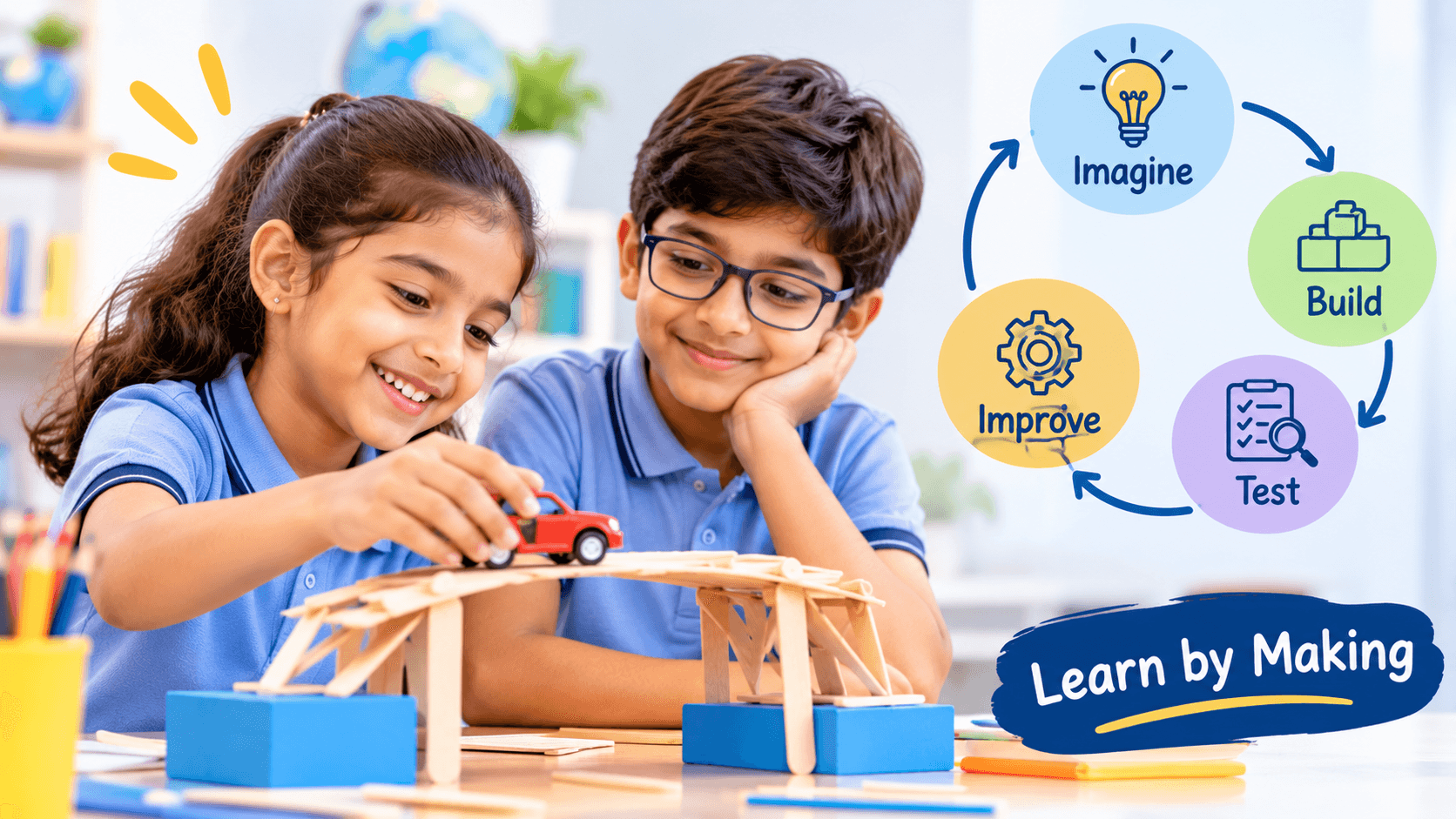

A child builds a bridge from ice-cream sticks, places a toy car on it and watches the middle bend. Is the project a failure? Not necessarily. The child has discovered that the design needs to change. This simple moment shows why making, testing and improving ideas can be a meaningful part of learning.
For parents exploring the Best schools in Gurugram, it is worth looking beyond whether children complete projects. The more important question is what they learn along the way: how to plan, solve problems, use feedback and keep trying when an idea does not work.
Why Is Learning Through Making Important?
When children create a model, build a simple machine or design something to solve a problem, they put classroom knowledge into use. A lesson about balance becomes clearer when a child tests which structure can hold more weight. A discussion about electricity feels more real when students assemble a basic circuit.
This approach is linked to design thinking and project-based learning. Children begin with a question or challenge, explore possible answers, make something, test it and decide what to change. They are not simply following instructions to produce an attractive object. They are connecting ideas with action. For example, a child designing a rainwater collector may use science to understand flow, mathematics to measure capacity and drawing to plan the shape. The project gives each subject a clear purpose.
A 2024 study in Education for Chemical Engineers described middle-school students designing oxygenators. They identified problems, applied knowledge from different subjects, discussed solutions and improved their designs through practice.
What Do Children Learn When They Test and Improve an Idea?
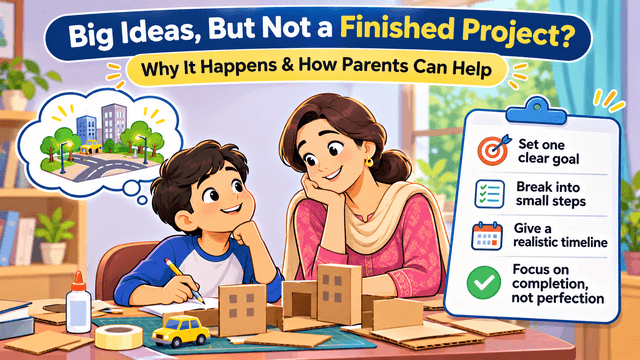
The value of a project is not limited to the finished model. Much of the learning happens between the first attempt and the final version.
1. Problem-solving: A paper tower that keeps falling encourages children to ask why and test changes to its base or folds.
2. Creative thinking: Open-ended challenges let children sketch different designs, choose materials and compare ideas.
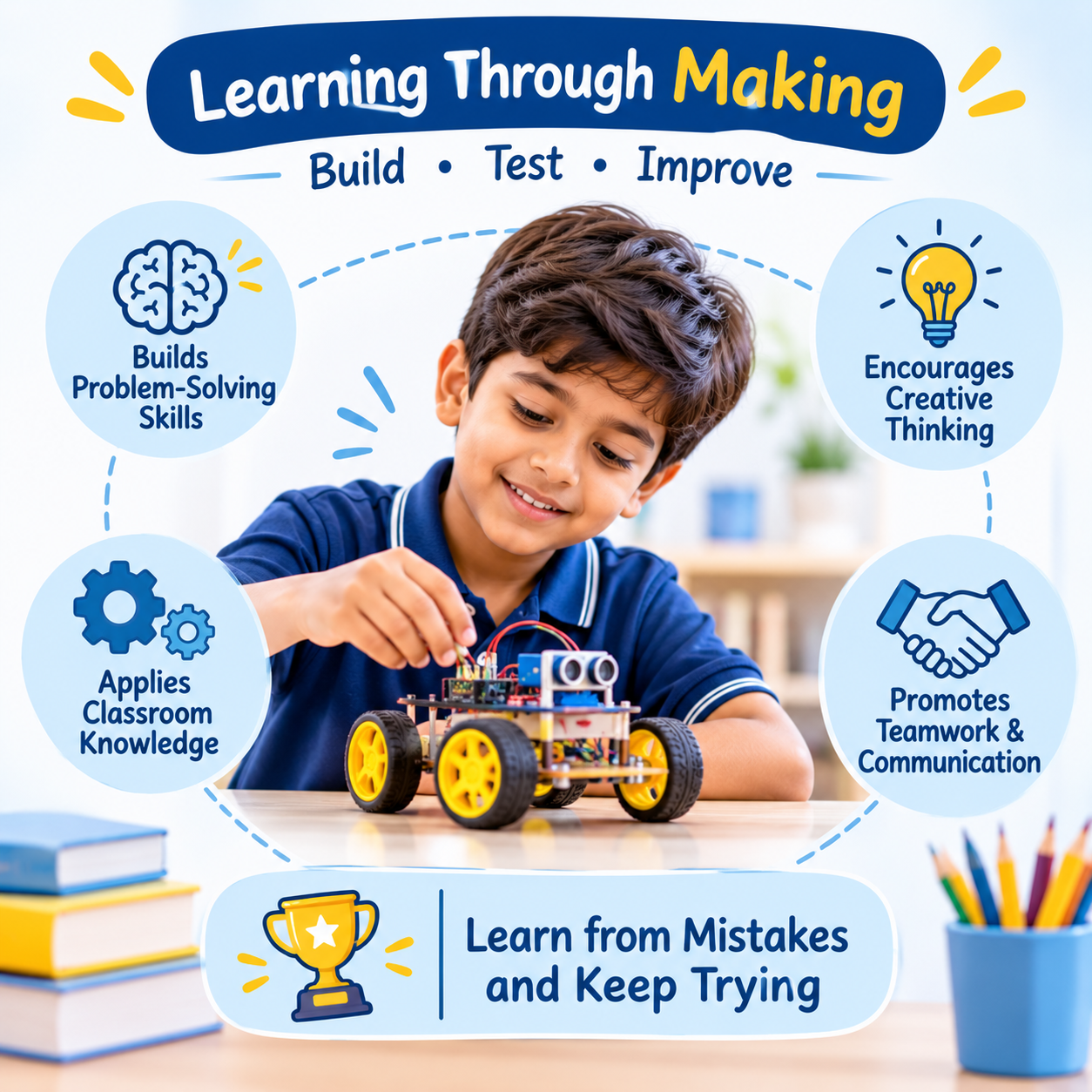
3. Applying classroom knowledge: A model can bring together subjects as children measure materials, draw a plan and explain how it works.
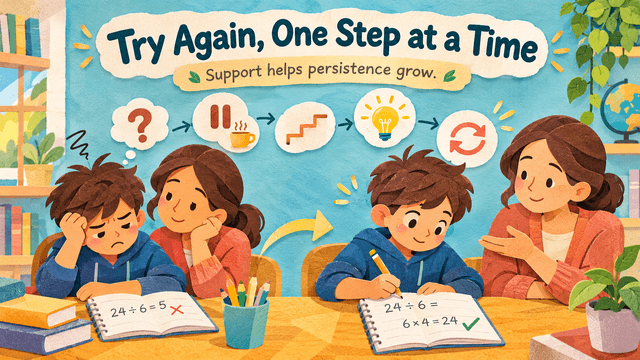
4. Learning from mistakes: A study of students in Grades 5 and 6 found that learning an iterative design process encouraged more testing and more positive responses to failure.
5. Communication and teamwork: Group projects ask children to share suggestions, listen, divide tasks and explain their choices.
How Can Parents Encourage Learning Through Making at Home?
Everyday materials can provide useful starting points; expensive kits are not necessary.
- Build and test: Make a paper bridge that can hold coins. Try different folds and compare.
- Plan first: Ask your child to sketch the idea before starting.
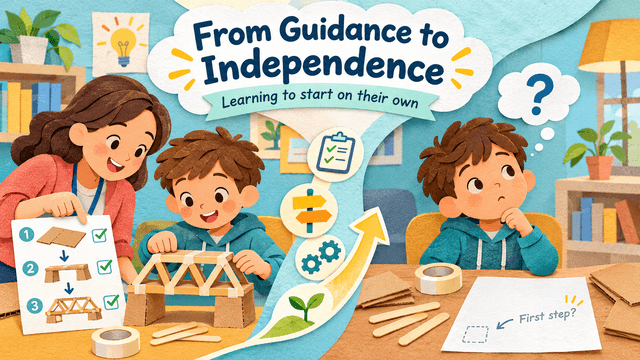
- Ask, don't take over: Try, "What made it fall?" or "What could you change?"
- Reflect: Discuss what the first attempt showed and what to try next.
Keep activities age-appropriate, supervise tool use and avoid unsafe materials.
What Should Schools Look for in a Good Making Activity?
A useful project needs more than craft materials and a display table. Children should understand the problem and have time to explore possible answers. Teachers can guide with questions and help students test ideas without doing the work for them.
Assessment should consider the process, not just the final product. Students can record their first idea, explain what happened during testing and describe why they made changes.
India's National Education Policy 2020 supports experiential and inquiry-based learning, practical application and reduced dependence on rote memorisation. These approaches help connect classroom concepts with real situations.
Learning Through Making at S D Heritage Pride School, Sector 85
At S D Heritage Pride School (SDHPS), Sector 85, Gurugram, a September 2026 notice for FeviCreate Idea Labs – Season 4 asked students in Classes I–VIII to refine their models after inspection feedback. For the Round 2 screening on 7 October, students were expected to build their 3D models independently at school within 1.5 hours. The school also reported that Class IV student Priyanshi Gupta became second runner-up among the Top 12 Young Finalists in the national FeviCreate Idea Labs competition, selected from more than 3,00,000 entries. For parents considering Top schools in Gurugram, these examples offer a specific way to examine how a school gives children opportunities to turn ideas into models and present their work.

Let the Process Matter as Much as the Product
A finished model may catch attention, but the thinking behind it is often the most valuable part. When children plan, build, test and improve, they practise using knowledge, responding to challenges and explaining their decisions. Parents and teachers can support this by giving children time, asking thoughtful questions and allowing them to try again. The aim is not to make every project perfect. It is to help children become more confident in exploring ideas and finding ways forward.
For more information on similar schools, check out this list of the best schools in Gurugram.






 as a preferred source on