




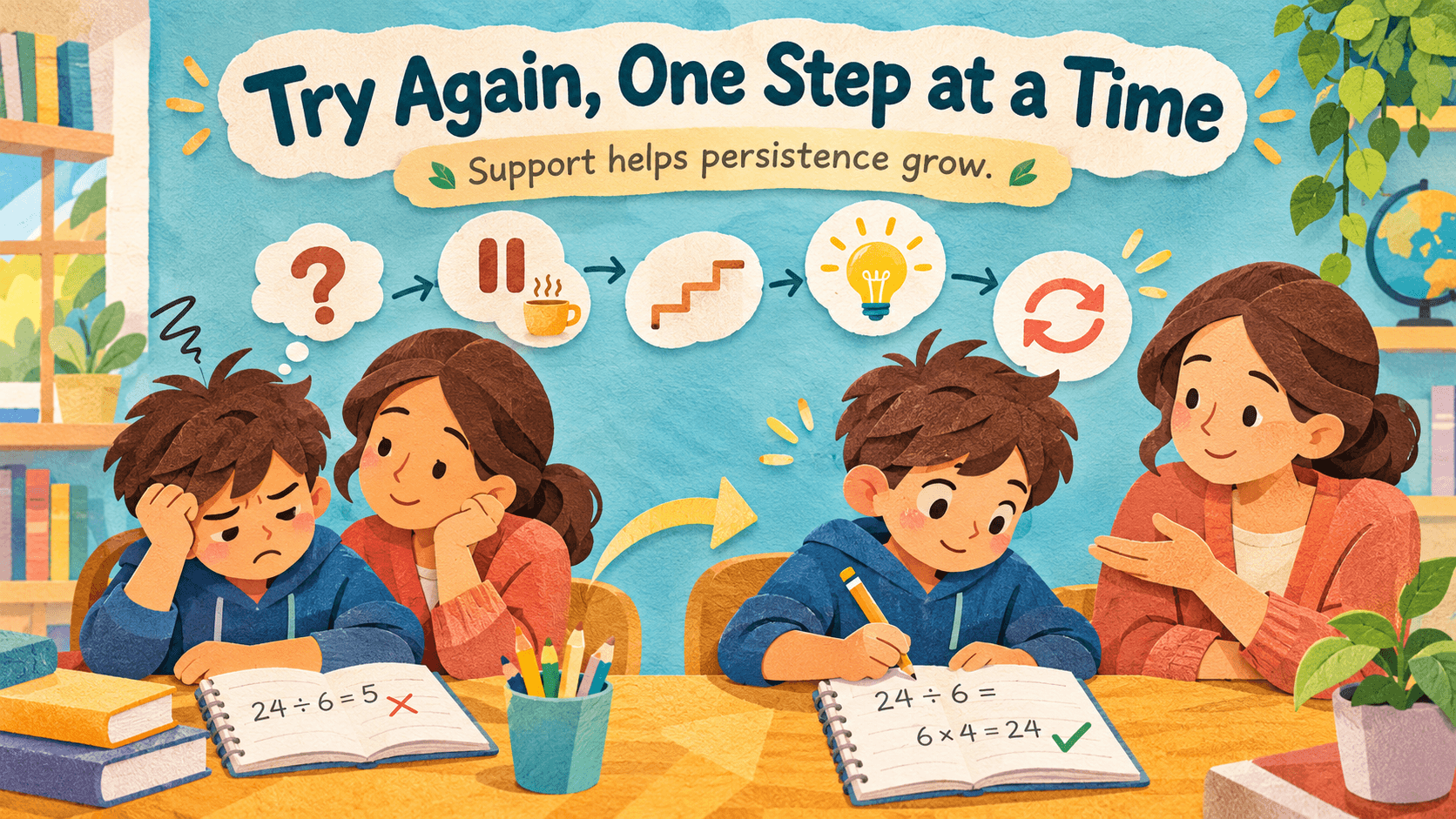

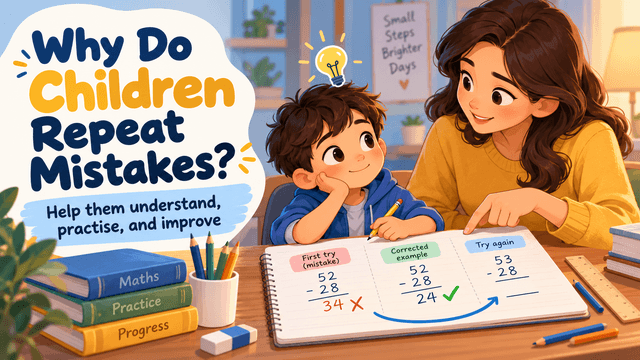
Your child spends five minutes on a maths problem, gets the answer wrong, and shuts the notebook. “I can’t do this,” they say, even though they solved similar questions yesterday. You offer help, but they refuse to look at the problem again.
For parents comparing Top Schools in Bangalore, including Goldenbee Global school(GBG), BTM Layout, Bangalore, learning how children respond to difficult tasks matters alongside academic progress.
Giving up after one attempt does not automatically mean a child is lazy. They may need help deciding what to try next.
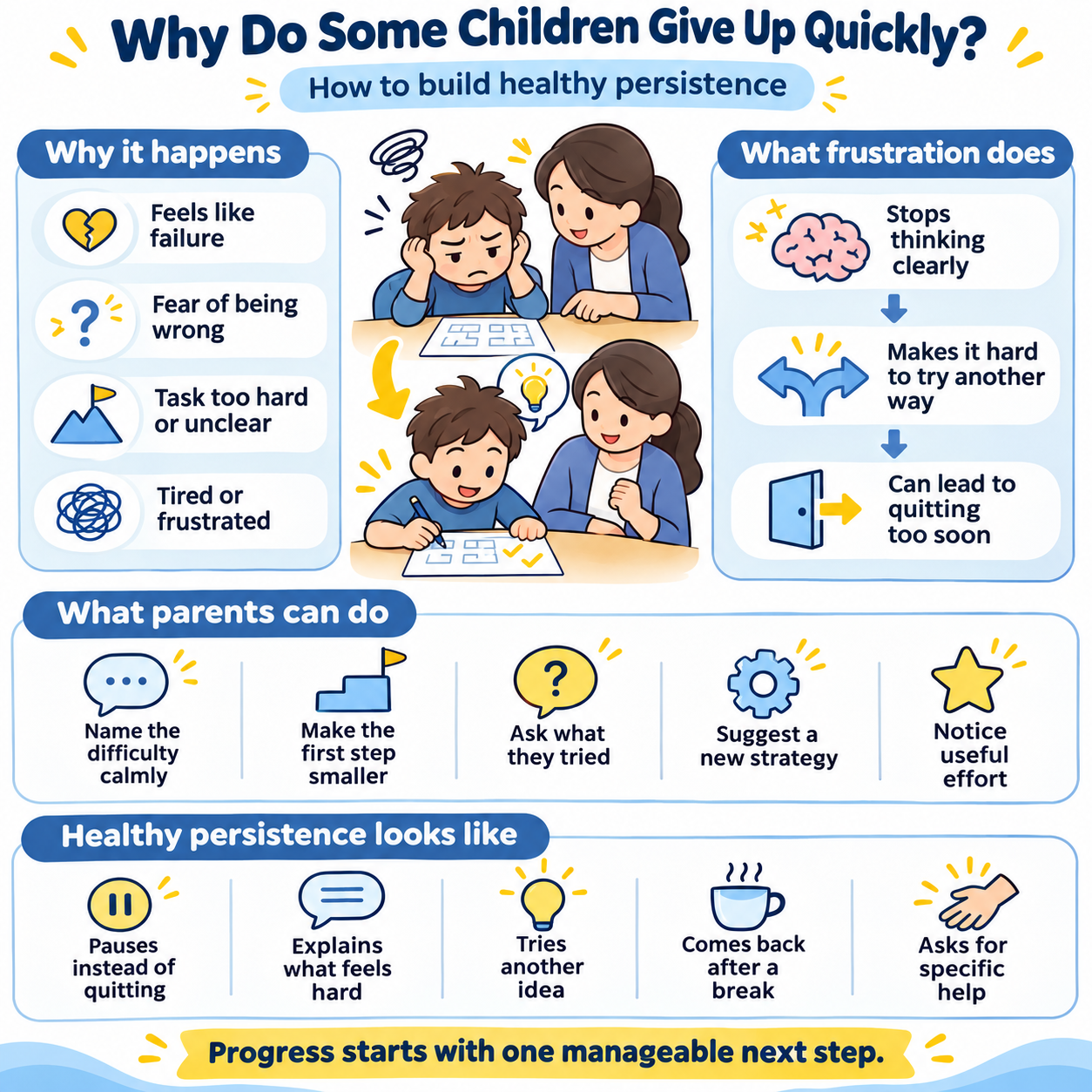
Why Does One Failed Attempt Make Some Children Stop Trying?
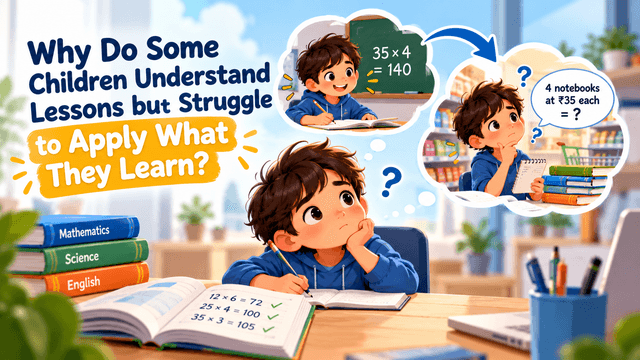
Imagine a Class 5 student who can multiply numbers correctly but freezes when the same skill appears in a word problem. They may know the calculation but cannot decide which information to use.
To the child, that confusion can feel like failure.
Some children expect to succeed immediately because familiar tasks usually come easily. Others worry about another wrong answer or what adults will say. They might believe, “I am bad at maths.”
Beliefs influence motivation, but are only part of the picture. A task may genuinely be too difficult, the instructions unclear, or the child simply tired.
Instead of saying, “You aren’t trying,” ask, “Which part became difficult?” Their answer can show whether they need reassurance, a different strategy, or an explanation of something they missed.
How Does Frustration Affect a Child’s Problem-Solving?
Picture a child attempting a jigsaw puzzle. After trying several pieces that do not fit, they sweep the pieces aside and announce that the puzzle is impossible.
Frustration can make it difficult to slow down, notice patterns, and consider another approach. Children are still developing the attention, flexible thinking, and self-regulation skills needed to manage challenging situations.
A parent could say, “Those pieces are tricky. Shall we take a short break and then look for the corner pieces?”
This recognises the feeling and offers a next step.
There is also a difference between a manageable challenge and a task beyond the child’s current skills. If the puzzle is far too advanced, repeating “Keep going” offers little value.
Support means finding a manageable challenge, not forcing success.
How Can Parents Encourage Children to Try Again Without Pressure?
Healthy persistence is not repeating the same unsuccessful action until something works. It means learning to adjust, ask questions, and try an achievable next step.
1. Name the difficulty without judging. Say, “This part looks frustrating,” rather than “Why are you giving up already?” A calm response makes it easier for children to describe what is wrong.
2. Make the first step smaller. If a child cannot finish an entire writing assignment, ask them to think of one opening sentence. A smaller starting point can make the task feel manageable.
3. Ask what they have tried. Instead of giving the answer, ask, “What did you do first?” or “Is there another way we could test this?” These questions encourage children to examine their own thinking.
4. Show how to change strategies. Suppose a building-block tower keeps falling. Rather than rebuilding it yourself, ask whether a wider base might help. Let the child test the idea safely.
5. Notice useful effort, not just time spent. Recognise when your child finds an error, changes an approach, or returns after a break.
Research on self-regulated learning highlights the value of helping children plan, monitor, and review their work. Parents can apply this during homework, games and everyday problems.
Sometimes, the right next step is a hint, a break, or help from a teacher. Asking for support can be part of good problem-solving.
What Does Healthy Persistence Look Like in Everyday Life?
A child does not need to finish every difficult activity alone to show progress.
Look for small changes: they pause instead of immediately quitting, explain what confused them, test another idea, or return to a task after resting.
For example, a child who once abandoned a difficult worksheet may begin saying, “I understand the first two questions, but I need help with the third.”
That is meaningful progress because the child can identify the problem and seek specific help.
If frustration is frequent, intense, or affecting schoolwork and daily life, speak with the child’s teacher. Together, you can check whether the difficulty comes from missing skills, unrealistic demands, or another concern.
Goldenbee Global School, BTM Layout, Bangalore
Goldenbee Global school(GBG), BTM Layout, Bangalore, lists a STREAM Lab and science laboratory among its campus facilities. Such spaces provide a relevant reason for parents to ask how children are supported when experiments or activities do not work initially. Families exploring Best schools in Bangalore can discuss whether students receive guidance, time to retry, and opportunities to explore different solutions. Listed facilities alone do not verify particular teaching practices or learning outcomes.

Conclusion
When children give up after a first attempt, the most useful response is not always “Try harder.” They may need help recognising the obstacle, managing frustration, or choosing a new approach.
With patient guidance and manageable challenges, children can practise trying again without feeling that every mistake is a failure.
For more information on this and similar schools, check out this list of the best schools in Bangalore.








 as a preferred source on