




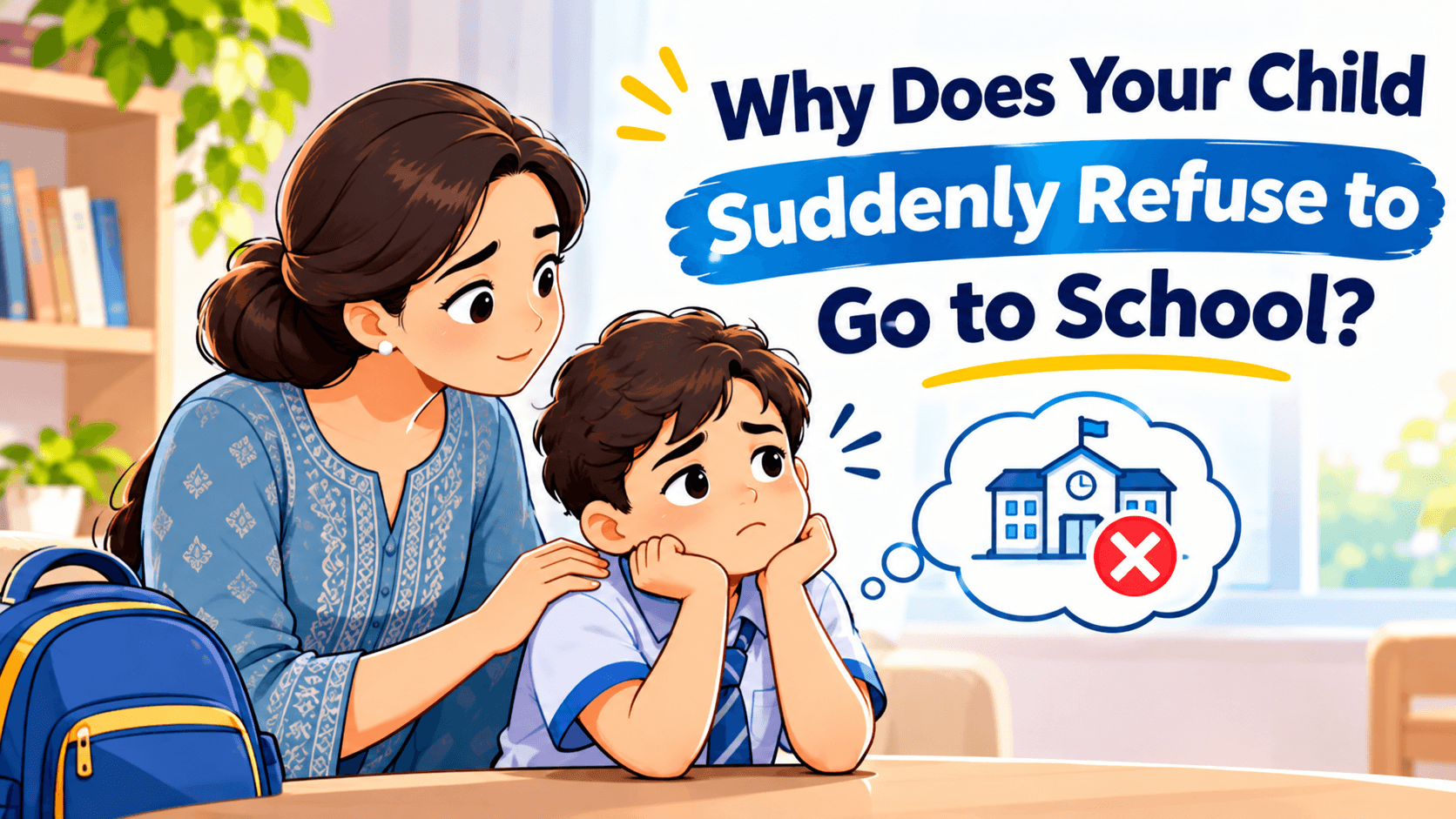

Your child was happily attending school until a few days ago. Suddenly, every morning begins with complaints of stomach aches, tears, or requests to stay home. Even after reassurance, they refuse to get ready.
As a parent, you might wonder whether your child is simply avoiding schoolwork or facing something more serious.
Sometimes, this behaviour is linked to school avoidance, where children experience emotional distress about attending school. Understanding what is causing their discomfort is the first step towards helping them feel comfortable again.
Why Do Some Children Suddenly Refuse to Attend School?
Children rarely develop school-related fears without a reason, although they may struggle to explain what is bothering them.
According to the American Academy of Pediatrics, school avoidance can be associated with anxiety, academic difficulties, bullying, and fear of failure.
Some common reasons include:
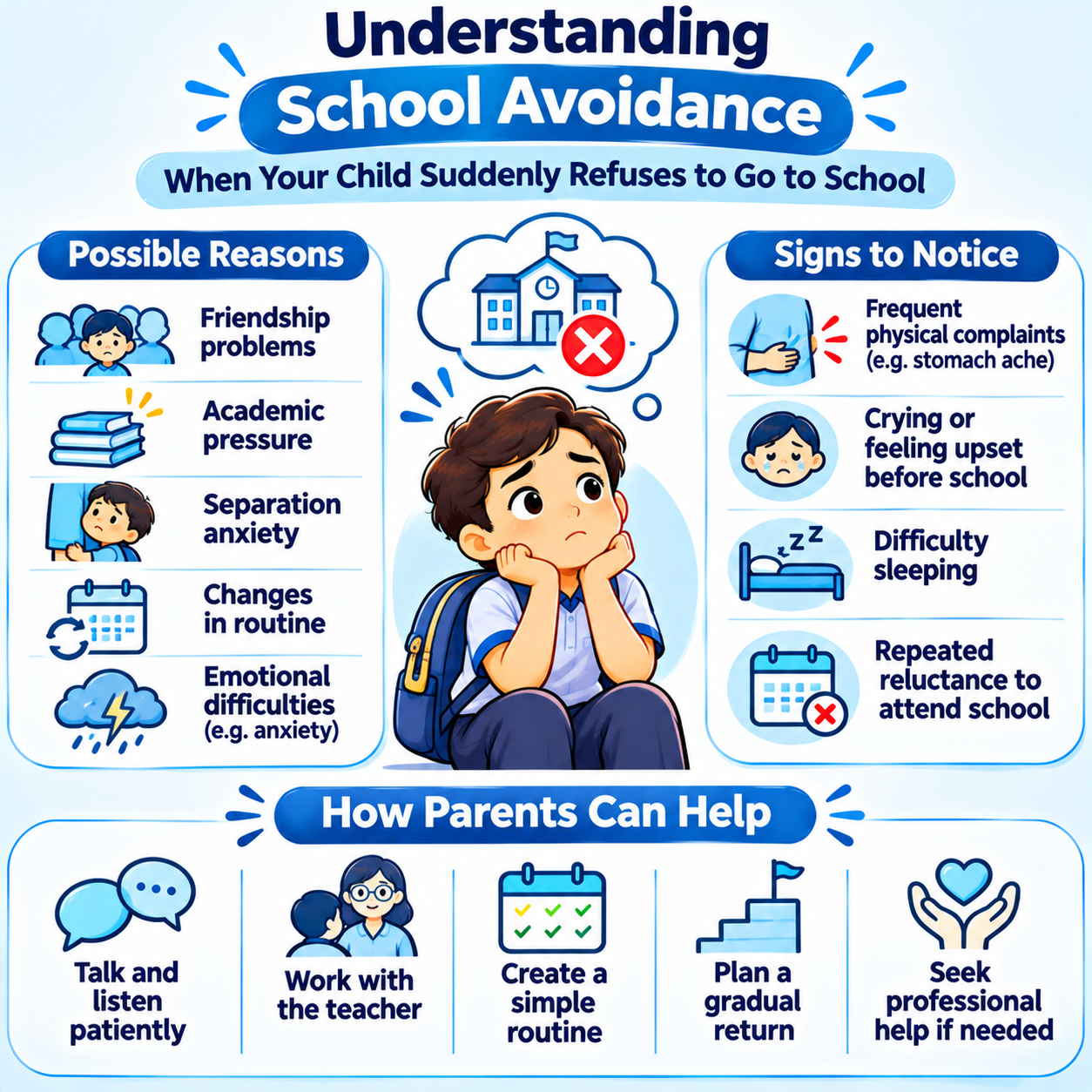
Friendship problems: Being excluded from games, arguments with classmates, or bullying can make school uncomfortable.
Academic pressure: Children who struggle with lessons or fear examinations may worry about disappointing teachers or parents.
Separation anxiety: Younger children may feel frightened about staying away from their parents.
Changes in routine: Moving to a new school, changing classrooms, or adjusting to a new teacher can create uncertainty.
Emotional difficulties: Family stress, low confidence, or anxiety can affect a child's willingness to attend school.
For example, a child who suddenly refuses to attend school every Monday might be worried about a particular class or activity.
Rather than assuming the child is being stubborn, parents should explore what happens during the school day.
How Can Parents Recognise the Signs of School Avoidance?
Not every child who dislikes school is experiencing serious anxiety. However, repeated changes in behaviour deserve attention.
The UK's National Health Service explains that anxiety in children can appear through emotional, behavioural, and physical symptoms.
Physical Complaints Before School
Children experiencing school-related anxiety may complain about headaches, nausea, dizziness, or stomach aches.
These symptoms may appear more frequently on school mornings and sometimes improve during weekends or holidays.
However, physical complaints should never automatically be dismissed as anxiety. A doctor can help identify whether an underlying medical condition needs treatment.
Changes in Mood and Behaviour
Parents may notice their child:
Crying or becoming unusually upset before school.
Taking longer than usual to get dressed.
Having difficulty sleeping on school nights.
Becoming unusually clingy or irritable.
Avoiding conversations about classmates or teachers.
These behaviours do not confirm school avoidance, but they provide useful clues.
Pay attention to when the behaviour begins and whether particular school activities seem connected to it.
What Should Parents Do When Their Child Refuses School?
Responding with anger or punishment may make an already anxious child more distressed. Instead, parents can combine emotional support with practical steps.
1. Start a Conversation Without Pressure
Choose a relaxed moment rather than questioning your child during a stressful morning.
Instead of asking, "Why are you making excuses?", try asking, "Is there something at school that has been worrying you?"
Give your child time to answer. Younger children may communicate their feelings more easily through drawing or storytelling.
2. Work With Teachers to Understand the Problem
Teachers may notice difficulties that children do not discuss at home.
For example, a child who appears cheerful after school might still feel uncomfortable during lunch breaks or group activities.
Parents can ask teachers whether their child seems withdrawn, struggles with particular lessons, or has experienced friendship conflicts.
Working together can help identify situations that need attention.
3. Create a Manageable Return-to-School Plan
The NHS recommends steady routines and gradual steps when children experience emotionally based school avoidance.
Parents can maintain regular sleeping hours, prepare school materials beforehand, and keep morning routines predictable.
For children experiencing significant distress, families can work with the school and an appropriate professional on a gradual return plan.
This might involve meeting a trusted teacher before classes or initially attending for shorter periods.
The aim is to rebuild confidence while addressing the underlying problem, not force a child into an unsafe situation.
When Should Parents Seek Professional Help?
Occasional reluctance to attend school is common. However, persistent refusal or increasing emotional distress may require professional support.
The American Academy of Pediatrics advises seeking assistance when school avoidance continues beyond a week or when symptoms seriously interfere with everyday functioning.
Consult a paediatrician or qualified child mental health professional if your child experiences repeated physical complaints, severe anxiety, or prolonged absence.
Seek immediate professional assistance if your child mentions self-harm, feels unsafe, or reports abuse.
Early attention can prevent difficulties from becoming more disruptive to learning and relationships.
Supporting Children's Emotional Well-Being at School
For parents exploring the Top Schools in Ghaziabad, a school's approach to student safety and communication can be an important consideration. St. Teresa School, Indirapuram, Ghaziabad, publishes a zero-tolerance bullying policy that emphasises respect, empathy, and student support. Its February 2026 advisory also encouraged parents to communicate with children and remain attentive to their safety and emotional well-being. Such initiatives highlight topics parents may wish to discuss when evaluating the Best Schools in Ghaziabad, particularly how concerns are reported and addressed.

Conclusion
When children suddenly refuse to attend school, their behaviour may signal difficulties they cannot explain clearly.
Listening patiently, identifying possible triggers, and communicating with teachers can help parents understand what their child needs.
With appropriate support, predictable routines, and professional guidance when necessary, children can gradually regain confidence in attending school.
To know more about other schools in Ghaziabad, click on the link below













 as a preferred source on