




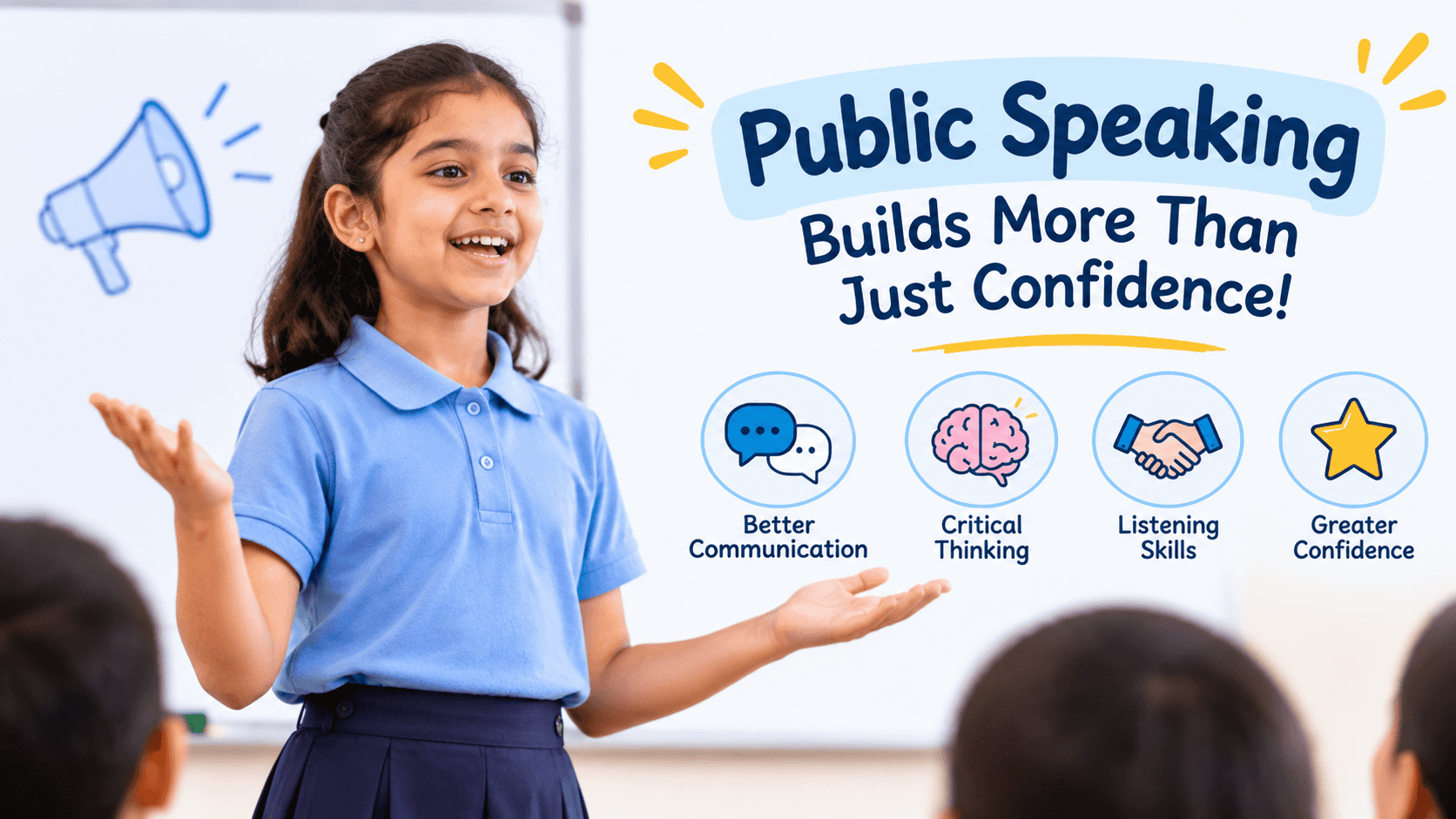

Your child has an answer when you ask a question at home but stays quiet when the teacher invites them to speak in class. Perhaps they avoid reading aloud or feel nervous when asked to share an opinion.
Public speaking is often mistaken for standing on a stage and delivering a long speech. In reality, it begins with everyday communication: sharing an idea, asking a question, explaining a thought, and listening to another person. These experiences help children express themselves with greater ease.
1. Public Speaking Is More Than Speaking on a Stage
Public speaking does not mean every child has to become an orator or enjoy being the centre of attention. It is the ability to communicate a message clearly to one or more people. For a young child, this may mean describing a favourite toy. For an older student, it could involve presenting a project or sharing a point of view in a group discussion.
These experiences help children organise their thoughts, choose suitable words and explain ideas in a logical order.
The National Curriculum Framework for School Education 2023 recognises discussions, debates, presentations and extempore talks as ways to develop oral communication. It also highlights listening to different viewpoints and supporting an argument with reasoning. Speaking skills are therefore connected with thinking and learning, not just performance.
2. How Public Speaking Supports a Child's Overall Development
Regular opportunities to speak can support skills children use at school and in everyday life.
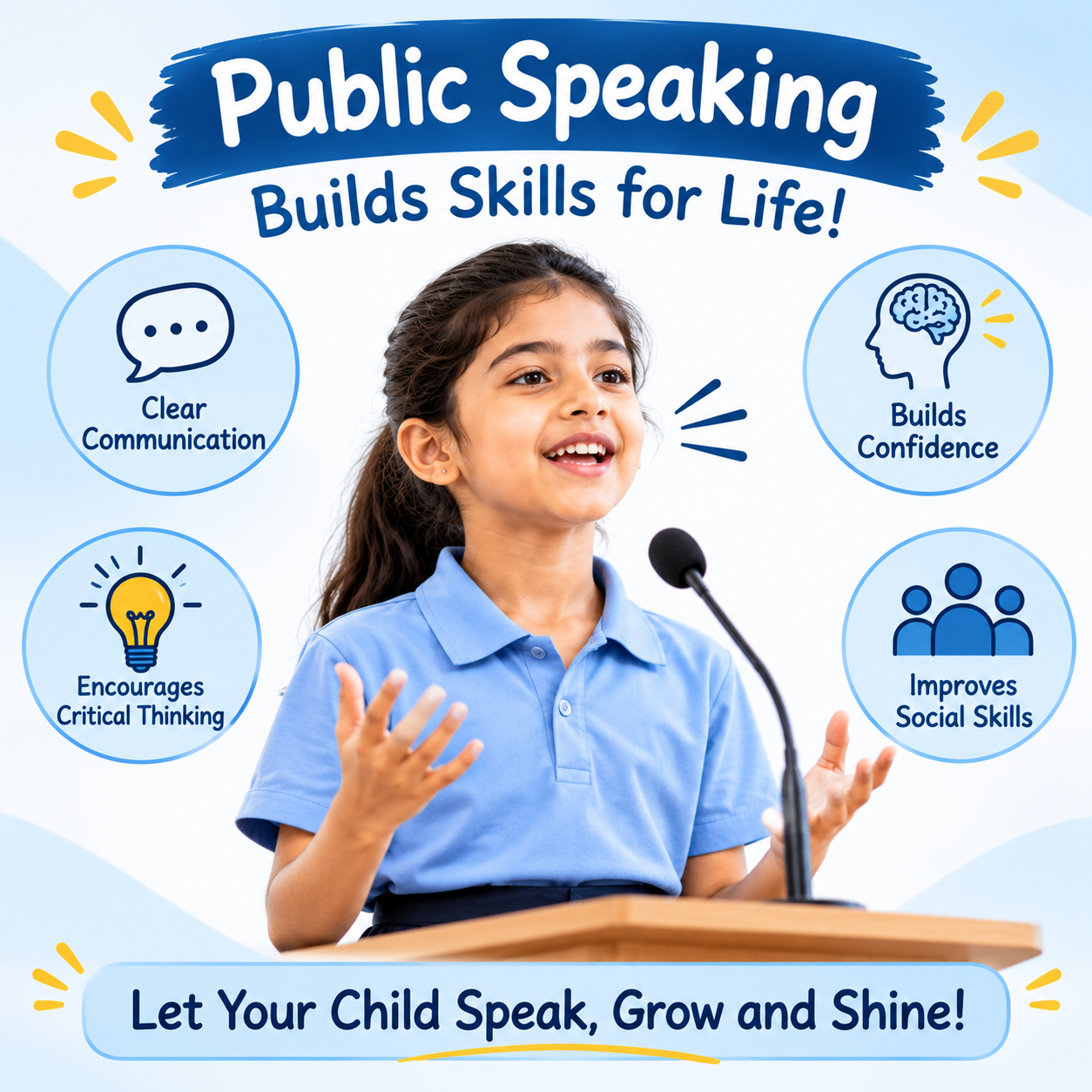
Clear communication: When children explain a story, describe an experiment or share an opinion, they practise putting thoughts into words. This can help them communicate with teachers, classmates and family members.
Confidence through practice: Small, supportive opportunities can make children more familiar with expressing ideas in front of others. Confidence grows through preparation, practice and encouraging feedback. A study of public-speaking training for primary-school children found improvements in aspects of their speaking skills, although the programme did not reduce speech anxiety. Skill-building and feeling nervous are not always the same thing.
Critical thinking: Speaking about a topic requires children to decide what they want to say and why. During a discussion, they may explain a reason, answer a question, or consider another person's view. These habits encourage thoughtful communication rather than memorised responses.
Listening and empathy: Good speakers also need to be good listeners. When children hear different opinions, wait for their turn and respond politely, they learn to respect other perspectives.
3. Simple Ways Parents Can Develop Public Speaking Skills at Home
Parents do not need to arrange formal speeches or make children perform in front of guests. Everyday conversations offer a comfortable starting point.
Give children time to share their day. Instead of asking only, "How was school?", invite them to describe one interesting thing they learnt. Listen without interrupting or correcting every sentence.
Try a one-minute talk. Ask your child to speak briefly about a favourite book, sport, animal, or family outing. Let them choose the topic. The aim is to share an idea, not deliver a perfect speech.
Make reading aloud enjoyable. Take turns reading a short story or poem. Encourage expression and pauses, but do not let mistakes become a reason for embarrassment.
Include children in everyday decisions. Ask why they prefer one game, book or weekend activity. Gentle follow-up questions such as, "What makes you think that?" help them explain their opinions.
Practise familiar situations. Role-play introducing themselves, asking a shopkeeper a question, or requesting help from a teacher.
Praise effort and preparation rather than comparing a child with a more outspoken classmate. If they are not ready to speak before a group, let them begin with one trusted person and gradually widen the audience.
4. How Schools Can Create Opportunities to Speak
Children need opportunities to communicate in different settings, not only during speech competitions. Show and Tell, storytelling, classroom discussions, role-play, debates, presentations, and group projects give students different ways to practise.
A supportive environment matters. Teachers can share the topic in advance, allow preparation time, and give feedback on specific areas, such as speaking clearly or organising ideas. Students should also learn that making a mistake or feeling nervous is a normal part of learning. The aim is participation and progress, not flawless delivery.
A School Environment That Encourages Expression
At Prabhu Dayal Public School (PDPS), Shalimar Bagh, Delhi, the school's published co-curricular information includes debates, public speaking, theatre and creative writing. Its Senior Wing activity schedule also lists mock interviews, presentations, extempore speaking, and group discussions. These activities provide opportunities for students to practise expressing ideas and listening to others. For parents researching the Best schools in Delhi and Top schools in Delhi, it is useful to look at how a school makes communication part of students' wider learning, alongside academic work.

Conclusion
Public speaking is not about turning every child into a stage performer. It is about helping them share ideas, ask questions, listen carefully, and speak up when they need to. Parents can nurture these abilities through everyday conversations, while schools can provide supportive opportunities to practise. With time, patience and regular encouragement, children can become more comfortable expressing themselves in different situations.
To know more about other schools in Delhi, click on the link below






 as a preferred source on