




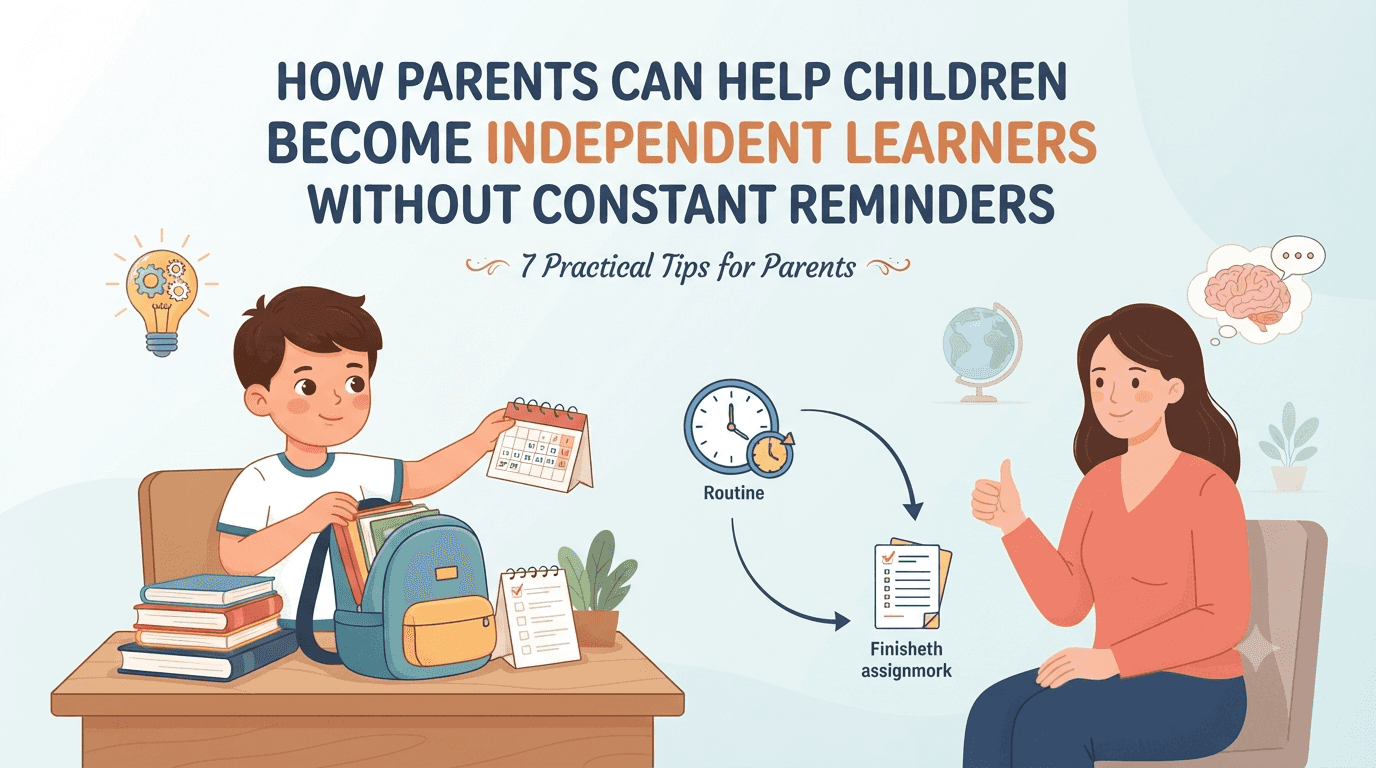

“Have you finished your homework?” “Did you pack your schoolbag?” “Have you revised for the test?”
If you find yourself asking these questions every day, you are not alone. Many parents remind their children about schoolwork, homework, and daily routines because they want them to stay organised and do well. However, children also need opportunities to manage these responsibilities on their own.
Becoming an independent learner does not mean studying without help. It means knowing what needs to be done, making an effort to complete it, and asking for help when something is difficult. These habits take time to develop, but parents can encourage them through small changes at home.
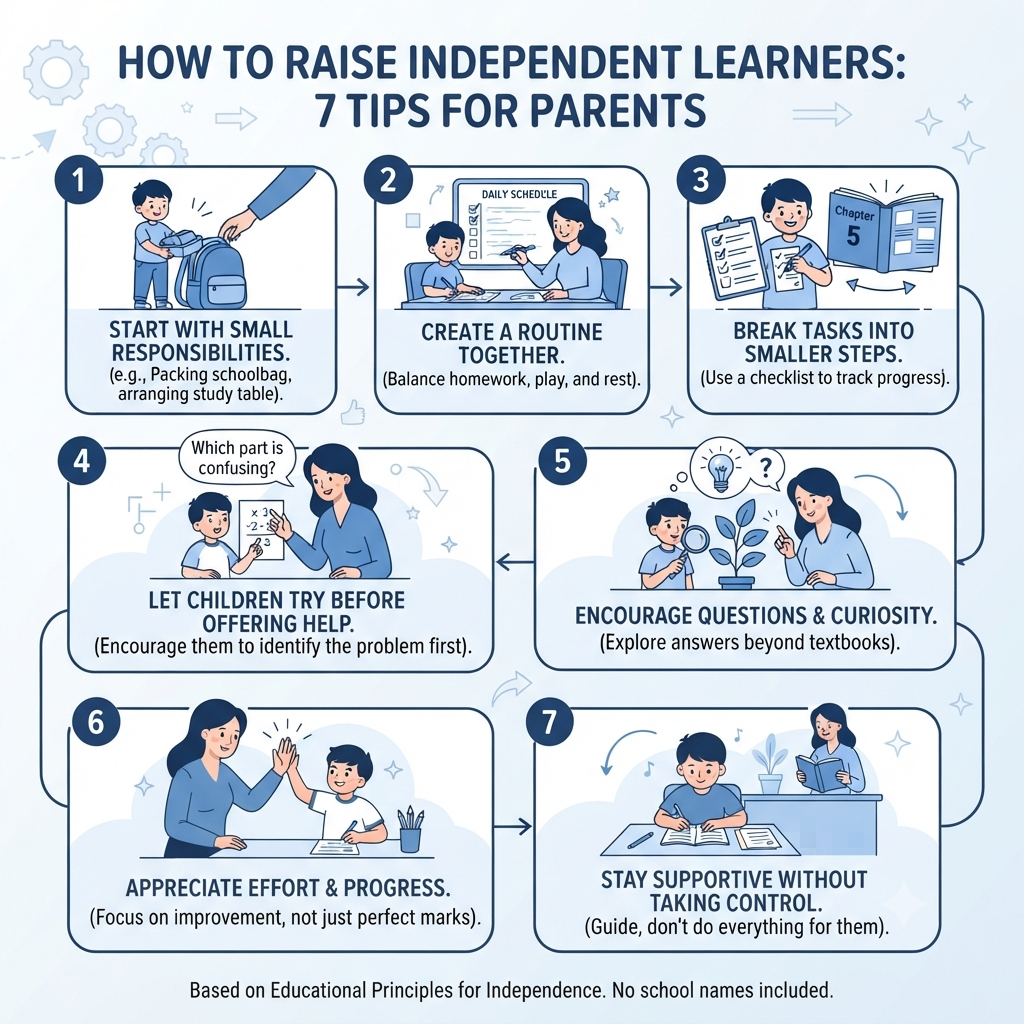
1. Start with Small Responsibilities
Children may find it difficult to manage several responsibilities at once. Instead of expecting them to handle everything independently, begin with simple tasks.
For example, younger children can put their books back in their schoolbag, arrange their study table, or keep their stationery in one place. Older children can maintain a homework checklist, note important school deadlines, and prepare their bags for the next day.
Allow them to complete these tasks at their own pace. They may take longer or forget something in the beginning. Rather than immediately stepping in, give them a chance to try again.
When children regularly manage small responsibilities, they gradually become more confident about handling bigger ones.
2. Create a Routine Together
A regular routine helps children understand how to manage their time. However, simply giving them a timetable may not work if they have no role in creating it.
Sit with your child and plan a daily schedule together. Include schoolwork, playtime, meals, hobbies, and enough rest. Ask when they feel most comfortable studying and how much time they need for different activities.
For example, a child may prefer completing homework after a short break following school. Another may find it easier to study after some outdoor play.
Keep the routine realistic and flexible. The purpose is not to fill every hour with activities but to help children understand how to balance their responsibilities.
3. Teach Children How to Break Tasks into Smaller Steps
Sometimes, children avoid homework because a task looks too long or difficult. They may not know where to begin and wait for their parents to guide them.
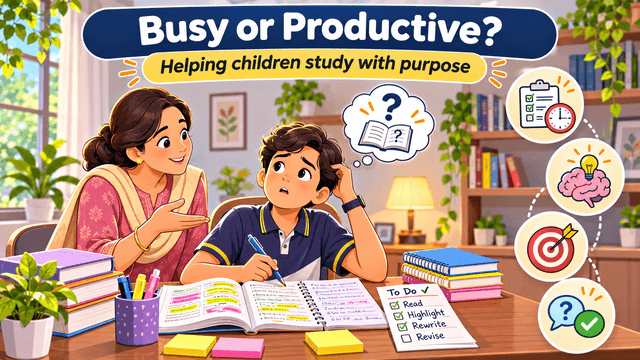
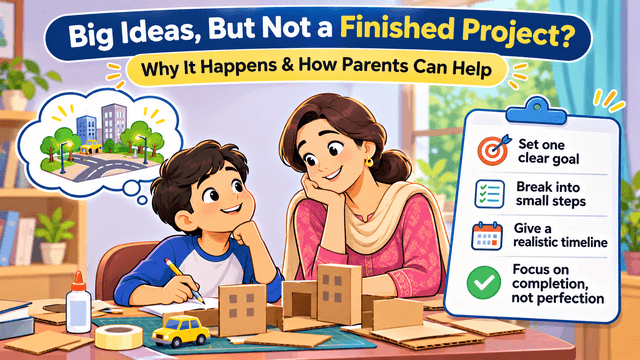
Teach them to divide larger tasks into smaller steps. If they have to complete a chapter, they can first read two pages, note important points, and then answer the questions.
A simple checklist can help them track their progress. They can tick each task once it is completed.
This approach also teaches children to plan their work instead of depending on someone else to tell them what to do next. Over time, they can learn to decide which task needs attention first and how much time to give it.
4. Let Children Try Before Offering Help
It is natural for parents to step in when children struggle with a question or make a mistake. But solving every problem for them can reduce opportunities to think independently.
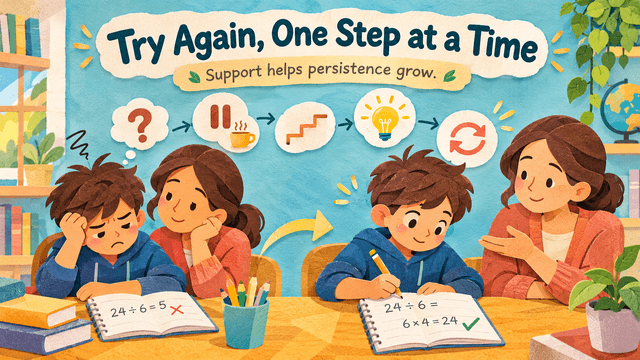
When your child asks for help, first ask what they have understood and what they have tried so far. You could say, “Which part is confusing?” or “What do you think the first step should be?”
Give them enough time to think before explaining the answer. If they still need help, guide them through the difficult part rather than completing the entire task.
Children should also understand that making mistakes is a normal part of learning. When they are allowed to correct their mistakes, they begin to develop problem-solving skills and confidence.
5. Encourage Questions Instead of Giving Every Answer
Independent learning is not only about completing homework alone. It also involves curiosity, asking questions, and finding ways to understand new ideas.
When children ask why something happens, encourage them to explore the answer. You can discuss the topic, read about it together, or connect it with something they see in everyday life.
For example, while cooking, you can talk about how heat changes food. During a walk, you can discuss different plants, insects, or weather conditions.
You can also ask open-ended questions such as, “What do you think will happen next?” or “How would you solve this problem?”
These conversations help children think beyond textbook answers and become more active participants in their learning.
6. Appreciate Effort and Progress
Children need encouragement while developing new habits. However, appreciation should focus on their effort and progress, not only on marks or perfect results.
If your child completes homework without reminders, acknowledge the effort. If they organise their schoolbag independently for the first time, appreciate that too.
Avoid comparing their progress with that of siblings or classmates. Every child develops at a different pace.
When something goes wrong, discuss what can be done differently next time. This helps children see mistakes as opportunities to learn rather than reasons to give up.
7. Stay Supportive Without Taking Control
Giving children responsibility does not mean leaving them completely on their own. They still need guidance, encouragement, and a safe space to discuss their difficulties.
Parents can check in at an agreed time rather than asking about every task repeatedly. For example, you can review the homework checklist together in the evening and discuss anything that remains incomplete.
If a child is regularly struggling with a subject, talk to their teacher to understand where they need support. Independence develops best when children know that help is available whenever they genuinely need it.
How Schools Can Support Independent Learning
A child's ability to learn independently develops through experiences at home and school. Prestige School, Hennur, Bangalore, provides a learning environment that includes academic activities, periodic assessments, and opportunities beyond regular classroom lessons. Its official activities list includes robotics, yoga, music, dance and sports, while its campus also includes a Science Zone and subject-specific laboratories. Such activities can give children opportunities to explore interests, participate in tasks, and learn through different experiences. For parents exploring the Best schools in Bangalore or Top schools in Bangalore, it is useful to consider how a school's academic approach and activities can support children's overall development alongside classroom learning.

Conclusion
Raising an independent learner is a gradual process. Children will forget tasks, make mistakes, and sometimes need reminders. What matters is giving them regular opportunities to take responsibility and learn from their experiences.
Parents do not have to stop guiding their children. They simply need to move from doing everything for them to helping them understand how to do things themselves. With patience, a supportive routine and consistent encouragement, children can become more organised, confident and responsible learners.
For more information on this and similar schools, check out this list of the best schools in Bangalore.






 as a preferred source on