




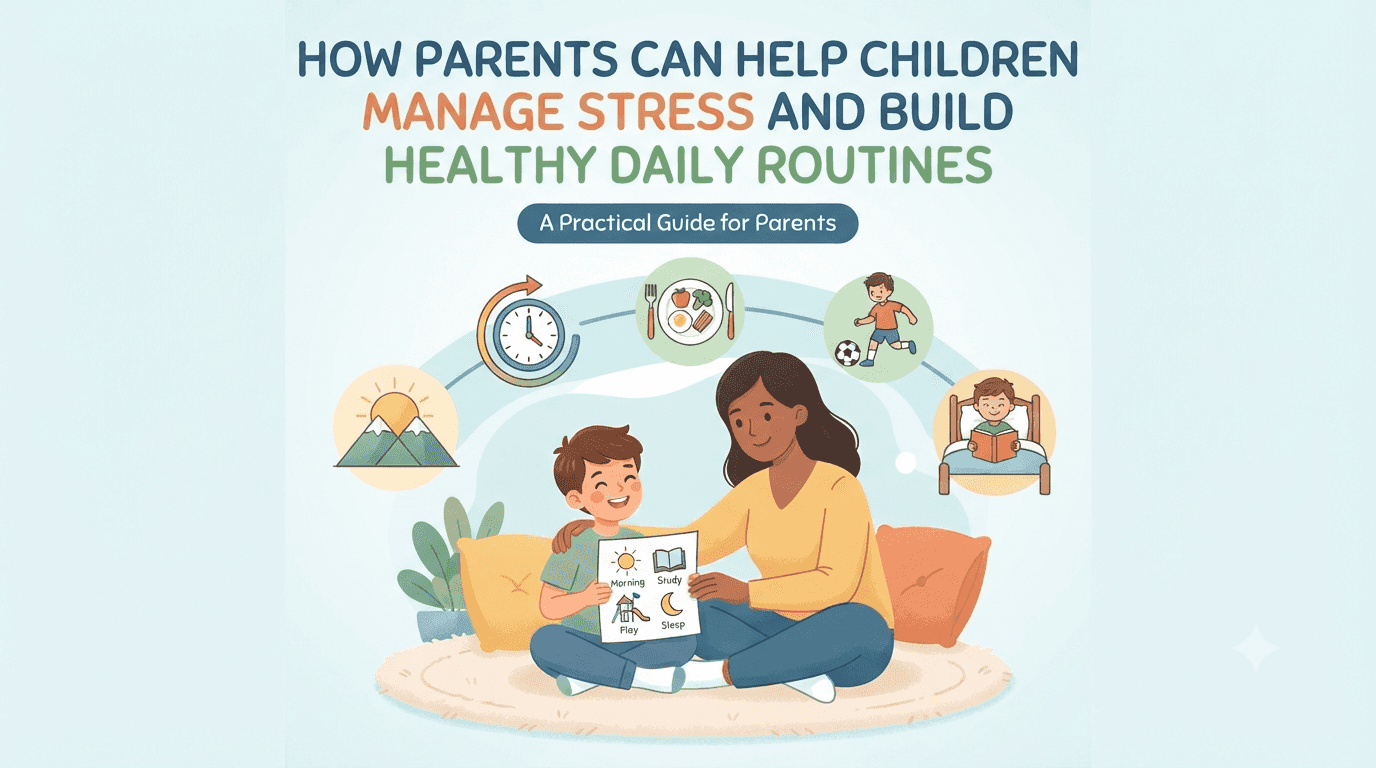

Does your child become irritated while getting ready for school, worry about unfinished homework, or struggle to fall asleep at night? These moments may seem like ordinary parts of growing up, but they can sometimes indicate that a child is feeling overwhelmed.
Children experience stress for many reasons. Schoolwork, exams, friendships, busy schedules, and changes at home can all affect their mood. While parents cannot remove every challenge, they can help children handle these situations through emotional support and healthy daily habits.
A balanced routine is not about making every minute productive. It is about giving children enough time for learning, rest, play, and family so they feel more settled throughout the day.
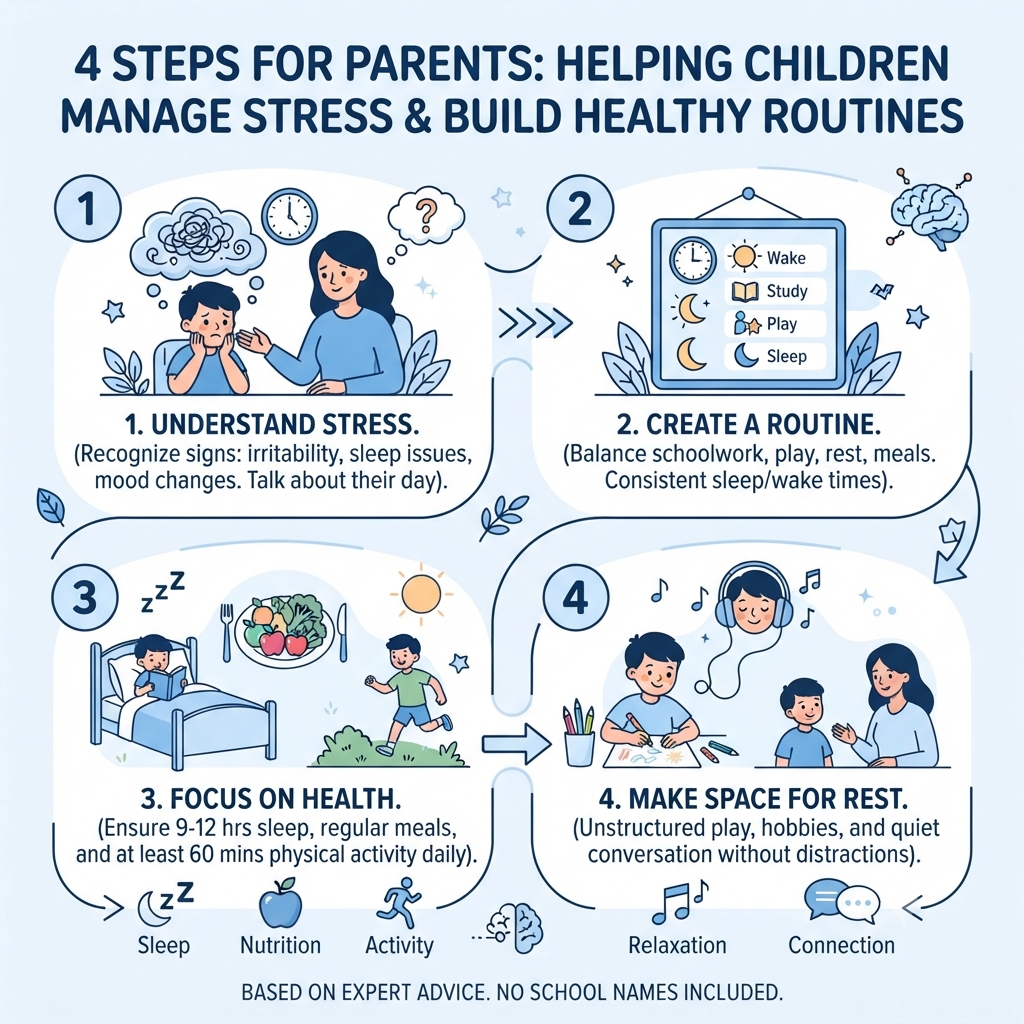
1. Understand What Is Causing Your Child's Stress
Before changing your child's routine, try to understand what is troubling them. Children do not always know how to explain their feelings. Some may talk openly, while others may become quiet, angry, or unusually restless.
Stress can appear in different ways, such as:
- Frequent headaches or stomach aches.
- Difficulty sleeping or changes in appetite.
- Irritability, crying, or sudden mood changes.
- Trouble concentrating on homework.
- Avoiding activities they usually enjoy.
These signs do not always mean a child is experiencing serious stress. However, noticing changes can help parents understand when something needs attention.
Instead of asking only, "Did you finish your homework?", make time for conversations about their day. Ask questions such as, "Was anything difficult today?" or "Is there something worrying you?"
Listen without immediately correcting or judging them. If a child is worried about an upcoming test, for example, understand whether the concern is about the subject, preparation time, or fear of disappointing someone.
UNICEF recommends helping children recognise their stress triggers and giving them time, attention and reassurance. Understanding the cause is often the first step towards finding a helpful solution.
2. Build a Predictable but Flexible Daily Routine
Children often feel more comfortable when they know what to expect. A regular routine can reduce the stress of rushing from one activity to another.
Start by creating a simple schedule that includes:
- A consistent wake-up time and bedtime.
- Time for meals and getting ready for school.
- A short break after returning home.
- A suitable period for homework and revision.
- Time for outdoor play, hobbies and relaxation.
For example, after school, allow your child some time to eat, rest or play before beginning homework. Trying to move directly from school lessons to another long study session may leave them tired.
Involve your child while planning the schedule. Ask which time works best for studying and when they prefer to play. Younger children may need more guidance, while older children can take greater responsibility for managing their time.
Remember that routines should not become another source of pressure. If your child has a tiring day or a family commitment, adjust the schedule. Consistency matters, but flexibility is equally important.
3. Give Sleep, Nutrition and Physical Activity Enough Attention
Children need more than study time to stay healthy and manage everyday pressure. Sleep, regular meals and physical activity are important parts of their routine.
Protect sleep: Avoid keeping bedtime too late because of homework, television, or mobile phones. UNICEF recommends 9–12 hours of sleep for children aged 6–12 and 8–10 hours for teenagers. A calming bedtime routine, such as reading a book or talking about the day, can help children settle down.
Encourage regular meals: Children may become tired or irritable when they skip meals or have irregular eating habits. Try to maintain regular meal times and offer balanced food. Eating together whenever possible also creates an opportunity to talk about the day.
Make movement part of the day: Encourage cycling, walking, dancing, playing a sport, or simply spending time outdoors. Children aged 5–17 should aim for an average of at least 60 minutes of moderate-to-vigorous physical activity daily, as recommended by WHO.
These habits do not need to be complicated. Even a family walk after dinner or a short outdoor play session can help create a healthier daily rhythm.
4. Make Space for Rest, Conversation and Unstructured Play
A child's day should not revolve entirely around schoolwork, tuition and organised activities. Children also need time when they are not expected to complete a task or achieve something.
Allow them to draw, play with toys, listen to music, read for pleasure, or spend time with friends. Such activities give children a break from academic demands and let them enjoy their interests.
Parents can also introduce simple relaxation habits. For example, encourage your child to take a few slow breaths when feeling nervous before a test. Younger children can imagine slowly blowing up a balloon while breathing out. Older children may prefer journaling, quiet reading, or listening to calming music.
Most importantly, create opportunities for conversation without distractions. A few minutes of undivided attention can help children feel heard and supported.
Avoid comparing their schedules, marks, or achievements with those of other children. A routine that works for one child may not suit another. The aim is to find a balance that supports your child's needs.
How Schools Can Support Children's Well-Being
A child's well-being is supported by both home and school experiences. Prominence World School, Knowledge Park V, Greater Noida West, reported organising a dedicated yoga session in its January 2026 school newsletter. The session focused on mindfulness, discipline, and overall wellness. Such activities can introduce children to the value of taking care of their physical and emotional well-being. For parents exploring the Best schools in Greater Noida West or Top schools in Greater Noida West, it is useful to understand how a school's activities, student support, and approach to well-being fit into a child's overall school experience.

Conclusion
Helping children manage stress does not require a perfect timetable or a completely worry-free childhood. It begins with listening, understanding their needs, and building healthy habits that they can follow comfortably.
Give children enough time to sleep, eat, learn, play, and relax. Be patient when routines need to change, and remind them that they can talk to you when something feels difficult.
With steady support at home and school, children can gradually develop healthier ways to manage everyday challenges.
To know more about other schools in Greater Noida West, click on the link below.












 as a preferred source on