




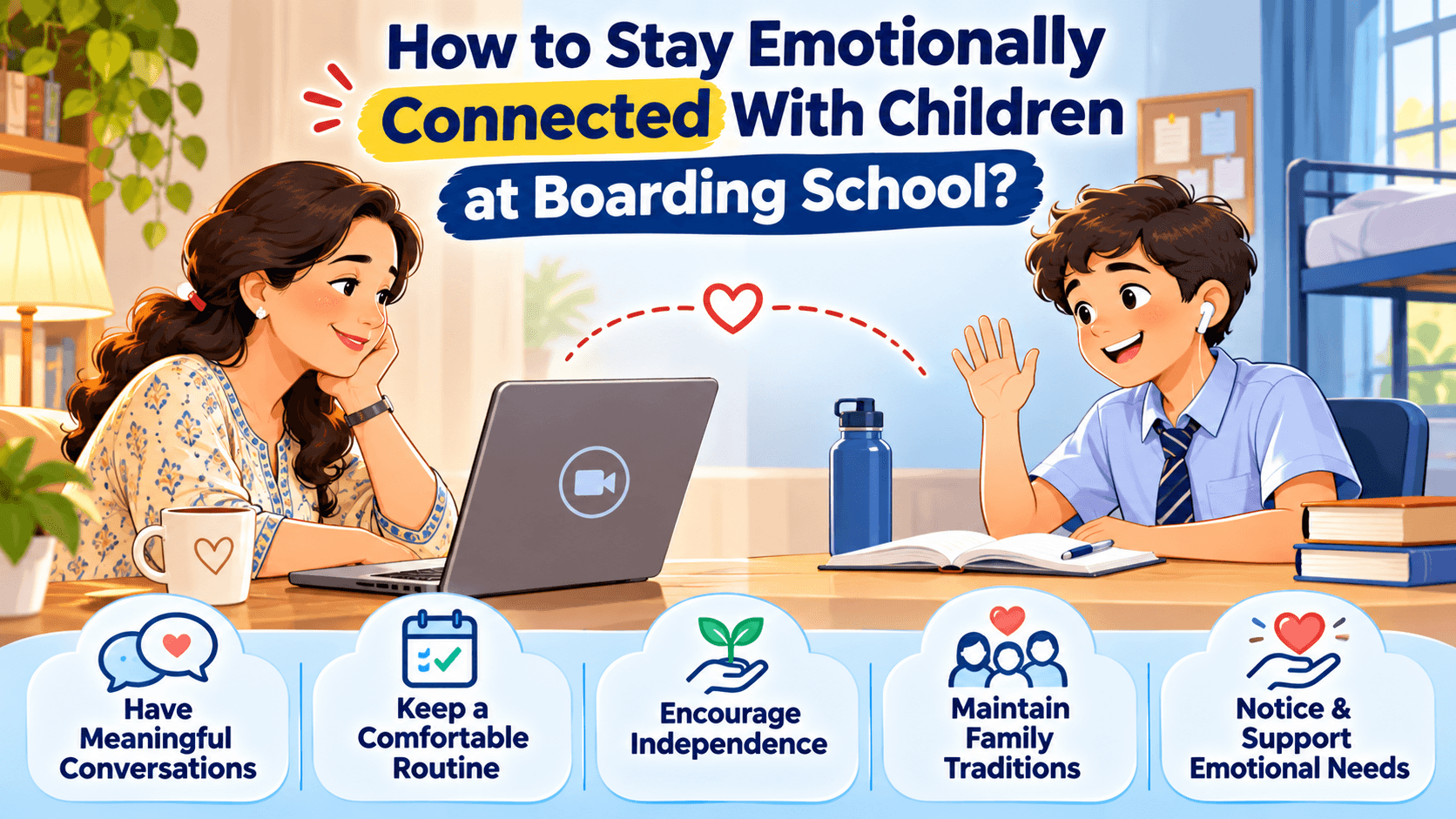

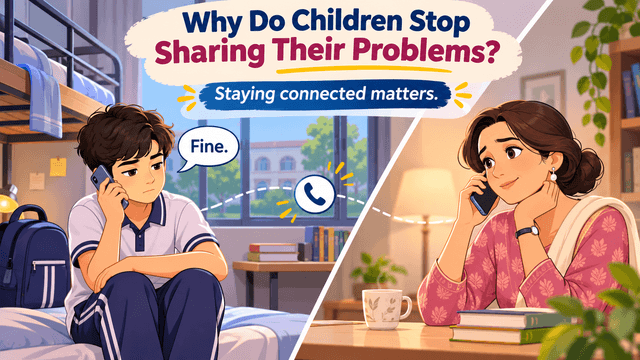
Your child calls from boarding school, and the conversation lasts barely five minutes. You ask about meals, classes, and friends. They reply, “Everything is fine,” before rushing off to another activity. After hanging up, you wonder whether they are genuinely happy or simply avoiding a longer conversation.
For parents, living apart from their children can be emotionally challenging. While boarding schools encourage independence, children still need reassurance, understanding, and emotional support from home. The good news is that physical distance does not have to weaken family relationships. Small, thoughtful efforts can help parents remain closely involved in their child's life.
Why Does Emotional Connection Matter When Children Live Away From Home?
Moving to boarding school introduces children to new routines, friendships, responsibilities, and expectations. Even confident children may occasionally feel lonely, overwhelmed, or homesick.
Research published in Pediatrics by the American Academy of Pediatrics explains that homesickness is a normal response to separation from familiar people and surroundings. It recommends preparing children for separation, encouraging friendships, and maintaining supportive communication.
A 2025 longitudinal study examining boarding students also found that attending boarding school did not necessarily reduce parent-child closeness. Emotional security can continue through a child's belief that their parents remain available when needed.
This means parents do not need to participate in every daily activity. What matters is ensuring their child feels heard, valued, and supported, even from a distance.
How Can Parents Make Conversations More Meaningful?
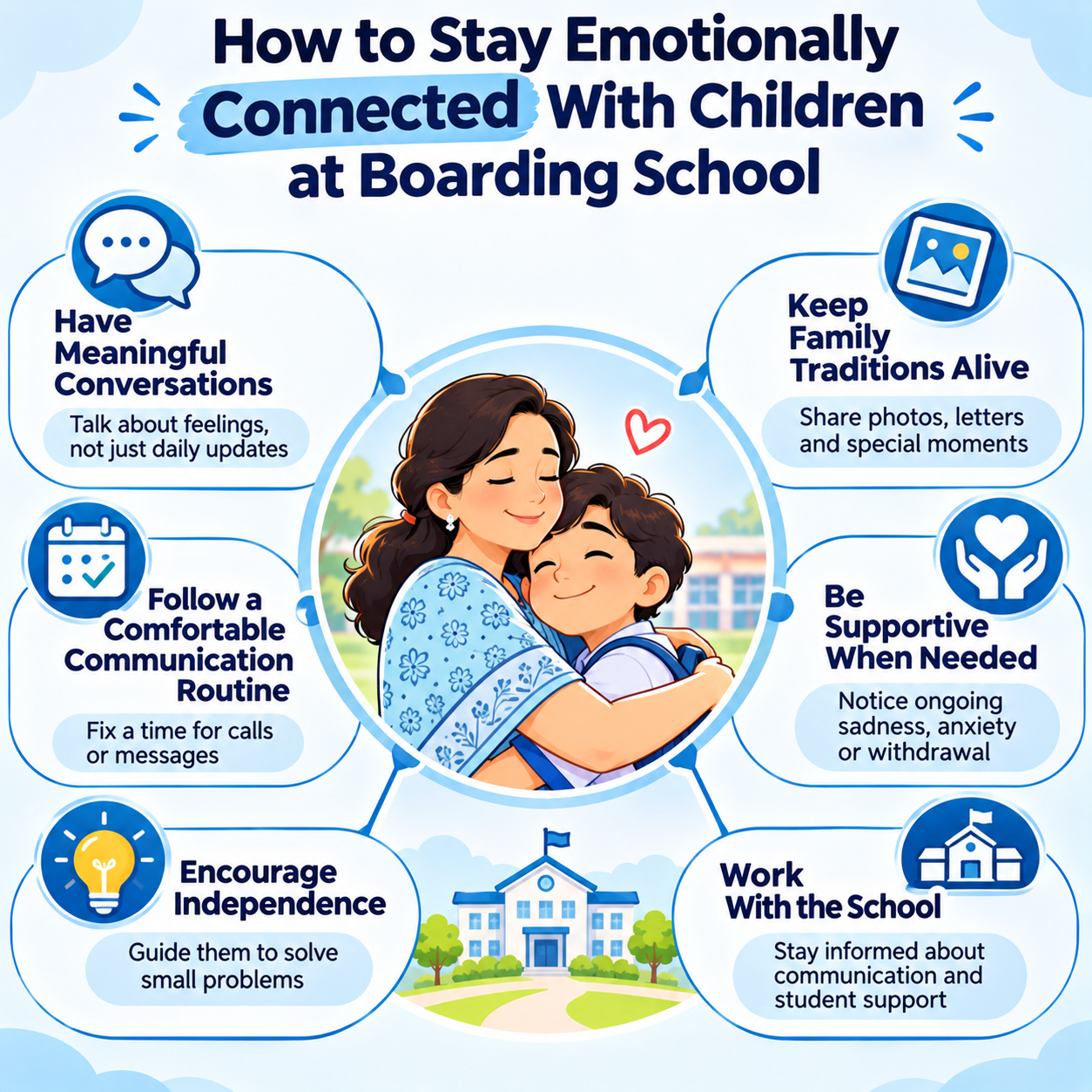
Focus on Feelings, Not Just Daily Updates
Many parent-child conversations quickly become discussions about homework, examinations, meals, or discipline. Although these topics matter, children also need opportunities to express their feelings.
Instead of asking only whether homework is complete, try questions such as:
- What was the happiest moment of your week?
- Did anything happen that made you uncomfortable?
- Who did you enjoy spending time with?
- Is there something you wish we could help you with?
For example, if your child mentions losing a cricket match, avoid immediately offering advice about practising harder. Ask how they felt and what they learned.
Listening without rushing to correct or judge encourages children to share more openly.
Create a Comfortable Communication Routine
Regular communication can provide reassurance, particularly during the first few months of boarding school.
Parents can agree on suitable calling times according to school rules and their child's preferences. Some children enjoy weekly video calls, while others prefer shorter conversations or occasional letters.
The American Academy of Pediatrics notes that planned contact during longer separations can help children maintain connections with home.
However, more calls do not automatically mean stronger relationships. Avoid making children feel guilty for missing a conversation because of school activities. A predictable, relaxed routine is generally more helpful than constant checking.
How Can Parents Support Independence Without Becoming Distant?
Let Children Solve Everyday Problems
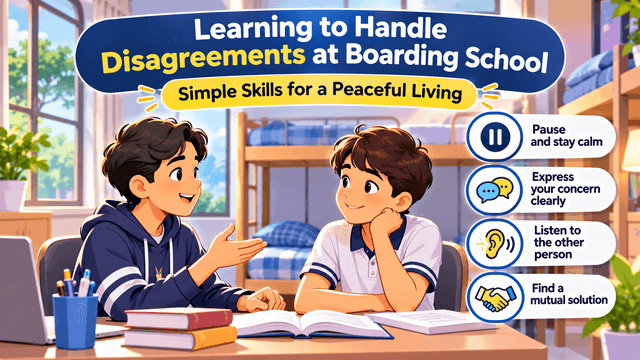
Imagine your child tells you they disagreed with a roommate. Your immediate reaction might be to contact the school and resolve the situation.
However, minor disagreements can become opportunities to develop communication and problem-solving skills.
Ask your child what happened, how they responded, and what they might try next. Encourage them to speak respectfully with their roommate or seek guidance from a trusted adult when necessary.
Research comparing boarding and day-school students suggests that physical separation can support greater emotional independence while preserving relationships with parents.
The goal is not to leave children alone with their problems. It is to help them recognise which situations they can manage independently and when they should ask for assistance.
Keep Family Traditions Alive
Emotional connections grow through shared experiences, not only conversations about important matters.
Parents can maintain simple family traditions despite the distance. For example, children might receive handwritten birthday letters, share photographs of family celebrations, or discuss a favourite book during scheduled calls.
During holidays, spend time doing familiar activities together rather than filling every day with outings or academic discussions.
These small traditions remind children that they continue to belong to their family while developing their own identity.
How Can Parents Recognise When Their Child Needs Extra Support?
Occasional sadness or missing home is common. However, persistent emotional changes deserve attention.
Parents should notice whether their child repeatedly reports difficulty sleeping, frequent headaches, withdrawal from friends, overwhelming anxiety, or losing interest in previously enjoyable activities.
A child may also become unusually quiet or irritated during conversations.
Rather than assuming these changes are simply part of adjustment, speak calmly with your child and contact appropriate school staff.
Ask whether similar concerns have been observed and what support is available. Persistent or serious difficulties may require assessment by a qualified mental health professional.
Parents should also understand the school's communication policies, pastoral support arrangements, and procedures for addressing student concerns before admission.
The Role of Schools in Supporting Parent-Child Connections
When exploring the Best Boarding Schools in India, parents should consider how schools encourage communication and maintain relationships with families. Sehwag International School (SIS), Jhajjar, offers residential education alongside academics and sports. Its official website documents a Parents' Orientation programme held in 2026, reflecting an opportunity for families to engage with the school environment. Parents comparing the Top Boarding schools in India can use such interactions to ask about communication schedules, residential staff, and emotional support arrangements.

Conclusion
Staying emotionally connected with a child at boarding school does not require constant calls or involvement in every decision. Meaningful conversations, family traditions, trust, and timely support can help children feel secure while becoming more independent.
The most important message parents can communicate is simple: distance may change everyday routines, but it does not change the love, understanding, and support waiting at home.
For more information on this and similar schools, check out this list of the best boarding schools in India.





 as a preferred source on