




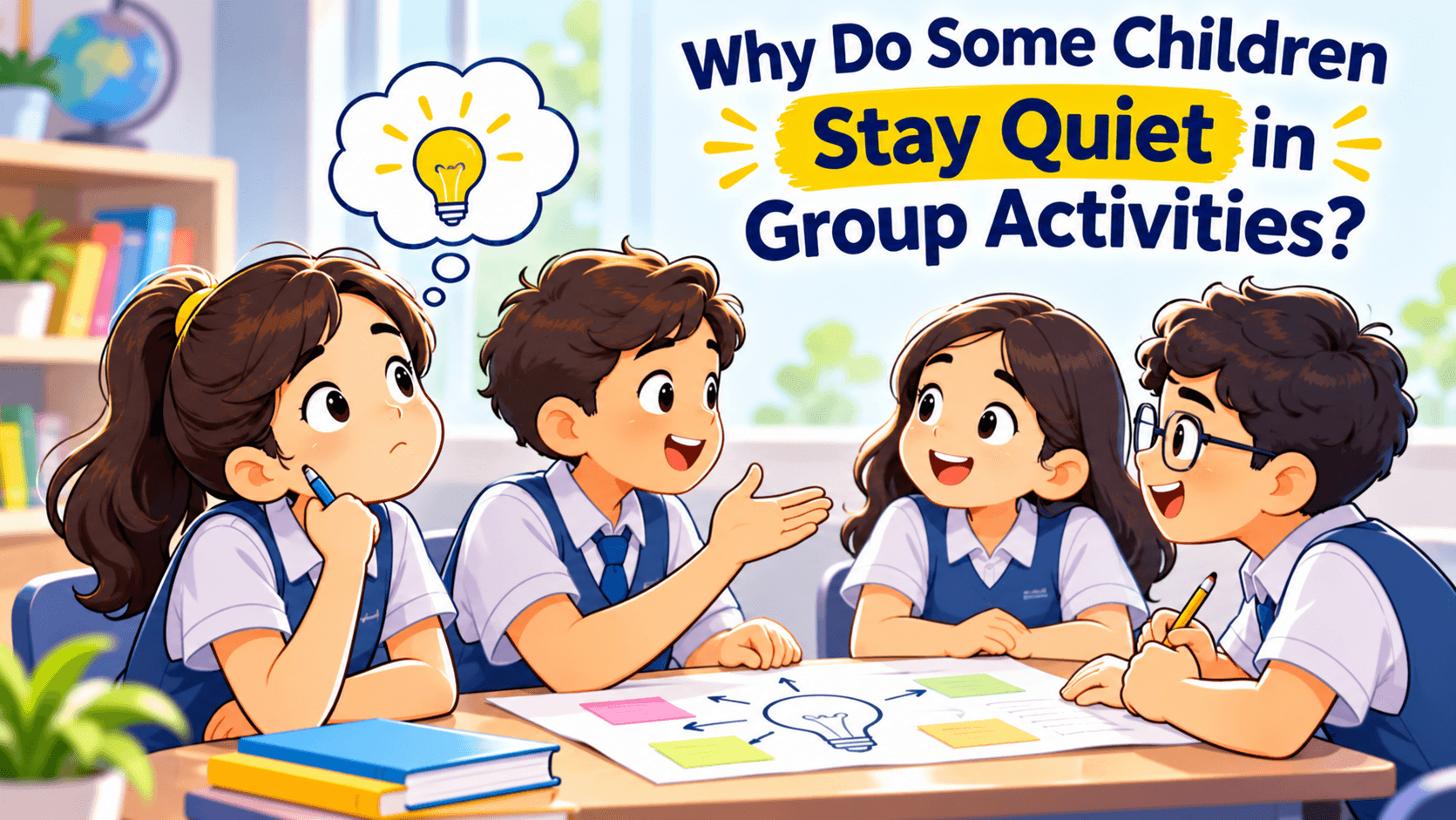

Your child comes home from school and excitedly explains how they could have solved a problem during a group activity. But when you ask whether they shared their idea with classmates, they quietly say, "No, I didn't."
This situation can confuse parents. A child who speaks confidently at home may hesitate during classroom discussions, group projects, or team activities.
Does this mean they lack confidence? Are they afraid of being wrong?
Not necessarily. Children participate differently depending on their personalities, experiences, and how comfortable they feel around others.
Understanding these differences can help parents encourage participation without making children feel pressured.
Why Do Some Children Hesitate to Speak in Groups?
Being quiet during group activities does not always mean a child has nothing to contribute.
Several factors can influence how comfortably children express themselves.
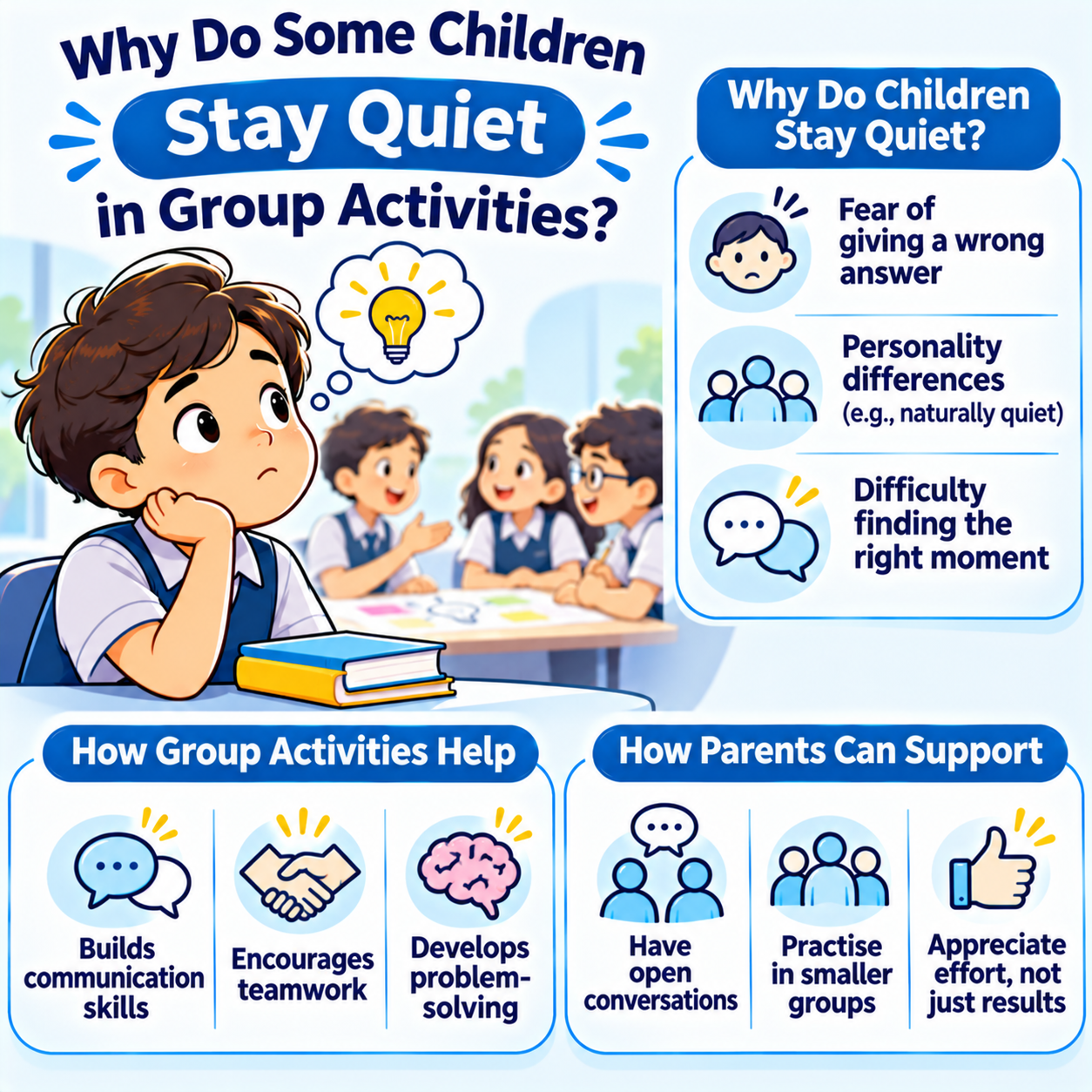
1. Fear of Giving the Wrong Answer
Some children worry that classmates might laugh if their suggestion is incorrect.
Imagine a child who has an idea for a science project but remains silent because another student sounds more confident.
The child may understand the task perfectly but hesitate to risk embarrassment.
2. Different Personality Traits
Some children naturally take longer to feel comfortable in unfamiliar social situations.
According to the American Academy of Pediatrics, childhood shyness is common, and many children become more comfortable after an initial adjustment period.
Being naturally quiet is not necessarily a problem. However, children who want to participate but feel unable to may need additional support.
3. Difficulty Finding the Right Moment
Group discussions can move quickly.
While one child is still organising their thoughts, another might already be speaking.
Sometimes, quieter children simply struggle to find an opportunity to contribute, especially when more outspoken classmates dominate conversations.
Does Being Quiet Mean a Child Lacks Confidence?
Parents sometimes associate confidence with speaking frequently, answering questions quickly, or volunteering for activities.
However, participation involves more than talking.
A child who listens carefully, observes others, and thinks before responding may still be actively engaged.
Research published in the International Journal of Inclusive Education examined teachers' strategies for helping shy students participate in oral activities. It highlighted how group settings, supportive relationships, and classroom expectations can affect children's willingness to contribute.
This suggests that participation should not be judged only by how often a child speaks.
For example, a quiet child might contribute by drawing a diagram, organising materials, or helping classmates complete a task.
Parents should recognise these contributions while gradually helping children express their ideas verbally.
The goal is not to make every child outspoken. It is to ensure that children feel comfortable sharing their thoughts when they want or need to.
How Can Group Activities Help Children Develop Communication Skills?
Well-structured group activities give children opportunities to practise communication, cooperation, and problem-solving.
The Education Endowment Foundation reports that collaborative learning approaches can positively influence academic outcomes.
However, effective collaboration requires careful planning. Simply placing children together does not guarantee meaningful participation.
1. Learning to Express Ideas Clearly
When children explain their suggestions, they practise organising thoughts into understandable sentences.
Even simple statements such as "I think we should try another way" encourage communication.
2. Understanding Different Perspectives
Group activities expose children to classmates who may approach the same problem differently.
Listening to these opinions helps children understand that disagreement does not always mean someone is wrong.
3. Developing Cooperation
Working together requires children to share responsibilities, listen patiently, and make decisions.
For quieter children, smaller groups with clear roles may offer more manageable opportunities to participate.
Research from the Education Endowment Foundation identifies groups of three to five students as promising arrangements for collaborative learning.
How Can Parents Help Quiet Children Participate More Comfortably?
Parents can support children through small, consistent activities without forcing them into uncomfortable situations.
Start with familiar conversations.
Encourage your child to share opinions during family discussions.
For example, ask them to suggest a weekend activity and explain why they prefer it.
Practise common group situations.
Use role-playing activities where your child practises joining conversations or sharing suggestions.
You might say, "Imagine your classmates are planning a project. How would you introduce your idea?"
Encourage participation in smaller groups.
Invite one or two familiar friends for activities involving building blocks, drawing, or simple games.
Smaller groups may help children practise speaking without feeling overwhelmed.
Appreciate effort rather than demanding results.
Instead of asking, "Why didn't you speak today?" try asking, "Was there something you wanted to share?"
Recognise small attempts without comparing your child with more outspoken classmates.
If anxiety consistently prevents participation, friendships, or everyday activities, consider discussing the concern with a teacher or qualified child mental-health professional.
Encouraging Expression Through School Activities
For parents exploring Top schools in Gurugram, opportunities for communication and creative participation can be important considerations. The Navriti School, DLF Phase IV, Gurgaon describes an Imaginarium learning space where younger students engage in puppetry, role-play, and interactive storytelling. Its official campus information presents these activities as opportunities for imagination and self-expression. Parents comparing the Best Schools in Gurugram can ask how teachers encourage quieter children to participate, whether students receive opportunities to work in smaller groups, and how individual communication needs are supported.

Conclusion
Children who remain quiet during group activities may still have thoughtful ideas and a strong understanding of the task.
Rather than expecting every child to speak confidently immediately, parents can create opportunities for gradual participation.
Supportive conversations, small-group interactions, and positive encouragement can help children become more comfortable expressing themselves.
What matters most is helping children understand that their ideas deserve to be heard, even when they need a little more time to share them.
For more information on similar schools, check out this list of the best schools in Gurugram.











 as a preferred source on