




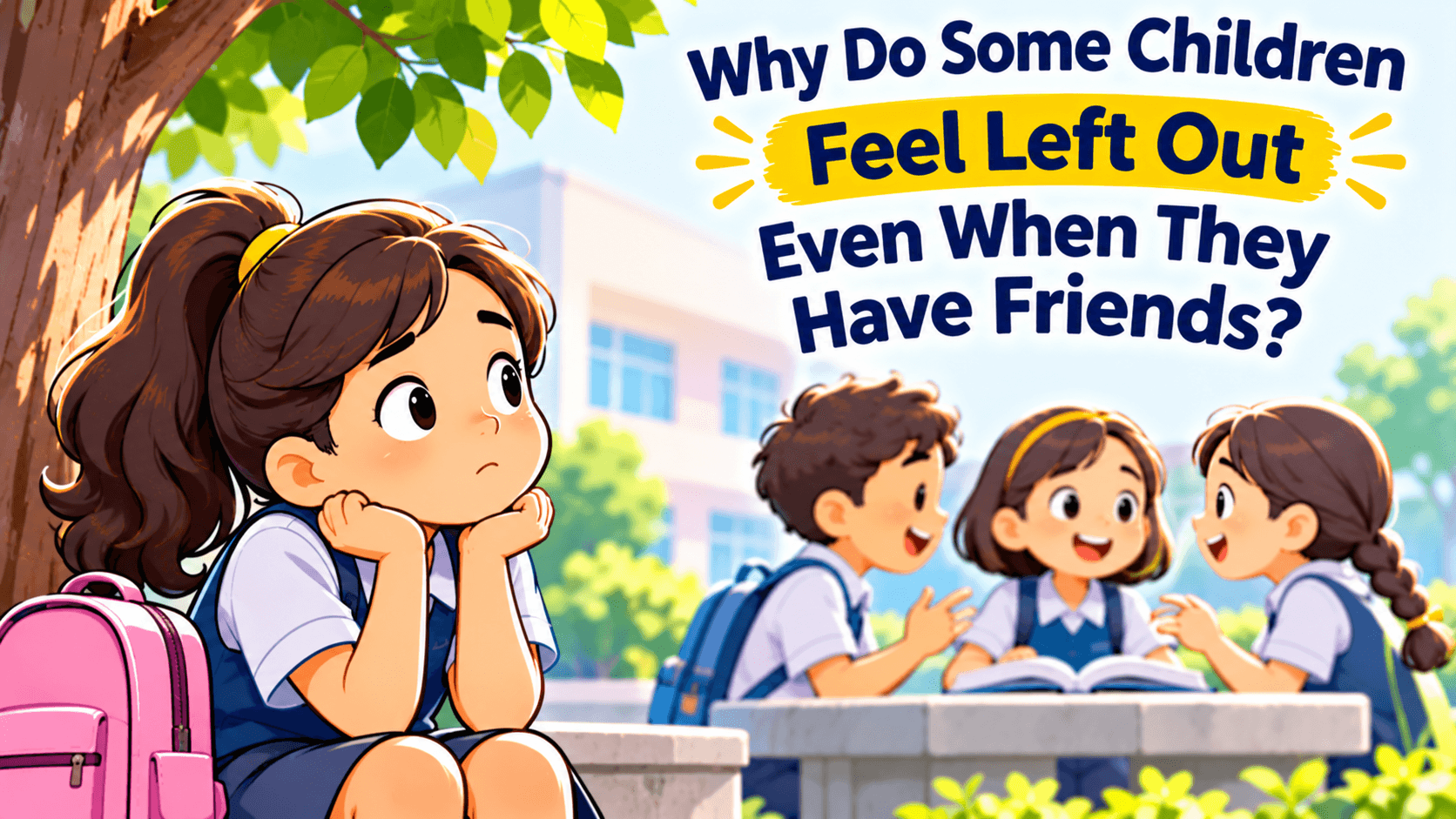

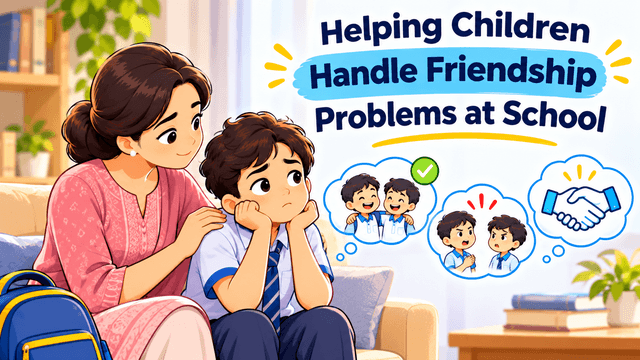
Your child regularly talks about classmates, attends birthday parties, and plays with friends during school breaks. Everything seems fine until one day they quietly say, "I have friends, but nobody really includes me."
For parents, this can be confusing. How can a child feel lonely when they are surrounded by friends?
The truth is that having friends and feeling accepted are not always the same thing. Children need more than people to play with. They also need to feel valued, understood, and included.
Understanding why children sometimes feel excluded can help parents support their friendships and emotional wellbeing.
Why Can Children Feel Lonely Even When They Have Friends?
Friendship is not simply about how many classmates a child knows. The quality of those relationships matters.
A child might have several friends but still feel uncomfortable sharing personal thoughts or joining certain activities.
1. Being Part of a Group Does Not Always Mean Feeling Included
Imagine four children playing together during lunch break. Three regularly make decisions about the game, while the fourth simply follows along.
Although nobody openly rejects the fourth child, they may feel that their opinions do not matter.
Small experiences like these can affect a child's sense of belonging.
A 2023 study published in the Journal of School Psychology, involving 998 primary-school children, found that receiving companionship, help, and emotional support from classmates was associated with lower feelings of loneliness.
2. Friendships May Not Feel Equally Close
Sometimes children consider someone their best friend, but that person may have a different understanding of the relationship.
For example, a child may always choose the same classmate as their partner, while the classmate regularly chooses someone else.
These differences can create disappointment, even when both children remain friendly.
3. Children May Worry About Being Rejected
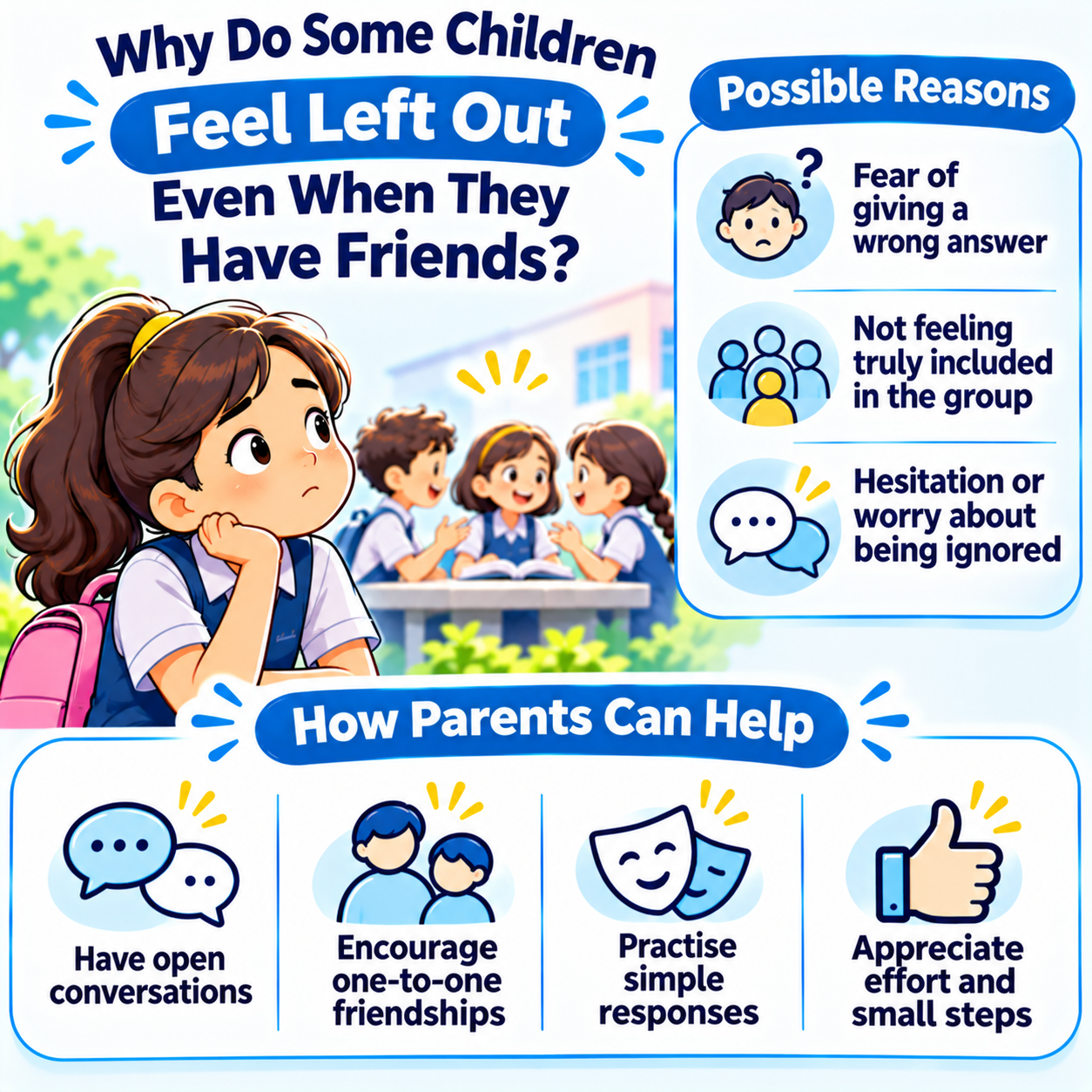
Some children hesitate to join conversations because they fear being ignored or embarrassed.
They might wait for others to invite them instead of asking to participate.
Over time, this hesitation can make them feel disconnected from classmates.
How Can Parents Recognise When Their Child Feels Excluded?
Children do not always directly explain their friendship problems.
Some may describe particular incidents, while others show changes in their behaviour.
Parents might notice that their child:
- Stops mentioning friends they previously talked about.
- Becomes upset after school or group activities.
- Frequently says nobody wants to play with them.
- Avoids birthday parties or social gatherings.
- Seems worried about who will sit beside them in class.
However, these behaviours do not automatically mean a child is being excluded.
According to the British children's charity Action for Children, loneliness may involve changes in mood, withdrawal, or concerns about friendships. Similar signs can also have other explanations.
Instead of assuming the cause, parents should gently explore what their child is experiencing.
For example, rather than asking, "Are your friends ignoring you?" try asking, "Who did you spend time with today?" or "Was there a moment when you wanted to join something but couldn't?"
Open questions allow children to describe situations in their own words.
Why Is Feeling Accepted Important for Children's Development?
A sense of belonging can influence how children experience school.
When children feel comfortable around classmates, they may find it easier to participate in discussions, ask for help, and try unfamiliar activities.
Research published in 2023 examined the relationship between classroom friendships, peer support, and loneliness.
The researchers found that classrooms offering more opportunities for companionship, encouragement, and helpful interactions tended to have lower levels of loneliness.
This suggests that meaningful social connections matter beyond simply having a large friendship group.
Similarly, research on school connectedness has linked supportive relationships with better emotional wellbeing among students.
However, friendship difficulties are a normal part of growing up. Occasional disagreements or being left out of one activity do not necessarily indicate a serious social problem.
What matters is whether the child feels supported and whether exclusion becomes repeated or persistent.
How Can Parents Help Children Build Stronger Friendships?
Parents cannot control every friendship, but they can help children develop healthier relationships.
Encourage One-to-One Friendships
Some children find large groups overwhelming.
Spending time with one classmate through a playdate, hobby, or shared activity can help children build closer connections.
Teach Children to Express Their Feelings
Practise simple statements such as, "Can I join your game?" or "I felt left out when everyone made plans without me."
Role-playing these conversations at home may help children feel more prepared.
Avoid Immediately Blaming Other Children
When your child describes an upsetting incident, listen carefully before deciding what happened.
Sometimes exclusion is deliberate. At other times, children misunderstand situations or make plans without considering everyone's feelings.
Communicate With Teachers When Necessary
If the same problem continues, speak privately with your child's teacher.
Ask about group interactions, break-time behaviour, and whether the child has opportunities to participate.
If exclusion involves repeated bullying, persistent distress, or school avoidance, seek additional support from appropriate school staff or a qualified professional.
Encouraging Positive Peer Relationships at School
For parents exploring Top schools in Bangalore, opportunities for healthy peer interaction can be an important consideration. The Paradise Academy(TPA), Electronic City, Bangalore describes social communication, mutual respect, and cooperative learning as parts of its educational approach. Its official website also identifies role-playing, music, dance, sports, and group activities within its curriculum. Parents comparing the Best Schools in Bangalore can ask how teachers encourage inclusive participation, support children experiencing friendship difficulties, and help students develop respectful relationships with classmates.
Conclusion
A child can have several friends and still feel lonely if they do not experience meaningful connection or acceptance.
Parents can help by listening without judgement, recognising friendship difficulties, and encouraging healthy communication.
Children do not need to be popular or included in every activity to feel secure. They need relationships where they feel respected, comfortable, and valued.
Helping children develop those connections can make school a more positive and supportive experience.
For more information on this and similar schools, check out this list of the best schools in Bangalore.



 as a preferred source on