




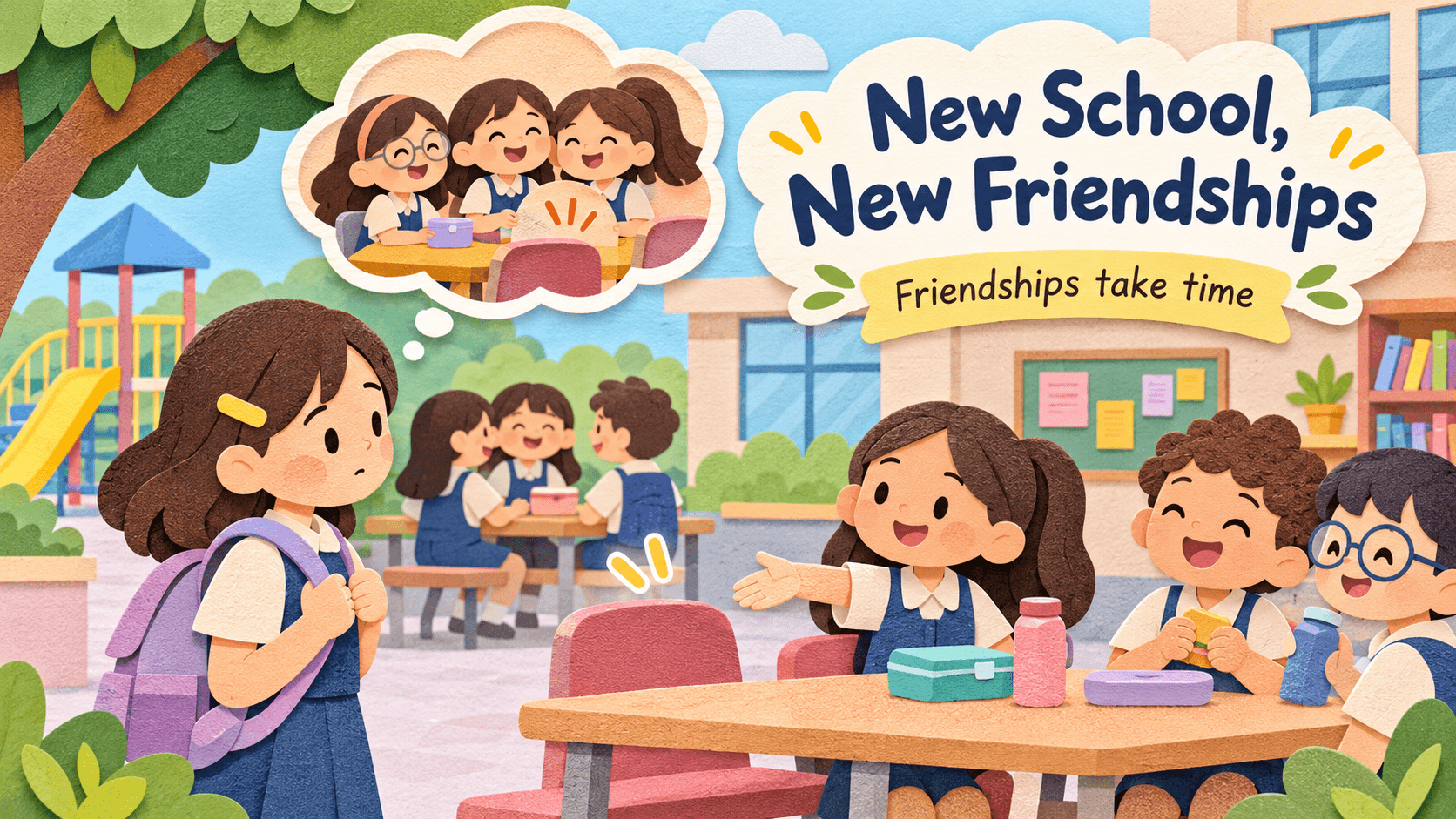

“My old friends would have saved me a seat,” your child says after another quiet day at their new school. They know their teachers, understand the timetable and complete their homework. Yet lunch breaks still feel lonely.
For parents exploring Top schools in hyderabad, including DRS International School (DRSIS), Gundlapochampally, Hyderabad, academic facilities are only part of the picture. A child also needs time and support to feel comfortable around new classmates. Having trouble making friends does not automatically mean something is wrong.
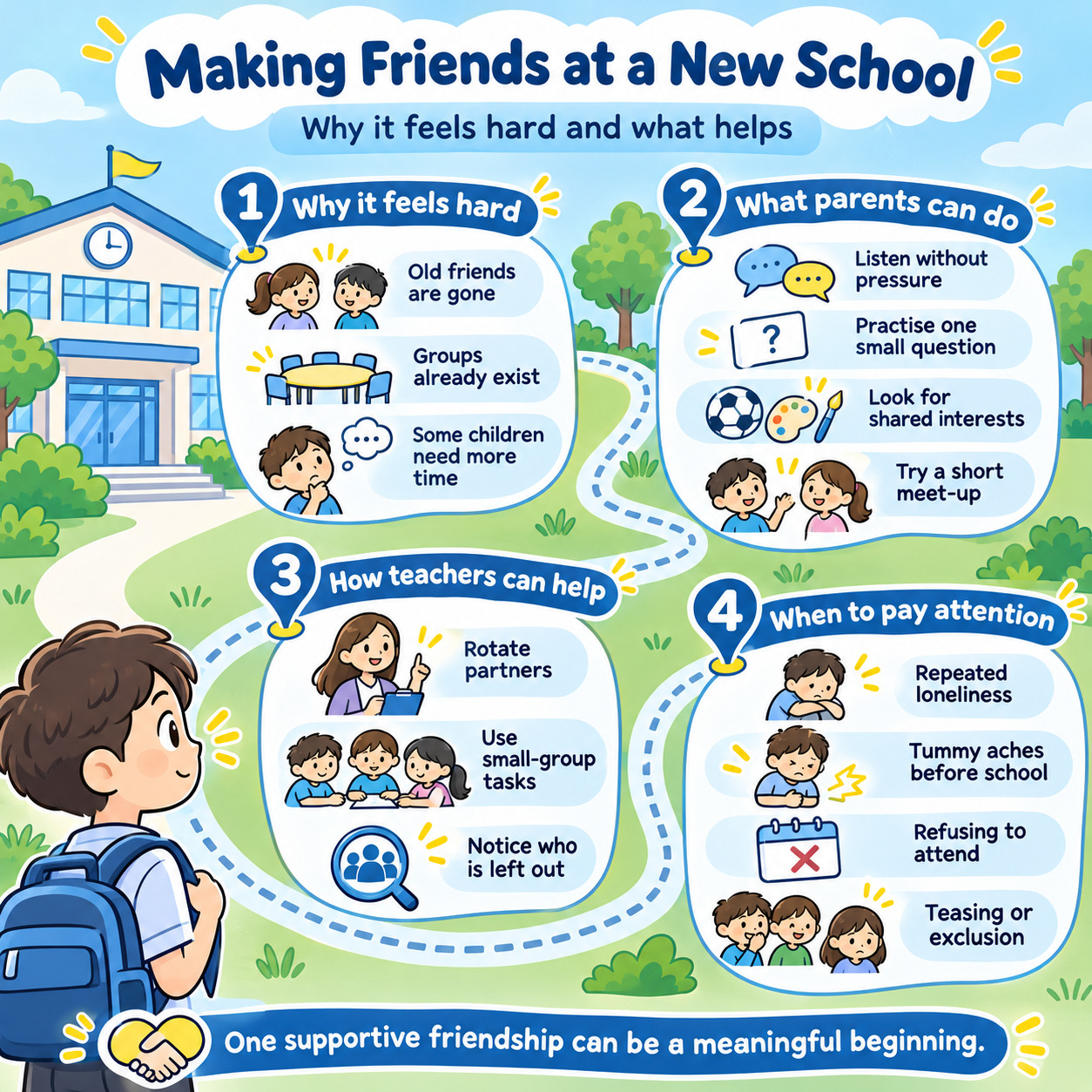
Why Does Making Friends Feel Harder at a New School?
Friendship usually grows through repeated small moments: sharing lunch, playing a game, or laughing over a class activity. When children change schools, those familiar moments disappear.
Existing groups can be difficult to enter. Classmates may already have partners for projects or teammates for games. A newcomer might worry about interrupting them, even when nobody intends to exclude anyone.
Children may also miss the ease of old friendships. Imagine a Class 6 student who played cricket with the same group every afternoon. In the new school, they do not know where the game happens or whether they can join. Standing nearby can feel easier than asking.
Personality matters too. Some children start conversations quickly; others need several friendly encounters before opening up. Neither approach is wrong.
A 2020 review of 96 studies on the move from primary to secondary school found that relationships with classmates and teachers shaped children's transition experiences. The studies focused on a particular school-stage change, but they show why relationships deserve attention alongside academics.
How Can Parents Help Without Forcing Friendships?
Start by listening. Instead of asking, “Did you make a friend today?” every evening, try, “Who did you spend time with at lunch?” or “Was there a moment you enjoyed?” These questions invite conversation without turning friendship into a daily test.
Next, help your child practise a small first step. You could role-play asking, “Can I join your game?” or “What did you think of the science project?” Keep it natural. A rehearsed speech is less useful than one comfortable question.
Look for shared interests. A child who enjoys drawing might connect with someone during an art activity. A cricket fan may find it easier to talk while practising than during a crowded lunch break. Clubs and group activities create chances to meet classmates repeatedly, but friendship cannot be guaranteed.
You can also arrange a short, supervised meet-up with a classmate, if both families are comfortable. A familiar face outside school may make the next morning easier.
Avoid comparing your child with a sibling who makes friends immediately. And don't insist they become popular. One supportive friendship can matter more than belonging to the largest group.
The US Centers for Disease Control and Prevention (CDC) notes that students who feel supported and respected by peers report stronger school connection and engagement. Making room for ordinary, positive interactions is a useful starting point.
What Can Teachers Do When a Child Feels Left Out?
If your child repeatedly spends breaks alone, speak privately with their class teacher. Share what your child has said, without assuming classmates are being unkind.
Ask specific questions: “Do they join group work?” “Is there an activity they seem to enjoy with others?” “Have you noticed anyone excluding them?”
Teachers can create natural opportunities for interaction through rotating partners, small-group projects and shared tasks. They can also notice when one student is regularly left out. CDC guidance recommends that teachers observe classroom relationships and support isolated students.
The goal is not to assign someone to be your child's best friend. It is to make everyday participation easier and safer while friendships develop naturally.
When Should Parents Be Concerned About Friendship Difficulties?
A few awkward lunches do not necessarily signal a serious problem. Look for patterns and listen to how your child describes school over time.
Take the concern more seriously if loneliness comes with frequent stomach aches before school, sleep difficulties, refusing to attend, or a sharp change in mood. Repeated teasing, deliberate exclusion, threats or humiliation also need attention.
Ask your child what happened and when. Record specific incidents if bullying is suspected, then contact the school through its appropriate reporting process. Avoid telling your child simply to ignore persistent mistreatment.
If distress continues or interferes with daily life, speak with a school counsellor or qualified child mental-health professional. Support should match the child's needs, not an arbitrary deadline for making friends.
DRS International School
DRS International School (DRSIS), Gundlapochampally, Hyderabad, describes student clubs, including Model United Nations, on its official website. In September 2026, the school hosted a Model UN event attended by students from multiple Hyderabad schools. Such group settings can provide opportunities to interact around shared interests, though they do not prove that every child will make friends. When comparing the Best schools in hyderabad, parents can ask how newcomers are included in everyday class and activity groups.

Friendships Need Room to Grow
Changing schools means learning new social routines as well as new lessons. Listen, encourage small interactions and work with teachers when needed. Your child does not have to befriend everyone. Feeling welcomed by even a few classmates can be a meaningful beginning.
For more information on similar schools, check out this list of the best schools in Hyderabad.



 as a preferred source on