








Education in India is changing. Parents today are asking different questions when they look for a school. They are no longer just asking about board results or pass percentages. They want to know if their child will enjoy going to school, if they will learn to think for themselves, and if they will grow into confident individuals. These are not small questions, and they deserve serious answers.
DMHSS, one of the best schools in Kolkata, has been closely watching this shift in what parents expect from education. The school's move toward child-centred learning reflects a growing body of research showing that children between the ages of three and six absorb knowledge best through experience and movement.
In this article, we explore how the Finnish teaching method works, why it matters for early childhood education, and how one school in Barrackpore is putting this into practice.
Also Read | Beyond Grades: “Duty and Discipline” Shaping Future Leaders at DMHSS
Why Teaching Methods Matter in Early Childhood
Most people agree that early childhood matters. But few think carefully about what actually happens in those first few years of schooling and how deeply it shapes a child's future.
Most people agree that early childhood matters. But few think carefully about what actually happens in those first few years of schooling and how deeply it shapes everything that follows. The habits and attitudes a child builds between ages three and six tend to stay with them. A child who discovers that learning is enjoyable will carry that feeling into every classroom they enter. A child who learns early on that school is stressful or that they are somehow behind may carry that too. These impressions form quietly, but they run deep.
This is why emotional safety in early schooling is not a soft concern — it is a practical one. When a child feels seen and comfortable in class, they ask more questions, try new things, and recover more easily from small failures. When they feel anxious or overlooked, they pull back. Think of a five-year-old who refuses to answer questions in class, not because they do not know the answer, but because they are afraid of getting it wrong in front of others. That hesitation, if left unaddressed in the early years, can quietly shape how a child approaches challenges for a long time. Social and emotional development at this stage is not separate from academic growth, it is the ground that academic growth stands on.
Some children speak early. Some take longer. Some are naturally curious about numbers, while others are drawn to stories and art. A good early learning environment respects these differences rather than rushing every child toward the same milestone at the same pace.
Also Read | Where Every Child Matters: Inside the Inclusive Education Model
Understanding the Finnish Method of Teaching
The Finnish model is not just about being gentle or relaxed. It is a carefully thought-out approach to how children develop and what conditions help them thrive.
Learning Through Exploration
In Finnish classrooms, teachers ask questions more than they give answers. Children are encouraged to figure things out, make mistakes, and try again without the fear of falling behind. There are no heavy homework piles or high-stakes tests in the early years. Instead, children spend time outdoors, work with their hands, and learn through doing. An Indian parent familiar with the pressure of unit tests and weekly assessments might find this surprising, but the outcomes are telling. Children in this system build genuine understanding rather than the ability to reproduce answers under pressure.
No Rush to Formal Academics
Finnish early education does not push reading, writing, and arithmetic from the first day. This can feel counterintuitive, especially for parents who worry that their child will fall behind if they are not writing letters by age four. But consider this — a child who spends their early years building curiosity, attention, and the confidence to express themselves is far more ready to handle formal academics when the time comes. They are not just learning content. They are learning how to learn. And that skill, once built, stays with them through every exam, every challenge, and every stage of life that follows.
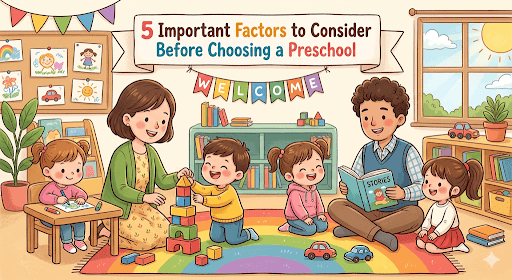
Physical health, emotional well-being, creative expression, and social awareness are not treated as extras in the Finnish model. They are built into the daily rhythm of learning alongside cognitive development. A child who paints, moves, plays, and talks through ideas is building a far richer foundation than one who only sits and listens. In practice, this looks like a classroom where a child might build a structure with blocks, talk about what they built, and then draw it — developing language, spatial thinking, creativity, and communication all at once, without ever opening a textbook.
Why Indian Schools Are Adopting Global Teaching Models
India's education landscape is genuinely shifting. The push is not just coming from progressive educators. Parents themselves are driving a lot of this change.
Modern parents understand that success requires more than textbook knowledge. They look for schools that build communication skills, emotional strength, and independent thinking. Schools that offer this attract trust and long-term commitment.
India's National Education Policy actively encourages experiential and activity-based learning, especially in the early years. This gives schools room to experiment with globally proven models without moving away from the broader national framework.
Check Out | Where Gandhi’s Values Meet Modern Innovation
DMHSS, Barrackpore: Bringing Finnish Education to North Kolkata
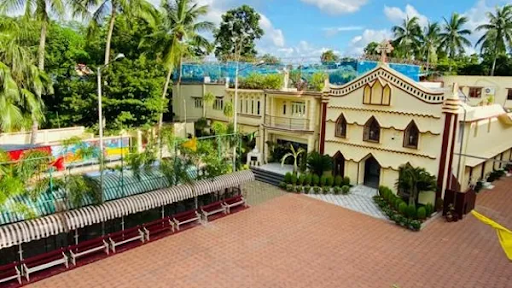
One of the best ICSE/ISC Schools in Kolkata, Douglas Memorial Higher Secondary School (DMHSS) has served the community for over 41 years. It is affiliated with the Council for the Indian School Certificate Examinations and follows both the ICSE and ISC curricula. The school offers boarding facilities, modern infrastructure, and a wide range of co-curricular activities.
DMHSS runs a Finnish Early Learning Centre for children between the ages of three and six. This programme is powered by HEI Schools, a globally recognised Finnish education provider. The curriculum focuses on physical, cognitive, language, social, and emotional development together. Children learn through exploration, creativity, and play in thoughtfully designed classrooms that encourage independence and imagination.
This initiative makes DMHSS one of the few schools in North Kolkata to offer internationally aligned early childhood education. The programme does not push young children toward early academic pressure. Instead, it builds a genuine love for learning from the very beginning. Children leave the early learning centre with stronger foundations for everything that follows.
Conclusion
The Finnish method works because it starts with a simple truth — children learn better when they feel good about learning. DMHSS takes that truth seriously. Rather than waiting until Class I to think about how a child engages with education, the school invests in that relationship from age three. For families in Barrackpore, that is not a small thing. The early years pass quickly, but what a child carries from them does not.
For more information on this and other such schools in the area, check out this list of the best schools in Kolkata.




 as a preferred source on