







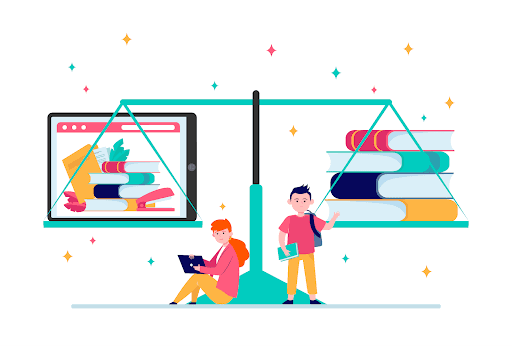

Education has evolved far beyond memorising facts and acing examinations. Today's world demands individuals who can think critically, collaborate effectively, and adapt to ever-changing circumstances. The traditional model of education, focused solely on academic performance, no longer suffices in preparing students for real-world challenges.
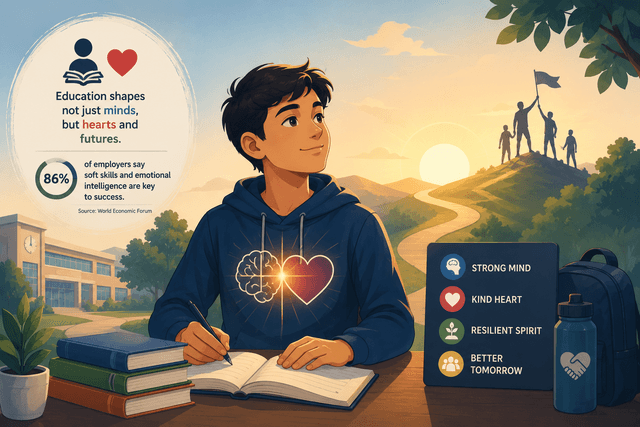
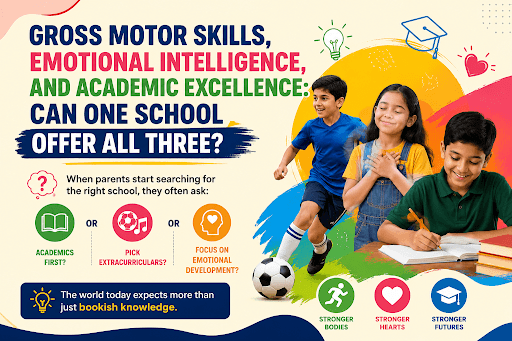
Holistic education addresses this gap by nurturing every dimension of a child's personality—intellectual, emotional, physical, social, and creative. It's about shaping well-rounded individuals who excel not just in classrooms but in life itself. One of the best schools in Faridabad, Grand Columbus International School (GCIS), exemplifies this philosophy through its innovative programs and comprehensive approach to student development.
In this article, we'll explore what holistic education truly means, why skills beyond academics matter, and how institutions like GCIS are redefining the educational landscape by fostering complete human development.
Also Read | Bridging the Opportunity Gap with the Kalam Scholarship
What Does Holistic Education Really Mean?
Holistic education isn't just a buzzword—it's a fundamental shift in how we perceive learning. Rather than treating students as vessels to be filled with information, this approach recognises them as unique individuals with diverse talents, learning styles, and potential. Let's understand what constitutes truly holistic learning.
The Core Pillars of Comprehensive Development
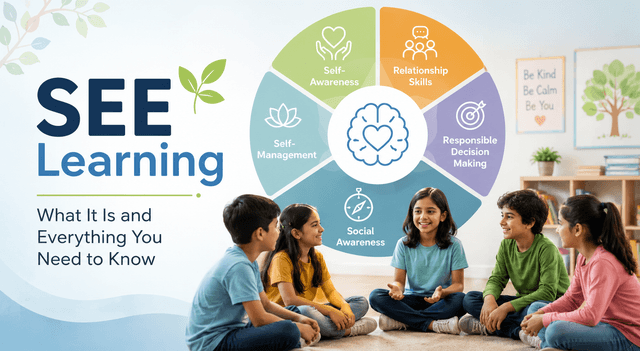
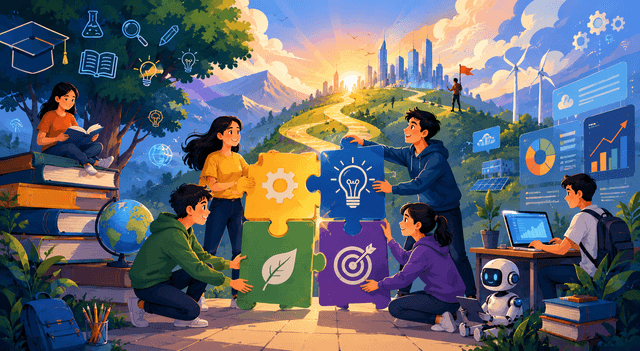
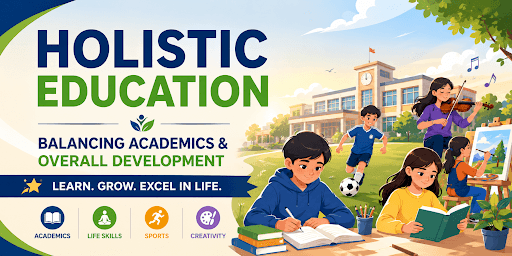
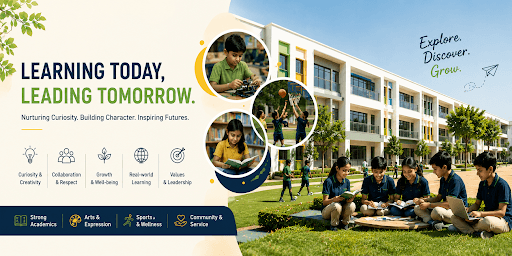
Holistic education rests on five interconnected pillars that work together to create balanced individuals. Intellectual development through rigorous academics forms the foundation, but emotional intelligence teaches children to understand and manage their feelings while building empathy. Physical wellness through sports and fitness keeps minds sharp and bodies healthy. Social skills emerge through collaborative projects and community engagement, while creative expression through arts, music, and innovation allows personalities to flourish authentically.
Moving Beyond Rote Learning
The National Education Policy 2020 emphasises experiential learning and skill development over rote memorisation. Traditional education models that rewarded students solely for reproducing textbook answers are gradually disappearing. Modern pedagogy encourages questioning, exploration, and application of knowledge rather than passive absorption. This shift recognises that success in the 21st century requires adaptability, creativity, and problem-solving abilities that can't be measured through standardised tests alone.
Beyond Academics: Skills That Define Success
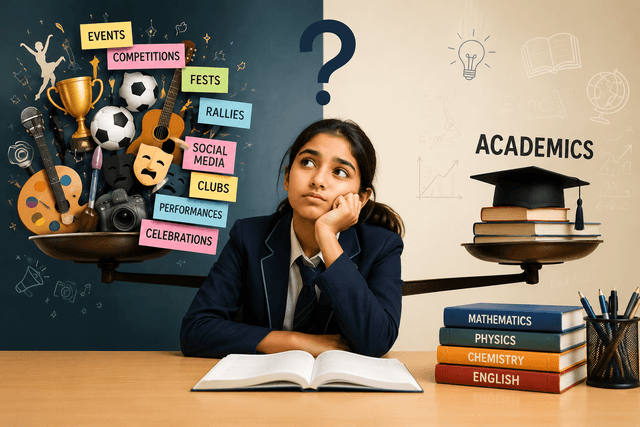
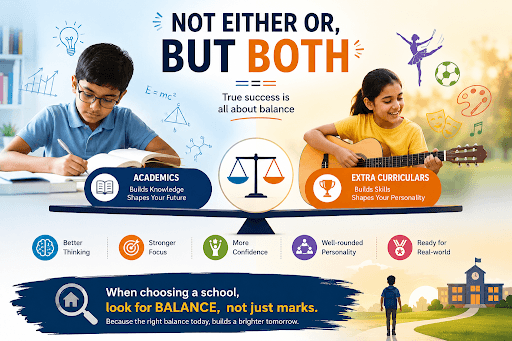
Academic excellence opens doors, but it's the skills beyond textbooks that help students walk through them confidently. Today's employers and universities seek individuals who bring more than just impressive grade sheets—they want thinkers, leaders, and collaborators.
Essential Life Skills for Modern Times
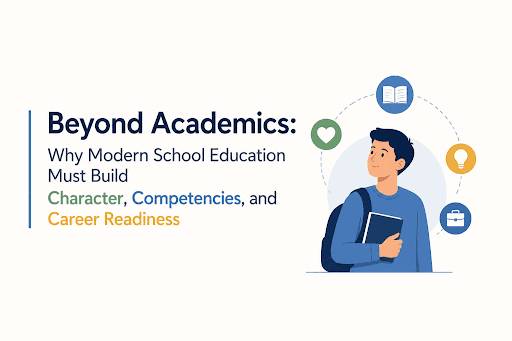
Problem-solving abilities help students navigate complex situations without clear-cut answers. Communication skills enable them to articulate ideas persuasively across different contexts and audiences. Collaboration teaches the art of working with diverse personalities toward common goals. Leadership emerges when students learn to take initiative, make decisions, and inspire others. Adaptability becomes crucial in a world where change is the only constant. These competencies don't develop in isolation—they require dedicated practice through diverse experiences.
The Role of Extracurricular Activities
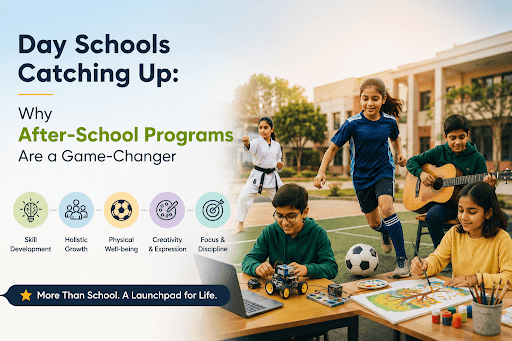
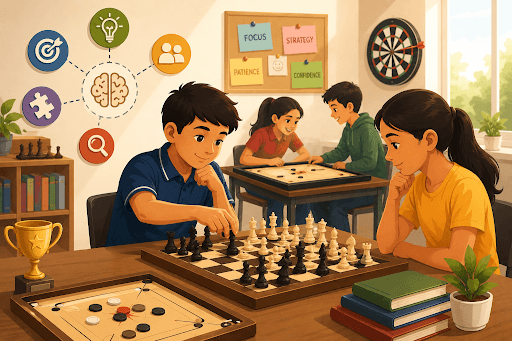
Sports teams teach discipline and time management while building physical stamina. Music and dance develop patience, rhythm, and self-expression. Debate clubs sharpen critical thinking and public speaking abilities. Community service projects instil empathy and social responsibility. These activities aren't mere diversions from "serious" academics—they're laboratories where essential life skills are cultivated through real experience.
Innovation and Technology in Learning
Technology has transformed how students interact with knowledge and develop skills for tomorrow's world. However, the key lies in using technology purposefully rather than letting it become a distraction or crutch.
STEM Education and Creative Problem-Solving
Science, Technology, Engineering, and Mathematics (STEM) education encourages students to ask "why" and "how" rather than just "what." Tinkering labs provide spaces where curiosity leads to innovation and failures become learning opportunities. Robotics programs teach coding fundamentals while developing logical thinking and perseverance. When students build projects from scratch, they experience the entire creative process—from ideation and design to execution and refinement. This hands-on approach makes abstract concepts tangible and memorable.
Balancing Digital and Hands-On Learning
While interactive whiteboards and educational apps enhance engagement, physical manipulation of materials remains irreplaceable for deep understanding. The best educational environments blend both approaches thoughtfully. Students might research online, collaborate through digital platforms, yet still conduct physical experiments and create tangible prototypes. This balance ensures technology serves learning rather than replacing the irreplaceable human experiences of trial, error, and discovery.
Physical Education: More Than Just Games
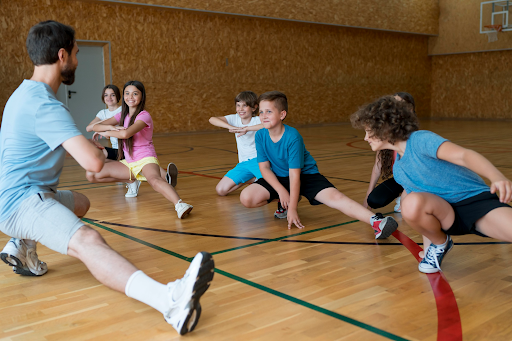
Physical activity isn't a break from learning—it's an integral component of cognitive and emotional development. Research consistently shows strong correlations between physical fitness and academic performance, yet many schools treat sports as optional extras.
The Mind-Body Connection
Regular physical activity increases blood flow to the brain, improving concentration and memory. Sports participation reduces stress and anxiety while boosting self-confidence. Team games teach communication, strategy, and handling both victory and defeat gracefully. Individual sports like athletics or gymnastics build self-discipline and goal-setting abilities. Yoga and meditation cultivate mindfulness and emotional regulation. Schools that prioritise diverse physical education options recognise these benefits extend far beyond the playing field into every aspect of a student's life.
Recognising Multiple Intelligences
Every child possesses unique strengths that traditional academic metrics might overlook. Howard Gardner's theory of multiple intelligences identifies at least eight distinct types—linguistic, logical-mathematical, spatial, musical, bodily-kinesthetic, interpersonal, intrapersonal, and naturalistic.
Talent Beyond Traditional Academics
A student struggling with mathematics might excel in spatial reasoning, making them a brilliant artist or architect. Someone who finds written essays challenging might possess exceptional interpersonal intelligence, destined for leadership roles. Musical talent, athletic prowess, and creative innovation deserve recognition and nurturing equal to academic achievements. Progressive schools create pathways for diverse talents to flourish through specialised programs, competitions, and scholarships that celebrate abilities beyond conventional report cards.
Check Out | How Multiple Intelligence Theory Empowers Your Child
Grand Columbus International School, Faridabad: Where Holistic Development Takes Centre Stage
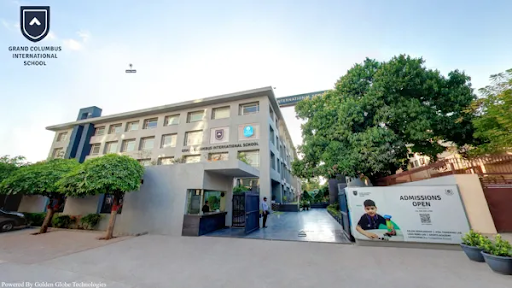
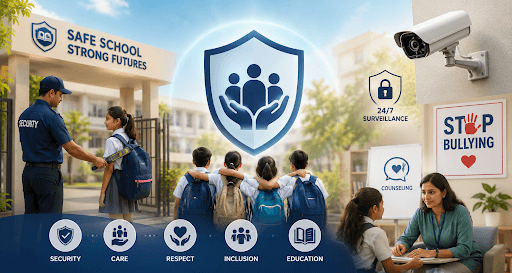
Located in Sector 16A, Faridabad, Grand Columbus International School spreads across 2 acres of thoughtfully designed, centrally air-conditioned campus with 24/7 power backup and comprehensive CCTV surveillance. This CBSE-affiliated institution has earned recognition as a landmark in educational infrastructure and innovation.
One of the best CBSE schools in Faridabad, GCIS features specialised laboratories named after scientific pioneers—the Dr A.P.J. Abdul Kalam Physics Lab, Michael Faraday Chemistry Lab, Darwin Biology Lab, and Alan Turing Computer Lab. The Mahatma Gandhi Library houses thousands of books alongside resource computer systems. Ergonomically designed furniture promotes correct posture while facilitating collaborative learning.
Launchpad Initiative: This unique program prepares students for competitive examinations like JEE, NEET, and various Olympiads while still in school, eliminating the pressure of separate coaching institutes.
Atal Tinkering Lab: Equipped with state-of-the-art equipment, this space promotes creativity, enhances STEM education, and develops 21st-century skills through innovation challenges and collaborative projects.
LEGO Robo Lab: Designed specifically for pre-primary and primary students, this lab builds logical thinking brick by brick while improving motor skills and introducing fundamental coding concepts.
Super Saturdays: A distinctive cultural feature at GCIS where students engage in extracurricular activities, starting with assembly, yoga, meditation, dance, and various enrichment programs.
What truly sets GCIS apart is the Kalam Skill Scholarship that recognises multifaceted talents in sports, music, dance, art, craft, and robotics. This approach acknowledges that future leaders emerge from various fields, not just academic toppers.
GCIS offers extensive sports facilities, including cricket, basketball, volleyball, badminton, table tennis, athletics, skating, gymnastics, yoga, and taekwondo. The school's vision emphasises creating reflective, lifelong learners who become passionate, caring, and responsible contributors to society.
The rigorous curriculum balances core academics with diverse electives, supported by experienced faculty who employ innovative teaching methods. Individualised support through guidance counsellors and learning programs ensures every student receives assistance to thrive.
Choosing the right school means finding an environment that recognises your child's unique potential across all dimensions. Grand Columbus International School, Faridabad, offers more than education—it provides a transformative experience that prepares students for success in every aspect of life. Visit the campus to witness how holistic education comes alive through innovative programs, world-class infrastructure, and a community committed to nurturing complete human beings.
For more information on this and other similar schools in the area, check out this list of the best schools in Faridabad.
 as a preferred source on