







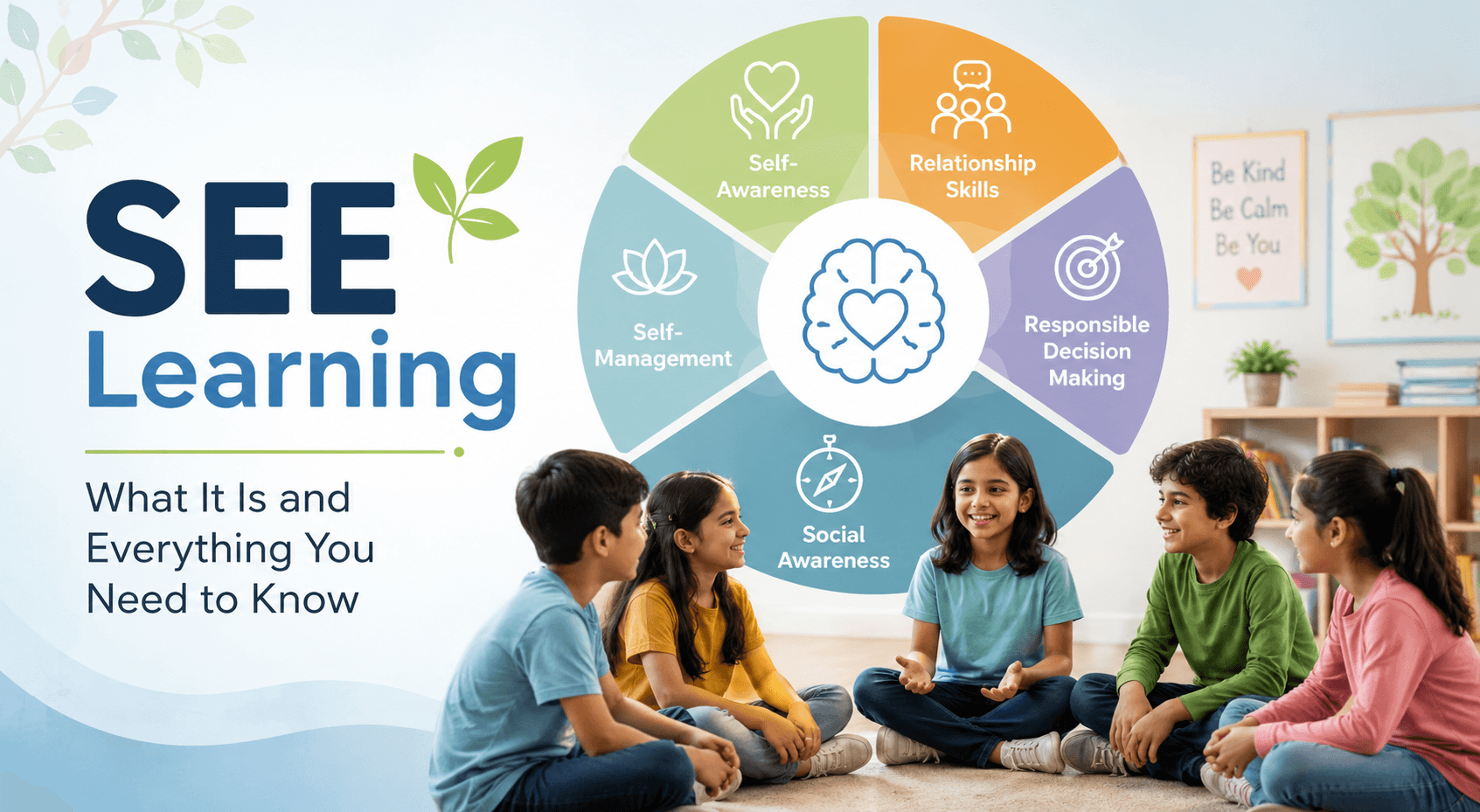

Every other week, there's a new kind of learning trending in schools, and it always comes with some acronym nobody explained to you. So parents do what parents do now: they Google it at 11 pm. "What is STEM learning?" "What is STEAM learning?" "STEM vs STEAM difference." You finally sort of get it, and then a school newsletter drops a new term on you like it's obvious, SEE Learning. Never heard of it? Don't worry, most parents haven't either; it's still pretty new here. But this one isn't just a fancy label schools slap on to sound impressive. It's actually being used in real classrooms already, top residential schools in Dehradun leading the way with it. Cambrian Hall is one of them; they've been folding SEE Learning into how they teach, not just talking about it on paper. So let's actually get into what this thing is, in simple words, no jargon.
Also Read: Why SEE Learning is the New Math for Gen-Alpha?
So, What Exactly Is SEE Learning?
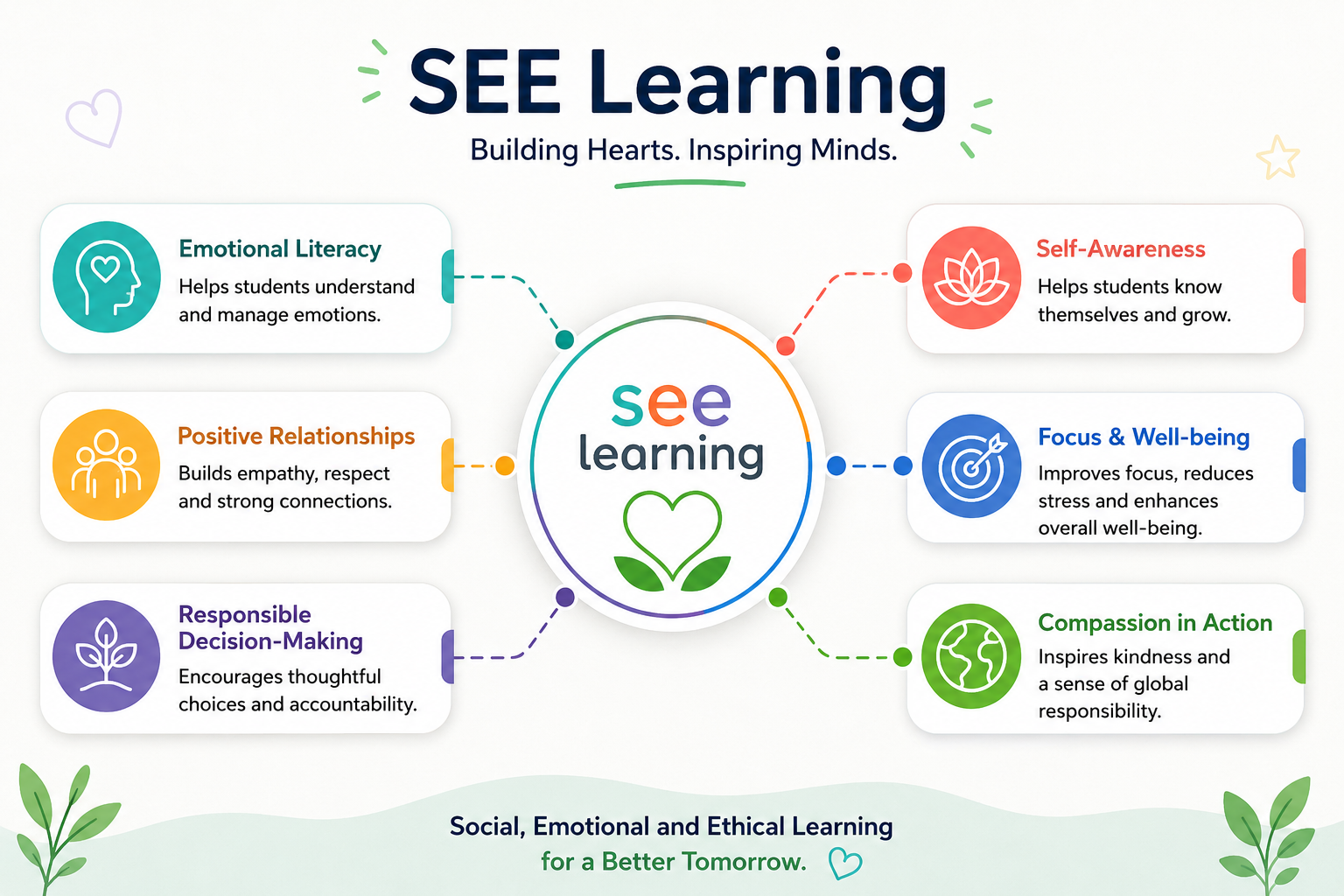
SEE Learning stands for Social, Emotional, and Ethical Learning.
It came out of Emory University, and there's a slightly unexpected detail in its backstory, the Dalai Lama was actually involved in shaping it, going all the way back to 1998 when this collaboration first started. Two very different worlds, a research university and a spiritual leader, sitting together trying to figure out one thing, how do you educate a child properly, not just their brain, but the rest of them too.
Here's the shift in thinking though. We're all used to schooling being about marks, subjects, results. SEE Learning doesn't throw that out, but it adds a layer most schools never really touched before, things like training a child's attention, actually teaching compassion instead of assuming it'll just develop on its own, helping kids build resilience when life gets hard, and slowly shaping their sense of right and wrong. Not through moral science lectures. Through actual practice.
Now, schools don't just teach this randomly; there's structure to it. Broadly, it works across three areas:
- First comes the personal side, a child learning to understand their own emotions and reactions.
- Then the social side, learning how to actually get along with people- classmates, siblings, whoever.
- And then it widens out into the systems side, understanding how their choices connect to something bigger than just them.
And to make sure this isn't just theory floating around, the whole thing is broken into thirty lessons of 40 minutes each, spread across eight units, so it actually fits into a school's regular timetable instead of feeling like some extra add-on nobody has time for.
What's reassuring is that this wasn't built by one or two people sitting in a room. Teachers, child psychologists, and education researchers all worked on this together across different countries. And interestingly, Indian schools weren't left out of that process either; teachers here have actually been testing it in real classrooms since 2017, and their feedback shaped how it eventually turned out.
So why now? Why are schools suddenly caring about this?
Honestly, it's not sudden. Teachers have known for years that a kid scoring 95% can still be falling apart quietly on the inside, stressed, anxious, comparing themselves to everyone around them, and marks were never built to catch that. SEE Learning is basically schools finally admitting that and doing something about it, instead of just hoping kids figure their emotions out on their own.
Also Read: The School Stuff No Report Card Ever Shows, But Your Child Will Thank You For
How Cambrian Hall Is Actually Doing SEE Learning

Reading about a framework on paper is one thing, seeing how a school actually lives it is another. And that's where Cambrian Hall, one of the more well-known names when people search for a top Boarding school in Dehradun, becomes a good example to look at. This isn't a school that just added SEE Learning as a fancy line in their brochure, they've actually built it into how students spend their day.
Cambrian Hall describes SEE Learning as something that nurtures both the heart and the mind, helping students build self-awareness, empathy, emotional balance, and a sense of ethical responsibility, all tied to constitutional values. In plain words, they're not just trying to make kids "well-behaved"; they're trying to help them actually understand themselves and the people around them.
And they're not shy about sharing results either. The school points to an 11% improvement in academic performance, along with better emotional regulation, stronger friendships, and higher chances of long-term success among students who go through the program. Numbers aside, what actually stands out is how they've made the whole thing feel far from boring. A few examples of how it plays out in real classrooms:
- Role-playing real conflicts where students step into roles like a peacemaker resolving a disagreement, instead of just reading about conflict resolution.
- The marshmallow test where kids practice patience and impulse control, choosing between one marshmallow now or a bigger reward later.
- Laughter yoga and mindfulness sessions because the school believes emotional wellbeing doesn't always have to feel serious; it can be fun too.
- "What Would You Do?" dilemmas where students are handed tricky ethical situations and have to actually think through what the right choice would be.
- A "Tell Me Without Telling Me" challenge that pushes students to express emotions like frustration without using any words at all, building their non-verbal empathy.
Underneath all these activities, the school builds everything around four pillars,
- Self-awareness
- Self-regulation
- Relationship-building
- Ethical decision-making
It's basically their way of quietly answering the same question every parent eventually asks: Will my child turn out not just smart but also a genuinely good human being?
And honestly, that's probably why more parents keep coming back to Cambrian Hall: it's rare to find a school that actually walks the talk on emotional development, not just promises it in a prospectus.
For more information regarding this and other schools in the nearby area
Explore Boarding Schools in India
 as a preferred source on