




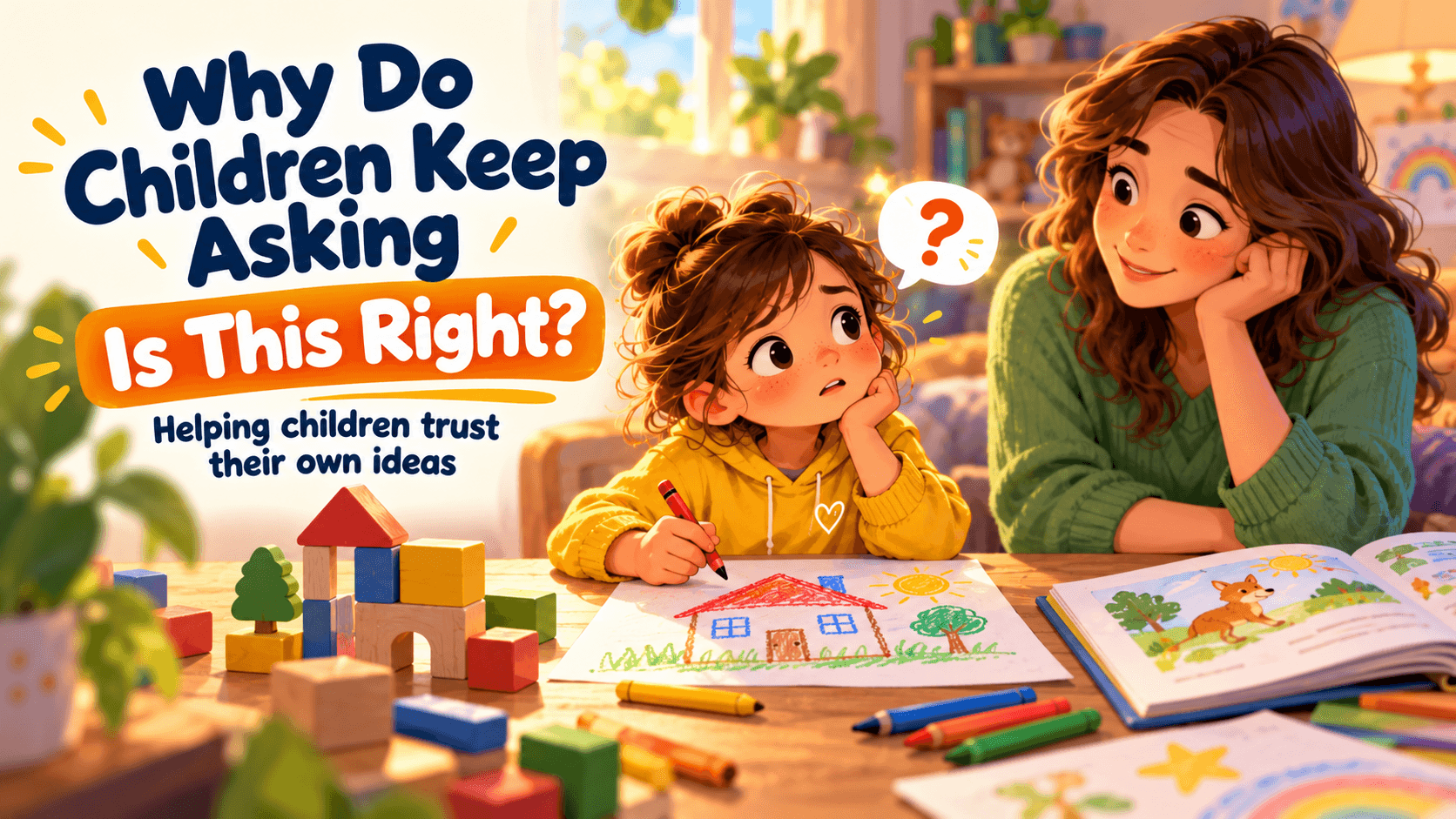

Your six-year-old is drawing a house. After making the roof, they ask, "Is this right?" You say yes, but a minute later, they ask again about the windows. Soon, they seem unwilling to choose even a colour without your approval.
For parents exploring Top Schools in Gurugram, including Vasant Valley School DLF City Campus, DLF Phase II, Gurgaon, such moments raise an important question: why does a child who enjoys learning hesitate to trust their own ideas?
The answer is not always low confidence. Sometimes children are trying to understand expectations. What matters is helping them recognise when they need guidance and when they can make a choice themselves.
Why Do Some Children Need Reassurance Before Every Step?
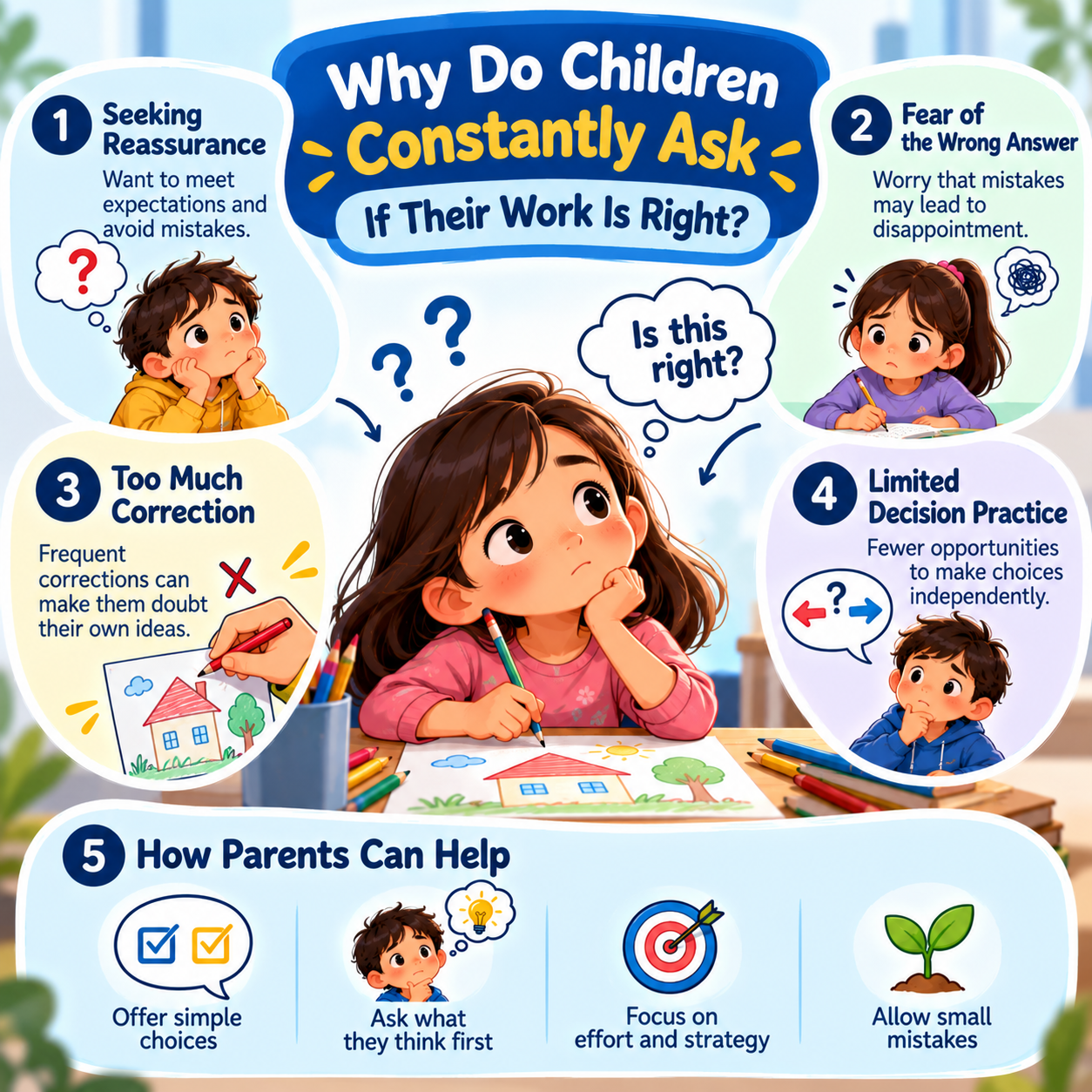
Young children learn many rules by watching how adults respond. When a teacher corrects a spelling mistake, the child learns that spelling has an accepted form. But they may begin to assume that the same rule applies to every task, including drawing a tree or inventing a story.
Some children ask for approval because instructions are unclear. Others want to please adults or worry that a mistake will lead to disappointment. A child who has often been told exactly what to do may also have had fewer chances to make decisions.
Reassurance itself is healthy. Children need to know that adults are available to help. The concern arises when they cannot begin or finish ordinary activities without repeated confirmation.
Rather than labelling the child as insecure, notice when the questions appear. Do they happen during unfamiliar homework, creative play, or nearly every activity? The pattern can help you understand what support they need.
Can Too Much Correction Make Children Doubt Their Ideas?
Imagine your child colours the sky purple. You might instinctively say, "The sky should be blue." Although you mean to help, the child may take away a different message: there is only one acceptable way to draw a picture.
Creative activities offer room for exploration. A purple sky, an unusual building made from blocks, or a surprising story ending may be an intentional choice, not a mistake.
The National Association for the Education of Young Children distinguishes open-ended, process-focused art from activities where children must copy a fixed example. Giving children opportunities to explore materials and make choices can support creativity and decision-making.
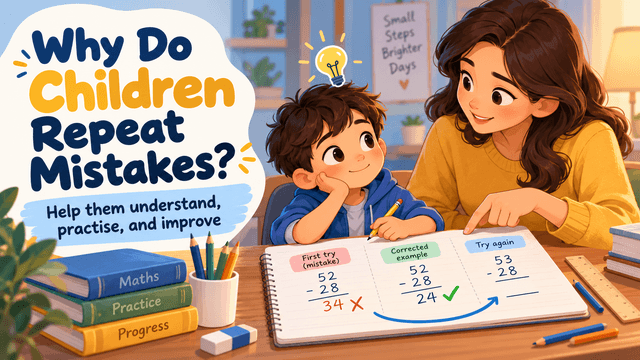
Of course, not every answer is a matter of preference. If a child writes that five plus three equals nine, clear correction is useful. Parents can distinguish between work that needs accuracy and activities where different approaches are possible.
Before correcting, ask yourself: does this need to be fixed, or am I simply choosing how I would do it?
How Can Parents Encourage Independent Thinking?
You do not need to stop praising your child. Instead, make your responses more useful and give them space to decide.
Offer manageable choices. Rather than asking a young child to plan an entire craft project, start with, "Would you like to use paper or clay?" Two options make decision-making less overwhelming.
Ask what they think first. When your child asks, "Is my picture good?" try, "Which part do you like most?" This shifts attention towards their own judgement without ignoring their question.
Describe the effort or strategy. Instead of only saying, "Perfect!", you might say, "You tried several ways to balance those blocks before the tower stood up." Specific feedback tells children what they did and can repeat.
Allow small mistakes. If a paper bridge collapses, resist rebuilding it immediately. Ask, "What could make it stronger?" Give your child time to experiment.
Offer help when it is needed. Independence does not mean leaving a frustrated child alone. If they cannot understand a mathematics instruction, explain one example, then invite them to try the next.
Education research on effective feedback stresses helping learners see what they have done and what to try next. At home, this means offering guidance that helps children think, not just approval that ends the conversation.
What Does Growing Confidence Look Like?
Progress can be subtle. Your child might start drawing without asking permission at every step, choose a game independently, or explain why they solved a problem in a particular way.
They may also become more specific when seeking help: "Can you show me how to start this question?" instead of "Is everything right?"
Avoid expecting constant independence. Everyone needs feedback, especially when learning something new. If reassurance-seeking causes ongoing distress or regularly prevents your child from completing everyday tasks, speak with their teacher or a qualified child-development professional.
Encouraging Independent Thinking in Early Education
For parents considering the Best Schools in Gurugram, opportunities for exploration and age-appropriate choices are worth examining. Vasant Valley School DLF City Campus, DLF Phase II, Gurgaon describes a planned early-years approach influenced by Montessori independence and Reggio Emilia creative expression. Its focus on inquiry and reflection connects with helping children try ideas, make decisions, and learn from feedback. As the DLF City campus is scheduled to begin classes in April 2027, these are educational plans rather than demonstrated outcomes at this campus.

Helping Children Trust Their Own Thinking
The goal is not to make children stop asking, "Is this right?" It is to help them discover which questions have clear answers and which leave room for their own ideas.
With patient guidance, meaningful choices, and space to try again, children can gradually learn to trust their judgement while knowing that help is available.
For more information on similar schools, check out this list of the best schools in Gurugram.















 as a preferred source on