






Although children are able to carry out a great many activities at school, this does not necessarily mean that they can express themselves effectively. Some children may be confident in their knowledge but still suffer from stage fright. Others might know what they think but have difficulty in putting it into words or in arranging their ideas in a logical manner. That is the reason why children need plenty of practice in communicating through a variety of media—this is exactly what media literacy activities aim at. Learning to Express Ideas with Confidence.
Also Read| Why is Outdoor Learning Essential for Children?
Learn to express ideas with confidence.
Children are more likely to talk when they have regular opportunities to speak, and they can discuss all sorts of topics and talk to other people as a result of taking part in media activities.
For example, when a child is carrying out a news report on a subject they enjoy—whether they are making an audio or a video presentation—they will have to think about what they want to convey and the way in which they are going to convey it. They might need to rehearse certain lines, work on their voice, or change the way in which they present the information.
This confidence can be seen in classroom presentations, in group work, and in other school activities. The students begin to understand that it's all right to make mistakes when speaking. Instead of feeling self-conscious about each word, they can focus on conveying their ideas.
How Media Activities Improve Listening and Thinking
Communication takes other forms than speaking; children also have to listen to and receive information from other people. Since most media activities are carried out in a group, children need to be able to work together and make a contribution.
For example, imagine that a group of learners is producing a podcast: one of the boys could write the questions, another could then carry out the interview with the guest, a third could take charge of recording it, and the fourth could be responsible for editing the final version. In order to achieve their aim, they will have to listen to one another and absorb the ideas.
This teaches children to listen respectfully to other people's points of view and to wait their turn when it is their turn to speak. It also teaches them how to formulate questions, how to ask relevant questions, and how to answer questions put to them.
Such media productions can likewise be used to encourage two-way communication, that is to say, a conversation between a grown-up and your child. When preparing a piece of news or a blog, they have to decide which points are important and set them out in the right order. They also learn to tell the difference between fact and opinion and check how reliable their content is.
Learning Through Creativity and Practical Experience
Children often find that they understand a thing much better when they get the opportunity to put it into practice. Media projects give children the chance to combine communication with creativity.
For example, a child who is making a short film must plan the story, write the script, choose the cast, and decide on the message. When someone is writing a blog, they have to organize their ideas, select their words, and make sure that their article is simple and easy to read. In a similar way, if a student is describing a school event, then they have to tell it in an interesting and very clear manner.
They are useful for helping with vocabulary, writing and storytelling, and children will realise that information has to be tailored to an audience of a different age; for instance, a video intended for younger children would have to use much simpler language and more common, familiar examples.
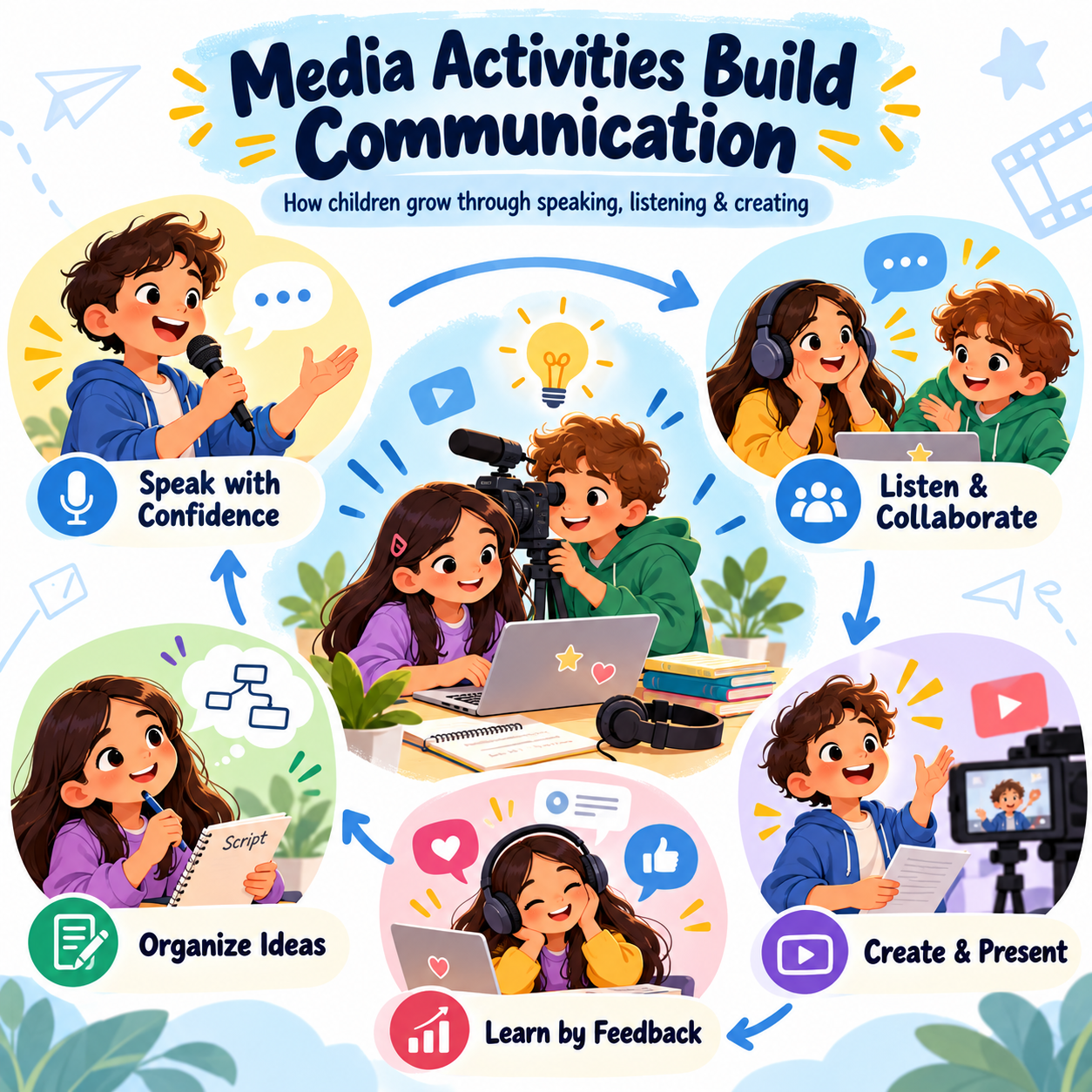
Another part of media learning should be reviewed and enhanced. Children may notice that the recording is too quiet or that their writing doesn't give enough support to an idea. In that case, they can make changes and try the activity in a different way. Feedback can be given to them by teachers and their peers to help them work out what is effective and what needs to be improved.
What we're talking about is not turning all children into professional presenters and filmmakers, but rather providing them with the opportunity to practise putting their ideas into words, to experiment, to meet and overcome difficulties, to reflect, and to learn from the experience.
Also read| Lab-Based Learning: The Secret Behind Better Results
How does Manav Rachna International School in Noida promote media learning?
At Manav Rachna International School in Noida, there is a facility called Media Shala, which gives students the opportunity to take part in media and communication activities. They can acquire knowledge and skills in journalism and reporting news, as well as in blogging, anchoring, filmmaking, photography, and podcasting.
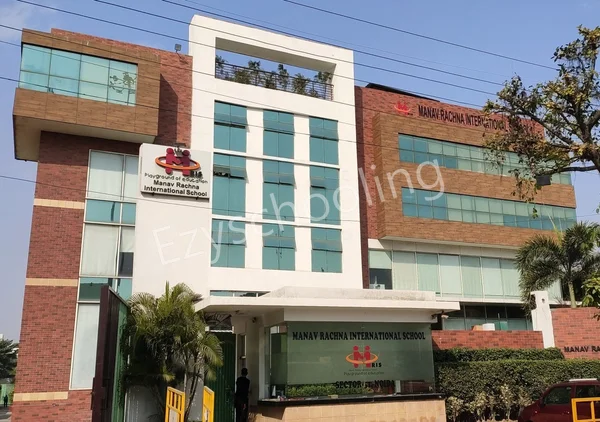
Moreover, the students can also engage in producing newsletters, setting up a news channel, carrying out documentation, and creating video content in the Media Shala. By means of this hands-on method, students are able to practise communicating by writing, presenting information, and expressing themselves using a variety of tools. The school is thus establishing a close connection between the work done in the classroom and the ways in which society communicates and shares information nowadays.
Helping Children Become Better Communicators
People's communication skills can only be improved through practical experience, encouragement, and practice. The enjoyment of media activities comes from the fact that they give children a variety of ways to express themselves and to share their ideas.
Parents can assist with this process at home by getting their children to invent stories, making short videos, interviewing members of their family, or writing down things that they enjoy. They should pay more attention to the effort that has been put in and be less concerned with the final product. Teachers should also provide opportunities for students to take part in presentations, debates, or creative activities.
The advantages of taking part in media activities are not limited to making films and writing blogs; they also involve helping children to learn how to plan their ideas, listen to other children, and express themselves effectively. The skills acquired in this way can not only support their present learning but also enable them to communicate more effectively in a variety of situations in the future.
For more information on similar schools, check out this list of the best schools in Noida.


 as a preferred source on