









Modern childhood has shifted indoors, with recent statistics indicating that children aged 5 to 16 spend nearly six hours a day on screens. This digital saturation often comes at the cost of "green time," leading to a rise in lifestyle-related issues like myopia and reduced attention spans. Outdoor learning offers a scientifically backed antidote, engaging multiple senses to foster development in ways a classroom cannot.
Outdoor learning gives children the freedom to explore and connect with their environment, turning curiosity into understanding and confidence. In this way, it builds strengths that are difficult to foster through traditional lessons alone.
In this article, we explore the concept of outdoor learning, how it can benefit children, and discuss how Manav Rachna International School, one of the top schools in Noida, incorporates outdoor learning into a balanced education.
Also Read | Clans, Competitions, and Creativity: How MRIS Noida Inspires Excellence Beyond Academics
What Does Outdoor Learning Mean in Schools?
Outdoor learning refers to structured educational experiences that take place outside traditional classroom settings. These experiences are planned with clear learning objectives and are closely linked to the curriculum.
Rather than replacing classroom teaching, outdoor learning complements it by offering real environments where concepts can be observed and applied. This approach helps children make sense of what they learn by seeing how it exists beyond textbooks.
Outdoor learning in schools commonly includes the following elements:
- Curriculum-linked Outdoor Activities: Lessons are designed to meet academic goals while allowing children to explore concepts through observation, movement and interaction with real surroundings.
- Experiential and Inquiry-based Learning: Students are encouraged to ask questions, investigate outcomes and draw conclusions based on what they see and experience outdoors.
- Guided Exploration and Reflection: Teachers support outdoor sessions by providing direction and helping students connect their experiences back to classroom learning.
- Multisensory Engagement: Unlike the flat surface of a screen, the outdoors stimulates all senses simultaneously, helping children process information through sight, sound, and touch.
The Physiological Impact of "Green Time"
The benefits of outdoor learning go far beyond burning energy. Exposure to natural environments triggers specific biological responses that are crucial for long-term health and physical development.
Research supports the "hygiene hypothesis," which suggests that early exposure to common microbes in soil and nature helps train the immune system. Children who play outdoors regularly tend to have fewer allergies and stronger resistance to common seasonal illnesses compared to those kept in sterile indoor environments.
Additionally, ophthalmologists now recommend at least 2 hours of outdoor time daily to combat the skyrocketing rates of myopia. Natural light stimulates the release of dopamine in the retina, which helps maintain the eye's healthy shape and prevents the elongation that causes nearsightedness.
Beyond vision and immunity, morning sunlight is the primary regulator of the body's internal clock. Children who get adequate natural light during the school day experience better melatonin production at night. This leads to deeper sleep and more consistent energy levels for early morning classes.
Cognitive and Social Advantages of Outdoor Learning
Parents often worry that time outside takes away from study time, but data suggests the opposite. The outdoors acts as a "cognitive supercharger," enhancing the brain's ability to process and retain information while building essential soft skills.
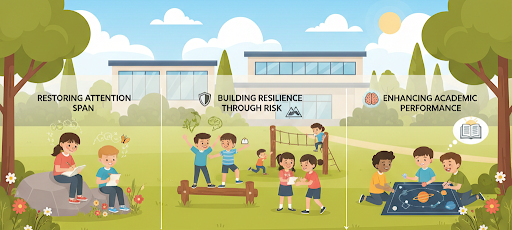
- Restoring Attention Span: Intense focus on textbooks or screens depletes the brain's cognitive resources. The "Attention Restoration Theory" posits that nature provides a soft fascination that allows the brain to recharge, resulting in sharper concentration and reduced symptoms of ADHD.
- Building Resilience Through Risk: Outdoor environments are unpredictable and require children to adapt to changing conditions like weather or uneven terrain. Overcoming these minor physical risks builds self-confidence and teaches them to assess safety without constant adult intervention.
- Enhancing Academic Performance: Studies consistently show a positive correlation between physical activity and academic grades. The increased blood flow to the brain during outdoor activity stimulates the growth of new brain cells in the hippocampus, the region responsible for memory and learning.
The Role of Schools in Making Outdoor Learning Effective
Outdoor learning requires thoughtful planning and guidance. Without structure, it risks becoming unproductive or disconnected from academic goals.
Schools play a critical role by designing age-appropriate activities, ensuring safety and aligning outdoor experiences with curriculum outcomes. When implemented well, outdoor learning becomes a powerful extension of classroom teaching.
Check Out | Balancing Academics and Co-Scholastic Activities
How MRIS-51 Noida Integrates Outdoor Learning
Manav Rachna International School, Sector 51, Noida, follows a child-centric approach to education. One of the best CBSE schools in Noida, MRIS focuses on balanced development, where academic learning is supported by well-designed physical spaces and experiential opportunities.
.jpg)
Outdoor learning at MRIS is supported through carefully planned activities that align with academic goals. These experiences help students apply theoretical understanding in real-world contexts.
Some of the ways outdoor exposure is integrated include:
- Educational Field Trips & Nature-based Visits: Students visit nearby parks, nature reserves and places of historical relevance, helping them observe concepts from subjects such as Geography, Science and Environmental Studies.
- Adventure & Experiential Learning Programmes: Activities such as trekking and camps encourage resilience, teamwork and problem-solving while exposing students to unfamiliar environments.
- Learning Beyond Borders: International trips and exchange opportunities help students gain global perspectives and cultural awareness through direct exposure.
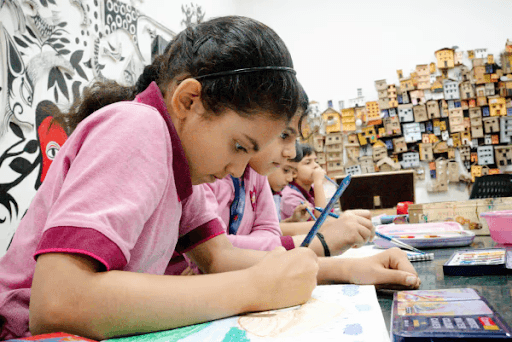
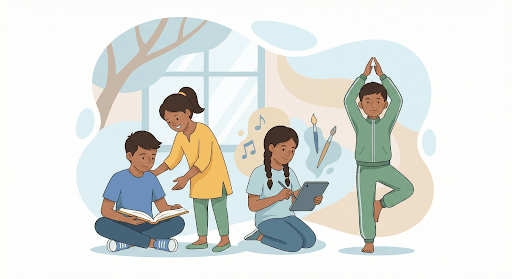
Spaces such as play zones for younger learners, Makershala and Mediashala extend learning into creative and exploratory domains. These platforms encourage students to experiment, build, communicate and express ideas through hands-on engagement. Such environments support outdoor and activity-based learning by promoting independence, collaboration and real-world problem-solving.
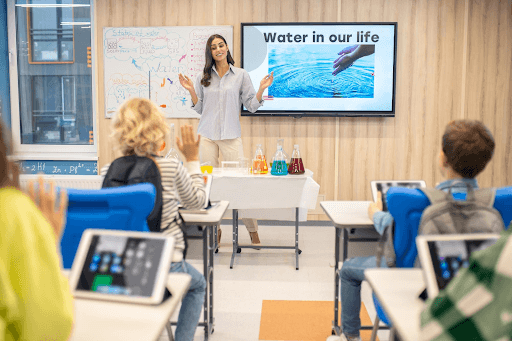
Classrooms and learning areas at MRIS-51 Noida are designed to encourage student participation and flexibility. Thoughtful infrastructure supports smooth transitions between indoor instruction and outdoor or activity-based learning. Students benefit from environments that are well-lit, technology-enabled and adaptable, allowing teachers to extend lessons into hands-on experiences when required.
For more information on MRIS and other similar schools, check out this list of the best schools in Noida.



 as a preferred source on