








In an era where education often prioritizes test scores over character, finding a school that balances both seems almost impossible. Parents today want institutions that don't just prepare children for exams but shape them into responsible, compassionate individuals ready to face real-world challenges.
Podar Global School Yelahanka, Bangalore represents this rare blend—where nearly a century of value-based education meets cutting-edge teaching methodologies. In this article, we explore how traditional Gandhian principles can coexist with modern learning technologies, creating an educational environment that nurtures both the mind and soul.
Also Read | Improve Retention Through 3D Learning
The Relevance of Value-Based Education in Contemporary Times
Modern classrooms buzz with smart boards and tablets, but are they cultivating empathy, integrity, and social responsibility? As education becomes increasingly competitive, the human element often gets lost in the race for rankings and admissions.
Why Values Matter More Than Ever
Today's children navigate a complex world—social media pressures, information overload, and unprecedented global challenges. Without a strong moral compass, academic excellence alone cannot prepare them for ethical decision-making. Schools must become spaces where character development holds equal importance to curriculum completion.
Gandhian Philosophy in Modern Context
Truth, non-violence, self-reliance, and community service—these principles remain timeless. When woven into daily learning experiences, they transform students from passive receivers of information into active contributors to society. The question isn't whether these values are outdated, but how effectively we can integrate them into contemporary education.
The Parental Perspective
Parents increasingly seek schools that prioritize character alongside academics. They understand that today's toddler will become tomorrow's leader, and that leadership demands more than degrees—it requires integrity, resilience, and compassion. The search for such institutions reflects a collective desire to raise not just successful children, but good human beings.
Brain-Based Learning: The Science Behind Early Childhood Education
Every parent has witnessed that magical phase when their child absorbs language, skills, and behaviors at an astonishing pace. This isn't magic—it's neuroscience at work. Understanding how young brains develop can revolutionize our approach to early education.
The Critical First Six Years
A child's brain makes over one million neural connections per second during the first years of life. These connections form the foundation for all future learning—emotional regulation, social skills, critical thinking, and creativity. What happens during these formative years cannot be replicated later, making early childhood education critically important.
What Developmentally Appropriate Means
Imagine teaching algebra to a four-year-old. Sounds absurd, right? Yet many schools push age-inappropriate academics onto young children. Developmentally appropriate practices respect how children learn naturally—through play, exploration, sensory experiences, and social interaction. This approach doesn't slow learning; it accelerates it by aligning with brain development.
Beyond Rote Learning
Traditional methods often treat children's minds like empty vessels waiting to be filled with information. Brain research tells a different story. Children learn best when they're actively engaged, when concepts connect to real experiences, and when education feels joyful rather than burdensome. Progressive approaches yield stronger retention, deeper understanding, and genuine love for learning.
Technology Integration: Redefining the Modern Classroom
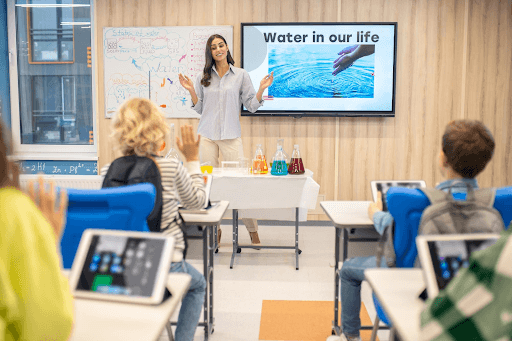
Walk into a contemporary classroom, and you might feel like you've entered a different world. Gone are the days when a blackboard and chalk defined teaching. Today's learning spaces buzz with digital tools that make abstract concepts tangible and distant places accessible.
The Digital Transformation
Indian education has embraced technology rapidly over the past decade. Interactive whiteboards replace static displays, bringing lessons to life with videos, animations, and real-time demonstrations. Students don't just read about the solar system—they virtually travel through it. They don't memorize historical events—they witness them through immersive content.
Understanding Modern Teaching Tools
Visualizers magnify tiny objects up to 220 times, turning science experiments into shared experiences where every student can observe minute details. Digital projectors transform walls into canvases for collaborative learning. Tablet PCs enable personalized learning paths where each child progresses at their own pace. These aren't gimmicks; they're tools that address different learning styles and make education accessible to all.
The Human Element Remains Central
Technology enhances teaching—it doesn't replace teachers. The best classrooms use digital tools to free educators from repetitive tasks, giving them more time for what truly matters: understanding each child's unique needs, fostering curiosity, building relationships, and providing emotional support. Screens illuminate minds, but teachers inspire hearts.
Holistic Development: Beyond Academic Excellence
Report cards filled with A's might make parents proud, but do those grades prepare children for life's curveballs? Real success demands skills no exam can measure—resilience when facing failure, empathy when dealing with others, creativity when solving problems, and courage when standing for what's right.
Defining Complete Education
Holistic development recognizes that children are not just brains on legs. They're complex beings with physical, emotional, social, creative, and intellectual dimensions. Focusing solely on academics is like training someone to play piano with just one hand—technically possible, but limiting their full potential and expression.
Life Skills That Actually Matter
Schools must teach children how to handle stress, build healthy relationships, think critically about information, and develop self-awareness. These aren't "soft skills"—they're essential survival tools for the modern world. A child who aces math but cannot manage emotions or work in teams will struggle more than one with moderate academics but strong life skills.
The Role of Sports and Arts
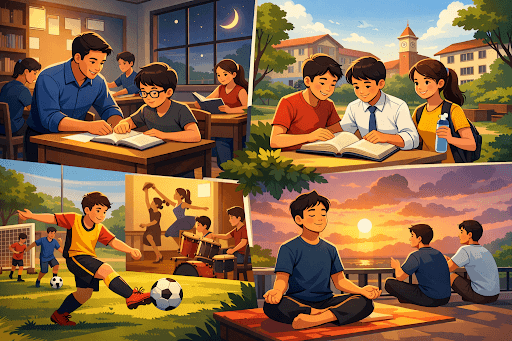
Physical education isn't just about fitness—it teaches teamwork, discipline, handling victory and defeat gracefully. Arts aren't frivolous additions—they develop creativity, emotional expression, and cultural appreciation. When schools treat these as essential rather than optional, they create well-rounded individuals ready for whatever life throws at them.
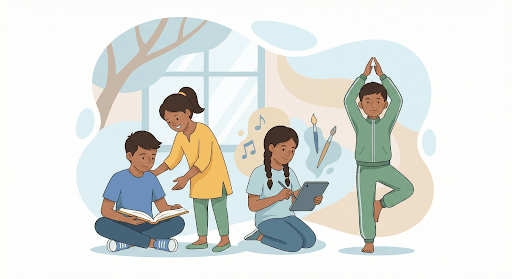
Key Components of Holistic Education:
- Intellectual Growth: Critical thinking, problem-solving, academic excellence
- Physical Development: Sports, yoga, health awareness, motor skills
- Emotional Intelligence: Self-awareness, empathy, stress management, resilience
- Social Skills: Teamwork, communication, conflict resolution, leadership
- Creative Expression: Arts, music, drama, innovative thinking
Check Out | Where Values Meet Vision: Inside the Holistic Education Model at GNWS
Podar Global School Yelahanka: 97 Years of Educational Excellence Meets Modern Innovation
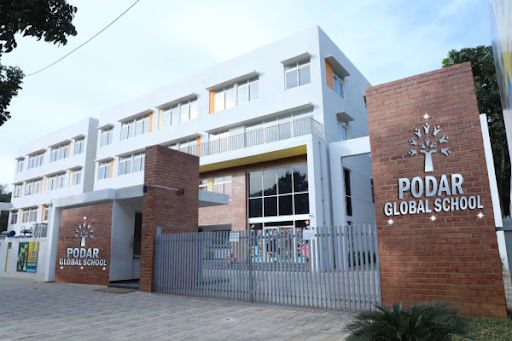
Standing strong since 1927, Podar Education Network represents nearly a century of unwavering commitment to quality education. Podar Global School in Yelahanka, Bangalore, carries forward this legacy while embracing contemporary teaching methodologies. The school offers multiple board options and maintains the founding principle of never accepting donations, making quality education accessible without financial barriers.
Mohandas Karamchand Gandhi served as the first President of Anandilal Podar Trust, embedding values of truth, service, and integrity into the institution's DNA. This isn't just historical trivia—it shapes how the school operates today. From adopting 1000 tribal girls to running a school for deaf and dumb students in Jaipur, Podar's social responsibility initiatives demonstrate that education extends beyond classroom walls.
PGS Yelahanka features air-conditioned digital classrooms equipped with Interactive Whiteboards, Visualizers, and Tablet PCs. The computer labs house state-of-the-art systems, while science laboratories provide hands-on experimental learning. Yet technology serves pedagogy, not the reverse. The "Between Us" web portal connects parents and teachers, enabling real-time communication about student progress, attendance, and behavior.
The early years program reflects current neuroscience understanding. Recognizing that brain development during the first six years shapes future emotional, social, and intellectual growth, PGS designs age-appropriate activities that stimulate neural connections naturally. Students aren't forced into premature academics; instead, they learn through developmentally suitable experiences.
Every classroom features a "Student's Creativity Corner" where children express themselves freely on topics they choose. This simple addition fosters confidence, creativity, and self-expression. The school library offers diverse reading materials across genres, creating comfortable spaces where children develop lifelong reading habits. Professional counselors support students through academic and personal challenges.
PGS partners with EduSports, implementing scientifically designed physical education programs with structured curricula and performance monitoring. Students access multiple sports—football, basketball, tennis, cricket, swimming—under experienced coaches. Extracurricular activities span music, dance, yoga, art, and martial arts, ensuring every child discovers their passion beyond textbooks.
Safety and Support Systems:
- 24/7 CCTV surveillance across campus and school buses
- Trained nurses managing first aid facilities
- Female security personnel ensuring comprehensive child safety
- Podar Safe School Act implementation with preventive protocols
Podar Global School Yelahanka demonstrates that values and innovation aren't opposing forces—they're complementary. The school honors its 97-year legacy while preparing students for a future that demands both strong character and technological fluency. Here, children don't just learn—they discover their potential, develop their talents, and understand their responsibility toward society.
If you're seeking an institution where your child receives more than academic instruction—where character development, technological proficiency, and holistic growth converge—Podar Global School Yelahanka deserves your consideration. Visit the campus, interact with the educators, and witness how nearly a century of educational excellence translates into contemporary learning experiences that prepare children not just for exams, but for life itself.
For more information on this and other such schools in the area, check out this list of the best schools in Bangalore.

 as a preferred source on