









Education today isn't just about scoring high marks or memorising formulas. It's about nurturing minds that think critically, innovate fearlessly, and adapt effortlessly to a rapidly changing world. The classroom is no longer confined to four walls—it extends to laboratories, sports fields, art studios, and even weekend gatherings that spark creativity.
Grand Columbus International School (GCIS) in Faridabad embodies this progressive vision through its distinctive approach to learning. From scientist-themed laboratories to skill-based scholarships and weekend extracurricular programs, the school demonstrates what happens when innovation meets education. In this article, we explore how modern institutions are redefining learning culture and examine GCIS's unique contributions to holistic education.
Also Read | Beyond Textbooks and Test Scores: The Holistic Approach of GCIS
The Evolution of Holistic Education in India
For decades, Indian education followed a singular path—textbooks, examinations, and percentages determined a student's worth. The system rewarded memory over creativity, conformity over curiosity. Students excelled at reproducing information but often struggled with applying knowledge to real-world situations.
This rigid framework is gradually transforming. Schools now recognise that intelligence manifests in multiple forms—artistic expression, athletic prowess, technological innovation, and emotional intelligence all deserve equal recognition. The National Education Policy 2020 reinforced this shift by emphasising experiential learning, critical thinking, and multidisciplinary education over rote memorisation.
Today's learners need more than academic qualifications. They require resilience, adaptability, collaboration skills, and creative problem-solving abilities. Holistic education addresses these needs by creating environments where students explore diverse interests, discover their strengths, and develop confidence beyond examination halls.
Redefining Merit: Beyond Academic Percentages

Traditional scholarship programs create a narrow definition of success. A student scoring 95% receives accolades, while another excelling in robotics, music, or athletics often goes unrecognised. This percentage-centric approach overlooks the reality that excellence exists in many forms.
When schools acknowledge diverse talents, they validate different pathways to achievement. A student building innovative robots demonstrates problem-solving skills that matter as much as solving mathematical equations. An athlete mastering discipline and teamwork develops qualities essential for any career. A musician learning patience through practice cultivates perseverance that translates across life domains.
Research consistently shows that recognising non-academic strengths builds student confidence and motivation. Children who feel valued for their unique abilities engage more deeply with learning, develop stronger self-esteem, and pursue their passions with greater commitment.
The professional world values this diversity, too. Companies seek employees who combine technical knowledge with creativity, communication skills, and emotional intelligence. Schools preparing students for real success must therefore celebrate varied talents rather than privileging academic performance alone.
The Saturday School Revolution
Weekend learning programs represent a departure from conventional education schedules. Rather than viewing Saturdays as mere extensions of the academic week, progressive schools reimagine them as opportunities for experiential growth and community building.
Breaking the Monday-to-Friday Monotony
Regular school weeks follow predictable patterns—mathematics, science, languages, and examinations dominate student schedules. While academic rigour remains important, relentless focus on curriculum coverage often leaves little room for creative exploration or stress relief.
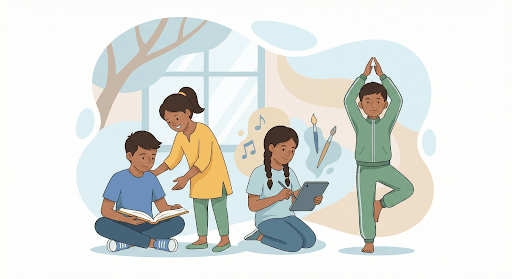
Weekend programs offer breathing space. Students arrive refreshed, ready to engage with activities that rejuvenate rather than exhaust. Yoga sessions calm racing minds, meditation builds focus, and dance releases pent-up energy. These activities aren't distractions from learning—they enhance cognitive function, improve memory retention, and boost overall academic performance.
Morning assemblies create shared experiences that build school spirit. When students gather collectively, they develop a sense of belonging that strengthens their connection to the learning community. This emotional foundation makes weekday academic challenges feel more manageable.
Building Community Through Shared Experiences
Beyond individual benefits, weekend activities foster peer bonding outside competitive academic contexts. Students collaborate on creative projects, support each other during physical activities, and discover classmates' hidden talents. These interactions build friendships based on shared interests rather than grade comparisons.
Group activities develop crucial social skills—communication, empathy, teamwork, and conflict resolution. Students learn to appreciate diverse perspectives, negotiate differences, and work toward common goals. These abilities prove invaluable throughout their personal and professional lives.
Smart Infrastructure: Technology Meets Pedagogy
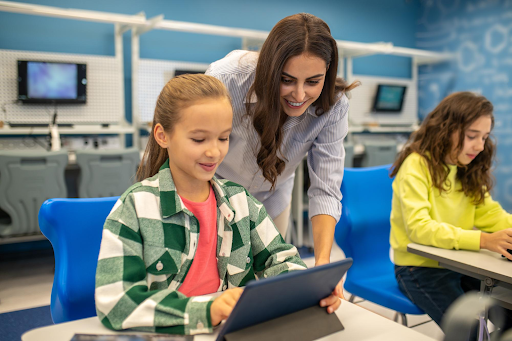
Modern learning environments require more than blackboards and benches. Infrastructure shapes educational experiences in profound ways, influencing student engagement, teacher effectiveness, and learning outcomes.
Air-conditioned classrooms maintain optimal temperatures for concentration. Interactive whiteboards transform passive listening into active participation, allowing teachers to display dynamic content, conduct virtual experiments, and engage students through multimedia resources. Technology integration isn't about replacing traditional teaching—it's about enhancing it.
Ergonomically designed furniture supports healthy posture during long study hours. Round-edged desks prevent injuries while promoting collaborative seating arrangements. These seemingly small details significantly impact student comfort, focus, and physical well-being throughout their academic journey.
Specialised laboratories equipped with modern equipment enable hands-on experimentation. Science students conducting actual experiments understand concepts far better than those who merely read about procedures. Tinkering spaces allow budding innovators to transform ideas into prototypes, fostering entrepreneurial thinking and practical problem-solving skills.
Preparing for Tomorrow: Competitive Exam Integration
Students preparing for competitive examinations face enormous pressure. Balancing school curriculum with coaching institute schedules creates exhausting routines—early morning classes, full school days, evening coaching sessions, and late-night homework leave little time for rest or recreation.
This dual burden strains students mentally and financially burdens families. Coaching fees represent significant expenses, particularly for middle-class households already investing in quality school education. The separation between school learning and competitive preparation also creates confusion, as students struggle to connect concepts taught through different pedagogical approaches.
Integrated preparation programs solve these problems elegantly. When schools incorporate competitive exam coaching within regular schedules, students receive consistent instruction that connects the school curriculum with the entrance test requirements. Concepts reinforced through both frameworks deepen understanding rather than creating confusion.
This approach reduces student stress considerably. Without rushing between school and coaching centres, students find time for adequate sleep, physical activity, and family interaction. Mental health improves, burnout decreases, and learning becomes sustainable rather than overwhelming.
Financial accessibility increases, too. Families save substantially when competitive preparation comes bundled with school education rather than requiring separate coaching investments. This democratizes access to quality guidance, helping talented students from diverse economic backgrounds compete effectively.
Check Out | Shaping the Whole Child: Multidimensional Development
Grand Columbus International School, Faridabad: Where Innovation Shapes Future Leaders
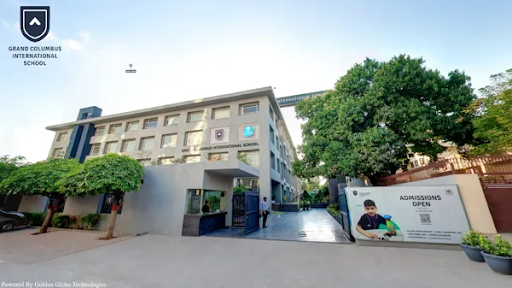
Grand Columbus International School (GCIS) occupies 2 acres in Sector 16A, Faridabad, offering CBSE-affiliated education within a centrally air-conditioned campus. The school's infrastructure includes 24/7 power backup, fire safety compliance, comprehensive CCTV coverage, and accessibility features ensuring inclusive education for all students.
The Kalam Skill Scholarship recognises merit beyond percentages. Students excelling in academics receive Platinum (95-100%), Diamond (90-94.9%), Gold (85-89.9%), and Silver (80-84.9%) scholarships. However, GCIS extends this recognition to sports, music, dance, art, craft, and robotics—acknowledging that excellence manifests across multiple domains.
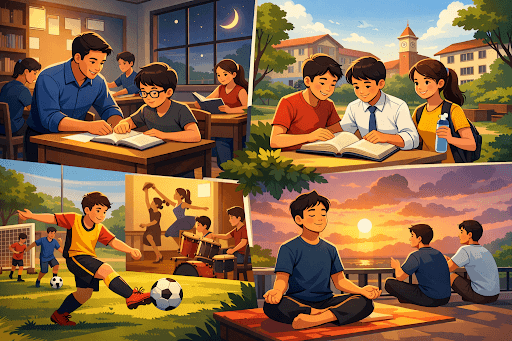
Super Saturdays distinguish GCIS from conventional institutions. Every weekend begins with assembly, yoga, and meditation, followed by dance and diverse extracurricular activities. This routine creates balanced development, ensuring students grow physically, emotionally, and socially alongside academic advancement.
The Launchpad program prepares students for JEE, NEET, NTSE, and international Olympiads during school hours. This integrated approach eliminates external coaching dependency, reducing student stress while maintaining a competitive edge. Parents appreciate the financial relief, and students benefit from cohesive instruction.
GCIS features scientist-themed laboratories—the Kalam Physics Lab, Faraday Chemistry Lab, Darwin Biology Lab, and Turing Computer Lab—inspiring students through legacy connections. The Atal Tinkering Lab promotes creativity and innovation, while the LEGO Robo Lab develops logical thinking and coding fundamentals in younger students.
GCIS's vision extends beyond academic excellence. The school aims to nurture reflective, lifelong learners who contribute meaningfully to society. Through comprehensive programs addressing intellectual, creative, physical, and emotional development, GCIS demonstrates that education succeeds when it celebrates every dimension of human potential.
Discover a learning environment where your child's unique talents are celebrated. Apply now to Grand Columbus International School and experience education beyond textbooks.
For more information on this and other similar schools in the area, check out this list of the best schools in Faridabad.

 as a preferred source on