




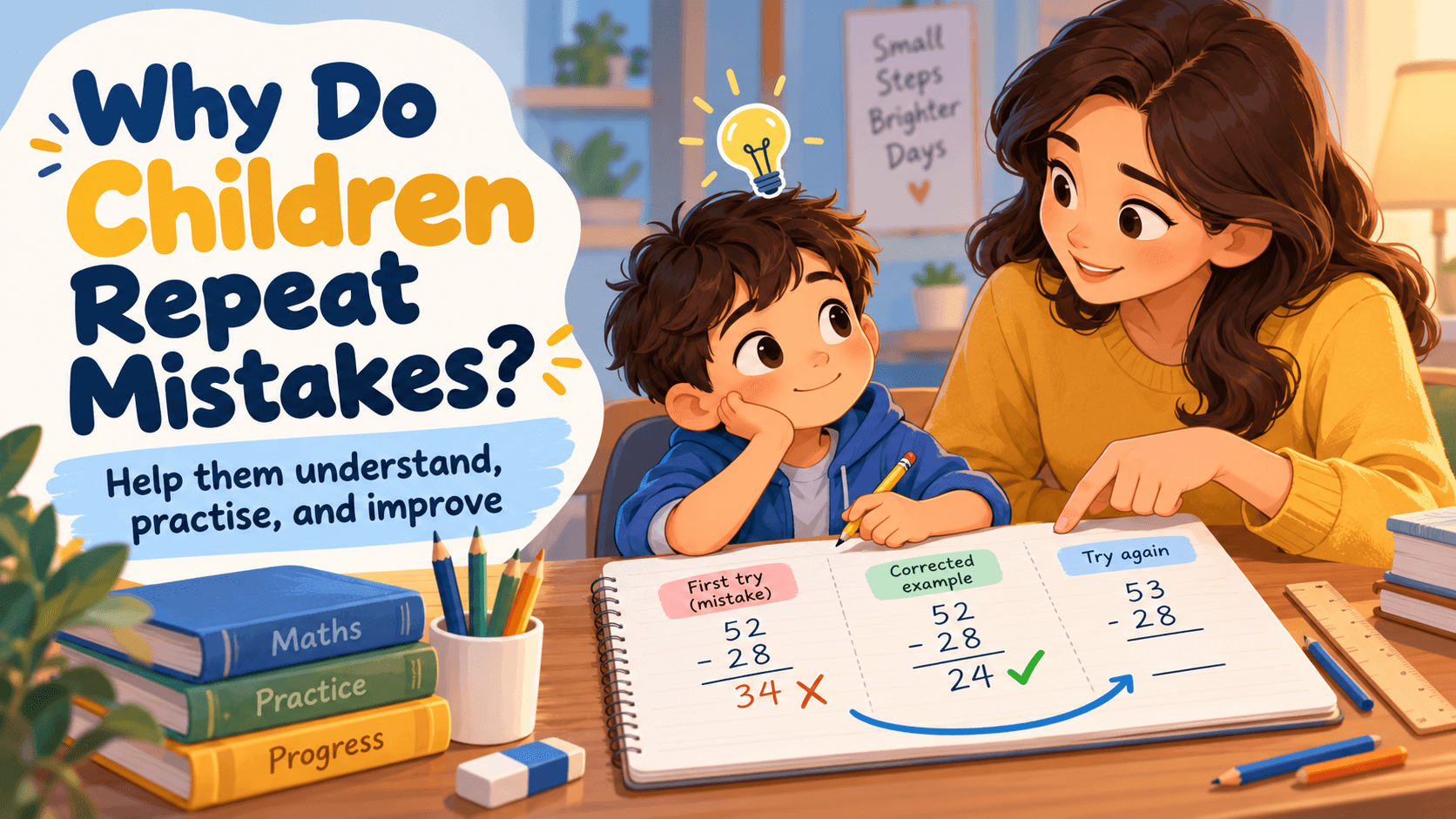

Your eight-year-old makes a mistake while subtracting two numbers. You explain each step, and they solve the next question correctly. But two days later, the same error appears in their homework. You wonder whether they forgot or were not paying attention.
For parents exploring Top Schools in Bangalore, including Prestige School(PS), Hennur, Bangalore, this can raise a familiar concern: why does correcting an answer not always prevent the mistake from happening again?
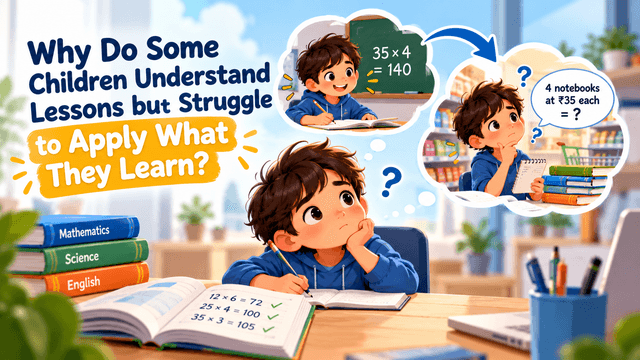
The answer is not always carelessness. Children may need help understanding the reason behind an error, remembering a method, or recognising when to use it independently.
Why Doesn't Correcting a Mistake Always Prevent It?
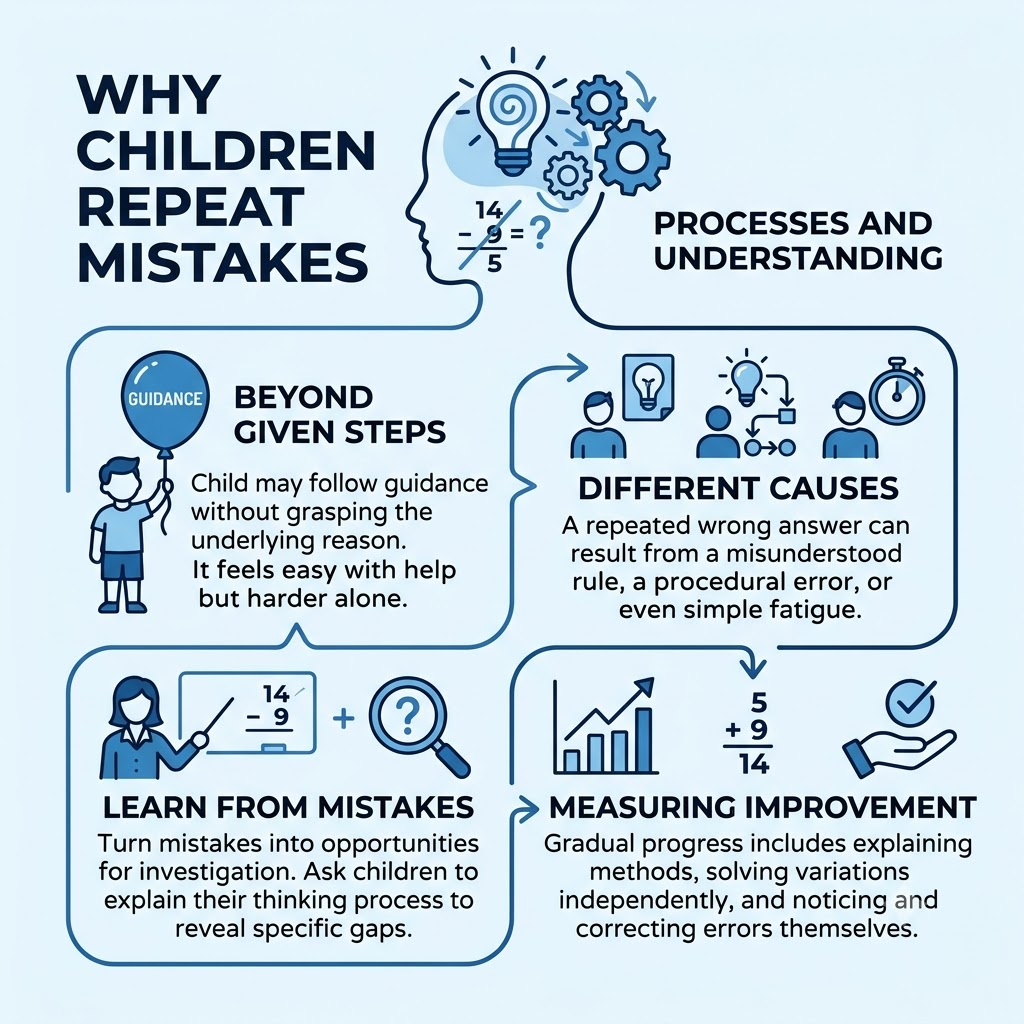
When an adult demonstrates the correct answer, a child may follow the steps without fully understanding them. It makes sense with guidance but proves harder alone.
Consider subtraction with regrouping. A child may watch a parent borrow from the tens column and successfully copy the method. Yet they may not understand why the digits change. When the next question looks different, the old mistake returns.
Children's errors can reveal what they believe about a concept. Guidance from the National Association for the Education of Young Children encourages adults to pay attention to children's mathematical thinking, not only whether their answers are correct.
Instead of immediately solving the problem again, ask, "Can you show me how you got this answer?" Their explanation may reveal the exact step that needs attention.
A correction becomes more useful when children understand both what went wrong and why another approach works.
Are Repeated Mistakes Always a Sign of Carelessness?
The same wrong answer can have different causes.
One child might misunderstand a rule. For example, they may believe that the larger digit should always be placed first when subtracting within a column. This is a misunderstanding of the method.
Another child may understand the rule but forget a step while working through a longer calculation. That is a difficulty with the procedure, not necessarily the concept.
A third child may know the method well but rush, misread a number, or forget to check their work. Occasional slips happen.
Spelling offers a similar example. A child who repeatedly spells "because" incorrectly may need practice remembering its letter sequence. A child who misspells several familiar words only during a timed test may be rushing.
Before saying, "You are making the same careless mistake again," look for patterns. Does it happen with one type of question, after a particular step, or mainly when the child is tired? The answer can guide your response.
How Can Parents Help Children Learn From Mistakes?
Start by making the mistake something to investigate, not something to fear.
Ask for their thinking. Say, "Tell me what you did first," rather than immediately identifying the wrong step. Children sometimes notice the problem while explaining it aloud.
Give specific feedback. Instead of "Wrong again," try, "You regrouped correctly, but forgot to change the number in the tens column." This tells the child what to work on.
Model one example when needed. If the idea remains confusing, solve a similar question slowly and explain your choices. Then let your child attempt a fresh question independently.
Return to the skill later. One correct answer immediately after an explanation does not guarantee that the method will be remembered. Try a few varied questions the next day or later in the week, without showing the earlier solution first.
Encourage self-checking. Ask, "Does this answer seem reasonable?" or "Can you check it another way?" The Education Endowment Foundation's guidance on feedback and self-regulated learning supports helping students understand their next steps and monitor their own work.
Keep practice purposeful. Repeating twenty nearly identical questions is not always as useful as identifying one misunderstanding and applying the corrected idea in several different examples.
How Can Parents Tell Whether Their Child Is Improving?
Look beyond whether the next answer is correct. Notice whether your child can explain the method without prompts, solve a similar question after a break, and recognise when an answer does not make sense.
For example, after practising subtraction, ask them to check their answer using addition. If they discover the error themselves, that is meaningful progress.
Improvement may be gradual. Some errors disappear quickly; others require several explanations and practice opportunities.
If the same difficulty continues despite patient support, speak with the teacher. Comparing classroom work, homework, and assessment feedback can help identify where the child needs further guidance.
Understanding Learning Progress Through Feedback
For families comparing the Best Schools in Bangalore, it is useful to ask how schools help parents understand their children's progress. Prestige School(PS), Hennur, Bangalore describes periodic assessments, progress updates, and parent-teacher meetings as part of its academic communication.

These arrangements can provide opportunities for families and teachers to discuss recurring errors, identify areas that need attention, and consider suitable support. Assessment information is most useful when it helps adults understand how a child is learning, rather than focusing only on marks.
Helping Children Improve Without Fearing Mistakes
A repeated mistake is not proof that a child is unwilling to learn. It may show which idea needs clearer explanation or more independent practice.
When parents respond with curiosity, useful feedback, and patience, mistakes can become clues for better learning instead of reasons for embarrassment.
For more information on this and similar schools, check out this list of the best schools in Bangalore.














 as a preferred source on