






Your daughter seems excited about joining a boarding school. She talks about making new friends, exploring the campus, and participating in activities. But when you begin packing her belongings, she suddenly becomes quiet and asks, "What if I miss home?"
For parents exploring a top boarding school in India, this situation can raise an important question: Is my daughter emotionally ready to live away from us?
When considering schools such as Ashok Hall Girls' Residential School (AHGRS), Almora, emotional readiness deserves as much attention as academic preparation. It involves understanding feelings, managing unfamiliar situations, and knowing when to ask for help.
Here are four important areas parents should consider before making a decision.
1. Can Your Daughter Talk About Her Feelings Without Hiding Them?
Some children openly express their worries, while others prefer keeping their feelings to themselves. Neither behaviour automatically determines whether a child is ready for boarding school.
Imagine your daughter feeling nervous about sharing a dormitory with unfamiliar students. Does she tell you what worries her, or does she avoid discussing it because she thinks you might be disappointed?
Being emotionally prepared does not mean feeling confident all the time. It means gradually learning to recognise emotions and communicate when something feels uncomfortable.
Parents can encourage this by asking questions such as:
- What excites you most about boarding school?
- Is there anything you feel worried about?
- Who would you approach if something upset you?
Avoid immediately dismissing concerns with statements like "You will be fine" or "There is nothing to worry about."
Instead, listen carefully and discuss possible solutions together.
A child who feels comfortable expressing concerns at home may find it easier to seek help from trusted adults at school.
2. How Does She Respond When Things Do Not Go Her Way?
Boarding school involves sharing spaces, following routines, and making decisions without parents being physically present.
Consider your daughter planning an activity with a friend. The friend suddenly changes her mind, leaving your daughter disappointed.
Does she become upset and refuse to participate, or can she eventually discuss the situation and consider another activity?
Children are still developing emotional regulation skills. Occasional frustration, anger, or disappointment is normal.
What matters is whether your daughter is gradually learning to manage these feelings.
Parents can support this development by allowing children to solve manageable problems independently.
For example, instead of immediately resolving every disagreement with a sibling, encourage your daughter to explain what happened and suggest a fair solution.
These everyday experiences provide opportunities to practise patience, flexibility, and problem-solving.
However, independence should never mean handling every problem alone. Knowing when to request adult assistance is equally important.
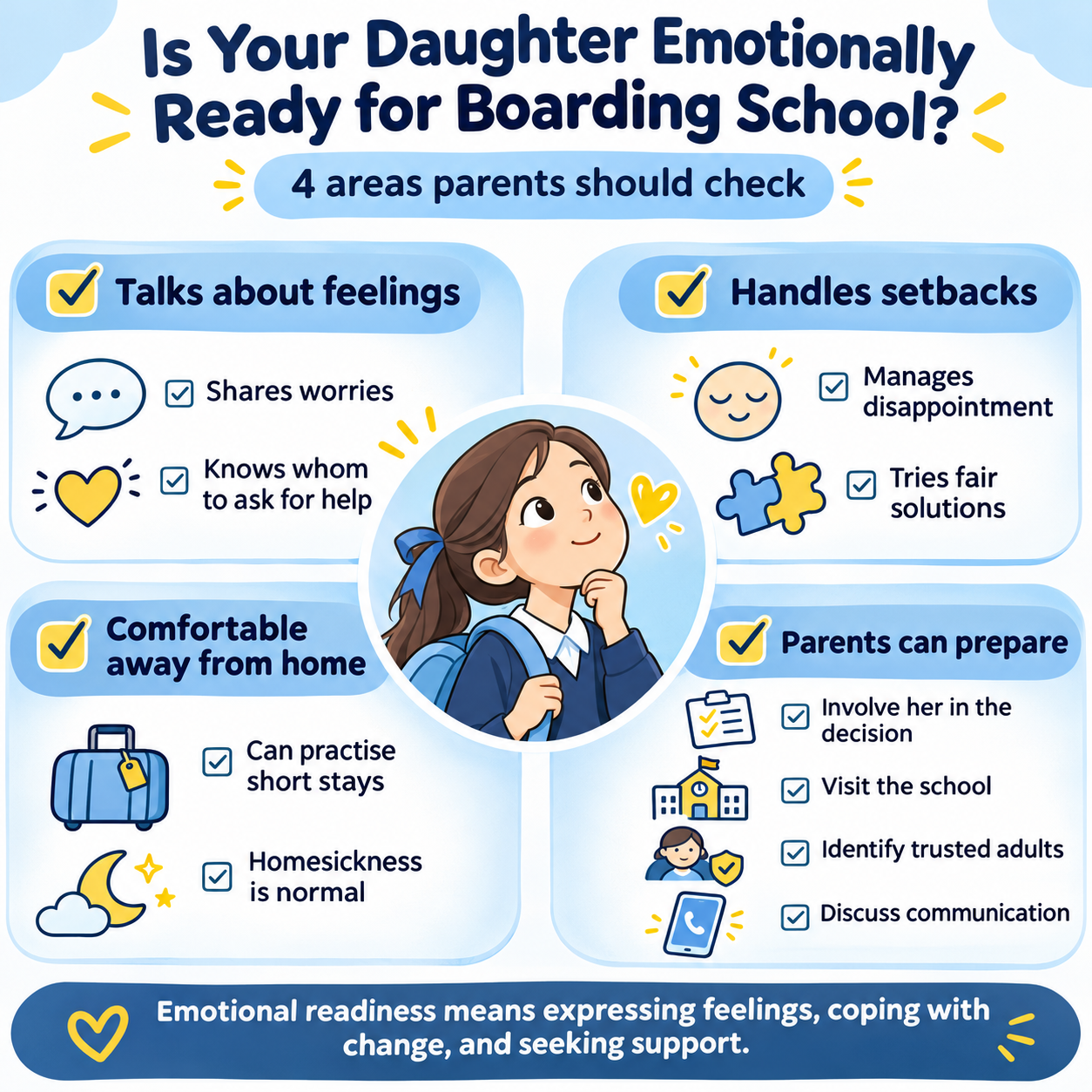
3. Is She Comfortable Spending Time Away From Home?
A child may enjoy school trips and sleepovers but still feel nervous about living away from family for several weeks.
This does not necessarily mean boarding school is unsuitable.
Homesickness is a common response to separation from familiar people and surroundings.
The American Academy of Pediatrics, in its research on preventing and treating homesickness, recommends involving children in decisions about living away from home, discussing homesickness openly, and providing opportunities to practise separation.
Parents can begin with short, comfortable stays with trusted relatives or friends.
For instance, a daughter who has never spent a night away from her parents might first stay overnight with her grandparents.
Such experiences can help her understand what separation feels like while knowing that support remains available.
However, parents should also recognise warning signs.
The UK's National Health Service explains that anxiety may need professional attention when it becomes persistent, worsens, or interferes with everyday activities.
If your daughter experiences continuing sleep difficulties, withdrawal, intense fear, or distress that affects daily functioning, seek professional guidance rather than assuming she will simply adjust.
4. What Can Parents Do Before Making the Final Decision?
Emotional readiness is not something parents need to judge through a single conversation.
Instead, observe how your daughter responds to different situations over time.
Before admission, consider these practical steps:
Involve her in the decision. Discuss why boarding school is being considered and listen to her preferences and concerns.
Practise everyday independence. Encourage her to organise belongings, manage simple routines, and make age-appropriate decisions.
Visit the school together. Where possible, allow her to explore the residential environment and ask questions about daily life.
Identify trusted adults. Explain whom she can approach if she feels lonely, frightened, unwell, or uncomfortable.
Discuss communication arrangements. Understand when students can contact their families and how urgent concerns are handled.
Avoid promising that you will immediately bring her home whenever she feels homesick. Instead, develop a realistic support plan while remaining responsive to serious concerns.
Most importantly, ask your daughter how she feels about the decision.
Her willingness to participate matters more than simply appearing brave.
Emotional Support at Ashok Hall Girls' Residential School, Almora
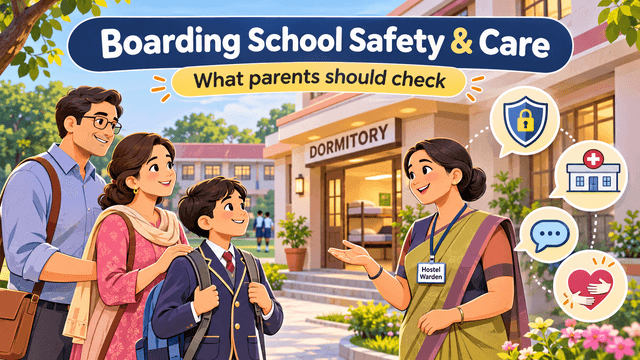
For parents researching the best boarding school in India, understanding how residential schools support students emotionally is an important consideration. At Ashok Hall Girls' Residential School (AHGRS), Almora, located in Majkhali, the mentor-mentee system connects students with teachers who provide academic and personal guidance through regular interactions.

The school also has personal counselling arrangements, while housemistresses and teachers form part of the support available to residential students. These arrangements are particularly relevant when children experience homesickness or difficulty adjusting to unfamiliar surroundings. Parents should discuss how students can approach mentors, receive counselling, and communicate concerns during their initial weeks at school.
Conclusion
Emotional readiness for boarding school is not about whether your daughter can live without missing home. It is about her developing the confidence to express feelings, manage everyday difficulties, and seek support when needed.
Before deciding, observe her behaviour, discuss her concerns, and understand the school's support arrangements.
A thoughtful decision should consider both your daughter's individual needs and her willingness to begin this new chapter.
For more information about residential schools and their facilities, explore boarding schools in India.
For more information on this and similar schools, check out this list of the best boarding schools in India.














 as a preferred source on